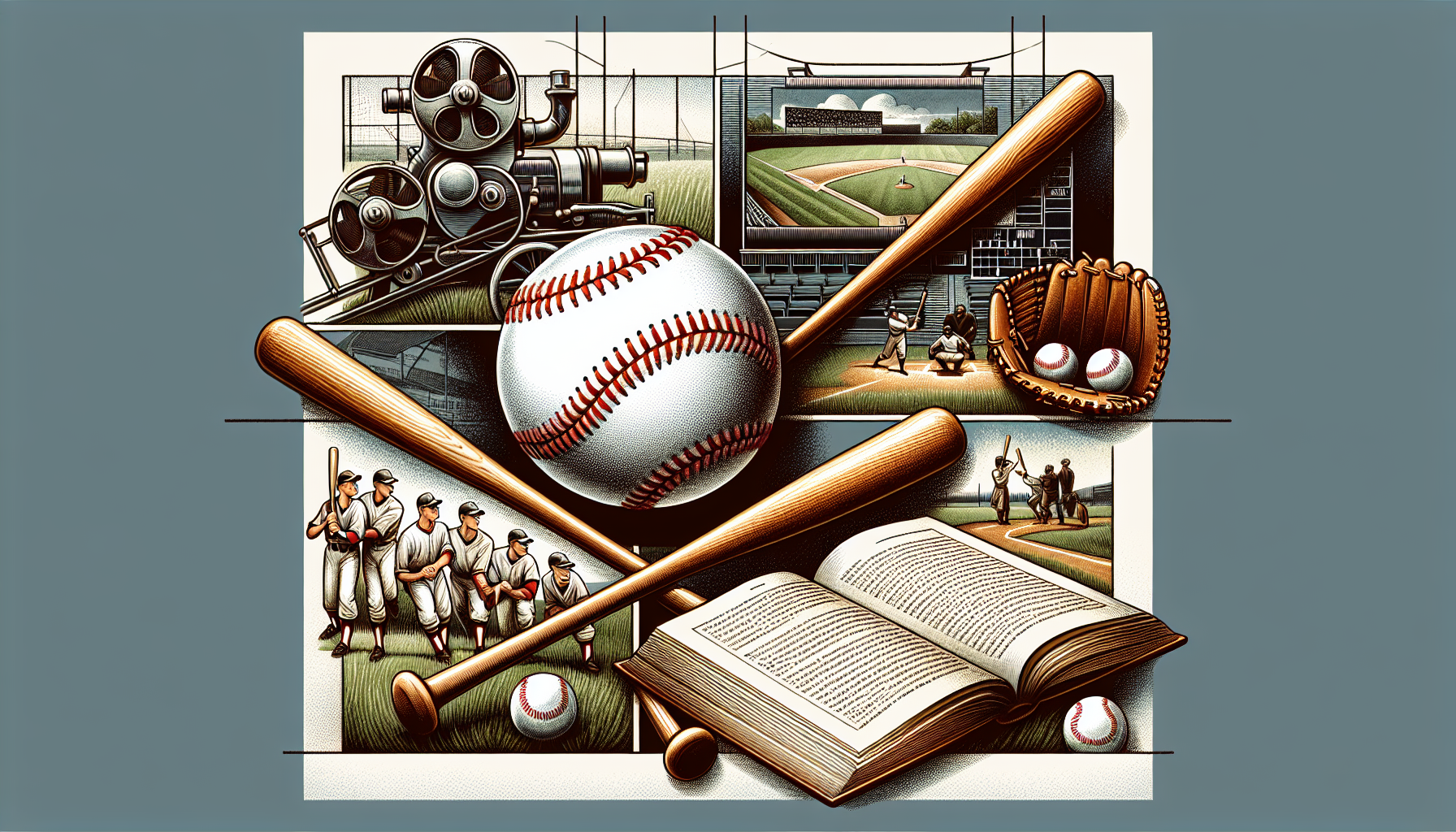
Baseball’s golden age lives most powerfully not in box scores alone but in the stories, films, memoirs, and myths that keep turning the sport into a language for memory. In literature and film, the phrase “golden age” usually refers to the late nineteenth century through the postwar decades, especially the era before television fully transformed how fans consumed games. It suggests more than athletic excellence. It evokes afternoon light, hand-scored programs, neighborhood sandlots, train rides, radio voices, and a national culture that treated baseball as both entertainment and moral theater. As someone who has spent years working through baseball novels, studio-era films, oral histories, and archives, I have found that nostalgia is the engine that connects these works. It shapes what gets remembered, what gets softened, and what gets omitted.
That matters because baseball nostalgia has never been simple sentimentality. It is a cultural lens through which writers and filmmakers examine childhood, masculinity, race, immigration, class aspiration, fatherhood, small-town identity, and the uneasy distance between myth and fact. A hub article on baseball in literature and film needs to treat this “miscellaneous” territory seriously, since many of the most influential works do not fit neatly into one genre. Some are novels about invented teams; some are films built around memory; some are essays, poems, biographies, or hybrid documentaries. Together they explain why baseball remains uniquely adaptable as a storytelling form. The game’s pace, records, seasonal rhythm, and rich iconography make it ideal for narratives about loss and recovery. Understanding that nostalgia helps readers navigate the broader field of baseball in literature and film with sharper critical judgment.
What “golden age” nostalgia means in baseball storytelling
In practice, golden age nostalgia is the selective reconstruction of baseball’s past as more intimate, legible, and virtuous than the present. The strongest baseball stories do not merely praise old parks and wool uniforms. They use the past to ask what modern life has cost. Bernard Malamud’s The Natural turns baseball into mythic quest literature, while W. P. Kinsella’s Shoeless Joe, adapted into Field of Dreams, uses vanished ballplayers to explore reconciliation, grief, and the longing to restore broken family lines. Even when these works are fantastical, their emotional logic is grounded in historically recognizable baseball culture: barnstorming legends, rural diamonds, oral tradition, and the aura of players lost to scandal or time.
Nostalgia works because baseball preserves detail unusually well. Fans can cite dates, batting averages, pennant races, and lineup cards across generations. That archival density gives artists a ready-made structure for memory. A writer can invoke Ebbets Field, the Polo Grounds, or a transistor radio broadcast and immediately trigger a sensory world. A director can frame sunlight through grandstand beams or linger on infield dirt and rely on viewers to supply emotional context. In my experience, baseball audiences respond strongly when a work gets these material details right. Accuracy in uniforms, speech patterns, league geography, or period music builds trust, and that trust lets a story move into larger symbolic territory.
Still, nostalgia is not history. Baseball’s so-called golden age included segregation, labor exploitation, gambling scandals, exclusionary ownership structures, and media mythmaking. The best literature and film acknowledge that tension. Ken Burns’s Baseball, for example, wraps the game in elegiac imagery and expansive memory, yet also gives central attention to the Negro Leagues, the color line, and the business forces shaping the sport. Good criticism of baseball nostalgia asks two questions at once: what emotional truth is being preserved, and what historical truth is being blurred?
How novels, memoirs, and essays turn baseball into cultural memory
Baseball literature has long used the game as a container for national feeling. Roger Angell’s essays are foundational because they do not simply report results; they preserve the texture of watching baseball in time. His prose captures slumps, September pressure, and the intimate observational habits that define fandom. Donald Hall’s Fathers Playing Catch with Sons and later autobiographical writing connect baseball to New England memory, family ritual, and mortality. Doris Kearns Goodwin’s memoir Wait Till Next Year shows how a baseball-centered childhood can become a durable map of family life, postwar suburban identity, and political awakening.
Fiction often pushes nostalgia further by making baseball a site of symbolic return. Mark Harris’s Henry Wiggen books, including The Southpaw, present mid-century baseball through clubhouse realism, humor, and a player’s observational intelligence. Philip Roth’s The Great American Novel satirizes baseball mythology by inventing a lost league, proving that nostalgia can be comic as well as reverent. DeLillo’s Underworld begins with the 1951 Giants-Dodgers playoff and uses one famous home run as an entry point into Cold War America, urban change, waste, and collective memory. That opening demonstrates a key principle for this hub topic: baseball scenes often function as portals into much larger historical narratives.
Readers looking across the broader baseball in literature and film landscape should notice recurring motifs. The father-child bond appears constantly, but so do loneliness, migration, civic pride, and the fear that modernization erases local identity. Baseball memoirs and essays are especially effective because they balance factual specificity with reflective distance. They can describe a pennant race precisely while also explaining why a fan thirty years later still remembers the way a summer broadcast sounded from the kitchen. That dual register gives baseball prose its enduring power.
Why film made baseball’s past feel visible and personal
Film intensifies nostalgia by making the past tactile. Costumes, ballpark architecture, radio sound design, and period cinematography give viewers an immediate sense of inhabiting another baseball era. Consider The Pride of the Yankees from 1942. It is a biographical film about Lou Gehrig, but its larger achievement is emotional canonization. By dramatizing Gehrig’s modesty, endurance, and farewell speech, the film fixed him in public memory as an idealized American hero. The baseball scenes matter, yet the movie’s deeper function is memorial. It teaches audiences how to remember.
Later films broadened that approach. Eight Men Out revisits the 1919 Black Sox scandal with sympathy for underpaid players and skepticism toward baseball’s ruling class. The Sandlot turns neighborhood baseball into a complete nostalgia machine, using childhood adventure, period soundtrack cues, and suburban visual memory to create a golden-age feeling even though its setting is 1962 and its release came in 1993. A League of Their Own uses women’s professional baseball during World War II to recover a sidelined chapter of history while still embracing the warmth and comic energy audiences associate with baseball nostalgia.
These films succeed when they understand that baseball is cinematic for structural reasons. The game has built-in pauses, rituals, and confrontations. A batter stepping in, an outfielder waiting under a fly ball, or a dugout listening to a radio report naturally carries suspense. Directors can combine those pauses with voice-over, flashback, and music to transform baseball into remembered time. For hub-page purposes, that is crucial: baseball film is not only sports cinema. It overlaps with historical drama, family melodrama, coming-of-age narrative, biopic, documentary, and even fantasy.
Key works and the kind of nostalgia they represent
One useful way to organize this miscellaneous area is by the type of nostalgia each work creates. Some texts aim for personal memory, others for national myth, and others for corrective remembrance that restores omitted people and institutions. The following works are central reference points for readers moving deeper into baseball in literature and film.
| Work | Medium | Nostalgic mode | Why it matters |
|---|---|---|---|
| The Natural | Novel/film | Mythic nostalgia | Turns baseball into legend, linking talent, fate, and corrupted innocence. |
| Field of Dreams | Film | Familial nostalgia | Uses baseball ghosts to explore reconciliation and the emotional power of memory. |
| Eight Men Out | Film/book adaptation | Revisionist nostalgia | Revisits a sacred era while exposing labor inequity and institutional hypocrisy. |
| A League of Their Own | Film | Recovering nostalgia | Expands the canon by showing women as central to baseball history. |
| The Sandlot | Film | Childhood nostalgia | Defines sandlot baseball as a shared American memory, even for later generations. |
| Roger Angell essays | Nonfiction | Observational nostalgia | Captures baseball’s lived texture with precise, enduring prose. |
| Underworld | Novel | Historical nostalgia | Shows how one baseball moment can organize national memory across decades. |
The tension between nostalgia and historical truth
No serious hub on baseball’s golden age can avoid the game’s exclusions. Literature and film have increasingly challenged the old version of nostalgia that treated the past as innocent. Any account of pre-integration baseball must reckon with the Negro Leagues and the structural racism that barred Black players from Major League Baseball until Jackie Robinson debuted with the Brooklyn Dodgers in 1947. Films, biographies, and documentaries about Robinson, Satchel Paige, Josh Gibson, and Buck O’Neil have altered how the golden age is represented, shifting the focus from loss alone to recovery and correction.
That same balancing act applies to labor and economics. Early baseball nostalgia often celebrates ownership stability, old parks, and player loyalty, but many players in the reserve-clause era had limited bargaining power. Eight Men Out remains essential because it frames the Black Sox scandal not only as moral failure but also as a labor story shaped by Charles Comiskey’s treatment of players. When readers and viewers see these pressures clearly, nostalgia becomes more useful. It stops being a blur and becomes a method for comparing ideals with actual conditions.
Gender also complicates the golden-age frame. A League of Their Own corrected a major gap, but the broader field still underrepresents women’s baseball stories, girls’ fandom, and women’s authorship in baseball writing. Expanding the canon improves historical accuracy and enlarges the emotional range of baseball storytelling. In archival work and classroom discussion, I have seen readers respond strongly when a familiar nostalgic image is widened rather than discarded. The point is not to abandon affection for baseball’s past. It is to make that affection honest.
How this hub connects the wider “Baseball in Literature and Film” topic
As a sub-pillar hub, this page should guide readers toward the many adjacent conversations that make baseball nostalgia meaningful. Biographies and player memoirs show how public legends are built. Negro Leagues studies reveal what mainstream memory long excluded. Hollywood baseball films demonstrate how studios packaged athletic history into national myth. Children’s books and young adult novels show how each generation inherits baseball symbolism. Poetry and essays preserve the game’s language at its most compressed and lyrical. Documentary works, from television series to oral histories, test nostalgia against evidence and testimony.
This is why the miscellaneous category matters. Some of the most valuable baseball works are cross-genre texts that connect several lanes at once. Field of Dreams belongs to adaptation studies, fantasy film, father-son narrative, and baseball memory all at once. Underworld belongs to postwar American fiction as much as sports literature. Roger Angell belongs to journalism, literary nonfiction, and cultural history. Treating these works as a hub rather than leftovers helps readers build a complete map of the subject.
For practical navigation, readers interested in baseball’s golden age should move in three directions next: historically grounded works that reconstruct specific eras, interpretive works that analyze mythmaking, and personal works that explain why baseball memory persists. Read across forms rather than staying in one medium. A novel can reveal the dream life of baseball; a documentary can restore chronology; a memoir can show how fandom becomes identity. Together they provide the fullest picture of baseball’s place in literature and film.
Baseball’s golden age endures because nostalgia gives the sport a second life beyond the diamond. In books and films, old games become stories about family, community, ambition, injustice, and the search for continuity in a changing culture. The strongest works do not simply praise the past. They recreate its sounds and textures, then test its legends against lived experience. That is why this corner of baseball in literature and film remains so rich: it invites readers and viewers to feel memory while also interrogating it.
For anyone exploring the broader topic, this hub offers the central idea to carry forward. Baseball nostalgia is not one mood but many: mythic, revisionist, familial, civic, comic, and corrective. Understanding those modes will help you read novels more sharply, watch films more critically, and recognize which stories are preserving history and which are remaking it. Use this page as a starting point, then follow the connected paths into biographies, Negro Leagues narratives, classic films, memoirs, and modern reinterpretations. The deeper you go, the clearer it becomes that baseball’s golden age was never just a period. It was, and remains, a storytelling tradition.
Frequently Asked Questions
What does “Baseball’s Golden Age” mean in literature and film?
In literature and film, “Baseball’s Golden Age” usually refers to the period stretching from the late nineteenth century into the decades after World War II, before television fundamentally changed how fans experienced the game. Writers and filmmakers use the phrase to describe more than a specific run of great players or historic pennant races. It points to a cultural moment when baseball occupied a central place in American daily life and imagination. The game was local, tactile, and communal: fans sat in afternoon light, kept score by hand, followed teams through newspapers and radio, and often knew ballparks as neighborhood landmarks rather than distant entertainment brands.
That is why the golden age carries such emotional weight in stories. In novels, memoirs, and films, it often symbolizes a slower, more intimate world where baseball connected generations and gave shape to memory. The era becomes shorthand for fathers and sons, summer routines, train travel, sandlots, small-town heroes, and the feeling that the game belonged to ordinary people. Even when these portrayals are idealized, they are powerful because they use baseball to explore larger themes: innocence, loss, ambition, belonging, and the passage of time. In other words, the “golden age” is as much a literary and cinematic idea as it is a historical one.
Why does nostalgia play such a central role in baseball stories and movies?
Nostalgia is central to baseball stories and movies because the sport naturally lends itself to reflection. Baseball unfolds at a measured pace, and that pace gives storytellers room to connect the game with memory. A single field, a weathered glove, the sound of a radio broadcast, or the image of a late-afternoon game can instantly evoke an earlier era. Compared with faster, more chaotic sports, baseball often appears in art as a game of pauses and returns, where the past is never fully gone. That makes it an ideal vehicle for stories about remembering childhood, reconnecting with family, or trying to recover something that seems lost in modern life.
There is also a deeper cultural reason. Baseball has long been presented as a national archive of feeling, a place where personal memory and collective memory overlap. People remember not only famous games but who they were when they listened to them, who taught them to score a scorecard, or where they sat in the stands. Literature and film draw on that emotional layering. Nostalgia in these works is not simply sentimental decoration; it is often the engine of the narrative. It helps writers and directors examine change, mortality, masculinity, class, race, and the distance between myth and reality. The best baseball stories do not just say the past was better. They ask why we need the past to feel meaningful in the present.
How do literature and film shape the mythology of baseball’s golden age?
Literature and film shape the mythology of baseball’s golden age by selecting details that feel timeless and emotionally resonant, then arranging them into narratives larger than sports history. A box score records what happened, but a novel or film tells audiences what it meant. That is where mythology begins. Authors and directors elevate ballplayers into folk heroes, turn ballparks into sacred spaces, and cast ordinary games as moments of moral revelation or personal transformation. The result is a version of baseball that often feels richer and more enduring than the historical record alone.
This mythmaking works through recurring images and themes. The sandlot becomes a training ground for character. The old stadium becomes a memory palace. The aging player becomes a symbol of fading glory. The young fan becomes a witness to a disappearing America. These patterns appear across memoir, fiction, and cinema because they are flexible and familiar. They allow baseball to stand for ideas far beyond the field, including community, hope, resilience, and continuity between generations. At the same time, strong works complicate the myth. They acknowledge exclusion, inequality, and the gap between the polished legend and the harder truths of the era. That tension between reverence and realism is often what gives baseball literature and film their lasting power.
Are portrayals of baseball’s golden age historically accurate, or are they mostly romanticized?
Most portrayals contain both truth and romanticization. The historical foundations are real: baseball did hold a uniquely visible place in American culture, local ballparks mattered deeply, radio transformed fandom, and many communities built strong identities around teams and shared rituals. Writers and filmmakers are not inventing the emotional significance of those experiences. They are working from a genuine cultural history in which baseball served as entertainment, civic theater, and a common language across generations.
However, nostalgia tends to soften the rough edges of the past. Many golden-age portrayals underplay the era’s exclusions and inequalities, especially racial segregation, limited access, labor struggles, and the everyday hardships that shaped working-class life. The pre-television age can be depicted as simpler and purer than it really was. That does not make these stories worthless; it means they should be read and viewed with awareness. The most compelling works are usually the ones that preserve the era’s beauty without pretending it was flawless. They understand that nostalgia is meaningful precisely because it is selective. It reveals what people wish to remember, what they fear losing, and what parts of history they continue trying to redeem through storytelling.
What themes should readers and viewers look for in stories about baseball’s golden age?
Readers and viewers should look first for themes of memory and time. In many baseball novels, memoirs, and films, the game is less about winning and losing than about how people remember a vanished world. A story may use an old field, a forgotten team, or a legendary player to explore how the past survives in fragments. That often leads into themes of family and inheritance: how values, rituals, and emotional histories pass from one generation to the next through the language of baseball. The catch in the yard, the scorecard in the stands, or the shared silence during a radio broadcast can matter as much as any championship.
It is also important to notice themes of place, identity, and myth. Baseball’s golden age is frequently tied to neighborhoods, small towns, immigrant communities, and city loyalties, so stories about it often ask how places shape people. At the same time, many works examine the tension between the ordinary and the legendary. Players are depicted as both human beings and icons. Fans are shown as both spectators and storytellers. Finally, attentive readers and viewers should watch for what is absent as well as what is present. Whose memories are centered? Whose experiences are left out? The richest baseball narratives invite admiration for the game’s beauty while also encouraging a more honest understanding of the society around it. That blend of affection, scrutiny, and emotional depth is what makes the golden age so enduring in literature and film.