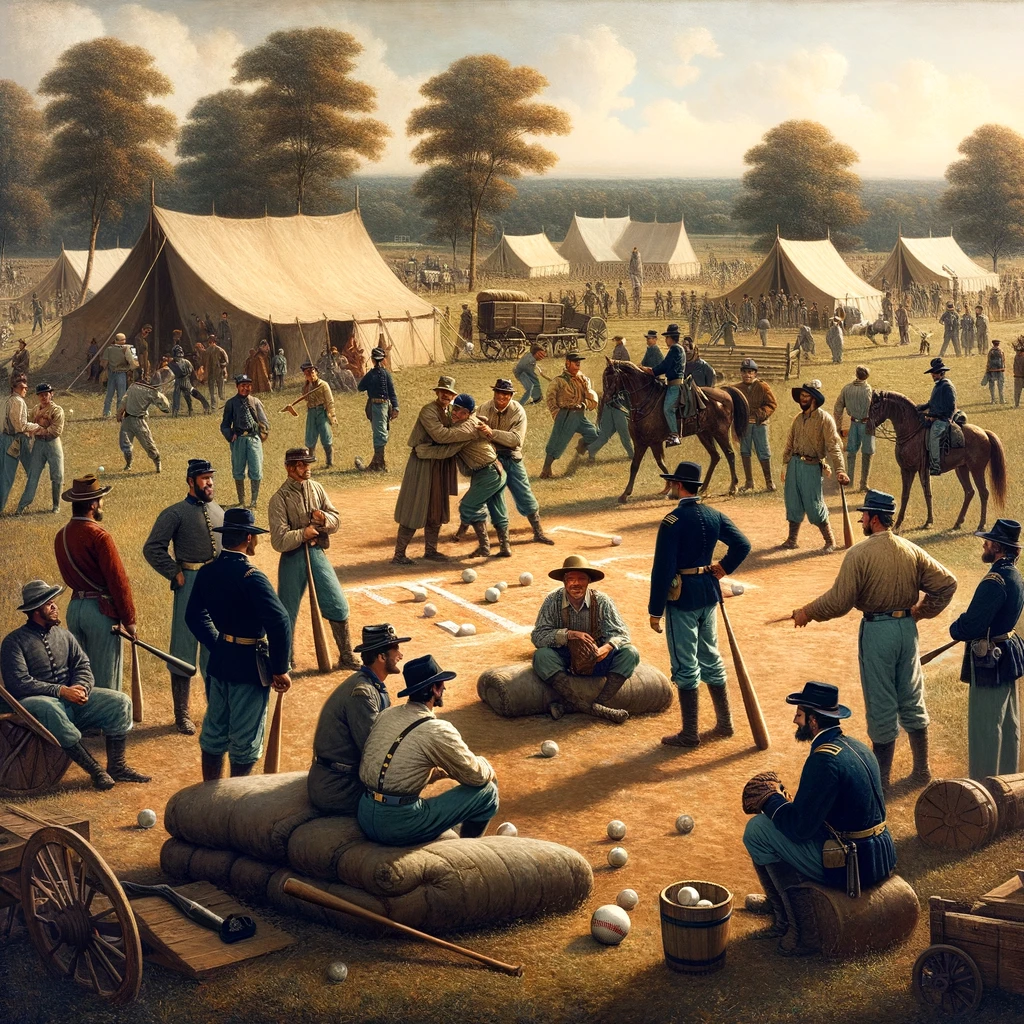
In the mid-19th century, the United States was a nation deeply divided by the Civil War, a conflict that pitted brother against brother and state against state. Amidst this backdrop of division and strife, a unifying force emerged in the form of a simple yet captivating sport: baseball. This article delves into the history of baseball during the Civil War era, exploring how it transcended the battlefields and became a symbol of unity and national identity.
Early Beginnings of Baseball
Baseball’s roots can be traced back to various bat-and-ball games played in England. However, it was in the United States that the game evolved into the form we recognize today. In the 1840s, towns and clubs began to formalize rules, most notably the New York Knickerbocker Baseball Club, which in 1845 codified a set of rules that laid the groundwork for modern baseball.
As the nation moved towards the Civil War in the 1860s, baseball was still in its infancy. It was seen largely as a recreational activity, a pastime that offered a brief respite from the daily rigors and emerging tensions of American life. Little did anyone know that this sport would soon become a pivotal part of the nation’s fabric.
Baseball and the Civil War
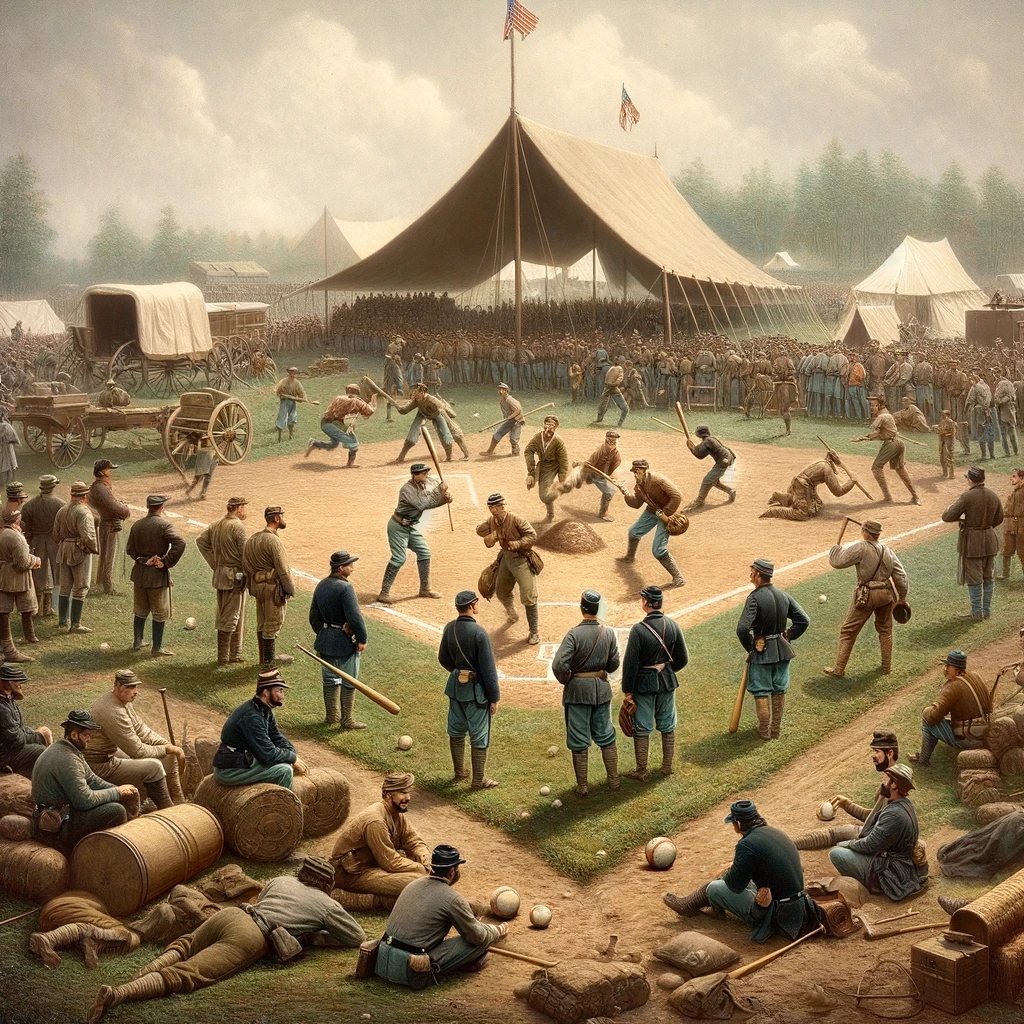
With the outbreak of the Civil War in 1861, baseball took on a new significance. Soldiers from both the Union and Confederate armies played baseball in their spare time, finding in it a much-needed distraction from the horrors of war. The sport provided a common ground, a neutral territory where the men could forget, for a moment, their allegiances and simply play.
Camps and prisons on both sides saw games of baseball. Union prisoners in Confederate camps would use whatever materials they could find – sticks for bats, rags for balls – to play the game. It was a poignant reminder of the normalcy and unity that sport can bring, even in the darkest of times.
Baseball’s Growing Popularity
As soldiers returned home after the war, they brought with them a love for baseball. The sport, which had been mostly confined to the Northeast before the war, began to spread across the country. Cities and towns formed teams, and the first professional baseball league, the National Association of Professional Base Ball Players, was established in 1871.
This period saw the rise of some of the first baseball stars, athletes who became household names. Their exploits on the field captured the imagination of the public, and baseball games became major social events, drawing crowds from all walks of life.
The Impact on American Society
The post-war era was a time of rebuilding and reconciliation for the United States. Baseball played a subtle but significant role in this process. As a shared national pastime, it provided a common cultural touchstone that helped bridge regional and political divides. In a country searching for a new identity, baseball became a symbol of unity and the democratic spirit.
Moreover, baseball mirrored the societal changes of the time. The late 19th century was a period of rapid industrialization and urbanization in America. Baseball, with its professional leagues and growing commercialization, reflected these broader trends. It was no longer just a game; it had become an integral part of the American way of life.
The history of baseball during the Civil War era is a testament to the power of sport as a unifying force. From its humble beginnings as a pastime to its emergence as America’s national game, baseball provided a sense of normalcy and unity in a time of profound division. It not only entertained but also helped in knitting together a nation torn apart by war, playing a crucial role in shaping the American identity.
Baseball as a Reflection of a Changing Nation
The post-Civil War era was marked by significant societal shifts. Baseball, in its own way, mirrored these changes. As cities grew and the American landscape transformed, the game evolved from an amateur pastime into a professional sport. This transition was not just about the sport itself, but it also reflected the burgeoning spirit of American enterprise and innovation.
The Birth of Professional Teams
The establishment of professional teams was a significant milestone in baseball history. The Cincinnati Red Stockings, formed in 1869, is often considered the first fully professional baseball team. Their nationwide tour in 1869 and 1870, playing against amateur clubs, showcased the potential of baseball as a professional sport. This tour was instrumental in popularizing baseball across the country and laid the foundation for the professional leagues that would follow.
Integration and Segregation
While baseball was unifying in many ways, it also reflected the societal prejudices of the time. The late 19th century was a period of racial segregation in America, and baseball was no exception. African Americans and whites played separately, with African Americans barred from the major leagues. Despite this, the African American community embraced the game, forming their own teams and leagues. The story of baseball during this era is incomplete without acknowledging these segregated experiences, which would continue until Jackie Robinson broke the color barrier in 1947.
Key Figures in Early Baseball
The Civil War era and the decades that followed produced some of baseball’s first superstars, men who would become legends in the annals of the sport.
Albert Spalding
Albert Spalding, a prominent player, manager, and eventually sporting goods entrepreneur, was instrumental in promoting baseball as America’s national sport. His company, Spalding, became synonymous with baseball equipment and played a key role in standardizing the game’s equipment and rules.
Cap Anson
Adrian “Cap” Anson was another notable figure, known for his remarkable skills on the field. However, his legacy is also tied to his role in reinforcing racial segregation in baseball, highlighting the complex and sometimes contradictory nature of the sport’s history.
The Cultural Impact of Baseball
By the late 19th century, baseball had firmly established itself as part of American culture. It was more than a game; it had become a symbol of American values like teamwork, fair play, and the pursuit of excellence.
Baseball Literature and Language
The popularity of baseball also influenced American literature and language. The game’s terminology found its way into everyday speech, with phrases like “out of left field” and “touch base” becoming common idioms. Writers like Walt Whitman and Mark Twain referenced baseball in their works, underscoring its significance in American culture.
Baseball and Community Identity
Baseball games became important community events, fostering local pride and unity. Towns and cities rallied around their local teams, and rivalries between teams mirrored local and regional rivalries. In this way, baseball contributed to the formation of community identities across the nation.
The Legacy of Baseball in the Civil War Era
The story of baseball in the Civil War era is a microcosm of the American experience during a pivotal period in the nation’s history. It reflects the challenges and changes the country faced as it emerged from the shadow of war. Baseball helped to bridge divides, foster a sense of national identity, and adapt to the changing American society.
In the decades following the Civil War, baseball continued to evolve, reflecting the nation’s growth and struggles. The game’s journey from amateur clubs to professional leagues, its role in societal issues like segregation, and its influence on American culture, all paint a picture of a sport intricately linked with the American story.
Conclusion
From its simple beginnings to its status as America’s national pastime, baseball during the Civil War era was more than just a game. It was a unifying force in a time of division, a reflection of a nation in transition, and a harbinger of societal changes. Its legacy is a testament to the enduring power of sports to inspire, unite, and reflect the best and sometimes the complex aspects of human society.
As we look back on this era, we recognize the profound impact baseball had on the American psyche and its continuing role in shaping the nation’s identity. The story of baseball in the Civil War era is a rich tapestry woven into the larger narrative of American history, a narrative of unity, diversity, and the enduring spirit of a nation.
Frequently Asked Questions
1. How did baseball become popular during the Civil War era?
Baseball’s popularity during the Civil War era can be attributed to several factors. Initially, baseball was a burgeoning pastime in America, having evolved from earlier bat-and-ball games. Its simplicity and minimal equipment requirements made it accessible. When the Civil War broke out, soldiers from both Union and Confederate sides brought baseball with them to camps and played during their downtime. This not only provided a much-needed diversion from the harsh realities of war but also helped bolster the game’s popularity. As soldiers moved from one location to another, the game spread geographically. The constant military interactions created a fertile ground for baseball to emerge as a shared, unifying sport, providing a sense of normalcy and camaraderie amidst the division.
2. Did the Civil War have any impact on the rules of baseball as we know them today?
Yes, the Civil War had a considerable influence on the development of baseball rules. During the war, soldiers from various states and regions came into contact, each bringing their local versions of the game. As they played together, ideas and styles merged, contributing to the standardization of the sport’s rules. The New York style, which prioritized a diamond-shaped infield and was less physically demanding compared to other versions, became the dominant form favored by soldiers due to its streamlined approach. The exposure painted baseball not only as a pastime but also as a structured and disciplined sport. Upon returning home, soldiers shared the consolidated rules, further cementing baseball’s rules and popularity post-war.
3. Were there any significant baseball games during the Civil War that symbolized its unifying impact?
Yes, several noteworthy games during the Civil War underscored baseball’s unifying impact. One of the most famous was a game played on Christmas Day of 1862 by members of the 165th New York Infantry at Hilton Head in South Carolina. This event drew a large crowd and was even reported in the New York Mercury newspaper. Additionally, games like these served as informal truces where soldiers from opposing sides momentarily set aside their differences to engage in the sport. These gatherings highlighted baseball’s role in providing not only distraction but a temporary bridge across enemy lines, echoing its potential to unify in the midst of conflict.
4. How did the perception of baseball as a sport of unity manifest after the war?
After the Civil War, baseball’s image as a unifying sport was solidified. The soldiers returned home with newfound enthusiasm for the game, eager to share it with their communities. It quickly became a national pastime, bridging the cultural and regional gaps that the war had widened. The post-war period saw the formation of numerous baseball clubs, leagues, and the establishment of official playing fields across Northern and Southern states. Baseball matches became communal events that drew people together, giving a fractured nation a common interest and purpose. Additionally, individuals who had played the game during their military service carried forth a narrative of unity and teamwork, which resonated with the broader societal desire to heal and reconnect.
5. Did baseball contribute to healing national divisions in any formal ways following the Civil War?
Baseball did play a role in helping heal national divisions after the Civil War, albeit in an informal manner. As an emerging national pastime, it symbolized a new era of American identity, one that prioritized leisure as a shared communal experience. The sport encouraged participation and competition not based on geography but on skill and sportsmanship, fostering an environment where the scars of war could be set aside in favor of friendly rivalry. Furthermore, baseball clubs often comprised individuals from diverse backgrounds, which promoted tolerance and understanding. This inclusivity and emphasis on collaboration helped cultivate a renewed sense of community and identity post-war. Baseball parks became spaces where citizens could gather, discuss more than just scores, and engage in social dialogue crucial for national healing. As the sport continued to evolve, its foundational ability to bring people together regardless of their past allegiances helped catalyze a broader process of national reconciliation.