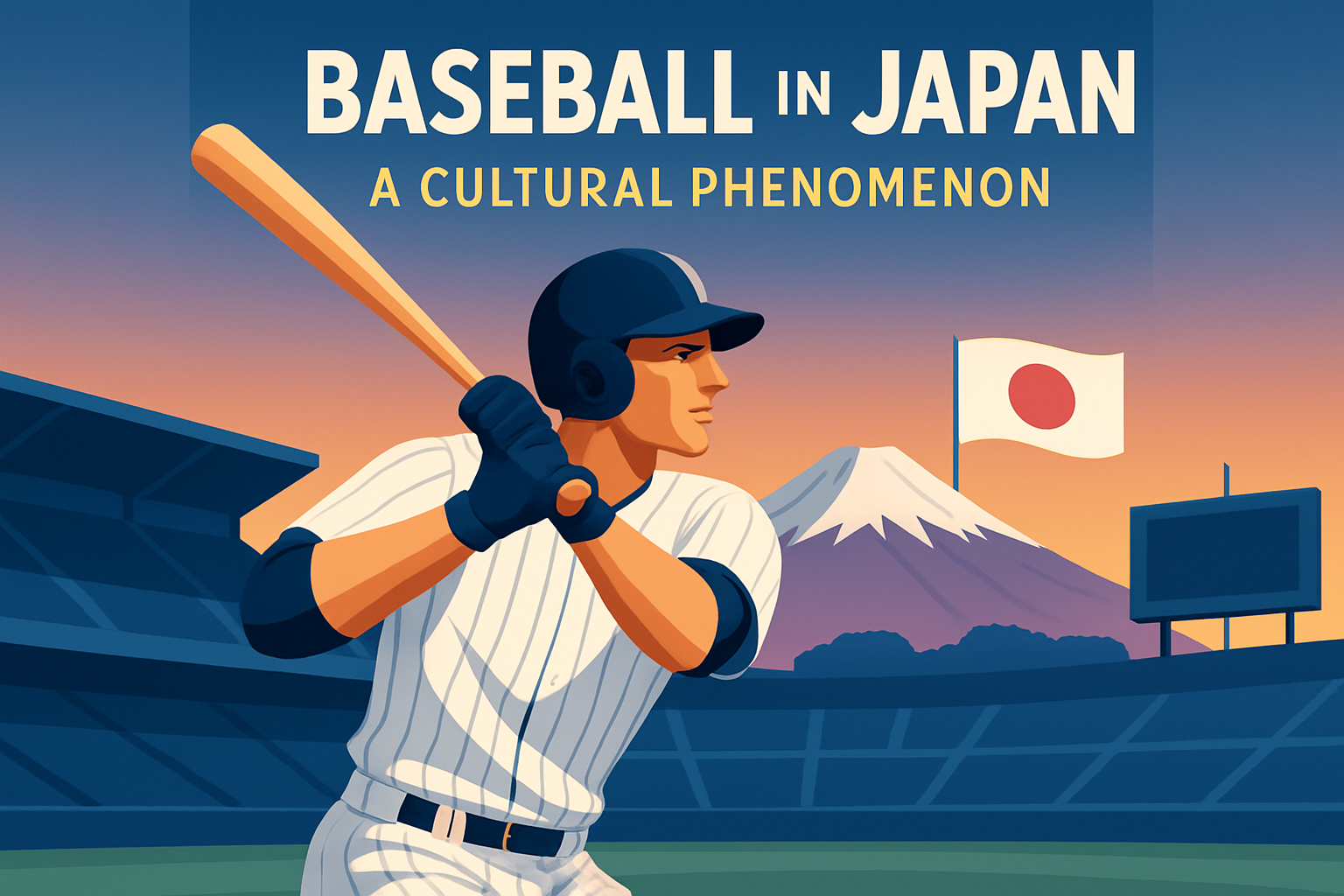
Baseball, or “yakyū” in Japanese, has evolved from a sport imported from the United States to a deeply ingrained cultural phenomenon in Japan. While initially introduced in the late 19th century by American teachers and students, today, baseball is more than just a sport in Japan; it is a cherished national pastime resonating with the values of dedication, teamwork, and perseverance. The significance of baseball in Japanese society cannot be overstated—it occupies a central role in the nation’s social fabric and serves as an essential link between generations. For many, baseball symbolizes camaraderie and shared national spirit, offering a unifying experience irrespective of age, background, or geography.
Understanding baseball’s significance in Japan involves exploring the cultural, social, and economic contexts in which it operates. Known for its disciplined approach, Japanese baseball emphasizes careful training, strategic play, and sportsmanship. These elements mirror broader cultural values such as respect for tradition, collective harmony, and the importance of hard work. Moreover, the sport’s popularity cuts across societal strata, from amateur enthusiast to professional athlete, enhancing its role as a common cultural touchpoint. By examining baseball in Japan, we gain insights not only into the sport itself but also into a culture where respect, precision, and mutual effort are held in high regard.
The Historical Journey of Baseball in Japan
Baseball’s journey in Japan began in the 1870s when Horace Wilson, an American professor at the Kaisei Gakko in Tokyo, introduced the game to his students. The sport quickly gained traction, with the establishment of clubs and school teams throughout the nation. By the early 20th century, baseball had permeated Japanese culture, becoming a staple in schools and communities.
A pivotal moment was the formation of the Japanese Professional Baseball League (NPB) in 1936, which established a structured competition system. Baseball was now not just a recreational activity but a professional endeavor that captivated millions. The early days of Japanese baseball saw legendary figures such as Eiji Sawamura, who became an icon akin to Babe Ruth in the United States.
- The introduction of the sport by Horace Wilson
- The establishment of the Japanese Professional Baseball League
- The cultural impact of figures like Eiji Sawamura
- How World War II affected and solidified the sport’s role in Japanese society
The sport’s history reflects Japan’s global interactions and its post-war recovery, where baseball played a part in rebuilding national pride. The effort to bridge Western influences with traditional Japanese values can be seen in how the sport was adapted—a testimony to both the resilience and adaptability of Japanese culture.
School Baseball and Its Cultural Impact
In the world of Japanese baseball, the most significant stage lies not within the professional leagues but in high school baseball tournaments, particularly the National High School Baseball Championship, popularly known as Kōshien. These tournaments capture the nation’s attention, reflecting the values rooted deeply within Japanese society, such as discipline, teamwork, and enduring effort.
Kōshien tournaments are considered a sacred rite of passage for young athletes. The tournament garners immense media attention, with millions of viewers tuning in to see which team triumphs at the iconic Hanshin Kōshien Stadium. The dedication seen at these tournaments is monumental, highlighting practices that can span entire days, weeks of intense preparation, and an unyielding commitment to excellence.
The cultural impact of Kōshien extends beyond just players and coaches. Families and communities rally around competing teams, with alumni often supporting their old schools. Many professional baseball players started their careers in these high school tournaments, becoming national heroes celebrated for their ventures on the diamond.
Professional Baseball: The Nippon Professional Baseball (NPB) League
The Nippon Professional Baseball League (NPB) is the pinnacle of professional baseball in Japan. It comprises two leagues: the Central League and the Pacific League, each with its own unique style and set of teams. Not only does the NPB exhibit top-tier athletic performance, but it also emphasizes a meticulous discipline and strategic play that exemplify the Japanese style.
Within the NPB, the Yomiuri Giants, sometimes labeled the “New York Yankees of Japan,” have long dominated, both in terms of financial clout and popularity. However, other teams like the Hanshin Tigers, with their famously passionate fan base, illustrate the diversity and excitement the league provides. Each team brings its own flair, with particular regional support bolstering rivalries and enhancing the experience.
| Team | League | City |
|---|---|---|
| Yomiuri Giants | Central League | Tokyo |
| Hanshin Tigers | Central League | Osaka |
| Fukuoka SoftBank Hawks | Pacific League | Fukuoka |
| Hokkaido Nippon-Ham Fighters | Pacific League | Hokkaido |
The NPB season, with its Opening Day akin to a national celebration, characterizes modern Japanese baseball dreams. Crowds attending these games witness a display of talent-pure athletic prowess intertwined with strategic foresight and team coordination. The league’s influence is profound, contributing significantly to the Japanese economy through revenue from tickets, merchandise, and broadcasting rights.
Baseball as an Indicator of Social Change
Baseball plays a critical role as an indicator of social change in Japan. The sport has held mirrors to evolving societal norms and held space for dialogue on gender roles, globalization, and even labor rights. Women’s baseball, though historically sidelined, is gaining recognition, as female players receive growing support and attention
Moreover, the introduction of foreign players, known as “Nanshiki Yakyū,” into Japanese teams has impacted the local sport’s dynamics immensely. Players such as Randy Bass in the 1980s broke new ground for cross-cultural team dynamics, proving that baseball could transcend cultural barriers and embrace diversity. Such changes enrich the tapestry of Japanese baseball by introducing global elements while retaining the essence of sportsmanship and tradition that defines it.
Today, shifts in societal behavior, including increased equality and acceptance, are mirrored within the baseball fields. As a microcosm of society, the sport illustrates that while tradition holds strong, change is inevitable, embraced, even if it’s on the hallowed grounds of the baseball field.
Summarizing Japan’s Baseball Culture
Baseball in Japan is far more than a mere athletic pursuit; it is a cultural juggernaut interweaving sport with tradition, reflecting values of dedication, perseverance, and community spirit. The sport’s deep roots in high school tournaments, embodied in the fervor of Kōshien, through to the spectacle of professional baseball, shows a commitment to both excellence and collective identity.
This examination of Japanese baseball is a portal into understanding broader Japanese societal norms, offering insight into a culture that cherishes discipline, teamwork, and the collective over the individualistic ethos. Whether one looks at the monumental presence of the Nippon Professional Baseball League or the community spirit in Kōshien, the sport reverberates through the nation as a beacon of unity.
For those interested in delving deeper into the cultural layers of Japanese baseball, attending a game, or exploring its history, offers a way to engage intimately with the sport and the culture that embraces it. As baseball continues to evolve in Japan, joining the future of this cultural institution provides new opportunities to appreciate and understand the dynamic between tradition and modernity uniquely intertwined in the heart of Japan.
The journey of Japanese baseball is ongoing, reinforcing the idea that while rooted in history, its branches reach forward, embracing change fearlessly. For enthusiasts, academics, and casual observers alike, a closer look at this phenomenon can yield fascinating insights—not just into the game itself, but into the soul of a nation.
Frequently Asked Questions
1. How did baseball become so popular in Japan?
Baseball, known as “yakyū” in Japan, first made its way to the country in the late 19th century, brought over by American educators and students. Initially, it was considered a foreign pastime, but the sport quickly endeared itself to Japanese people. This transformation can largely be attributed to Japan’s cultural values aligning closely with the sport—baseball emphasizes dedication, hard work, teamwork, and perseverance, all qualities highly revered in Japanese society. Over time, it integrated into schools and universities, becoming a staple among youth activities. The sport’s communal and ceremonial aspects appealed to Japanese audiences and helped solidify its place as a national pastime. Today, children grow up idolizing professional players and dream of making it to the Nippon Professional Baseball (NPB) league or even Major League Baseball (MLB) in the United States, further propelling its popularity across generations.
2. What are some unique aspects of Japanese baseball culture?
There are various unique cultural elements in Japanese baseball that set it apart from its American counterpart. Firstly, the game is deeply ceremonial and respectful, starting with players bowing to each other, the umpires, and fans. Japanese baseball games have a slower pace and place an even greater emphasis on tactics and discipline. Fans also play a significant role, often organizing themselves into cheer sections called “ouendan,” singing coordinated songs with bands and drums to support their team throughout the match. Moreover, the iconic Koshien Tournament, a national high school baseball competition, captures the heart of the nation each summer, showcasing young talent and often generating star players for the future of the sport. This tournament is more than just a competition; it symbolizes youth, dreams, and the steadfast spirit inherent in baseball.
3. How do professional baseball leagues in Japan compare to Major League Baseball in the United States?
Japan’s professional baseball league, the Nippon Professional Baseball (NPB), comprises two leagues: the Central League and the Pacific League. While NPB is known for being an excellent quality league in its own right, one noticeable difference is the number of games played in a season. NPB teams typically play 143 games compared to MLB’s 162-game regular season. Additionally, in Japan, the ballparks are generally smaller, which can affect gameplay dynamics like home run counts. Pitching is also often more dominant in Japanese baseball, resulting in games that emphasize strategic plays more than power hitting, which dominates MLB. Despite these differences, both leagues share a high level of talent, and increasing numbers of Japanese players have ventured to play in MLB, further blurring the lines between the two leagues.
4. What role does baseball play in Japanese society beyond just being a sport?
Baseball in Japan is much more than a sport; it is an integral component of the national culture. It embodies the principles of resilience, teamwork, and pursuit of excellence, reflecting values that are deeply ingrained in everyday Japanese life. This societal role is evident through educational systems where baseball clubs are a crucial part of school life from a young age. Furthermore, baseball serves as a bridge, uniting communities and generations. Events such as the Koshien Tournament unite the nation in enthusiastic support for young athletes, prompting nostalgia for many adults who grew up playing or watching the game. Corporations also sponsor teams, linking business with the cultural ethos of disciplined effort and success. Consequently, baseball helps instill a sense of identity and pride in Japanese culture, past and present.
5. Are there notable cultural icons or legendary baseball figures in Japan?
Japan has produced numerous baseball legends who have become cultural icons both domestically and internationally. Ichiro Suzuki is perhaps the most famous, known not only for his astonishing achievements in MLB with the Seattle Mariners but also for his seamless transition from NPB, symbolizing the bridge between Japanese and American baseball. Another legendary figure is Sadaharu Oh, who holds the world record for career home runs with 868, a testament to his prowess and impact on the sport in Japan. Shigeo Nagashima, an exemplary player and manager, garners deep respect, especially among fans of the Yomiuri Giants, the Japanese equivalent of the New York Yankees in terms of historical success. These figures are more than athletes; they embody the cherished ideals of perseverance and success through hard work, inspiring millions of fans and aspiring baseball players in Japan and worldwide.