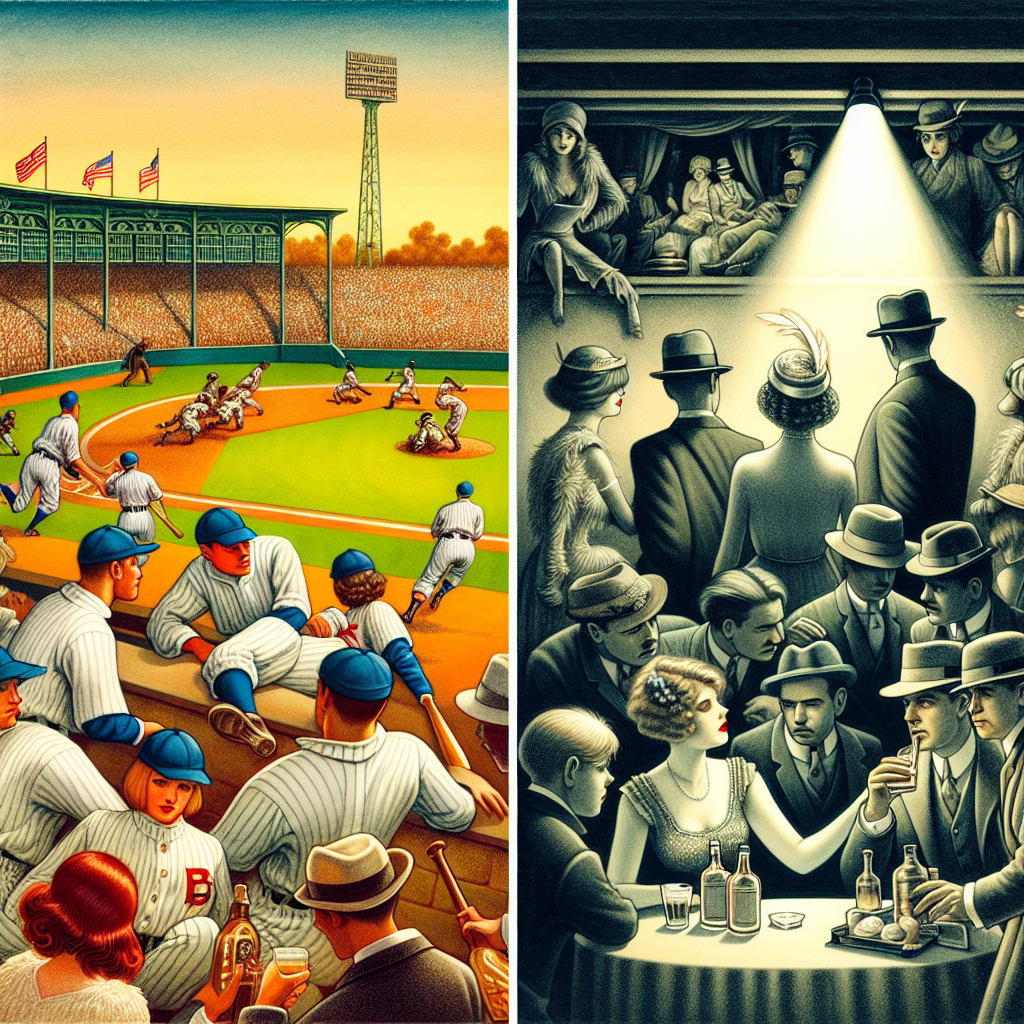
Baseball and Prohibition. At first glance, these two elements of early 20th-century American life might seem completely unrelated. Yet, their histories are deeply interwoven, representing a curious intersection of American culture and societal norms. As iconic symbols of their time, both influenced and were influenced by the socio-political landscape of the United States. Baseball, often referred to as America’s pastime, has a storied history that dates back to the mid-19th century. By the early 1900s, it had evolved into a major sporting phenomenon, captivating millions of fans across the country. This period saw the rise of legendary players, iconic teams, and unforgettable moments that would forever be etched in the annals of sports history. Simultaneously, the early 20th century was marked by a significant social experiment: Prohibition. From 1920 to 1933, the manufacture, sale, and transportation of alcohol were outlawed in the United States. This period, known as Prohibition, was driven by the Temperance Movement, which sought to combat the social ills associated with alcohol consumption. While Prohibition aimed to purify American society, it inadvertently fueled some of the most notorious eras of organized crime and corruption. Surprisingly, amidst the dry years, baseball continued to flourish. The sport not only provided entertainment but also served as a unifying force in a divided society. In this comprehensive article, we’ll delve into how baseball and Prohibition intersected and impacted each other. We’ll explore the societal backdrop, the challenges faced by the sport, and the remarkable resilience of baseball during one of the most turbulent periods in American history. So, grab your bat and ball, and let’s step back in time to uncover the fascinating tale of baseball and Prohibition.
The Societal Backdrop:
As the 19th century drew to a close, America was a land of transformation. Rapid industrialization had led to urbanization, bringing with it a myriad of social issues such as crime, poverty, and public health concerns. In this environment, baseball emerged as a popular pastime, offering a welcome escape from the rigors of daily life. Simultaneously, the Temperance Movement gained momentum. Fueled by religious and social reformers, the movement argued that alcohol was the root cause of many societal problems. Organizations like the Women’s Christian Temperance Union (WCTU) and the Anti-Saloon League were at the forefront, advocating for laws to restrict or ban alcohol consumption. By the time the 18th Amendment was ratified in 1919 (taking effect in 1920), the United States was a nation deeply divided over the issue of alcohol. Proponents saw Prohibition as a means to heal the nation’s moral fabric, while opponents viewed it as an overreach of government authority. During this time, baseball was not immune to societal changes. The sport, which had largely been a casual and amateur endeavor, was rapidly professionalizing. The establishment of major leagues, standardized rules, and national championships helped to bring a sense of order and uniformity to the game. Despite its growing popularity, baseball faced its own set of challenges. Issues like player exploitation, gambling scandals, and the lingering effects of segregation were serious concerns. Yet, the sport’s ability to adapt and thrive amidst a rapidly changing society allowed it to endure as a beloved American pastime.
Prohibition’s Impact on Baseball:
When Prohibition came into effect in 1920, it quickly altered the social fabric of America, and baseball was not immune to its reach. The ban on alcohol led to the closure of numerous saloons and bars, which had been popular gathering spots for fans to discuss and appreciate the game. Moreover, many baseball players, team owners, and even fans were divided on the Prohibition issue. Contrary to the idealistic vision of a “dry” America, Prohibition gave rise to speakeasies, illegal taverns where people could clandestinely consume alcohol. These underground establishments became cultural hotspots, often frequented by baseball players who sought an escape from their demanding schedules. The mingling of players, fans, and organized crime figures in these illicit venues added a layer of complexity to the sport’s narrative. Interestingly, some players became involved in bootlegging. Tales of baseball stars doubling as moonshiners or running speakeasies became lore in the annals of baseball history. These activities, while clandestine, underscored the blurred lines between the sport and the underworld during Prohibition. Despite these challenges, Major League Baseball (MLB) saw a period of significant growth. Attendance at games soared as people sought wholesome entertainment in the face of societal restrictions. Baseball stadiums became havens where people could momentarily escape the pervasive impact of Prohibition. Teams capitalized on this surge in popularity by marketing the sport as a family-friendly pastime. The drinking culture associated with baseball games also shifted. With alcohol banned, ballparks began to focus on other forms of concessions, increasing sales of soft drinks, hotdogs, peanuts, and Cracker Jacks. This shift contributed to the enduring association of these treats with baseball culture.
Legendary Figures and Stories:
During the Prohibition era, several baseball legends emerged, their stories interwoven with the societal changes of the time. Players like Babe Ruth, Ty Cobb, and Lou Gehrig became household names, their exploits on the field providing a welcome distraction from the broader societal issues. Babe Ruth, in particular, became an icon of the era. Known for his prodigious home runs and larger-than-life persona, Ruth’s popularity soared during Prohibition. His penchant for nightlife and indulgence, despite the ban on alcohol, made him a polarizing yet captivating figure. Ruth’s ability to generate headlines both on and off the field helped elevate the status of baseball to unprecedented heights. Ty Cobb, known for his fierce competitiveness and controversial personality, also left an indelible mark on the game during this era. Cobb’s aggressive style of play and his frequent clashes with teammates and opponents made him a formidable figure in baseball history. His career, spanning the Prohibition years, highlighted the grit and determination that defined the sport. Lou Gehrig, with his unwavering work ethic and humility, provided a stark contrast. His dedication to the game and remarkable consistency earned him the nickname “The Iron Horse.” Gehrig’s accomplishments during Prohibition left a lasting legacy, solidifying his place among the greatest players in baseball history. Off the field, stories of players’ interactions with the burgeoning organized crime scene added an element of intrigue. Notably, bootleggers often sought the patronage of high-profile athletes to enhance their own status. This mingling of sports and crime, while sensationalized, underscored the complex dynamics of the period.
The Rise of the Negro Leagues:
While Major League Baseball thrived during Prohibition, another chapter in baseball history was unfolding simultaneously—the rise of the Negro Leagues. Due to segregation policies, African American players were barred from participating in MLB, leading to the establishment of separate leagues. The Negro Leagues, though marginalized, produced some of the most talented and captivating players in baseball history. Legends like Satchel Paige, Josh Gibson, and Cool Papa Bell showcased their remarkable skills in a parallel baseball universe. These players, though facing immense challenges, contributed significantly to the rich tapestry of the sport. The talent in the Negro Leagues was undeniable. Players often competed against white teams in exhibition games, frequently emerging victorious and demonstrating that their exclusion from the major leagues was solely based on racial prejudice. These matchups provided a platform to challenge the prevailing notions of racial inferiority and paved the way for the eventual integration of baseball. The Prohibition era further complicated the experiences of Negro League players. The economic constraints imposed by the ban on alcohol led to financial instability for many teams. However, the resilience and creativity of team owners and players allowed the Negro Leagues to navigate these challenges. Innovative promotional strategies, barnstorming tours, and the sheer talent on display ensured that the Negro Leagues remained a vital part of baseball history. The eventual integration of Major League Baseball in 1947, with Jackie Robinson breaking the color barrier, marked a significant turning point. The legacy of the Negro Leagues, however, continued to resonate, serving as a testament to the indomitable spirit of the players who persevered despite systemic racism.
Legacy and Enduring Impact:
The intersection of baseball and Prohibition left an enduring impact on both the sport and American society. Baseball’s ability to adapt and thrive during a period of significant societal upheaval demonstrated its resilience and cultural significance. Prohibition, though eventually repealed in 1933 with the ratification of the 21st Amendment, left a lasting legacy. The era highlighted the complexities of morality, law enforcement, and individual freedom in a rapidly changing society. It also underscored the unintended consequences of well-intentioned social experiments. For baseball, the Prohibition years solidified its status as America’s pastime. The sport’s ability to provide a sense of normalcy and entertainment during uncertain times endeared it to millions of fans. The stories of legendary players, the rise of parallel leagues, and the unique challenges of the era contributed to the rich tapestry of baseball history. The cultural impact of Prohibition-era baseball is still felt today. The traditions of watching games, enjoying concessions, and celebrating the accomplishments of legendary players remain integral to the sport. The lessons learned from this period continue to shape the way baseball is played and appreciated. As we look back on this intriguing chapter in both baseball and American history, it becomes evident that the sport’s enduring appeal lies in its ability to reflect the broader societal changes and challenges of the times. Baseball and Prohibition, though seemingly disparate, together weave a tale of resilience, adaptation, and the enduring spirit of the American people.
Conclusion:
In conclusion, the early history of baseball and the era of Prohibition are intricately intertwined, each reflecting the broader social and cultural currents of their time. Baseball, with its storied past and legendary figures, provided a sense of continuity and national pride during a period of significant upheaval. Prohibition, though ultimately unsuccessful in eradicating alcohol consumption, left an indelible mark on American society and the sport of baseball. The challenges faced by baseball during Prohibition highlighted the sport’s resilience and its ability to adapt to changing circumstances. From the underground activities of players and fans to the rise of the Negro Leagues, the period was marked by both struggles and triumphs. The legacy of this era continues to influence the sport today, reminding us of the enduring power of baseball to unite and inspire. As we reflect on the early history of baseball and Prohibition, we gain a deeper appreciation for the dynamic forces that have shaped America’s national pastime. The tales of legendary players, the impact of societal changes, and the resilience of the sport offer valuable insights into the broader history of the United States. Through the lens of baseball, we can better understand the complexities and triumphs of the American experience. So, whether you’re a die-hard fan or a casual observer, the story of baseball and Prohibition is a fascinating chapter that underscores the profound impact of sport on society. It reminds us that, in times of change and uncertainty, the enduring spirit of baseball continues to capture the hearts and imaginations of generations, forging a timeless connection to our shared history.