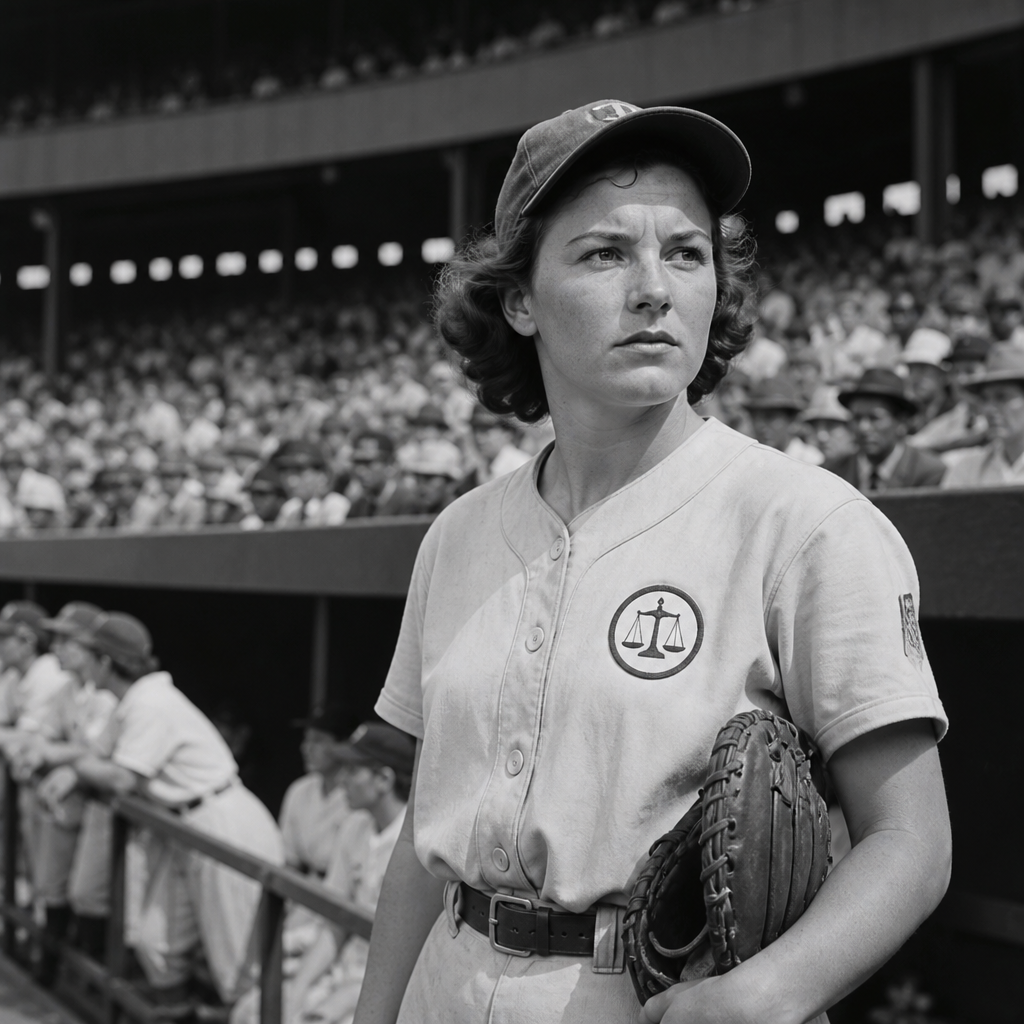
Baseball history is often told through major league pennants, famous ballparks, and legendary men, but that version leaves out many of the women who changed baseball forever. The pioneering spirit of women in baseball is not a side story. It is a central part of how the game developed, how communities experienced it, and how the sport continues to evolve. In this hub for the Women in Baseball “Miscellaneous” topic, the goal is to connect the broad landscape: players, owners, executives, activists, writers, umpires, and cultural figures whose work pushed baseball forward in ways that still matter.
When discussing women in baseball, it helps to define the scope clearly. “Women in baseball” includes women who played organized baseball rather than softball, women who built institutions around the game, and women whose legal, commercial, or cultural actions altered who could participate. It also includes overlooked figures from barnstorming clubs, the Negro Leagues, wartime leagues, front offices, broadcasting booths, and youth development programs. Over the years, I have found that the most useful way to understand this history is not by treating one league or one celebrity as the whole story, but by tracing the recurring barriers women faced: access, pay, publicity, legitimacy, and opportunity.
This topic matters because baseball has always reflected broader social change. Rules about who could play, own, report on, or profit from baseball mirrored debates about gender roles, race, labor, and citizenship. Women challenged those limits repeatedly. Some did it with a bat in hand, like Toni Stone facing men in professional competition. Others changed the sport through ownership and business strategy, like Effa Manley of the Newark Eagles. Still others expanded public understanding through journalism, historical preservation, and advocacy. Their impact is measurable not only in records and milestones but in the pathways now available to girls, women, and nontraditional baseball professionals across amateur and professional systems.
Because this article serves as a hub, it covers the miscellaneous ground that connects the whole subject. It explains who the essential figures are, what they actually changed, and why their influence still shapes youth baseball, player development, front office culture, and the public memory of the sport. If you want a practical framework, here it is: women changed baseball by proving they belonged on the field, by keeping teams alive financially, by widening the sport’s audience, by documenting hidden history, and by forcing institutions to confront exclusionary traditions. Those five contributions explain why this story deserves a central place in any serious baseball conversation.
Players Who Broke Through When the Game Said No
The most visible pioneers were the women who insisted on playing baseball itself, often in environments designed to reject them. Toni Stone stands near the top of that list. In 1953, she became the first woman known to play regularly as a professional in a major Negro League, joining the Indianapolis Clowns. That achievement is often reduced to a novelty line, but it was more demanding than many summaries admit. Stone had to compete against male professionals, travel under intense public scrutiny, and perform in a segregated baseball economy that was already unstable after integration began drawing Black stars toward the major leagues. She was not simply present; she was credible in professional competition, and that mattered.
Connie Morgan and Mamie “Peanut” Johnson extended that breakthrough with the Indianapolis Clowns as well. Johnson, a pitcher, reportedly won more than 30 games for the team and built a reputation for control and competitiveness. Morgan took over second base after Stone, demonstrating that one woman’s opportunity did not have to remain a one-off exception. These athletes did more than inspire. They disproved a widespread claim that women lacked the skill, toughness, or baseball intelligence for high-level play.
The All-American Girls Professional Baseball League also changed baseball’s possibilities, though it should be understood accurately. Founded in 1943, the league was a wartime response to fears that men leaving for military service would weaken fan interest in baseball. Yet it became much more than a temporary substitute. At its peak, it drew strong attendance, operated in multiple Midwestern cities, and gave hundreds of women a professional baseball platform. The league mixed baseball and softball elements early on, then moved progressively closer to regulation baseball. That evolution matters because it shows women adapting not just to social expectations but to changing technical demands in pitching, base running, and defensive play.
Players from that league helped establish a durable public record that women’s baseball could attract crowds, media attention, and commercial support. The later popularity of A League of Their Own amplified awareness, but the underlying historical fact predates Hollywood: women had already demonstrated there was a market for their baseball when owners invested in it seriously.
Women Who Built, Owned, and Saved Baseball Institutions
Not every pioneer wore a uniform. Some of the most consequential women in baseball transformed the sport through ownership, administration, and business judgment. Effa Manley is the clearest example. As co-owner and later sole owner of the Newark Eagles, she was one of the most influential executives in Negro League history and remains the first woman inducted into the National Baseball Hall of Fame. Her work covered player contracts, promotion, civil rights advocacy, and team operations. She was known for fighting the exploitation of Black players and for demanding compensation when major league clubs signed Negro League talent without fair payment.
Manley’s importance lies in both ethics and execution. She understood that baseball institutions survive on ticket sales, publicity, scheduling, labor relations, and community ties. The Newark Eagles won the 1946 Negro League World Series, but that on-field success rested on executive competence behind the scenes. In practical terms, Manley showed that a woman could lead at ownership level in one of the most politically and financially complex environments in American sports.
Helene Hathaway Britton deserves more attention as well. In 1911, she became the first woman to own a major league team when she inherited the St. Louis Cardinals. Her tenure was not ceremonial. She dealt with league politics, public criticism, and the challenge of running a club in an era when women in visible business roles were regularly patronized. While the Cardinals were not yet the powerhouse they later became, Britton’s ownership stands as a direct challenge to the idea that women entered baseball leadership only recently.
In modern baseball, women executives continue this institutional work in scouting, analytics, player development, legal affairs, and operations. Kim Ng’s appointment as general manager of the Miami Marlins in 2020 was historic not because a qualified woman suddenly appeared, but because baseball finally recognized a level of expertise women had long been demonstrating in assistant roles. Ng had already built an elite résumé with the Chicago White Sox, New York Yankees, Los Angeles Dodgers, and Major League Baseball’s central office. Her hiring signaled a structural shift: women were no longer confined to symbolic posts but increasingly trusted with roster construction, contract decisions, and competitive strategy.
How Women Reshaped Baseball Culture, Media, and Memory
Baseball is not shaped only by who plays and who owns. It is also shaped by who tells the story. Women changed baseball forever by documenting it, interpreting it, and preserving neglected chapters that would otherwise disappear. Journalists, historians, filmmakers, broadcasters, and museum advocates expanded what counted as “real” baseball history. In my experience working with sports content and archival material, this is where many readers underestimate influence. If a story is not preserved, institutions eventually behave as if it never mattered.
Writers and researchers who chronicled the All-American Girls Professional Baseball League, the women of the Negro Leagues, and girls excluded from Little League created the factual foundation for later recognition. The National Baseball Hall of Fame’s 1988 permanent display on “Women in Baseball” did not happen by accident. It reflected years of advocacy, collection, verification, and public pressure to widen the official story of the sport. Once museums, documentaries, and educational programs began integrating these histories, the conversation changed from whether women belonged in baseball history to how much had been excluded.
Broadcasting also mattered. When women entered baseball media spaces as reporters, hosts, and play-by-play voices, they changed both access and tone. They brought new audiences into the game and challenged clubhouse cultures that often treated women as outsiders. That progress was uneven, and harassment remained a serious problem, but visibility mattered. Young fans seeing women discuss pitch sequencing, roster construction, or labor negotiations on air received a direct message that baseball expertise is not male by definition.
One reason this cultural work matters is that baseball relies heavily on tradition. Tradition can preserve beauty, but it can also protect blind spots. Women who revised the historical record forced baseball to confront a fuller truth: the game’s past has always been more diverse and complicated than its most nostalgic myths suggest.
Barriers, Milestones, and Why They Still Matter Today
The story of women in baseball is not a clean march of progress. Important milestones came with limitations, setbacks, and long gaps between breakthroughs. Girls often faced exclusion from youth baseball pipelines, steering them toward softball even when their interest was specifically baseball. Front office hiring remained narrow for decades. Professional opportunities were fragmented rather than continuous. That discontinuity is one reason a hub article like this is useful: the history makes more sense when seen as an ecosystem of breakthroughs rather than a single timeline.
Several milestones illustrate how change happened across different parts of the game:
| Figure or event | What changed | Why it matters |
|---|---|---|
| Helene Hathaway Britton owns Cardinals, 1911 | Woman leads a major league franchise | Proved women could hold top baseball authority early in the modern era |
| Effa Manley leads Newark Eagles | Executive and ownership power in Negro Leagues | Linked baseball management to civil rights and fair labor concerns |
| AAGPBL founded, 1943 | Large-scale professional opportunity for women | Showed women’s baseball could draw paying audiences |
| Toni Stone joins Indianapolis Clowns, 1953 | Woman competes in men’s Negro League baseball | Challenged assumptions about ability at the professional level |
| Girls gain Little League access in 1974 | Youth participation rights expand | Improved the development pipeline for future players |
| Kim Ng hired by Marlins, 2020 | Woman becomes MLB general manager | Marked front office leadership recognition at the highest level |
These milestones still matter because baseball development is cumulative. If girls cannot play youth baseball, fewer become elite amateurs. If women are excluded from coaching internships, fewer build the experience clubs demand. If historical examples are hidden, decision-makers claim there is no precedent. Every breakthrough above addressed one of those bottlenecks.
Recent initiatives by MLB, USA Baseball, and programs such as the Trailblazer Series have started to strengthen the pipeline. Girls’ baseball events, coaching clinics, and national team opportunities create something earlier pioneers rarely had: continuity. That does not mean equality has been achieved. It means the infrastructure is finally beginning to match the talent and interest that have always existed.
The Lasting Legacy of Baseball’s Women Pioneers
The women who changed baseball forever did not all seek the same outcome, but together they widened the sport in lasting ways. Players like Toni Stone, Mamie Johnson, Connie Morgan, and the women of the All-American Girls Professional Baseball League established that skill was never the real barrier; access was. Owners and executives like Effa Manley, Helene Hathaway Britton, and Kim Ng proved that baseball leadership depends on judgment, discipline, and strategic thinking, not gender. Writers, broadcasters, and historians ensured these achievements were recorded rather than erased.
The main lesson from this history is straightforward. Baseball improves when it draws from the widest possible pool of talent, perspective, and leadership. That is true on the field, in the front office, in youth development, and in public memory. Ignoring women’s contributions does not protect tradition; it distorts it. Understanding the full story makes fans smarter, organizations stronger, and the sport more honest about how change actually happens.
As a hub for the Women in Baseball miscellaneous topic, this page should guide further exploration into individual biographies, league histories, legal milestones, media breakthroughs, and modern development programs. Use it as a starting point, then go deeper into the lives and systems behind each breakthrough. The pioneering spirit in baseball was never abstract. It was lived by women who took real risks, faced real resistance, and left the game larger than they found it. Keep reading, keep linking these stories together, and make them part of how you understand baseball itself.
Frequently Asked Questions
Why are women so important to the history of baseball?
Women are essential to baseball history because they helped shape the game at nearly every level, even when official histories minimized or ignored their contributions. They played on the field, organized teams, owned clubs, promoted games, built fan communities, challenged exclusion, and expanded the sport’s cultural reach. In many eras, women kept baseball visible and meaningful in local communities not just as spectators, but as active participants in its growth. Their influence can be seen in barnstorming teams, industrial leagues, wartime professional leagues, youth development, front-office leadership, and advocacy for wider access to the sport.
Just as importantly, women changed the meaning of baseball. They pushed the game beyond narrow assumptions about who belonged in uniform, who could lead, and who could claim authority within the sport. When women took the field or entered ownership and executive roles, they forced baseball institutions and the public to confront long-standing biases. That made their contributions historically significant even when they were not fully welcomed in their own time. To tell baseball history without women is to miss how the sport evolved socially, economically, and culturally. Their story is not a footnote to the men’s game; it is part of the game’s foundation and ongoing transformation.
Who are some of the most influential women who changed baseball forever?
Several women stand out as transformative figures, though their influence came in different forms. Effa Manley is one of the most important names in baseball history. As co-owner and business manager of the Newark Eagles in the Negro Leagues, she was a pioneering executive who combined sharp baseball leadership with civil rights activism. She advocated for players, promoted her team aggressively, and helped prove that women could exercise serious authority in professional baseball operations. Her eventual induction into the National Baseball Hall of Fame confirmed what many historians already understood: her impact reached far beyond one franchise.
On the playing side, Toni Stone, Mamie “Peanut” Johnson, and Connie Morgan broke powerful barriers by playing in the Negro Leagues at a time when opportunities for women in professional baseball were scarce and heavily restricted. Their careers challenged assumptions about athletic ability, toughness, and legitimacy. They were not symbolic participants; they were real competitors in a demanding environment. In another part of the game’s history, the women of the All-American Girls Professional Baseball League demonstrated that women’s professional baseball could attract attention, talent, and public enthusiasm on a national scale. Players such as Dottie Kamenshek and Sophie Kurys became prominent examples of elite skill and professionalism.
Influence also extends beyond players and owners. Ila Borders became a modern trailblazer by pitching in men’s professional and collegiate settings, showing that women could compete in spaces long defined as closed to them. More recently, women in coaching, scouting, player development, umpiring, and front-office leadership have continued to change baseball’s structure from within. Figures in these roles matter because they expand what future generations see as possible. The most influential women in baseball are not all famous in the same way, but together they reshaped the sport permanently.
How did women contribute to baseball beyond playing on the field?
Women contributed to baseball in ways that were organizational, financial, political, and cultural, not just athletic. Some served as owners and executives, helping teams survive and succeed through business discipline, community relationships, and promotional creativity. Others worked in administration, scouting, player development, media, and public relations, all of which are critical to how baseball functions. These contributions often received less public attention than on-field accomplishments, but they were vital to the sport’s operation and growth. Baseball has always depended on more than players, and women have long been part of that broader machinery.
Women also played a major role in connecting baseball to communities. They organized local support networks, marketed games, created fan traditions, and helped turn teams into civic institutions. In many settings, especially in the Negro Leagues and local or regional circuits, baseball thrived because communities treated it as a social event as much as a competition. Women were often central to that process. They helped sustain attendance, publicity, fundraising, and public engagement. Their labor, leadership, and influence made baseball more resilient and more deeply rooted in everyday life.
Another major area of contribution was advocacy. Women challenged exclusionary policies and opened conversations about fairness, access, and representation. Whether through direct activism, institutional leadership, or simply insisting on participation in spaces designed to keep them out, they changed the terms of the sport. That impact continues today in youth baseball, college programs, professional development pipelines, and leadership opportunities. Looking beyond the field gives a fuller and more accurate picture of how women changed baseball forever.
What barriers did women face in baseball, and how did they overcome them?
Women in baseball faced entrenched barriers that were both formal and informal. Some were excluded by custom rather than written rule, while others encountered direct restrictions on where they could play, work, or advance. Many were told that baseball was unsuitable for women physically, socially, or professionally. Even those with exceptional skill often had to prove themselves repeatedly in ways male counterparts did not. They faced media skepticism, limited access to coaching and development, unequal pay, reduced visibility, and the constant pressure of being treated as novelties instead of serious baseball people.
These barriers were compounded by race and class. Black women in baseball, for example, confronted both sexism and racism, sharply limiting their opportunities while increasing the scrutiny they faced. In many cases, women who broke through did so without the institutional support systems that help athletes and professionals succeed. They had to rely on determination, community support, personal resilience, and undeniable performance. For some, simply staying in the game long enough to be recognized was an act of resistance. For others, leadership meant building opportunities where none existed before.
Women overcame these barriers in different ways. Some excelled so clearly that exclusion became harder to justify. Some used ownership or executive authority to create space for themselves and others. Some pushed through alternative leagues or independent pathways when mainstream institutions closed their doors. Others changed baseball incrementally by entering coaching staffs, front offices, and developmental roles that had historically excluded women. Their progress was rarely linear, and gains were often followed by setbacks. Even so, their persistence reshaped baseball’s possibilities. Every woman who entered the game and refused to accept artificial limits helped make the sport more open than it had been before.
Why does the story of women in baseball still matter today?
The story of women in baseball still matters because it directly informs current conversations about equity, access, talent evaluation, leadership, and historical memory. Baseball is not only a game of statistics and championships; it is also an institution that reflects broader social values. When people understand how women contributed to baseball despite exclusion, they gain a clearer view of how the sport has worked, who has been left out of its official narratives, and why inclusion remains an unfinished project. That perspective is valuable not just for historians, but for fans, educators, players, and decision-makers throughout the sport.
This history also matters because representation changes expectations. When young players, aspiring coaches, or future executives see women as part of baseball’s past, they are more likely to view women as part of its future. Historical visibility helps dismantle the false idea that women are newcomers to the sport. In reality, they have been present all along, often doing groundbreaking work without receiving lasting credit. Recovering those stories is not about adding token examples; it is about correcting the record and understanding baseball more honestly.
Finally, the story matters because it expands the meaning of baseball itself. The game becomes richer when its history includes all of the people who built it, challenged it, and carried it forward. Women changed baseball forever not only through singular achievements, but through sustained participation across generations. Their legacy can be seen in today’s players, coaches, broadcasters, executives, and advocates who continue to redefine what baseball looks like and who gets to belong within it. That makes this history living, relevant, and deeply connected to the future of the sport.