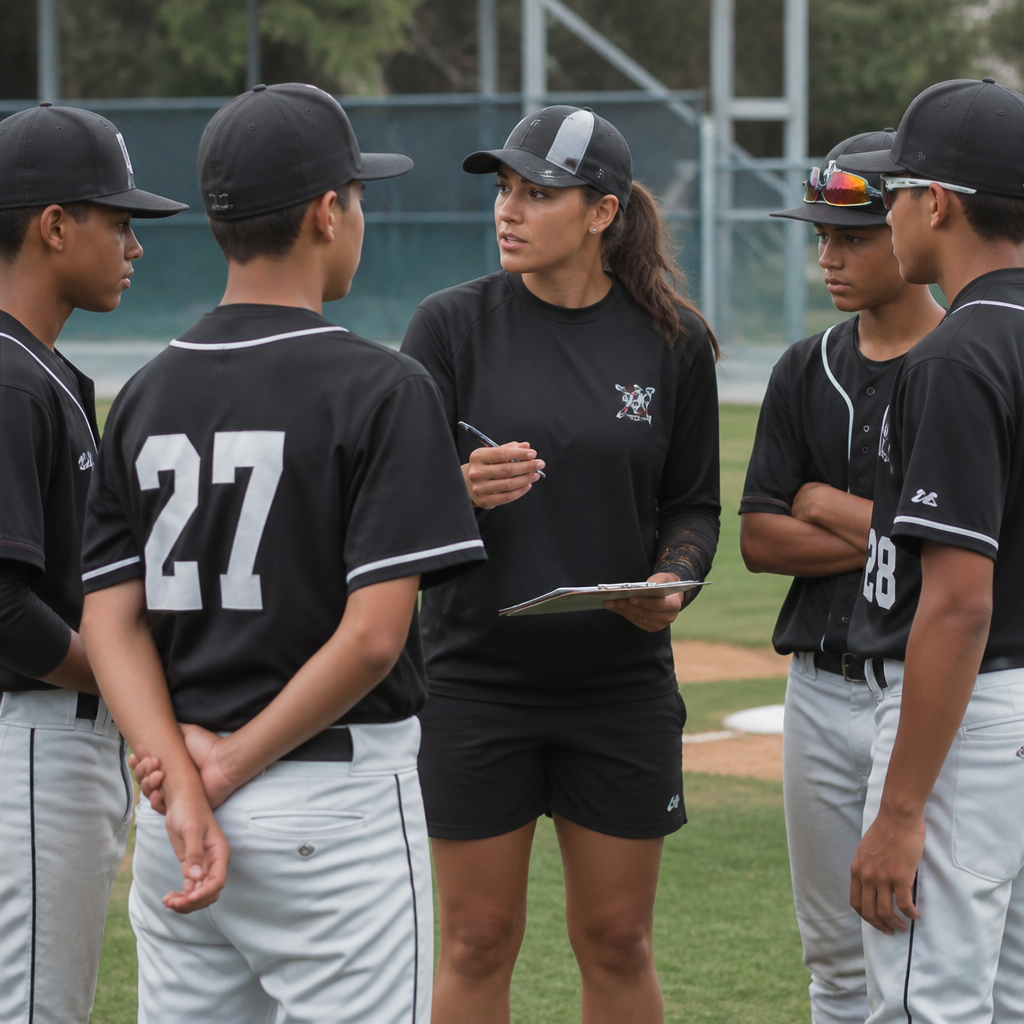
The emergence of female leadership in baseball academies marks one of the most important structural shifts in the modern game. For decades, women in baseball were most visible as athletes, advocates, broadcasters, or front office pioneers, while academy leadership remained largely male and often insulated from broader changes in sports management. That pattern is changing. Today, women are serving as academy directors, player development coordinators, strength specialists, analytics managers, mental performance coaches, operations leads, and ownership partners in training environments that shape the next generation of players. In practical terms, female leadership in baseball academies means women holding decision-making authority over instruction, staffing, recruitment, budgets, athlete welfare, performance systems, and long-term organizational culture.
A baseball academy is more than a training facility. It is a structured development environment where players receive technical instruction, physical preparation, academic support in some programs, competition exposure, and often guidance on college recruiting or professional pathways. Leadership within that environment determines what gets taught, how progress is measured, which values are reinforced, and whether athletes develop in a way that is sustainable. When leadership broadens, the academy broadens with it. I have seen this firsthand in youth and high-performance settings: once women move from supporting roles into true authority, conversations become more rigorous, communication improves, and blind spots around athlete experience often surface quickly.
This matters because baseball academies are gatekeepers. They influence who feels welcome in the sport, which families trust a program, how injuries are prevented, how talent is identified, and whether players are developed as complete people rather than as short-term performers. Female leadership does not automatically solve every institutional problem, and it should not be treated as symbolic progress alone. Its value lies in better leadership, wider expertise, stronger representation, and more accountable systems. As the broader women in baseball conversation expands, baseball academies have become a crucial hub within that story because they connect participation, instruction, leadership pipelines, and the future business of the game.
To understand why this development is significant, it helps to distinguish visibility from power. A woman throwing batting practice, speaking on a panel, or appearing in promotional material may indicate inclusion, but leadership means control over standards and outcomes. That includes hiring coaches, implementing safeguarding policies, selecting technology such as Rapsodo or Blast Motion, evaluating biomechanics partners, and deciding how resources are allocated across athletes and staff. The rise of female leadership in baseball academies therefore reflects a deeper institutional change: women are not simply entering baseball spaces; they are increasingly shaping how those spaces operate.
Why Female Leadership Is Expanding Now
Female leadership in baseball academies is growing because several long-building trends have converged. First, baseball has become more specialized. Modern academies rely on biomechanics, performance data, nutrition planning, sports psychology, recovery protocols, and educational advising. As the field professionalized, hiring widened beyond traditional former-player networks. That opened pathways for qualified women with backgrounds in kinesiology, athletic training, data analysis, education, business operations, and organizational leadership.
Second, families now evaluate academies differently than they did fifteen years ago. Parents want evidence of safety, professionalism, communication, and developmental credibility. A program that can explain pitch count management, concussion procedures, strength progressions, and recruiting timelines in clear terms gains trust faster. Women in leadership have often helped academies build those systems because many entered through disciplines where documentation, athlete care, and interdisciplinary planning are standard. In my experience, the strongest academy leaders are rarely the loudest technicians; they are the people who can align coaches, metrics, schedules, and athlete needs into one coherent program.
Third, the wider sports industry has created visible examples. Kim Ng’s leadership in Major League Baseball operations, Alyssa Nakken’s coaching role with the San Francisco Giants, Rachel Balkovec’s ascent to managing in affiliated baseball, and growing numbers of women in player development have changed what stakeholders consider normal. Baseball academies do not operate in isolation. When the professional game legitimizes women in authority, private academies, travel organizations, and development programs face stronger pressure to modernize their own leadership structures.
Fourth, technology has changed how expertise is recognized. In older academy models, authority often depended on playing pedigree alone. Today, coaches and directors are judged by athlete outcomes, communication quality, data interpretation, injury reduction, and retention rates. A leader who can connect force plate readings, movement screening, and swing decisions to practical coaching commands respect quickly, regardless of gender. That does not mean bias has disappeared. It means objective systems have made it harder to dismiss qualified women when their work is measurable and visible.
What Female Leaders Actually Do Inside Baseball Academies
Female leadership in baseball academies spans far more than one title. Some women lead entire organizations as founders or executive directors. Others run player development departments, oversee softball and baseball operations together, manage recruiting services, direct camps, supervise residential logistics, or build mental performance programs. In high-functioning academies, leadership is distributed, and women increasingly occupy multiple points in that chain of authority.
A technical director may design throwing progressions, hitting curricula, assessment days, and coach education modules. A strength and conditioning lead may establish workload monitoring, return-to-play protocols, and age-appropriate resistance training plans based on National Strength and Conditioning Association principles. An operations leader may handle scheduling, transportation, billing systems, background checks, staff onboarding, and emergency planning. A mental skills coordinator may use evidence-based techniques such as goal setting, breathing routines, attentional control, and pre-pitch resets to improve performance under pressure. Each role changes the athlete experience materially.
One reason this topic belongs at the center of a women in baseball hub is that academies are where many adjacent issues meet. Representation, hiring equity, youth development, coach education, safeguarding, and career advancement are not separate conversations in an academy environment. They are daily management decisions. If an academy wants more girls in coeducational training sessions, leadership must design policy, messaging, facilities use, and staff behavior around that aim. If it wants to recruit more women coaches, someone must budget for professional development, create promotion pathways, and hold supervisors accountable.
The clearest sign of real change is not a single headline hire. It is operational integration. When women lead curriculum reviews, staff meetings, budget planning, athlete evaluations, and parent communications, they influence the academy’s core systems rather than its public image alone. That is the level at which culture becomes durable.
Key Leadership Roles and Their Impact
| Role | Primary Responsibilities | Impact on Athletes and Academy Culture |
|---|---|---|
| Academy Director | Sets vision, hires staff, manages budgets, defines standards, oversees safety and development model | Creates accountability, establishes trust with families, and determines whether the academy prioritizes long-term development |
| Player Development Coordinator | Builds training plans, tracks progress, aligns hitting, pitching, defense, and performance staff | Reduces fragmented coaching and gives athletes a clearer path from assessment to improvement |
| Strength and Conditioning Lead | Designs physical preparation, monitors workload, supports return-to-play and movement quality | Improves resilience, lowers avoidable injury risk, and supports performance gains that transfer to the field |
| Mental Performance Coach | Teaches routines, confidence skills, focus strategies, and emotional regulation | Helps athletes handle failure, pressure, and consistency, especially during recruiting or high-stakes competition |
| Operations Manager | Runs logistics, staffing systems, registration, compliance, communication, and event coordination | Makes the athlete experience safer, smoother, and more professional from intake to tournament travel |
These roles matter because baseball development is interdisciplinary. A talented instructor can improve a swing path or mound move, but academy leadership determines whether those technical changes fit the athlete’s age, body, schedule, and goals. In academies led by strong cross-functional teams, women are often central in connecting departments that historically operated in silos.
Benefits for Player Development, Culture, and Business
The most important benefit of female leadership in baseball academies is better decision-making. Diverse leadership teams typically examine assumptions more carefully, communicate more precisely, and challenge habits that persist only because they are familiar. In baseball, that can mean questioning outdated conditioning methods, revising harsh communication styles that undermine learning, or identifying recruiting biases that limit opportunity. Good leadership is not about replacing one demographic with another. It is about expanding competence and improving outcomes.
Player development benefits directly. Athletes learn best in environments that combine technical clarity with psychological safety. That phrase does not mean comfort or low standards. It means players can ask questions, process mistakes, and receive feedback without confusion or humiliation. Many female leaders excel here because they have had to become unusually clear communicators in order to establish authority in male-dominated spaces. The result is often a more teachable environment, especially for younger athletes and families navigating baseball’s complexity for the first time.
Culture improves as well. Academies with women in leadership often develop stronger safeguarding practices, more formal reporting structures, and more consistent expectations around professionalism. That is not accidental. Organizations that widen leadership usually also professionalize governance. Written codes of conduct, staff training, travel supervision rules, and parent communication policies become more common when leadership is built deliberately rather than inherited informally.
There is also a business case. Parents increasingly choose academies based on trust, organization, and communication as much as radar-gun numbers or social media clips. Programs that reflect the diversity of the communities they serve often attract broader participation and higher retention. They may also build stronger partnerships with schools, colleges, municipal facilities, and sponsors. In practical terms, female leadership can help an academy become more credible, more resilient, and more scalable.
Barriers That Still Limit Progress
Progress remains uneven because structural barriers are still real. The first is credibility bias. Women in baseball academies are still asked to prove expertise repeatedly in ways many men are not. A male coach with modest experience may be presumed knowledgeable; a female leader with advanced certifications, years of outcomes, and strong references may still face skepticism from parents, peers, or athletes encountering her for the first time.
The second barrier is pipeline design. Many academies hire through informal networks built around former teammates, local men’s leagues, or long-standing coaching circles. Those systems reproduce themselves. If women are absent from entry-level coaching opportunities, mentorship relationships, and succession planning, leadership appointments remain rare. Real change requires intentional recruitment and promotion practices.
Third, role compression is common. Women leaders are often expected to manage culture, communication, and administration while also delivering elite technical performance. Those responsibilities are valuable, but they can become limiting if women are steered toward “organizational” work while men retain visibility in headline development roles. The answer is not to devalue operations or athlete care. It is to ensure women are represented across hitting, pitching, analytics, scouting, and executive leadership alike.
There are also practical constraints: uneven pay, lack of maternity support in some organizations, inadequate facilities, and isolation in all-male staff groups. Small academies may have no formal HR structure, which makes conflict resolution and advancement less predictable. A serious conversation about women in baseball academies must acknowledge these realities rather than treating every leadership story as uncomplicated progress.
How Academies Can Build and Sustain Female Leadership
Baseball academies that want more female leadership should start with systems, not slogans. Job descriptions need to define actual authority, measurable responsibilities, and advancement routes. Hiring panels should include more than one decision-maker, and candidate evaluation should be tied to competencies such as program design, athlete communication, staff development, and operational management. Compensation must be standardized enough to reduce negotiation bias.
Professional development is equally important. Support women in earning certifications from respected bodies, attending ABCA events, studying analytics tools, shadowing experienced directors, and leading internal education sessions. Mentorship should be structured rather than casual. The strongest programs pair emerging leaders with decision-makers who can sponsor them for visible assignments, not just offer advice.
Academies should also track indicators that reveal whether leadership inclusion is real: staff retention, promotion rates, athlete satisfaction, parent trust, incident reporting, and diversity across technical departments. When I have reviewed academy operations, the clearest difference between performative inclusion and substantive inclusion was whether the organization could point to systems and outcomes. If a woman is introduced as a leader but has no hiring power, no budget input, and no influence over curriculum, the title means little.
The broader takeaway is simple. Female leadership in baseball academies is not a side story within women in baseball; it is a force that shapes access, development quality, and institutional credibility across the sport. As more academies modernize, the programs that treat leadership as a merit-based, interdisciplinary, accountable function will outperform those that cling to outdated gatekeeping. For families, athletes, and organizations, that is the real benefit. If you are building a baseball program or choosing one, look closely at who leads, how they lead, and whether their authority improves the experience for everyone involved.
Frequently Asked Questions
Why is the rise of female leadership in baseball academies considered such an important shift?
The rise of female leadership in baseball academies is significant because it reflects a deeper structural change in how the sport develops talent, builds organizations, and defines expertise. For many years, women were highly visible in baseball as athletes, media voices, advocates, and front office trailblazers, but academy leadership roles remained far less accessible. Those positions often controlled the daily systems that shape players most directly, including training philosophy, performance standards, recruitment practices, mentorship, education, and long-term development strategy. As women step into roles such as academy directors, player development coordinators, strength specialists, and analytics managers, they are influencing the game at one of its most foundational levels.
This matters not only for representation, but for competitive and organizational advancement. Baseball academies are where raw talent becomes professional talent. Leadership in these environments determines how athletes are evaluated, how resources are allocated, how communication happens between departments, and how players are prepared for the physical and mental demands of the sport. When women enter and succeed in these positions, they expand the talent pool of decision-makers and help move academies toward more modern, evidence-based, and collaborative models of leadership.
It is also important culturally. The presence of women in meaningful leadership positions challenges outdated assumptions about authority in baseball and helps normalize the idea that expertise is not limited by gender. For young players, staff members, and families, this shift sends a clear message that baseball’s future is being built by a broader range of professionals. Over time, that can strengthen trust, improve workplace culture, and create more resilient institutions.
What kinds of leadership roles are women taking on in baseball academies today?
Women in baseball academies are taking on a wide and growing range of leadership positions, many of which directly influence player outcomes and organizational strategy. Some serve as academy directors, overseeing operations, staffing, educational programming, player welfare, scheduling, and long-term development planning. Others work as player development coordinators, helping design individualized training plans and ensuring communication between coaches, performance staff, analysts, and administrators. These roles are central to how academies function on a daily basis.
Women are also increasingly visible in performance-related leadership. Strength and conditioning specialists, sports science coordinators, nutrition leaders, rehabilitation managers, and mental performance professionals all play critical roles in the modern academy environment. These positions require both technical expertise and strong leadership skills, since they often involve managing staff, setting protocols, tracking progress, and coordinating with coaches to align performance goals with player health and readiness.
Another major area of growth is analytics and data-informed decision-making. Women serving as analytics managers or performance analysts help academies evaluate player trends, injury risk, workload, mechanics, and development benchmarks. In today’s baseball landscape, the integration of data with coaching judgment is essential, and these professionals often act as translators between numbers and practical on-field application. In addition, women are contributing in recruitment, education, compliance, international operations, and community engagement, all of which shape the reputation and effectiveness of an academy.
The most important point is that female leadership in academies is not limited to symbolic or peripheral roles. Women are increasingly involved in positions with real authority, strategic importance, and measurable impact on how players are developed and how organizations perform.
How does female leadership improve player development within baseball academies?
Female leadership can improve player development by broadening the perspectives, methods, and management approaches used inside academies. Strong player development depends on far more than teaching mechanics or running drills. It requires a system that addresses physical training, skill acquisition, mental preparation, recovery, education, communication, and personal growth. Women in leadership roles often contribute to this system by helping create more integrated and athlete-centered environments where departments work together instead of operating in isolation.
One of the clearest benefits is improved collaboration. Modern academies rely on coaches, analysts, trainers, strength staff, medical professionals, and administrators to align around each player’s needs. Effective leaders build structures that encourage information sharing and accountability. Female leaders who excel in these roles can strengthen the consistency of development plans, ensure that performance goals match health and recovery priorities, and help players receive clearer guidance. That organizational clarity often translates into better progress over time.
There is also a cultural benefit that can directly affect development. Players tend to perform better in environments where communication is respectful, expectations are clear, and support systems are strong. Female leaders can help reinforce professionalism, emotional intelligence, and inclusive team culture, all of which matter in high-pressure training settings. This does not mean women lead in only one way, but it does highlight that diverse leadership teams often produce better problem-solving and more balanced decision-making.
In practical terms, female leadership can influence everything from injury prevention protocols and educational standards to nutrition planning and data use. Because baseball development is becoming more interdisciplinary every year, academies benefit when leadership includes professionals with different experiences and viewpoints. The result is often a more adaptive, modern approach that helps players develop not just as athletes, but as durable and prepared professionals.
What barriers have women historically faced in baseball academy leadership, and what is changing now?
Historically, women faced several overlapping barriers in baseball academy leadership, beginning with the longstanding perception that authority in player development belonged almost exclusively to men. Even when women had strong credentials in coaching, sports science, administration, medicine, analytics, or player support, they were often excluded from the internal networks and advancement pathways that lead to influential academy roles. In many cases, the issue was not a lack of capability, but a lack of access, trust, and institutional willingness to rethink traditional leadership models.
Another barrier was visibility. Because there were relatively few women in academy leadership positions, aspiring professionals had fewer examples to follow and fewer mentors to help them navigate the system. This created a cycle in which women were underrepresented partly because they had been underrepresented before. Stereotypes about communication style, authority, and technical expertise also made advancement more difficult, especially in environments resistant to cultural change.
What is changing now is a combination of necessity, modernization, and intentional reform. Baseball organizations increasingly recognize that elite player development requires interdisciplinary leadership and that strong ideas can come from a broader pool of professionals than the sport historically acknowledged. As academies become more sophisticated in areas such as data analysis, biomechanics, mental performance, education, and holistic athlete care, women with specialized expertise are moving into positions where their impact is undeniable.
There is also growing awareness that better hiring, mentorship, and promotion practices produce stronger organizations. Some academies and baseball institutions are investing more deliberately in inclusive recruiting, leadership development, and workplace culture. That does not mean every barrier has disappeared. Progress remains uneven, and representation alone does not solve structural issues. But the momentum is real: more women are being trusted with decision-making authority, more pathways are opening, and the idea of women leading baseball academies is becoming less exceptional and more standard.
What does the future of female leadership in baseball academies look like?
The future of female leadership in baseball academies looks increasingly influential, practical, and deeply tied to the evolution of the sport itself. As academies continue to function as major centers for talent identification and player development, leadership will be judged more by results, adaptability, and organizational effectiveness than by tradition. That creates strong opportunities for women to expand their presence not only in support roles, but in top decision-making positions that shape philosophy, staffing, budgets, and long-term strategy.
One likely development is that female leadership will become more normalized across multiple departments at once. Instead of a single pioneering figure in one academy, the sport is moving toward broader participation by women in operations, coaching coordination, sports performance, analytics, player care, and executive oversight. That matters because lasting change usually happens when representation is distributed throughout an organization rather than concentrated in isolated roles. As more women build careers in these areas, the leadership pipeline becomes stronger and more sustainable.
Another important part of the future is influence on standards. Women in academy leadership are likely to continue shaping how organizations think about player welfare, education, communication, and long-term development. The best academies increasingly understand that success is not only about producing skilled players, but about building systems that are healthy, accountable, and capable of supporting athletes over time. Leaders who can connect performance goals with human development will be especially valuable.
Ultimately, the future is not just about women entering baseball academies; it is about women helping redefine what excellent academy leadership looks like. As this transition continues, the sport stands to benefit from smarter management, more inclusive culture, and more effective development environments. That makes female leadership not a side story in baseball’s growth, but a central part of where the game is heading.