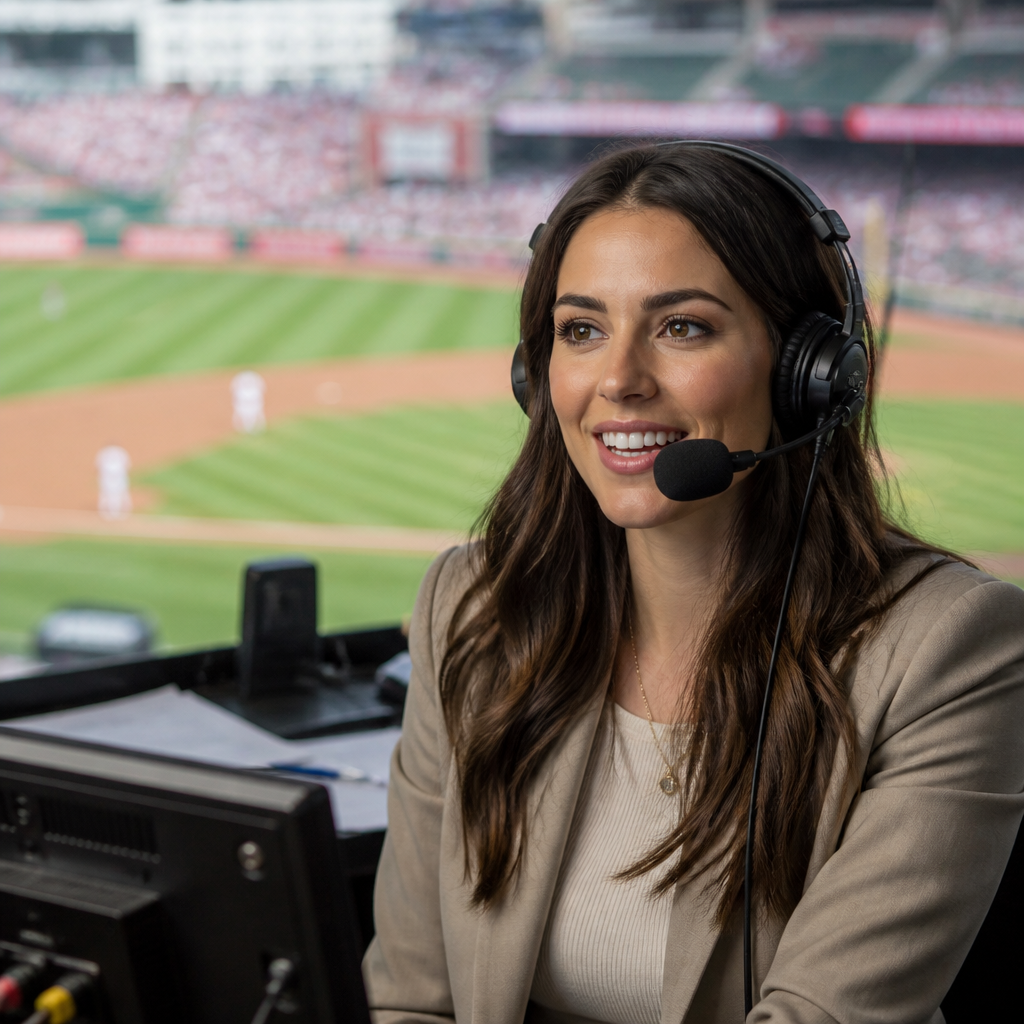
Baseball broadcasting is changing in a way that would have seemed unlikely for most of the sport’s history: female commentators are no longer rare exceptions, but increasingly visible voices shaping how fans understand games, players, and the culture around the sport. In baseball, a commentator may handle play-by-play, where every pitch and baserunning decision must be described in real time, or analysis, where deeper context, mechanics, scouting insight, and strategy are explained between pitches and innings. When discussing the rise of female commentators in baseball broadcasting, it is important to separate novelty from progress. A single hiring can create headlines, but real change appears when women are present across radio, television, studio shows, field reporting, podcasts, and digital broadcasts, and when they are trusted with meaningful assignments rather than symbolic appearances.
I have worked around sports media long enough to see how quickly audiences adapt once they hear consistent, informed work on air. Initial resistance is often framed as tradition, yet what actually wins over listeners is command of the game: accurate pitch identification, smart explanation of defensive positioning, understanding of bullpen usage, and the ability to describe momentum without cliché. That is why this topic matters well beyond representation. Broadcasters help define the public memory of baseball. They explain rules changes, translate analytics, frame controversies, and introduce new generations to the sport. As more women enter these roles, baseball benefits from a larger talent pool, a wider range of lived experience, and better storytelling. This hub examines how female commentators reached this point, who helped open doors, what skills the job requires, which barriers remain, and why their growing presence is now one of the most meaningful developments in modern baseball media.
How female commentators moved from occasional appearances to regular baseball voices
For decades, women in baseball media were largely steered toward sideline or clubhouse reporting, even when they had the knowledge to do far more. That distinction matters because reporting and commentary are different disciplines. Reporting depends on access, sourcing, and concise updates; commentary requires instant pattern recognition, vocal pacing, memory for game situations, and enough confidence to make judgments live. Early pioneers had to prove not only that they understood baseball, but that audiences could accept hearing women in roles long associated with male authority. That burden was unfair, but it was real.
Several breakthrough moments changed the trajectory. Gayle Gardner became one of the first women to host studio baseball coverage on national television. Suzyn Waldman moved from reporting to prominent radio work and later became a fixture on New York Yankees broadcasts, demonstrating durability in one of the sport’s highest-pressure media markets. Jessica Mendoza’s work on national telecasts brought a former elite softball player into mainstream baseball analysis, and while her appearances sparked debate, they also normalized women offering tactical commentary on major broadcasts. More recently, Melanie Newman, Jenny Cavnar, and other play-by-play broadcasters have shown that women can handle the most technically demanding role in the booth over full schedules, not just isolated games.
The growth has also followed structural changes in the industry. Regional sports networks, streaming platforms, league-produced broadcasts, and alternate telecasts created more inventory and therefore more opportunities. At the same time, journalism schools, team content departments, and minor league clubs became practical training grounds. I have seen talented commentators sharpen their timing in college baseball and Double-A parks, where smaller audiences still demand professional standards. That pathway matters because baseball is a repetition sport. Broadcasters improve the same way players do: by logging innings, making mistakes, reviewing tape, and refining preparation habits.
The pioneers, current leaders, and career paths that built this subtopic
This hub sits within a broader Women in Baseball conversation, and the commentator story connects to many adjacent areas: front-office hiring, coaching visibility, player development, media access, and fan culture. Understanding the miscellaneous side of the topic means looking at the full ecosystem rather than only a short list of famous names. Pioneers established credibility in hostile environments; current leaders are expanding the range of roles women can occupy; and the next wave is building careers across formats that barely existed a decade ago.
Three career routes appear most often. First is the reporter-to-analyst route, where a broadcaster builds sport-specific expertise through beats, interviews, and field work before moving into studio or booth analysis. Second is the athlete-to-analyst route, especially for former softball players, whose deep understanding of hitting mechanics, pitch movement, and game preparation translates well to baseball commentary when given fair opportunity. Third is the play-by-play apprenticeship route, where broadcasters call college, minor league, and digital games to master pacing, scorebook management, and description. None of these routes is easy, but all are now more visible than they were twenty years ago.
| Role | Primary Skills | Typical Entry Path | Example of Impact |
|---|---|---|---|
| Play-by-play commentator | Real-time description, timing, scorekeeping, vocal control | College sports, minor leagues, digital streams | Makes games accessible and sets broadcast rhythm |
| Color analyst | Strategy, mechanics, storytelling, trend analysis | Former athlete, reporter, studio analyst | Explains why events happened and what comes next |
| Field reporter | Interviewing, sourcing, concise updates, injury and lineup context | Beat reporting, local TV, team media | Adds dugout perspective and news value |
| Studio host | Conversation management, segment structure, topic framing | News anchor, reporter, network host | Connects games to larger trends and audiences |
These roles often overlap. A broadcaster may start in one lane and eventually handle all four. That flexibility is important because baseball media rewards versatility. Teams and networks want people who can call innings, host pregame coverage, interview managers, and adapt to radio, television, and streaming production styles. Women who have broken through in baseball broadcasting have typically done exactly that: they have become impossible to pigeonhole.
What great baseball commentary sounds like, and why audiences increasingly respond to it
Strong baseball commentary is not about having a distinctive biography; it is about helping fans see the game more clearly. The best broadcasters explain sequencing when a pitcher sets up a slider with elevated fastballs. They identify why an infield is shaded two steps toward the pull side. They tell listeners when a catcher steals a strike at the bottom of the zone, why a hitter’s bat path is late, or why a manager is stretching a reliever through the order. In my experience, audiences care far more about this clarity than about the commentator’s gender once they hear enough competent work.
That shift has been accelerated by changes in how fans consume baseball. Modern viewers are used to Statcast data, on-screen probability graphics, and instant replay from multiple angles. They want explanation, not just narration. Female commentators have succeeded in this environment because many entered the industry during a period when broad baseball literacy had to include analytics, biomechanics, and video review. Their training often involved learning TrackMan data, swing decisions, run expectancy, and pitch usage trends as standard language rather than add-ons. That background can make their analysis especially direct and contemporary.
Audience response also improves with familiarity. Every broadcaster has a cadence, vocabulary, and style that takes time for viewers to learn. Baseball, with its 162-game regular season and long radio tradition, rewards consistency more than flash. A commentator who returns night after night builds trust through preparation and restraint. That is one reason regular assignments matter so much. If women are only used for occasional broadcasts, audiences never get the repetition that turns a new voice into a familiar one. Repetition creates comfort, and comfort creates credibility.
Barriers that remain, from hiring patterns to online hostility
Progress has been real, but it is not complete. The first barrier is still access to the highest-leverage assignments. National games, postseason series, and flagship radio booths remain limited opportunities, and decision-makers often default to familiar candidates. The second barrier is evaluation bias. Male broadcasters are usually critiqued on performance alone, while women are more often judged on voice, tone, appearance, or whether they “sound right” in a role that audiences were conditioned to hear as male. That standard is subjective, unstable, and often unfair.
Online abuse remains another serious obstacle. Women in visible baseball media roles routinely face a volume of gendered harassment that male peers do not experience at the same scale. Networks and teams now understand this problem better, but support structures still vary widely. Clear moderation policies, public backing from employers, and internal security protocols are not optional extras; they are necessary workplace protections. I have seen how much easier talent can perform when organizations treat harassment as an operational issue rather than a personal burden to endure.
There are also pipeline challenges. Travel-heavy schedules, freelance instability, and uneven pay can push talented people out before they reach the major league level. Baseball broadcasting has never been an easy profession, but retention matters. If organizations want more women in booths, they need deliberate development systems: mentorship, regular reps, aircheck feedback, and transparent advancement criteria. The industry already knows how to build players through farm systems. It should be just as intentional about developing broadcasters.
Why this hub matters within Women in Baseball, and where coverage should go next
The rise of female commentators in baseball broadcasting is not an isolated media story. It connects to the larger question of who gets to interpret baseball publicly and whose expertise is treated as normal. Within a Women in Baseball content hub, this miscellaneous page works best as a bridge. It links conversations about pioneers, on-field participation, front-office leadership, and media representation because commentary sits at the point where all those subjects become visible to fans. When a woman calls a game, analyzes a pitching change, or leads a pregame discussion, she is not only doing a job well; she is expanding the range of authority baseball audiences hear.
Future coverage should track more than firsts. Firsts are historically important, but they can trap the conversation in symbolism. Better questions are practical ones: How many women hold recurring play-by-play roles? Which networks are building internal pipelines? How are minor league clubs and college programs serving as incubators? Which commentators are influencing how analytics are explained to mass audiences? Those questions reveal whether change is durable. They also produce stronger journalism because they focus on systems, not just individual milestones.
For readers exploring Women in Baseball, the key takeaway is straightforward. Female commentators are rising because they have earned space through preparation, versatility, and high-level performance in one of sports media’s most demanding environments. Their presence improves baseball coverage by widening perspective, strengthening analysis, and reflecting the actual diversity of the sport’s audience and workforce. Keep following the broadcasters doing this work, seek out full-game assignments rather than clips, and use this hub as a starting point for deeper reading across the many ways women continue to shape baseball.
Frequently Asked Questions
Why are female commentators becoming more visible in baseball broadcasting now?
The growing visibility of female commentators in baseball broadcasting is the result of several changes happening at once. Sports media organizations have widened their hiring pipelines, audiences have become more open to diverse voices, and women with strong backgrounds in journalism, former playing experience, scouting, analytics, and on-field reporting have built clear pathways into broadcast booths. For decades, baseball commentary was shaped by tradition, and that tradition often excluded women from the most prominent roles, especially play-by-play and lead analyst positions. What has changed is not the complexity of the job, but the willingness of networks and teams to recognize that expertise is not limited by gender.
Another major factor is that the modern baseball audience expects more than a single style of commentary. Fans want sharp game description, but they also want tactical analysis, player development context, clubhouse insight, and an understanding of how front offices use data. Female commentators have entered the field with exactly those strengths, often bringing a mix of reporting discipline and technical knowledge that fits today’s broadcasts well. As more women succeed on regional sports networks, national telecasts, radio, streaming platforms, and digital baseball coverage, they stop being treated as novelties and instead become part of the normal fabric of the sport’s media landscape.
Visibility also creates momentum. When fans regularly hear women calling games or breaking down mechanics, it becomes easier for producers, executives, and aspiring broadcasters to imagine even more women in those roles. In that sense, the rise of female commentators is both a reflection of progress already made and a signal of further change ahead.
What roles do female commentators hold in baseball broadcasts?
Female commentators work across the full range of baseball broadcasting roles, and that breadth is one of the clearest signs of how the industry is evolving. Some serve as play-by-play announcers, handling the fast, demanding task of describing every pitch, swing, defensive shift, steal attempt, and scoring play in real time. This role requires precision, pacing, strong vocal control, deep rules knowledge, and the ability to keep fans oriented during long innings and sudden bursts of action. Women taking on play-by-play assignments are especially significant because that position has historically been one of the most tradition-bound jobs in sports media.
Others work as color analysts, where the focus is less on narrating every moment and more on interpreting what the audience is seeing. Analysts explain pitch selection, hitting adjustments, defensive positioning, roster strategy, player tendencies, injury impact, and coaching decisions. In baseball, strong analysis matters because so much of the game happens in the space between pitches. A good analyst helps viewers understand why a pitcher is attacking a certain zone, why a manager is staying with a reliever, or how a hitter is reacting to spin and velocity. Female analysts have increasingly stood out in this role because of their ability to combine technical detail with clear, accessible explanation.
Women also continue to play important roles as sideline or dugout reporters, pregame and postgame hosts, studio analysts, and digital contributors. These jobs involve interviews, injury updates, clubhouse atmosphere, lineup news, and broader storytelling around the team and season. While on-field reporting was once the most common entry point for women in baseball media, many have moved from those positions into larger on-air responsibilities, including national analyst desks and full game calls. The overall picture is clear: female commentators are not limited to one narrow function, but are contributing at every level of baseball coverage.
How are female commentators changing the way baseball is explained to fans?
Female commentators are helping broaden baseball broadcasting by expanding both the style and substance of the conversation. At the most basic level, great commentators make the game easier to follow, but the strongest broadcasters do more than describe events. They translate baseball’s complexity into language that connects with different kinds of fans, from lifelong followers to new viewers. Many female commentators have been especially effective at blending technical insight with approachable delivery, which helps make advanced strategy feel less intimidating without oversimplifying it.
That matters because baseball is a sport rich in nuance. A broadcast can quickly move from discussing pitch tunneling and launch angle to lineup construction, prospect development, replay review, or the emotional rhythm of a long series. Female commentators have added value by bringing varied professional backgrounds and fresh communication styles to those topics. Some lean heavily on reporting and storytelling, adding context about player preparation and team dynamics. Others emphasize mechanics, scouting, analytics, or front-office thinking. The result is often a more layered broadcast that reflects the many ways baseball can be understood.
They are also influencing tone. As more women enter booths and studio shows, there is often a noticeable shift away from overly insular or exclusionary ways of talking about the sport. That does not mean abandoning baseball tradition; it means making the conversation more inviting, more precise, and more relevant to a wider audience. Fans benefit when commentary feels informed without being gatekeeping, enthusiastic without being shallow, and confident without relying on old assumptions about who gets to sound authoritative in baseball.
Do female commentators face unique challenges in baseball broadcasting?
Yes, and understanding those challenges is essential to understanding why their rise matters. Female commentators in baseball often work under a level of scrutiny that male counterparts do not face in the same way. Their knowledge, tone, style, and even right to occupy the space may be judged more harshly, especially in a sport with a long history of male-dominated media. Mistakes that would be treated as routine for some broadcasters can be unfairly magnified when made by women, and public criticism can sometimes focus on gender rather than professional performance.
There are also structural issues. Because women were historically underrepresented in baseball booths, there have been fewer mentors, fewer established pipelines, and fewer examples of women in lead calling roles for younger broadcasters to study and emulate. That can make career progression more difficult, even for highly qualified candidates. In addition, some female commentators have had to navigate fan bias on social media, resistance from traditionalist audiences, and the pressure of being treated as symbolic representatives rather than simply professionals doing a job.
At the same time, many women in the field have responded by building strong reputations through preparation, consistency, and versatility. They often arrive overprepared because they know credibility may need to be earned repeatedly. The encouraging part is that as more women succeed visibly and repeatedly, the burden of being “the exception” begins to lessen. The conversation gradually shifts from whether women belong in baseball broadcasting to which voices, regardless of gender, are the strongest, smartest, and most compelling.
What does the rise of female commentators mean for the future of baseball broadcasting?
It points toward a more competitive, more inclusive, and ultimately more effective broadcasting industry. When teams, networks, and media companies draw from a wider talent pool, the quality of coverage improves. Baseball benefits when the booth includes commentators who can offer different experiences, different instincts, and different ways of communicating the game’s depth. That does not replace traditional baseball storytelling; it strengthens it by making room for more perspectives and sharper analysis.
For younger fans and aspiring media professionals, the impact is especially important. Seeing women in prominent baseball broadcasting roles changes expectations about who belongs in sports media. It tells future play-by-play announcers, analysts, and reporters that there is a place for them in the sport if they develop the skill set. Representation alone is not enough, but representation combined with excellence has long-term power. It helps create a pipeline in which more women study broadcasting, pursue internships, cover amateur and minor league baseball, and move into major league opportunities.
From an industry standpoint, this shift is likely to continue as baseball media expands beyond traditional television and radio into streaming, podcasts, team-controlled digital platforms, and social content. Those newer formats often reward clarity, personality, and specialized knowledge, all areas where many female commentators have excelled. The larger significance is not just that more women are appearing on broadcasts. It is that baseball commentary itself is evolving into something more representative of the audience and more capable of explaining the modern game with insight, energy, and authority.