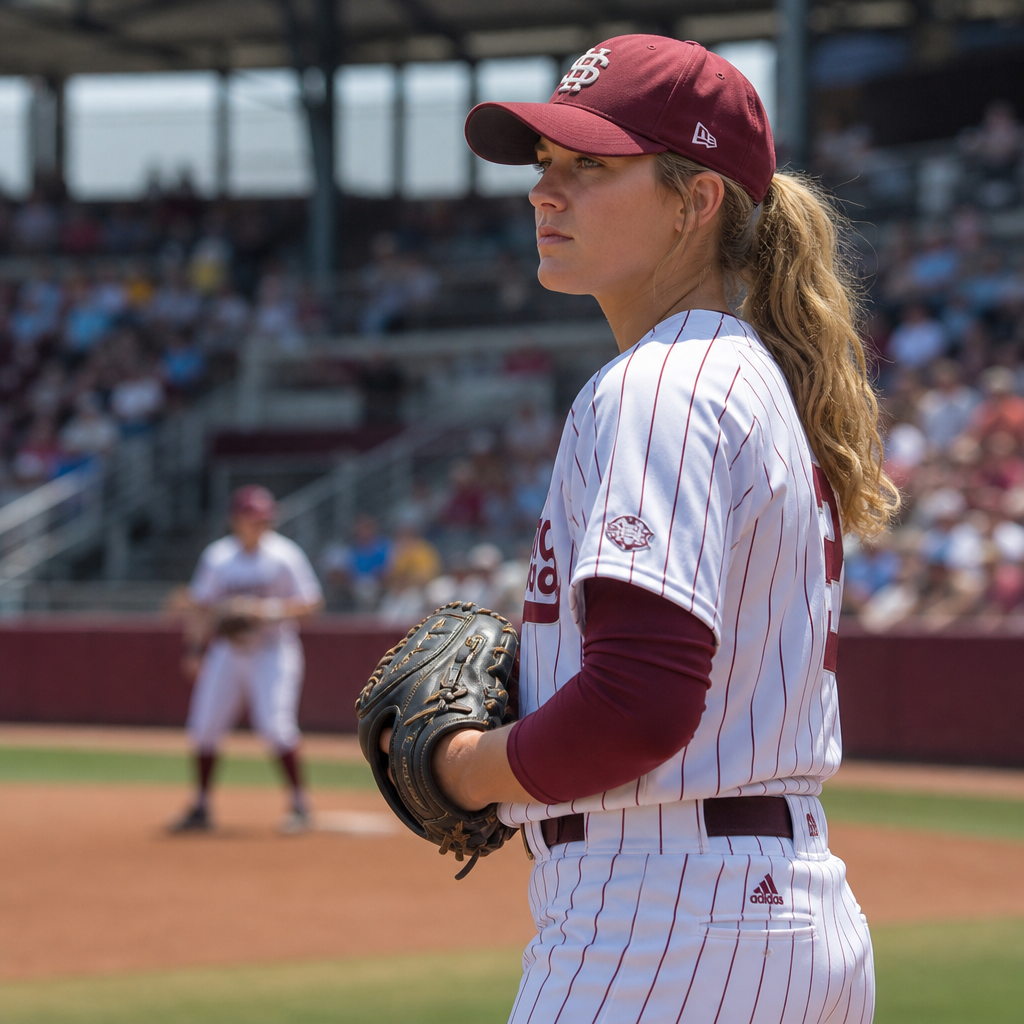
Celebrating women’s achievements in college baseball means documenting a part of the sport that is often overlooked, even though women have shaped lineups, dugouts, training rooms, front offices, broadcasts, and baseball culture on campuses for generations. In this context, college baseball refers to intercollegiate programs, typically governed by the NCAA, NAIA, NJCAA, or school-specific structures, while women’s achievements include playing opportunities, coaching breakthroughs, athletic training leadership, operations work, umpiring, analytics, media coverage, and advocacy that expands access to the game. I have worked on baseball content and program storytelling long enough to see the same pattern repeat: when people hear women in baseball, they often jump straight to professional milestones, yet many of the most important advances begin on college campuses where habits, hiring pipelines, and institutional norms are formed. That is why this subject matters. College baseball is one of the sport’s strongest talent ecosystems, and the women who thrive within it influence recruiting, player development, sports medicine, compliance, equipment management, fundraising, and public perception. Their contributions deserve recognition not as novelty stories, but as part of the everyday infrastructure that keeps programs competitive and healthy.
This hub article covers the miscellaneous landscape of women in college baseball because the topic is broader than a single role or headline. Some readers want to know whether women have played on men’s college baseball teams. Others are looking for examples of female coaches, strength staff, athletic trainers, team managers, administrators, broadcasters, photographers, and student workers who have built respected careers around the game. Many also want context: what barriers still exist, what progress is measurable, and what colleges can do next. The answers require specificity. Title IX did not create varsity NCAA women’s baseball at scale, so most female baseball players in the United States have historically been funneled toward softball, club baseball, national team pathways, or rare roster spots on men’s college teams. At the same time, baseball operations and support roles at colleges have opened more meaningfully, especially as departments professionalized nutrition, biomechanics, video analysis, and athlete care. Understanding these different pathways is essential because achievement in college baseball is not limited to the batter’s box. It includes every woman who has improved how the game is taught, managed, studied, and represented on campus.
What women’s achievements in college baseball include
Women’s achievements in college baseball include direct participation on the field, leadership in coaching and player development, and essential behind-the-scenes work that affects daily performance. The most visible milestones usually involve female athletes making college baseball rosters, appearing in games, or competing in college club programs where baseball, not softball, is the chosen discipline. These stories matter because they challenge the assumption that baseball spaces are exclusively male. They also give younger players evidence that persistence can create opportunities even when formal structures are limited. In my experience reviewing college program histories, these player milestones often become entry points for wider institutional change. Once a woman joins a roster, schools are pushed to think more carefully about recruiting language, facility access, locker room logistics, media relations, and the way they explain opportunity.
Just as important are the women who have built impact in roles that shape outcomes over full seasons. Athletic trainers are a clear example. In baseball, the trainer often sees players more consistently than almost anyone outside the coaching staff, managing arm care, rehabilitation timelines, hydration, recovery protocols, and communication with physicians. A respected female athletic trainer in a college baseball program is not a symbolic figure; she is central to player availability and long-term health. The same is true for strength and conditioning coaches who manage throwing workloads, rotational power development, and return-to-play progressions. Operations directors, video coordinators, and analytics staff also deserve attention. With modern college baseball leaning heavily on data from TrackMan, Rapsodo, Blast Motion, Synergy, and high-speed video systems, technical staff influence pitch design, swing decisions, defensive positioning, and scouting reports. Women succeeding in these jobs are participating directly in competitive advantage.
Why college campuses are pivotal for baseball progress
College campuses are pivotal because they connect youth participation to professional opportunity. A student manager who learns roster logistics, travel planning, and technology support in college baseball can move into operations at a summer collegiate team, a minor league affiliate, or a major conference athletic department. A woman who starts as a baseball communications assistant may become a sports information director, broadcaster, or content strategist for a professional club. A female strength coach who earns trust in a college weight room builds practical credibility that transfers into elite performance settings. These pathways are real because college baseball is one of the few places where education, competition, staffing, and public visibility overlap every day.
Campuses also serve as culture-setting environments. If a university treats women in baseball roles as ordinary professionals rather than exceptions, that standard influences players, alumni, donors, and local media. I have seen schools normalize this effectively by introducing staff members through role-specific credentials instead of novelty framing. For example, a university profile that explains how a coordinator improved catchers’ pop times through targeted mobility and throwing metrics does more for credibility than a generic first woman headline alone. Milestones should be celebrated, but they should also be attached to measurable work. That approach builds durable respect and helps future hires enter environments where competence is expected and gender is not treated as a distraction.
Notable pathways and examples across programs
There is no single template for women succeeding in college baseball. Some entered through athletic training or sports medicine, where baseball departments have long depended on skilled clinicians. Others came through student manager roles and grew into operations, video, or recruiting support. Some schools have had women serve as assistant coaches, bullpen catchers, or directors of baseball development, while club baseball organizations on campus have offered women competitive playing opportunities when varsity structures did not. National organizations such as USA Baseball, the Women’s National Team program, and Baseball For All have also influenced the college landscape by creating visibility and proving that female baseball players and leaders belong in the sport’s development pipeline.
One practical example is the growing use of baseball analytics internships and graduate assistant positions. These roles require database management, coding fluency, video tagging, and communication skills more than traditional gatekept playing backgrounds. A woman who can interpret vertical approach angle, chase rate, release height consistency, and batted-ball profiles can immediately help a college staff make better decisions. Another example is athlete care. Programs increasingly rely on interdisciplinary teams, including female dietitians, mental performance consultants, and physical therapists, to support long seasons. Their impact is easy to trace: lower soft-tissue injury rates, better return-to-throw compliance, improved travel recovery, and more informed lifestyle habits. Achievement in college baseball should therefore be measured not only by firsts, but by sustained influence on player outcomes and program standards.
| Area of contribution | Typical college baseball role | Why it matters | Example of measurable impact |
|---|---|---|---|
| On-field participation | Rostered player, club baseball athlete | Expands access and visibility for women who choose baseball | Game appearances, roster inclusion, recruiting interest |
| Coaching and development | Assistant coach, bullpen catcher, player development staff | Improves skill instruction and normalizes women in leadership | Pitching plans, defensive execution, hitter progress |
| Sports medicine | Athletic trainer, physical therapist, dietitian | Protects athlete health across a demanding season | Reduced injury days, compliant rehab, recovery gains |
| Performance science | Strength coach, biomechanics analyst, data coordinator | Drives evidence-based development | Velocity trends, force outputs, swing efficiency, workload management |
| Operations and media | Director of operations, SID, broadcaster, photographer | Keeps the program functional and visible | Smoother travel, stronger storytelling, sponsor and fan engagement |
Barriers that still shape opportunity
Progress is real, but barriers remain structural. The biggest issue is that baseball and softball are still treated as separate participation tracks from a young age, which narrows baseball-specific development for girls before college recruiting even begins. By the time a student reaches late high school, many coaches assume softball is the default destination, even if that athlete’s actual interest is baseball. That means fewer scouting opportunities, fewer established pipelines, and less institutional imagination around what college baseball inclusion can look like. On the staffing side, women also face credibility tests that men in equivalent entry-level roles often avoid. They may be asked to prove technical knowledge repeatedly, manage biased assumptions from parents or fans, or navigate workplaces that were not originally designed with them in mind.
There are also practical constraints. Travel arrangements, staffing budgets, and outdated facility policies can create avoidable friction. So can media habits that focus excessively on novelty rather than expertise. When coverage centers only on gender milestones, audiences miss the actual baseball value being delivered. Another challenge is the lack of comprehensive public data. Colleges regularly track wins, attendance, and player statistics, but many do not systematically publish information about women working in baseball departments or the progression of female staff into leadership. Without better records, it is harder to benchmark change. Even so, the direction is clear: programs that intentionally widen baseball opportunities for women tend to benefit from stronger staffing diversity, broader recruiting perspectives, and a more modern image that resonates with students and supporters.
How colleges can better support women in baseball
Colleges can better support women in baseball by treating inclusion as a program design issue rather than a ceremonial initiative. First, schools should widen the entry points. That means posting internships, student manager roles, analytics positions, and operations jobs with clear skill requirements instead of relying on informal networks. It also means partnering with kinesiology, communications, data science, and sport management departments so female students already on campus can see baseball as a viable field. Second, colleges should invest in mentorship. A young woman entering a baseball environment benefits from access to supervisors who explain decision-making, advocate in rooms she has not yet entered, and connect her with conference-wide or national peers.
Third, colleges should improve storytelling. Publish staff features that explain actual responsibilities, tools used, and outcomes achieved. Highlight a trainer’s return-to-throw protocol, a coordinator’s use of force-plate testing, or a broadcaster’s preparation process for a weekend series. Fourth, review facilities and policies for practicality and fairness. Small logistical details influence retention more than many administrators realize. Finally, create baseball opportunities for women beyond varsity staffing alone. Support campus club baseball, host clinics for girls, invite women working in baseball to speak with athletes, and build alumni networks that include female professionals across the sport. These actions are not abstract. They create familiarity, and familiarity is one of the strongest drivers of lasting institutional change.
The broader value of recognition
Recognition matters because it shapes who feels welcome to participate next. When colleges celebrate women’s achievements in college baseball accurately and consistently, they do more than honor individuals. They widen the sport’s talent pool, preserve important institutional history, and give recruits, students, and staff a fuller picture of what baseball leadership looks like. They also improve decision-making. Diverse staffs tend to bring different training backgrounds, communication styles, and problem-solving habits, which is useful in a game that increasingly blends tradition with technology. In practical terms, a program that values women in baseball is often a program that values expertise wherever it finds it.
This hub should serve as a starting point for deeper exploration across the women in baseball landscape, from player pathways to coaching, sports medicine, media, and operations. The key takeaway is simple: women’s achievements in college baseball are not side notes to the sport’s history. They are part of how college programs function, evolve, and compete. Schools that recognize this are better positioned to build stronger departments and more credible baseball cultures. If you manage, cover, or support a college program, start by documenting the women already driving results around your team, then create clearer pathways for the next group to follow.
Frequently Asked Questions
Why is it important to celebrate women’s achievements in college baseball?
Celebrating women’s achievements in college baseball matters because it helps correct a gap in how the sport is remembered, discussed, and valued. For many fans, the public story of college baseball has traditionally centered on male players and coaches, even though women have long contributed to the game in meaningful ways. On campuses across the country, women have served as players in select situations, coaches, strength and conditioning specialists, athletic trainers, operations leaders, administrators, broadcasters, and advocates who helped programs grow behind the scenes and in the spotlight. Recognizing those contributions gives a more accurate picture of how college baseball actually functions and evolves.
It also has a powerful cultural impact. Visibility creates possibility. When young athletes, students, and professionals see women succeeding in baseball environments at the collegiate level, they are more likely to imagine themselves in those spaces too. That matters not only for women who want to play or coach, but also for those interested in sports medicine, analytics, communications, recruiting, equipment management, and athletic administration. In other words, celebrating women’s achievements is not simply about honoring the past. It is also about expanding the future talent pipeline and reinforcing the idea that excellence in college baseball can take many forms.
Just as importantly, recognition promotes accountability and progress. When schools, conferences, and media outlets document milestones and highlight leadership breakthroughs, they help normalize women’s presence in baseball rather than treating every accomplishment as an exception. Over time, that strengthens inclusion, improves institutional memory, and supports a healthier, more representative sports culture on college campuses.
What kinds of achievements by women should be recognized in college baseball?
Women’s achievements in college baseball should be recognized broadly, not narrowly. While playing opportunities often draw attention first, the full range of accomplishments goes far beyond what happens in the batter’s box or on the mound. Achievements can include women earning roster spots, participating in practices, contributing in exhibition settings, or breaking barriers as players in intercollegiate baseball systems. Those moments are important because they challenge assumptions about who belongs in the sport and often require tremendous skill, resilience, and mental toughness.
At the same time, coaching breakthroughs deserve major recognition. Women have contributed as assistant coaches, graduate assistants, player development staff, and in leadership roles that influence strategy, culture, recruitment, and athlete growth. Their work often shapes day-to-day team performance in ways that may not always be visible to casual fans. The same is true for women working in athletic training, sports performance, rehabilitation, nutrition, and sports psychology. These professionals are essential to keeping athletes healthy, prepared, and competitive throughout a demanding season.
Administrative and operational achievements are equally significant. Women in baseball operations, compliance, scheduling, recruiting coordination, media relations, fundraising, and front-office style roles help college programs run effectively. Broadcasters, writers, photographers, and digital storytellers also deserve recognition for shaping how college baseball is presented to the public. When an article celebrates women’s achievements, it should acknowledge this full ecosystem. Doing so reflects the reality that college baseball success is built by many kinds of expertise, not only by those listed in the starting lineup.
Have women really played meaningful roles in college baseball, even if they have often been overlooked?
Yes, absolutely. Women have played meaningful roles in college baseball for generations, even when those roles were not consistently documented or widely celebrated. In many cases, their contributions were treated as unusual footnotes rather than as part of the sport’s ongoing history. That lack of visibility has created the false impression that women’s involvement in college baseball is new or rare, when in fact women have been helping shape the game on campuses for a long time.
Some women have earned attention through direct participation as players, often standing out because of their talent, determination, and ability to compete in demanding environments. Others have influenced programs through coaching, training, administrative leadership, and support systems that directly affect player development and team outcomes. Athletic trainers, for example, have long been critical to injury prevention, treatment, and recovery. Women working in those roles have made a tangible impact on the performance and well-being of college baseball athletes, even if their stories have not always been highlighted in mainstream coverage.
There is also an important historical point here: being overlooked does not mean being absent. It simply means the record has not always been complete. That is why contemporary articles, school archives, interviews, and media features matter so much. They help preserve stories that might otherwise be lost and place women’s work where it belongs—within the central narrative of college baseball history. A well-rounded celebration acknowledges both the visibility of major milestones and the quieter, sustained contributions that have supported the sport year after year.
How can colleges and athletic programs better support and honor women in college baseball?
Colleges and athletic programs can do a great deal to support and honor women in college baseball, and the most effective approach combines recognition with structural opportunity. Public celebration is a good starting point. Schools can highlight women’s achievements through athletics websites, game-day promotions, alumni features, social media storytelling, hall of fame recognition, and historical exhibits that document important milestones. These efforts help ensure that women’s contributions are visible to recruits, current students, alumni, and the broader baseball community.
However, meaningful support has to go beyond publicity. Athletic departments can create pathways for women to advance in coaching, operations, athletic training, strength and conditioning, scouting, analytics, and administrative roles. That means investing in fair hiring practices, mentorship opportunities, leadership development, and professional networking support. Programs can also invite women working in baseball to speak with teams, collaborate with campus groups, and participate in clinics or career panels. These actions make inclusion more practical and sustained rather than symbolic.
Documentation is another major area of improvement. Many schools have rich baseball histories but incomplete records when it comes to women’s roles in the program. Preserving interviews, photographs, statistics, employment milestones, and personal stories can strengthen institutional history and give future generations a clearer understanding of who helped build the program. Ultimately, honoring women in college baseball is about creating an environment where recognition, respect, and advancement are built into the culture of the sport, not added only on special occasions.
What should readers take away from an article about celebrating women’s achievements in college baseball?
Readers should come away with a broader and more accurate understanding of college baseball itself. The sport at the intercollegiate level—whether in the NCAA, NAIA, NJCAA, or school-specific structures—is not shaped only by the athletes most visible on the field. It is built through coaching insight, medical expertise, administrative leadership, communication, recruiting, preparation, and cultural influence. Women have contributed across all of those areas, and recognizing that reality makes the story of college baseball richer, smarter, and more complete.
Another important takeaway is that progress in baseball often happens through both landmark moments and steady, everyday excellence. Some achievements stand out because they break barriers or attract national attention. Others matter because they reflect consistent professionalism and leadership over time. Both kinds of accomplishment deserve respect. Celebrating women’s achievements should encourage readers to value not only headline-making firsts, but also the sustained work that helps programs function, athletes succeed, and communities connect with the sport.
Finally, readers should understand that recognition has real consequences. When women’s achievements are acknowledged, documented, and shared, the culture around college baseball becomes more inclusive and more honest. That benefits everyone involved in the sport, from current athletes and staff to future generations considering a place in baseball. A strong article on this topic should leave readers informed, appreciative, and ready to see women’s impact on college baseball not as a side story, but as an essential part of the game’s history and future.