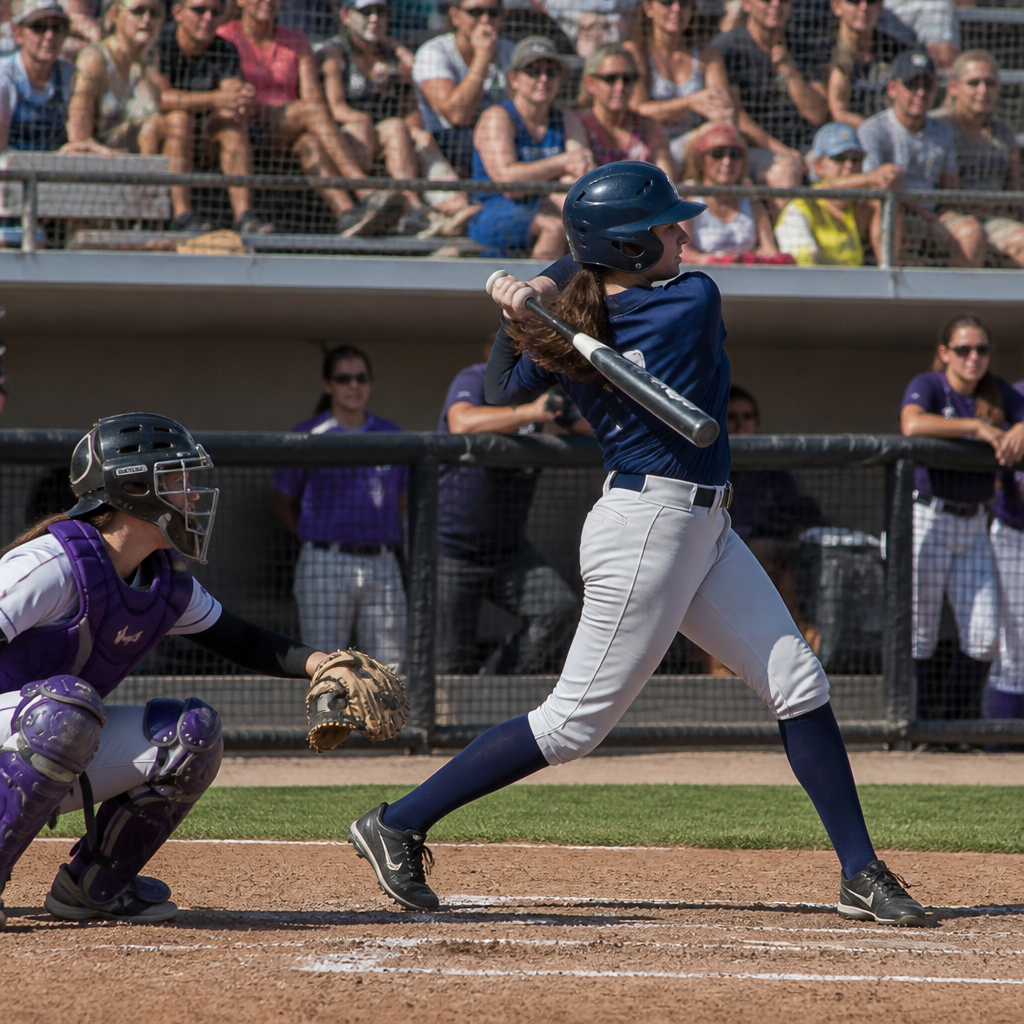
Women’s collegiate baseball leagues sit at a fascinating intersection of sports history, gender equity, and athlete development, linking the early struggles for access to organized baseball with today’s efforts to build sustainable competition on campuses. In this context, “collegiate baseball” means organized baseball played by students at universities and colleges under school-affiliated clubs, varsity programs, invitational tournaments, or governing bodies. It is distinct from softball, which evolved as a separate sport with different rules, equipment, field dimensions, and institutional support. That distinction matters because many female athletes who prefer baseball have historically been redirected into softball, even when their skills, goals, and identities were rooted in baseball itself.
I have worked on women in baseball content and athlete pathway research long enough to see the same misconception repeat across generations: people assume the absence of a large varsity women’s college baseball system means there was no meaningful history. The record shows the opposite. Women have played baseball on campuses, in clubs, on national teams, and in exhibition circuits for more than a century. The issue was not lack of interest. The issue was fragmented infrastructure, limited institutional backing, and a sports culture that treated baseball as male by default.
This topic matters now because the pipeline is finally becoming more visible. Girls’ baseball tournaments are stronger, the Women’s Baseball World Cup has created international legitimacy, and college club programs are giving players somewhere to continue after high school. At the same time, Title IX discussions, NIL-era recruiting dynamics, and rising interest in alternative athlete pathways have reopened old questions. Can women’s collegiate baseball become a durable league structure? What models actually work? Which barriers are cultural, and which are administrative?
As a hub article for the broader miscellaneous side of women in baseball, this guide brings the scattered pieces together. It covers the historical roots of women’s college baseball, the role of club programs, the impact of national and international competition, the structural reasons growth has been uneven, and the practical future facing schools, players, and organizers. The central truth is straightforward: women’s collegiate baseball has never been imaginary or symbolic. It has been real, persistent, and underbuilt, and its future depends less on proving demand than on organizing it effectively.
Early Roots: Women Played Baseball Before Colleges Were Ready
The history of women’s collegiate baseball leagues begins before formal leagues existed. In the late nineteenth and early twentieth centuries, women and girls played baseball in schools, town teams, physical education settings, and barnstorming clubs. Archival records from Vassar, Smith, Wellesley, and other women’s colleges show bat-and-ball activity, although many institutions gradually favored sports viewed as more socially acceptable for women. Basketball, field hockey, and later softball gained administrative support because they were easier for institutions to justify within prevailing gender norms.
That shift had long-term consequences. Baseball remained culturally visible, but access narrowed. Colleges that might have incubated women’s baseball instead invested in women’s softball once it became standardized. The NCAA later sponsored softball championships, while no comparable varsity women’s baseball framework emerged. By mid-century, women who wanted baseball often had to play informally, compete against boys or men, or leave the sport entirely. The famous All-American Girls Professional Baseball League demonstrated public appetite for women’s baseball from 1943 to 1954, yet its legacy did not translate into sustained college infrastructure.
In practical terms, colleges were not neutral. Administrative decisions about field allocation, coaching lines, travel budgets, and roster recognition shaped which sport could survive. When a campus added women’s softball but not women’s baseball, it created opportunity in one area while closing a door in another. That pattern is essential to understanding the history of collegiate women’s baseball: the sport was not displaced by lack of athletic merit, but by institutional channeling.
The Modern Collegiate Landscape: Clubs, Inclusion, and Patchwork Competition
Today, women’s collegiate baseball exists mainly through club teams, mixed-gender participation on men’s club rosters, national invitational events, and isolated school-supported initiatives rather than a broad varsity league system. The National Club Baseball Association has been an important setting because some women have competed on NCBA teams, proving that college baseball participation is possible even without a dedicated women’s championship structure. However, inclusion on existing teams is not the same as a women’s league. It offers access for some athletes but does not automatically create recurring competition among women’s squads.
Several schools and organizers have tried to solve that gap with women’s baseball clubs or developmental gatherings. What I have seen repeatedly is that the first challenge is not talent identification. It is finding enough institutions within manageable travel distance to schedule a season. Baseball requires field time, pitching depth, umpires, equipment, and weather flexibility. A club can recruit twenty players and still struggle if the nearest comparable opponent is several states away.
The most effective modern programs usually start with three ingredients: an institutional sponsor, committed student leadership, and ties to national baseball networks such as USA Baseball, local amateur leagues, or alumni donors. Without those supports, many teams burn out after one or two graduating classes. This is why the landscape appears uneven. The sport often grows through passionate local effort, but passion alone does not replace a conference schedule, annual budget, and administrative continuity.
| Model | How It Works | Main Strength | Main Limitation |
|---|---|---|---|
| Women’s club team | School-recognized student club fields a roster and schedules games or tournaments | Creates identity and dedicated space for women baseball players | Inconsistent funding and opponent availability |
| Women on men’s club teams | Female players compete on open or men’s club rosters | Immediate access to games and facilities | Does not build a women’s league ecosystem |
| Invitational showcase model | Teams gather for periodic tournaments or development weekends | Efficient for scattered programs | Limited season length and weak local continuity |
| Varsity pilot program | Institution directly funds and staffs women’s baseball competition | Best path to legitimacy and recruiting stability | Rare, expensive, and administratively complex |
Why Softball Became the Default and Baseball Did Not
Any serious discussion of women’s collegiate baseball leagues must explain the softball question directly. Softball became the default women’s diamond sport in the United States because schools, conferences, and the NCAA built it that way. Once championship structures, scholarships, coaching pipelines, and youth feeder systems were attached to softball, it became the efficient administrative choice. Families chasing college opportunity understandably followed those incentives.
That does not mean baseball and softball are interchangeable. Hitting approach, basepaths, pitching mechanics, defensive angles, and game rhythm differ substantially. A baseball player moved to softball is not simply changing uniforms. She is learning another sport. I have interviewed and studied enough player stories to say confidently that many athletes accepted softball because it offered college access, not because it matched their primary sporting ambition.
The dominance of softball also shaped public perception. When colleges advertised women’s diamond opportunities, baseball disappeared from view. That invisibility affected donors, athletic directors, and even students who might otherwise have organized teams. In sports administration, what is visible gets measured, and what gets measured gets funded. Women’s collegiate baseball was disadvantaged not only on the field, but in the language institutions used to define legitimate opportunity.
Key Milestones That Changed the Conversation
Although no nationwide varsity women’s collegiate baseball league yet mirrors NCAA softball, several milestones have materially changed the sport’s credibility. Title IX, enacted in 1972, did not create women’s baseball directly, but it transformed the legal and cultural conversation around access to school sports. Over time, that framework made it harder to dismiss female baseball players as novelty participants.
Another major milestone was the growth of international women’s baseball. The Women’s Baseball World Cup, governed by the World Baseball Softball Confederation, gave elite players a visible endpoint beyond local club play. National teams from Japan, Canada, the United States, Australia, Hong Kong, Chinese Taipei, and others demonstrated that women’s baseball was not an isolated American niche. For college-aged athletes, international competition proved there was a serious version of the sport worth training for.
USA Baseball’s Women’s National Team has been especially influential. When college students can point to a recognized national team, a structured identification process, and alumni who advanced from youth baseball into senior competition, the argument for campus programs becomes easier to make. Initiatives such as the Trailblazer Series have also broadened the youth pipeline by giving girls better exposure, instruction, and visibility. These programs do not solve collegiate scheduling on their own, but they create demand that colleges can no longer plausibly claim does not exist.
The Real Barriers: Money, Geography, Governance, and Culture
The biggest barriers facing women’s collegiate baseball are not mysterious. They are budget, geography, governance, and culture. Budget is obvious: baseball is relatively expensive compared with indoor court sports. Travel, uniforms, catcher’s gear, mound maintenance, batting practice infrastructure, and multiple game dates add up quickly. Club teams often depend on student fees and fundraising, which creates year-to-year instability.
Geography matters because leagues need clusters. A single campus program in isolation cannot provide enough competition to retain players or justify investment. Sustainable growth usually requires regional pods, then annual championships. This is exactly how other emerging sports gained traction at the college level.
Governance is the next hurdle. A sport grows faster when a recognized body standardizes eligibility, schedules, championship formats, safety protocols, and reporting. Women’s collegiate baseball still lacks a universally adopted national framework with the reach of the NCAA or NAIA in softball. Without governance, administrators hesitate. They want to know who sanctions play, how postseason works, and what benchmark defines success.
Culture may be the hardest barrier. Even now, baseball is often treated as a boys’ and men’s sport unless a woman reaches an exceptional headline-making role. That framing is limiting. It positions female baseball participation as an exception rather than a category. On campus, culture shows up in subtle ways: casual assumptions during tryouts, reluctance to allocate premium field slots, or confusion over whether women’s baseball should exist separately at all. Those frictions are small individually but cumulative over time.
What the Future of Women’s Collegiate Baseball Leagues Could Look Like
The future is most likely to emerge through phased growth rather than a sudden nationwide varsity launch. In the near term, the strongest model is a regional club-league system supported by a national coordinating body. Think of clusters in the Northeast, California, the Midwest, and parts of Canada or the Southeast where enough players and baseball infrastructure already exist. These leagues could standardize schedules, share officiating resources, and hold annual championship weekends that are meaningful but financially realistic.
The next phase would be hybrid institutional support. Colleges do not need to jump immediately to full varsity status to make a serious commitment. They can provide reserved field time, athletic training access, coaching stipends, admissions support for recruited players, and formal recognition within campus recreation or club sports departments. Those steps dramatically improve retention and recruiting.
Longer term, pilot varsity programs at a small number of institutions could test the market. The precedent exists in emerging college sports such as women’s wrestling and acrobatics and tumbling, where concentrated institutional commitment created momentum. A women’s collegiate baseball league would not need hundreds of schools at launch. It would need a credible first tier, transparent standards, and competitive games worth watching.
For players, parents, alumni, and administrators, the practical takeaway is simple: stop treating women’s collegiate baseball as a thought experiment. The history is established, the athlete base is real, and the future depends on building repeatable structures. Support local club teams, follow national development programs, and push schools to recognize baseball as a legitimate women’s pathway. That is how miscellaneous interest becomes durable infrastructure, and how a long-fragmented sport finally gains the college league system it has deserved for generations.
Frequently Asked Questions
What is meant by women’s collegiate baseball, and how is it different from softball?
Women’s collegiate baseball refers to organized baseball played by students at colleges and universities through school-affiliated clubs, varsity-level initiatives, invitational competitions, regional conferences, or governing bodies that support intercollegiate play. The key distinction is that these athletes are playing baseball itself, not softball. While the two sports share some strategic similarities, they differ in core ways, including field dimensions, ball size, pitching mechanics, base paths, equipment standards, and the long-term player development systems connected to each sport. Baseball uses a smaller ball, a larger field, and overhand pitching, all of which shape the game’s pace, defensive demands, and player specialization differently than softball.
This distinction matters historically and culturally. For decades, many women who wanted to continue playing baseball after youth leagues found that softball was the only school-supported option available to them. As a result, women’s collegiate baseball has often developed outside the traditional varsity pipeline, relying on student clubs, independent organizers, and national or international baseball advocates to create playing opportunities. Understanding that difference is essential to understanding the broader story: women’s collegiate baseball is not simply a variation of softball, but part of a separate effort to secure recognition, legitimacy, and a stable competitive structure for women who specifically want to play baseball at the college level.
How did women’s collegiate baseball leagues develop historically in the United States and beyond?
The history of women’s collegiate baseball is best understood as a story of persistence rather than uninterrupted institutional support. Women and girls have played baseball since the nineteenth century, but formal pathways into high school and college competition remained limited for much of that time. As men’s baseball became deeply embedded in school and university athletic systems, women were often steered away from the sport or told to compete in softball instead. That meant female baseball players who wanted to keep playing after youth or amateur competition usually had to build their own opportunities through clubs, exhibitions, local associations, and later national organizing efforts.
At the collegiate level, development has often been uneven and decentralized. Rather than emerging all at once through a single governing authority, women’s college baseball grew through campus clubs, exhibition games, invitational tournaments, and networks of committed athletes and advocates. In the United States, some institutions have supported women’s baseball clubs or mixed-gender club teams, while others have hosted showcase events designed to demonstrate demand. Internationally, countries with stronger women’s baseball infrastructures have also influenced collegiate development by creating visible role models, national teams, and competitive benchmarks. Events connected to women’s baseball world competition have helped legitimize the sport and encouraged colleges to think beyond the assumption that softball is the only viable women’s diamond sport.
The result is a history marked by starts, stops, and gradual progress. Some leagues or conferences have been short-lived due to travel costs, limited rosters, or lack of administrative backing. Even so, each generation of organizers has contributed to a larger foundation by proving that there is sustained interest among college-aged athletes. The modern movement builds on those earlier efforts, combining historical awareness with new tools for recruiting, scheduling, media visibility, and athlete advocacy.
Why have women’s collegiate baseball leagues faced so many barriers to growth?
Women’s collegiate baseball has faced barriers because it operates within systems that were not originally designed to support it. One of the biggest challenges has been structural visibility: when athletic departments already fund men’s baseball and women’s softball, administrators may assume there is no need for a separate women’s baseball pathway. That assumption can become self-reinforcing. Without official teams, there are fewer players on campus; without enough visible players, institutions may conclude that demand does not exist. This cycle has historically made it difficult for women’s baseball advocates to secure field access, coaching resources, travel budgets, recruiting support, and regular schedules.
There are also cultural and developmental barriers. Many talented girls are moved into softball systems early, not necessarily because baseball is not a fit, but because softball is often the more accessible school-sponsored option. By the time they reach college age, some have had limited chances to train in baseball-specific environments, compete against peer talent, or be identified by collegiate organizers. That affects roster depth and makes league-building harder. In addition, because women’s collegiate baseball often begins as a club sport rather than a varsity sport, student leaders may carry a heavy administrative burden, including fundraising, scheduling, equipment management, and travel planning.
Financial constraints are another major factor. League sustainability depends on consistent opponents, manageable travel, and enough institutional support to reduce year-to-year uncertainty. Without these elements, teams may struggle to retain players or maintain momentum after a strong inaugural season. Even so, the existence of these barriers should not be mistaken for lack of viability. In many cases, the issue is not athlete interest but infrastructure. Where schools, organizers, and baseball governing bodies commit resources and long-term planning, women’s collegiate baseball has shown clear potential to grow.
What role do club teams, governing bodies, and showcase events play in the future of women’s collegiate baseball?
Club teams, governing bodies, and showcase events are central to the future of women’s collegiate baseball because they form the bridge between grassroots participation and formal institutional recognition. Club teams are often the entry point. They allow students to organize, recruit, and compete even when a university has not established a varsity program. In many sports, club status has served as the proving ground for eventual expansion, and women’s baseball is no exception. Strong club teams can demonstrate local demand, build alumni support, create traditions, and give administrators tangible evidence that sustained competition is possible.
Governing bodies matter because growth requires more than enthusiasm; it requires structure. Organizations that coordinate rules, rankings, scheduling frameworks, championships, coaching standards, and player development pathways help transform isolated teams into a recognizable collegiate ecosystem. They also make it easier for athletes to find opportunities and for schools to understand how participation would fit into a broader competitive landscape. National baseball federations, collegiate recreation departments, and international women’s baseball organizations can all contribute to this process by sharing resources, data, and best practices.
Showcase events and invitational tournaments play a powerful visibility role. They bring dispersed talent together, help athletes be seen by organizers and coaches, and create compelling proof that there is enough skill and interest to justify regular intercollegiate competition. Just as important, these events generate stories, images, and momentum. When schools see well-run tournaments, competitive games, and enthusiastic participation, the idea of women’s collegiate baseball becomes more concrete and more difficult to dismiss. In practical terms, the future of the sport will likely depend on these three elements working together: clubs building participation, governing bodies creating systems, and showcases making the opportunity visible to campuses, media, and potential sponsors.
What does the future look like for women’s collegiate baseball leagues, and what would it take for them to become more sustainable?
The future of women’s collegiate baseball is promising, but sustainability will depend on intentional growth rather than optimism alone. The strongest near-term path is likely a layered model that includes campus club teams, regional scheduling alliances, recurring invitational tournaments, and eventually more formal league structures. In some places, varsity recognition may emerge over time, but broad progress does not require every institution to move immediately to varsity status. What matters most is building a reliable competitive environment where athletes can join a team, expect regular games, and continue developing over multiple seasons.
For that to happen, several pieces need to come together. First, schools need better awareness that women’s baseball and softball are not interchangeable and that there is a distinct population of athletes seeking baseball opportunities. Second, organizers need regional density. Travel becomes far more manageable when multiple colleges in the same area commit to participation, making league play more practical and affordable. Third, stable funding is essential. Even modest institutional backing for uniforms, field reservations, transportation, and coaching can make the difference between a team that lasts one year and one that becomes part of campus sports culture.
Recruiting and player development will also shape the future. As more girls stay in baseball through high school and as women’s national and international baseball continues gaining visibility, colleges will have a larger pool of athletes ready for organized competition. Media coverage, alumni engagement, and partnerships with baseball organizations can further strengthen the ecosystem by attracting sponsors and normalizing the sport in the public imagination. The long-term outlook is not just about adding teams; it is about creating legitimacy, continuity, and pathways. If institutions, athletes, and governing organizations keep investing in those foundations, women’s collegiate baseball leagues can move from the margins of college athletics toward a more secure and recognized future.