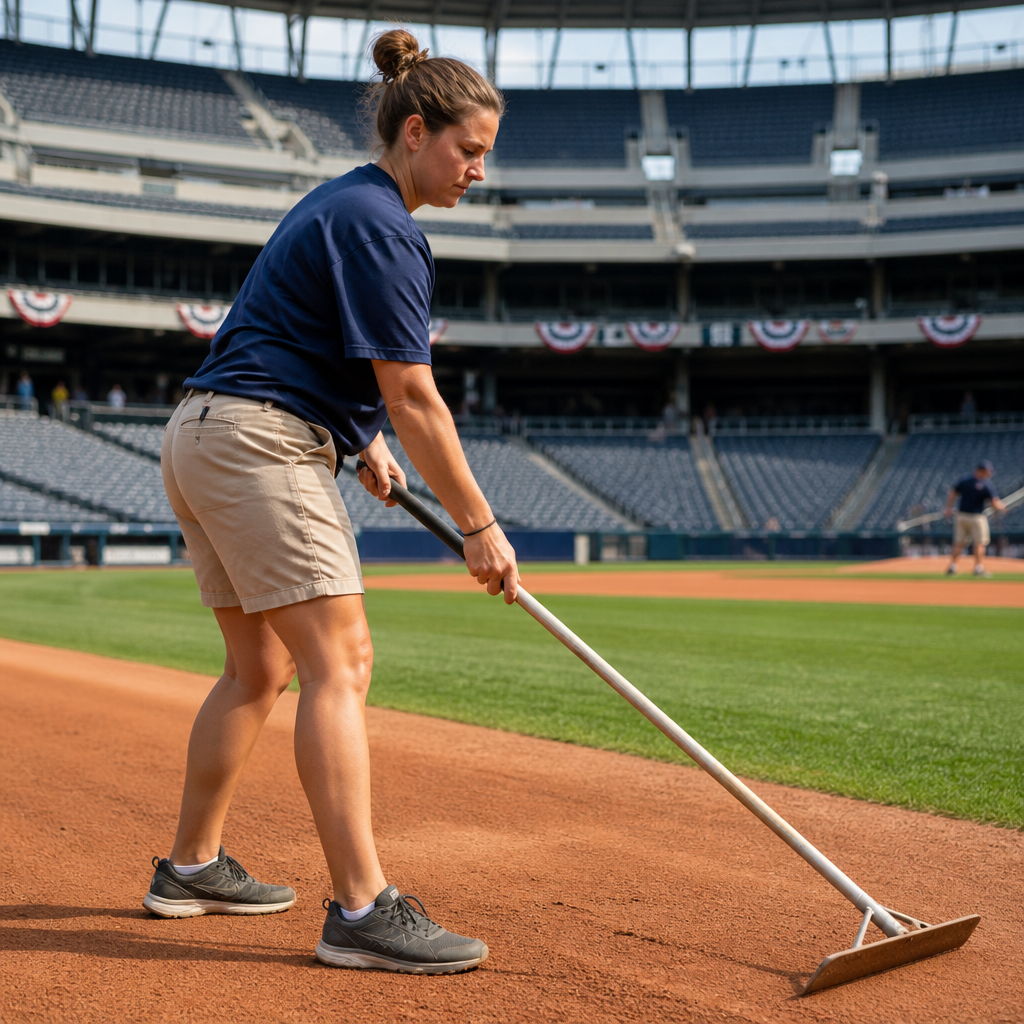
Women groundskeepers in baseball rarely occupy headlines, yet they shape every pitch, bounce, slide, and rain delay decision that fans, players, and broadcasters experience. A groundskeeper maintains the field’s playability, safety, appearance, and regulatory compliance, from clay moisture and mound firmness to grass height, tarp deployment, drainage performance, and game-day recovery. In baseball, where surface conditions can decide whether a ground ball skips true or a pitcher lands securely, this work is not cosmetic; it directly affects competition. I have worked around sports content and field-operations teams long enough to know that the best grounds crews are judged by what never goes wrong: no soft landing spots near first base, no puddling on the warning track, no lip buildup that twists an ankle, no uneven clay that changes hop patterns in the late innings.
This article serves as a hub for the miscellaneous side of women in baseball by focusing on women groundskeepers, the professionals whose expertise intersects turf science, meteorology, irrigation management, logistics, and labor leadership. The topic matters because baseball history often celebrates players, managers, and executives while overlooking the specialists who make the game possible every day. It also matters because visibility influences career pipelines. When girls and young women can see that baseball includes agronomy, facilities, and operations careers, the sport becomes larger than the roster card. Across Major League Baseball, Minor League Baseball, college programs, municipal parks, and training complexes, women are increasingly entering roles once treated as male defaults. Their stories illuminate broader themes in women in baseball: access, skill recognition, apprenticeship, institutional culture, and the slow correction of who gets credited for expertise.
Understanding women groundskeepers also helps readers understand baseball itself. A field is a managed system with specifications and tradeoffs. Infields require precise grading, mound and batter’s box repairs, packing and scarifying routines, edging, and moisture balance. Outfields demand mowing patterns, fertility planning, disease control, overseeding or resodding decisions, and attention to wear zones. Every level of baseball faces different constraints. A big-league park may have sub-air systems, advanced weather monitoring, and a large staff; a small community field may rely on one supervisor, seasonal workers, and limited equipment. Women working in these environments are not symbolic additions. They are trained operators making evidence-based decisions under deadline pressure, often before dawn and long after the final out.
As a hub article, this page explains what women groundskeepers do, how they entered the profession, what barriers have historically limited participation, which skills and standards define excellence, and where readers can explore related stories in the wider women in baseball landscape. It also answers practical questions directly: Is groundskeeping a viable baseball career for women? Yes. What qualifications matter most? Turf management knowledge, field-prep experience, equipment proficiency, and calm decision-making. Why are these women unsung heroes? Because the quality of baseball depends on their work, yet their names are usually absent from the box score.
What Women Groundskeepers Actually Do in Baseball
The job of a baseball groundskeeper combines daily maintenance, event operations, and long-range facility planning. On a typical game day, crew members inspect moisture in the skin areas, drag and level the infield, chalk baselines and boxes to regulation dimensions, repair the mound and plate area with fresh clay, monitor grass stress, set tarp plans based on radar, and coordinate with umpires and operations staff. During batting practice, they watch for wear patterns and safety issues. After the game, they may edge, sweep, water, patch, and prepare for the next event. At multipurpose venues, they also transition surfaces for concerts, ceremonies, or non-baseball games, then restore baseball-specific conditions afterward.
Women doing this work often come through horticulture, sports turf, agronomy, landscaping, or athletic facility programs, though many also start in seasonal crew roles and learn through mentorship. The technical side is substantial. The infield mix must balance sand, silt, and clay content for drainage and stability. Mound clay differs from the looser infield skin because pitchers need a firm, consistent landing area. Grass species vary by climate: Kentucky bluegrass and perennial ryegrass are common in cooler regions, while bermudagrass dominates many warmer markets. Irrigation scheduling is tied to evapotranspiration, root depth, compaction, and weather patterns. These are not abstract details; they shape how a field performs from first pitch through extra innings.
One reason women groundskeepers deserve greater recognition is that field preparation influences both athlete safety and competitive fairness. A field with excessive moisture can create unstable push-off points. A dry, loose home plate area can alter catcher footing. Uneven lips between turf and skin can produce bad hops or injuries. Experienced groundskeepers learn to read subtle signs: how cleat marks hold, how a probe enters the mound, how the warning track firms after rolling, how clouds and humidity change tarp timing. In my experience reviewing baseball operations, the strongest crews are the ones that can explain every decision in practical terms: what was done, why it was done, and how it affects play.
Why Their Work Is Often Invisible
Groundskeeping is visible when a crew sprints on the field with a tarp, but invisible in the way many forms of skilled maintenance are invisible: success looks ordinary to outsiders. If the grass is uniform, the clay is firm, and the game starts on time after a storm, spectators assume the result happened naturally. That invisibility is intensified for women because baseball has historically coded technical field labor as masculine, even though the profession depends more on training, planning, and judgment than brute force. Modern equipment such as compact tractors, infield groomers, spreaders, moisture meters, and irrigation controls rewards precision and knowledge. The myth that only men belong on a grounds crew has never matched the actual competencies the work requires.
Recognition is also uneven because baseball storytelling prioritizes action inside the foul lines. Media coverage typically centers on wins, slumps, trades, and strategy. Yet grounds crews can save doubleheaders after downpours, preserve a field during heat stress, or prevent player injuries through disciplined maintenance cycles. When a woman leads or contributes to that result, she is participating in baseball performance, not merely supporting it from the margins. As this women in baseball hub expands, related articles can profile individual groundskeepers, training pathways, and notable field operations moments that reveal just how much expertise sits behind a smooth-looking diamond.
Career Pathways, Skills, and Standards
For women considering baseball groundskeeping careers, the pathway usually blends education, hands-on repetition, and networking. Degrees in turfgrass management, plant science, agronomy, horticulture, or sports management can help, but they are not the only route. Seasonal internships with MLB or MiLB clubs, university athletic departments, spring training complexes, and local park districts often provide the most important early experience. Industry associations such as the Sports Field Management Association have long mattered because they connect emerging professionals to certification information, conferences, and practical best practices. OSHA awareness, pesticide applicator licensing where applicable, and equipment safety training also strengthen a candidate’s profile.
Baseball field standards come from rule books, league operations manuals, and years of accepted field-construction practice. Baseline dimensions, mound geometry, home plate setup, warning track transitions, and drainage tolerances are not guessed at. Good groundskeepers work from measurable benchmarks, not intuition alone. They also document routines. Moisture logs, irrigation schedules, fertility calendars, topdressing plans, and disease observations help crews maintain consistency across long seasons. Women entering the field and succeeding in it tend to be the ones who treat field care as applied science under competitive constraints. They communicate well with coaches and front-office staff, but they also trust tested methods when pressure rises before a nationally televised first pitch.
| Area | Core Responsibilities | Tools and Standards |
|---|---|---|
| Infield skin | Dragging, grading, moisture management, lip control | Infield drag, lute, nail drag, moisture meter, league dimensions |
| Mound and plate | Repacking clay, slope repair, landing area stabilization | Mound clay, tamp, rake, level, pitcher safety standards |
| Turfgrass | Mowing, irrigation, fertility, disease and wear monitoring | Reel mower, irrigation controller, soil testing, IPM practices |
| Rain operations | Tarp timing, water removal, post-storm recovery | Radar apps, pumps, squeegees, crew coordination protocols |
| Event conversion | Protecting surface, restoring baseball conditions | Flooring systems, paint, edging tools, recovery schedules |
Barriers Women Groundskeepers Have Faced
The largest barriers have historically been access, assumptions, and advancement. Access matters because many sports turf careers start through referrals, internships, and crew openings that once circulated through male-dominated networks. Assumptions matter because women have often had to prove mechanical competence or field authority before their work was judged on merit. Advancement matters because leadership roles on grounds crews can depend on who receives the hardest assignments, who gets trusted during weather emergencies, and who is introduced to decision-makers across facilities and baseball operations departments.
There are also practical challenges. Baseball schedules are relentless, especially in the minors and at amateur complexes with tournaments. Hours are early, late, and weather-dependent. Seasonal pay can be modest at lower levels, and the profession is physically demanding. Those realities affect everyone, but women may face added scrutiny or isolation when they are the only woman on a crew. Even so, the pattern across baseball has been gradual improvement as more organizations recognize that effective groundskeeping is a talent pipeline issue like any other. Once clubs evaluate candidates by field results, communication, and technical skill, old stereotypes lose force.
Importantly, inclusion should not be reduced to token hiring. Women groundskeepers need equitable pay, proper equipment training, clear promotion ladders, and the same access to marquee tasks that build résumés. A club that celebrates diversity publicly but keeps women away from mound rebuilds, pesticide decisions, or rain-delay command has not solved the real problem. The benchmark is operational trust. When women are fully integrated into the most consequential work, the profession moves from symbolic progress to durable change.
Real-World Impact Across Baseball Levels
At the major league level, field quality is scrutinized by athletes, television audiences, and league officials, so a groundskeeper’s decisions carry immediate reputational weight. A storm arriving forty minutes before first pitch can trigger a chain of calls about tarp deployment, batting practice cancellation, gate timing, and drainage recovery. Women working in those environments show their value through anticipation and execution. At the minor league level, crews often operate with fewer resources while hosting frequent games, promotions, camps, and community events. That setting rewards adaptability. In college baseball, women groundskeepers may coordinate with facilities departments, coaches, and tournament hosts while balancing budget limitations and heavy spring weather variability.
Their impact is also strong at youth and municipal levels, where one knowledgeable groundskeeper can improve safety and play quality for thousands of athletes over a season. Better mound care reduces lower-body stress for pitchers. Smoother skinned areas create truer hops for infielders. Consistent warning track maintenance improves spatial awareness for outfielders approaching walls. These outcomes are measurable in player experience even when they are not captured in official statistics. That is why women groundskeepers belong in any serious discussion of women in baseball miscellaneous topics: they influence the sport from infrastructure upward.
Readers exploring this hub should also connect women groundskeepers to adjacent roles such as women in baseball operations, athletic training, scouting, umpiring, broadcasting, and data analysis. Baseball is an ecosystem. The more accurately we map its labor, the clearer it becomes that women have always contributed beyond the most public roles. Groundskeeping may seem niche, but it is one of the best examples of how expertise, persistence, and institutional opportunity intersect.
How Baseball Can Better Support Women Groundskeepers
Baseball organizations can accelerate progress with simple, concrete steps. First, recruit intentionally from turf programs, agricultural colleges, and sports field internships, and make sure job descriptions emphasize technical requirements rather than outdated physical stereotypes. Second, spotlight field operations staff in team media, not as novelty stories but as professionals explaining field science and game-day preparation. Third, create mentorship structures that pair early-career women with experienced head groundskeepers and facilities leaders. Fourth, standardize promotion criteria around measurable competencies: field condition outcomes, safety records, planning quality, crew leadership, and emergency response.
Clubs should also invest in retention. That means fair scheduling where possible, quality locker and restroom access, continuing education budgets, and visible support from senior leadership when women are leading crews or making difficult weather decisions. In my experience, culture changes fastest when managers publicly back the person with operational expertise. If a head groundskeeper says the tarp goes on now, or the mound needs a full rebuild, that decision must carry authority regardless of gender. Once that norm is reinforced repeatedly, credibility stops being gendered and returns to where it belongs: proven performance.
Women groundskeepers in baseball are unsung heroes because they make the sport playable, safe, and visually excellent while receiving only a fraction of the attention given to on-field performers. Their work spans agronomy, mechanics, weather response, scheduling, leadership, and baseball-specific rule compliance. They prepare infields that play true, mounds that protect pitchers, warning tracks that guide outfielders, and recovery plans that keep seasons moving through rain, heat, and relentless use. For a women in baseball hub, this miscellaneous topic is essential because it broadens the definition of baseball contribution and reveals how deeply women shape the game behind the scenes.
The key takeaway is straightforward: women belong in baseball groundskeeping not as exceptions, but as skilled professionals whose expertise improves every level of the sport. If you are building out a women in baseball content cluster, use this page as a starting point, then explore profiles, career guides, and related operational roles to see the full picture. Share this article, link it within your women in baseball resources, and give the next groundskeeper the recognition her work has already earned.
Frequently Asked Questions
What does a woman groundskeeper in baseball actually do on a day-to-day basis?
A woman groundskeeper in baseball handles the same essential responsibilities as any elite field professional: making sure the playing surface is safe, consistent, visually sharp, and ready for competition in all kinds of conditions. That work starts well before first pitch. A groundskeeper may inspect grass health, monitor infield moisture, check mound and batter’s box firmness, edge basepaths, drag the infield, repair worn areas, measure grass height, and evaluate how the field is responding to heat, humidity, shade, and recent use. Every adjustment matters because baseball is unusually sensitive to surface conditions. A slightly softer landing area can affect a pitcher’s push-off, and a slightly drier infield skin can change how sharply a ground ball hops.
During games, groundskeepers are also decision-makers under pressure. They assess incoming weather, coordinate tarp deployment, manage rain-delay procedures, and prepare high-traffic areas for between-inning maintenance. After the final out, the job continues with postgame repair, clay conditioning, moisture balancing, and planning for the next event. Women in these roles are often working in highly visible environments where the quality of their work is judged instantly by players, coaches, broadcasters, and fans. Their impact is constant, even if their names are rarely announced.
Why are groundskeepers so important to how a baseball game is played?
Groundskeepers directly influence the fairness, safety, and rhythm of a baseball game because the field is not just a backdrop; it is part of the action on every pitch and every ball in play. The firmness of the mound affects pitcher stability and mechanics. The condition of the landing area influences whether a pitcher can finish a delivery confidently. The moisture and grade of the infield skin affect whether ground balls stay low, take true hops, or slow down. Even the cut and density of the outfield grass can shape how quickly a ball travels to the warning track or into a fielder’s path.
Safety is another major reason their work matters. A poorly maintained field can increase the risk of slips, awkward landings, bad hops, and lower-body stress. In a sport where tiny performance margins matter, professional field preparation helps create consistency from inning to inning. Groundskeepers also play a critical role in weather management. Fast, smart decisions about drainage, tarp timing, and moisture control can prevent cancellations, shorten delays, and preserve field integrity over a long season. In short, they help determine whether the field plays cleanly, predictably, and safely, which affects everyone from ace pitchers to rookie infielders.
What challenges do women groundskeepers in baseball often face?
Women groundskeepers often face a mix of technical, physical, and cultural challenges. The technical side is demanding on its own. Field care requires deep knowledge of agronomy, irrigation, clay management, weather patterns, drainage systems, equipment operation, and league standards. It is also physically intense, involving early mornings, long homestands, tarp pulls in bad weather, and constant maintenance under tight time constraints. The work is exacting, and mistakes can become visible immediately on the field.
At the same time, women in this profession have historically had to navigate an industry where they are underrepresented and frequently underestimated. That can mean having to prove expertise more quickly, challenge assumptions about who “belongs” in baseball operations, and build credibility in spaces where the spotlight usually falls elsewhere. Despite those barriers, many women groundskeepers have built strong careers through skill, consistency, and leadership. Their presence also helps broaden the image of who can succeed in baseball behind the scenes. As more fans and organizations recognize the complexity of field management, the contributions of women groundskeepers are becoming harder to overlook.
How do groundskeepers manage rain delays and bad weather during baseball games?
Managing bad weather is one of the most visible and high-stakes parts of a groundskeeper’s job. It involves far more than simply rolling out a tarp when rain begins. Groundskeepers track forecasts throughout the day, study storm timing, monitor field moisture, and evaluate how much water the surface can absorb before playability and safety are affected. Timing is everything. Put the tarp on too early and you may trap moisture or interrupt play unnecessarily. Wait too long and you risk saturating the infield skin, softening the mound, flooding low spots, or creating unsafe footing around the bases and plate.
When weather hits, a grounds crew must move quickly and in coordination. They may deploy the full infield tarp, protect the mound and plate area separately, manage water movement near the edges, and inspect drains once rain ends. Afterward, recovery can involve removing standing water, reconditioning the clay, restoring traction, rebuilding damaged areas, and rebalancing surface moisture so the field does not become either muddy or overly hard. These decisions affect whether a game resumes promptly and whether the surface still plays true once action restarts. For women groundskeepers, excelling in these moments demonstrates exactly why the role demands technical authority, calm judgment, and strong leadership.
Why should fans care more about women groundskeepers in baseball?
Fans should care because women groundskeepers help shape the quality of the baseball they watch, even if their work happens mostly before first pitch and after the crowd goes home. Every clean hop, stable landing, sharp basepath, and well-managed rain delay reflects decisions made by field professionals who understand how baseball surfaces behave under real conditions. When the field looks pristine on television and plays consistently for nine innings, that is not accidental. It is the result of careful planning, skilled labor, and constant adjustment.
There is also a bigger reason their stories matter. Women groundskeepers represent expertise in one of baseball’s least celebrated but most influential professions. Recognizing them expands the conversation about who contributes to the sport and who belongs in its operational core. It reminds fans that baseball depends on far more than players and managers. The game also depends on specialists whose knowledge affects safety, strategy, scheduling, and performance. Giving women groundskeepers more visibility does not just honor overlooked professionals; it gives fans a fuller, smarter understanding of how baseball really works.