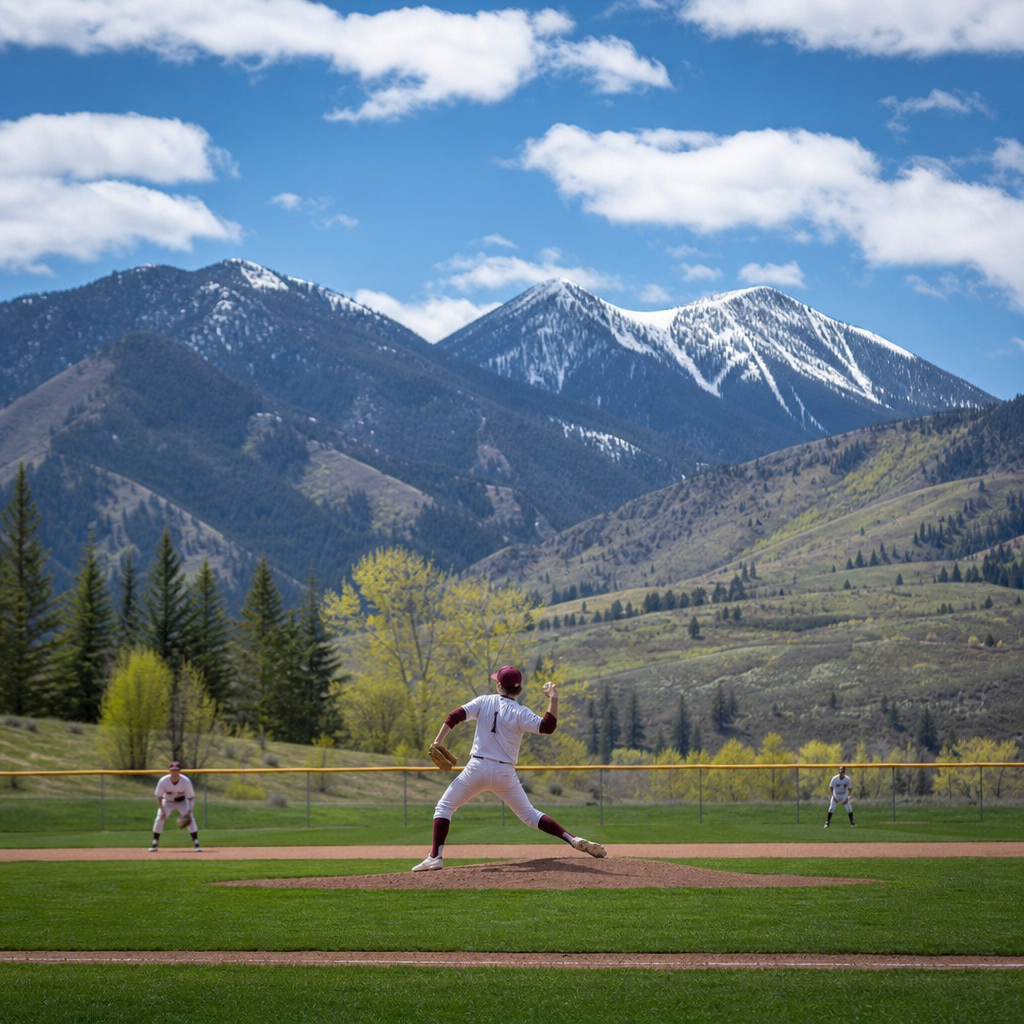
College baseball is often defined by familiar powers, packed SEC stadiums, and a postseason map crowded with traditional brands, but the sport’s real character also lives in programs that developed on different timelines, in unusual regions, or through identities that do not fit the standard script. In this guide to unique college baseball programs, “unique” means more than quirky mascots or remote campuses. It refers to teams shaped by distinctive geography, mission, history, player pipelines, facilities, scheduling demands, or competitive models. I have covered college baseball long enough to know that the programs people remember most are not always the ones with the most Omaha appearances. They are the ones with a clear sense of place and purpose.
That matters because college baseball is far more diverse than casual fans realize. The NCAA structure spans major-conference contenders, mid-major innovators, service academies, historically Black colleges and universities, cold-weather schools, urban commuter campuses, and independent-minded programs building national relevance outside the spotlight. For readers exploring the broader “Minor Leagues and College Baseball” landscape, this hub matters because these miscellaneous programs reveal where player development, regional culture, and institutional priorities intersect. They also explain why the sport remains one of the most locally rooted games in American athletics.
A unique college baseball program usually stands out for one of six reasons: location, institutional mission, recruiting footprint, style of play, resource model, or historical role. Dallas Baptist built a national profile as a private Christian university without football. West Virginia turned travel and weather obstacles into roster resilience. Army and Air Force operate under service commitments that shape recruiting and roster planning in ways most coaches never face. Grambling and Southern carry deep HBCU traditions that tie baseball to community identity. Oregon State proved a non-blueblood in the Pacific Northwest could become a national benchmark through pitching development and disciplined roster construction.
As a hub article, this page maps the miscellaneous side of college baseball comprehensively. It highlights the types of programs worth studying, explains why they are different, and gives practical examples readers can use when comparing schools, conferences, and development paths. If you want to understand the road less traveled in college baseball, start with the programs that built relevance by leaning into constraints instead of waiting for ideal conditions.
What Makes a College Baseball Program Truly Unique?
A unique program has structural characteristics that materially affect how it recruits, trains, travels, schedules, and develops players. That is the key distinction. Every school markets traditions; only some face conditions that reshape baseball operations every day. In my experience, the fastest way to identify a truly unusual program is to ask three questions: Where can it recruit naturally? What institutional rules limit or sharpen roster choices? What competitive advantage has it built that another school cannot easily copy?
Consider geography first. Northern schools routinely lose outdoor practice time before the season opens, so they must develop hitters in cages, use indoor technology well, and schedule long road stretches. Southern powers can host early and train outdoors in January. That difference affects player readiness, injury management, attendance, and budget. Add altitude, travel isolation, or an urban campus with limited space, and baseball operations change immediately. Gonzaga, for example, has sustained relevance in a region where weather and conference visibility can be obstacles, largely through disciplined recruiting and player development.
Institutional mission is the second marker. The service academies are obvious examples, but religious institutions, military colleges, and academically demanding universities all create distinct roster profiles. Coaches at those schools are not simply evaluating bats and arms; they are recruiting players who fit lifestyle expectations, academic standards, and long-term institutional commitments. That narrows the pool, but it also strengthens culture when the fit is right.
The third marker is strategic identity. Some programs become known for elite pitching labs, aggressive baserunning, transfer efficiency, junior college relationships, or regional loyalty. Others stand out because they consistently send polished players into pro ball despite modest budgets. The uncommon part is not being different for its own sake. It is building a repeatable competitive model around realities that cannot be changed.
Regional Outliers and Cold-Weather Builders
One of the clearest categories in miscellaneous college baseball is the regional outlier: a school competing seriously in a place that does not naturally support easy baseball operations. These programs matter because they show how infrastructure and planning can narrow climate disadvantages. Oregon State is the strongest modern example. Before becoming a national champion under Pat Casey, it did not carry the same automatic prestige as historic Southern brands. Its rise came through ruthless player evaluation, physical development, and a pitching-centered culture that translated in postseason play. That blueprint gave the Pacific Northwest a flagship baseball identity.
West Virginia offers a different case. Morgantown is not a conventional baseball destination, and the Mountaineers regularly manage weather, travel, and conference competition against schools with stronger baseball climates. Yet the program has created momentum through toughness, athletic rosters, and visible energy. In practical terms, these teams often recruit players who are less deterred by inconvenience and more motivated by opportunity. That personality becomes part of the team’s edge.
Programs in the Northeast and upper Midwest face similar issues. Connecticut reached Omaha in 2011 and has remained relevant because it treats development as nonnegotiable. St. John’s has long recruited the New York area effectively despite weather and facility challenges common to urban campuses. The lesson is direct: cold-weather programs succeed when they make every constrained rep count, invest in indoor training, and recruit players who understand the work required before the season even begins.
| Program Type | Main Challenge | Typical Advantage | Example |
|---|---|---|---|
| Cold-weather contender | Limited outdoor practice and early travel | Discipline, indoor development, resilient roster culture | Connecticut |
| Geographic outlier | Distance from recruiting hotbeds | Clear identity and undervalued regional recruiting | Oregon State |
| Urban campus program | Facility space and travel logistics | Access to dense local talent markets | St. John’s |
| Mountain or travel-heavy school | Weather, road miles, and uneven scheduling | Mental toughness and roster versatility | West Virginia |
Service Academies and Mission-Driven Programs
No discussion of unique college baseball programs is complete without the service academies. Army, Navy, and Air Force operate under rules and expectations unlike those at conventional Division I schools. Players are not only students and athletes; they are preparing for service obligations that shape admissions, daily routines, and long-term planning. That reality changes recruiting from the first phone call. Coaches must identify athletes who want the institutional mission, not merely the uniform or the conference schedule.
From a baseball standpoint, that creates both limits and strengths. The pool is narrower, transfers are not managed the same way as at many schools, and pro baseball decisions can be more complicated. At the same time, these clubs tend to be older in discipline if not in age. They execute fundamentals well, defend reliably, and rarely lack structure. Army, for instance, has produced strong Patriot League teams by leaning into order, conditioning, and accountability. Air Force faces another layer of challenge because altitude and service-academy demands meet the travel realities of the Mountain West footprint.
Mission-driven programs outside the academies also deserve attention. Schools with strong faith-based identities, such as Dallas Baptist, often build unusually cohesive rosters because players self-select into an environment with clearly stated expectations. Dallas Baptist is especially notable because it became a nationally respected baseball school without football-driven athletic branding. In scouting circles, that program earned credibility by producing polished pitchers and experienced lineups that consistently challenged power-conference opponents. Uniqueness here is not novelty. It is alignment between institutional identity and baseball operations.
HBCU Traditions, Community Identity, and Historical Importance
Historically Black colleges and universities occupy a distinct and essential place in the college baseball map. Their uniqueness comes from history, community, and the role they played when opportunities elsewhere were limited or exclusionary. Programs such as Grambling State, Southern, and Florida A&M are not just teams on a schedule; they are extensions of campus culture and regional pride. When these schools are strong, they connect baseball to alumni networks, marching-band traditions, and local identity in ways many mainstream programs cannot replicate.
Grambling’s baseball history remains especially significant because of Ralph Waldo Emerson Jones and later Wilbert Ellis, who helped shape the program’s legacy and broader HBCU athletics culture. Florida A&M has sent players to professional baseball and has often served as a reminder that baseball talent has never belonged to one demographic or one conference map. The challenge for many HBCU programs today is not relevance but resources. Facilities, recruiting budgets, and staffing often lag behind larger peers, even when tradition is rich.
That tradeoff is important to state plainly. Unique does not always mean competitively advantaged. In some cases, it means historically important programs are carrying more burden with fewer resources. Yet these schools remain central to any honest college baseball hub because they represent pathways, rivalries, and cultural significance that standard rankings miss. Readers exploring this miscellaneous category should treat HBCU baseball as required context, not a side note.
Independent Builders, Player Development Factories, and Future Reading Paths
Another group of unique college baseball programs consists of independent builders: schools that carved out a recognizable brand through development rather than institutional scale. Dallas Baptist fits here again, but so do programs like Coastal Carolina before and after its 2016 national title, East Carolina with its intense regional following, and UC Santa Barbara, which routinely turns precise player identification into wins and pro prospects. These programs are useful because they show that baseball credibility can be manufactured through systems, not inherited through conference logos.
When I evaluate why these schools matter, I come back to player development. Strong miscellaneous programs usually have a clear answer to one of two questions: How do they turn overlooked recruits into all-conference players, or how do they prepare advanced players for professional baseball? The best do both. They use technology such as TrackMan, Rapsodo, and force-plate testing when budgets allow, but tools alone are not the differentiator. The differentiator is having coaches who know what to measure, what to ignore, and how to communicate changes without overwhelming athletes.
As a sub-pillar hub under Minor Leagues and College Baseball, this page should point readers toward several deeper angles. One logical next step is a program-by-program look at cold-weather contenders. Another is a focused guide to HBCU baseball history and modern challenges. A third is an article on service academy recruiting realities. You can also branch into mid-major player development, unusual ballpark environments, and colleges that consistently produce professional talent outside traditional power structures. Together, those paths complete the miscellaneous map.
The road less traveled in college baseball is worth following because it explains the sport more accurately than a list of bluebloods ever could. Unique college baseball programs reveal how teams win with climate disadvantages, mission-driven constraints, smaller budgets, and overlooked recruiting territories. They show why institutional fit matters, why development is often more valuable than hype, and why baseball culture changes from one campus to the next. For fans, recruits, and writers, these programs offer the clearest view of the sport’s range. If you are building your understanding of college baseball, use this hub as your starting point, then explore the individual stories behind each kind of outlier program.
Frequently Asked Questions
What makes a college baseball program “unique” beyond mascots, branding, or location?
A unique college baseball program stands out because of how it was built, not just how it looks from the outside. In this context, uniqueness comes from a program’s development path, institutional identity, recruiting footprint, geographic reality, and long-term baseball culture. Some schools built winning traditions without the financial advantages of national powers. Others emerged in regions not historically associated with high-level college baseball and had to create local interest, facilities, and recruiting credibility from scratch. Still others reflect a mission-driven identity, military structure, faith-based environment, or academic model that shapes everything from roster construction to daily player expectations.
What separates these programs from standard blueblood narratives is that their success often depends on adaptation. They may recruit differently because of climate, admissions standards, service commitments, smaller budgets, or less media attention. They may rely more heavily on player development than on headline recruiting classes. They may also attract athletes who specifically want a certain culture, whether that means a tighter campus community, a nontraditional baseball market, or a developmental environment where under-recruited players can grow into major contributors. In short, a unique program is one whose identity is inseparable from the conditions that shaped it, and that usually makes its story more interesting than a simple win-loss record.
Why do certain college baseball programs thrive even when they are far from traditional baseball hotbeds?
Programs outside the classic baseball corridor often succeed because they become exceptionally intentional. They cannot always depend on nearby deep talent pools, ideal weather, or inherited national attention, so they build advantages in other ways. That might mean identifying overlooked recruits earlier, developing strong ties with junior colleges and summer leagues, investing in player development technology, or building a style of play that fits their environment. In colder-weather regions, for example, teams often learn to maximize indoor training, practice efficiency, roster versatility, and mental discipline because outdoor preparation can be limited for part of the year.
There is also a cultural edge that can emerge from being geographically different. Players who choose these programs often do so for a reason, which can create buy-in and cohesion. They are not accidentally there; they believe in the coaching staff, the opportunity, and the challenge. That can produce resilient teams with a clear internal identity. In some cases, these schools become the flagship baseball option in their area, allowing them to capture regional talent that wants to stay close to home while still competing at a high level. Over time, once a program proves it can develop pros, reach regionals, or upset nationally known teams, distance from the sport’s traditional centers stops looking like a disadvantage and starts becoming part of the brand.
How do institutional mission and school identity shape a baseball program’s style and reputation?
Institutional mission can influence a baseball program as much as conference affiliation or budget. At military academies, for instance, the structure, discipline, and service commitment create a player experience unlike that of a typical Division I school. At faith-based institutions, the team culture may emphasize personal formation, accountability, and community in a way that deeply affects recruiting and retention. At academically demanding universities, coaches may prioritize a certain type of player who can handle rigorous coursework while still competing at a high level. These are not superficial differences. They affect practice schedules, recruiting conversations, leadership standards, and what daily life looks like for athletes.
This kind of alignment often gives a program a reputation that is distinct within the college baseball landscape. Recruits, families, and coaches understand that choosing the school means choosing a full environment, not just a uniform. That can narrow the recruiting pool, but it can also strengthen the fit of the players who do commit. Teams built this way may develop reputations for maturity, toughness, discipline, or strong clubhouse chemistry because the broader institution reinforces those values. When a program’s baseball identity matches the school’s overall mission, it tends to feel more coherent and sustainable, and that coherence is often what makes it memorable.
Do unique college baseball programs develop players differently than traditional powerhouses?
Often, yes. While elite national programs can certainly develop players at a high level, unique programs frequently depend on development as their core strategy rather than a complement to top-end recruiting. They may sign more under-the-radar athletes, multi-sport players, late physical bloomers, or prospects who were overlooked because they played in smaller markets. That means coaching staffs in these programs often become highly skilled at identifying projectable traits rather than polished résumés. They look for athleticism, makeup, competitive consistency, coachability, and room for growth, then build systems designed to turn those traits into production.
Development in these settings can also be more personalized. Players may receive clearer pathways to earning roles, especially if the roster is built around improvement and fit rather than recruiting rankings. Coaches in unique programs often have to be especially strong teachers because they are not simply plugging in finished products. They may focus intensely on pitch design, defensive versatility, strength gains, swing adjustments, and baseball IQ. Just as important, they may create a culture where patience and progression are expected. Over time, this can produce rosters full of experienced, connected players who understand exactly how the program wants to play. That developmental identity is one of the clearest reasons certain lesser-publicized teams consistently outperform assumptions.
Why are these nontraditional or under-the-radar programs important to the overall story of college baseball?
They matter because they reveal the full depth of the sport. If college baseball is viewed only through its biggest brands, richest conferences, and most televised venues, a large part of its character is lost. Unique programs show that there is no single model for relevance, competitiveness, or tradition. Some teams built legitimacy through regional persistence. Others became meaningful because they represent a particular community, mission, or baseball frontier. They demonstrate that the sport is not only sustained by the institutions everyone already knows, but also by schools that found different ways to matter.
These programs also challenge the idea that success must always look the same. A unique team might not measure itself solely by national championships; its significance may also come from player development, regional influence, institutional pride, or the ability to compete credibly despite structural disadvantages. That broadens the conversation and makes the sport richer for fans, writers, and recruits alike. When people pay attention to the road less traveled in college baseball, they begin to see how innovation, culture, geography, and mission all shape the game. In many ways, those programs are not side stories at all. They are essential to understanding why college baseball remains so compelling across so many different campuses and regions.