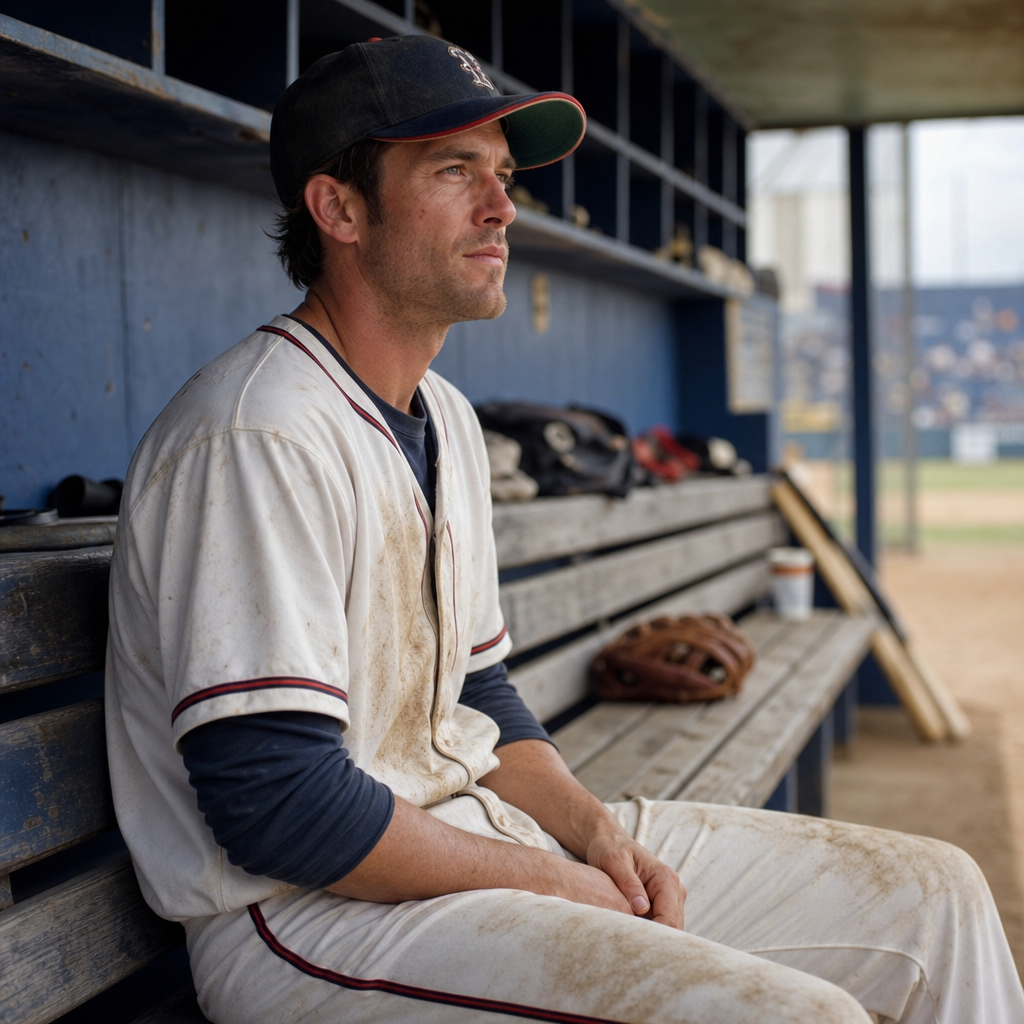
Baseball history is full of famous prospects, celebrated call-ups, and Hall of Fame careers, but one of the sport’s richest stories lives a level below that spotlight: the forgotten legends of the minor leagues. These were players who dominated small towns, packed ballparks, and became household names to local fans, yet never established themselves in Major League Baseball. In this context, a minor league star is not simply a good player who spent time in the farm system. It is a player whose reputation, production, and cultural impact were built primarily outside the majors, often over many seasons, across multiple clubs, and in leagues that mattered deeply to their communities.
This subject matters because the minor leagues have never been just a waiting room for the big leagues. For much of the twentieth century, especially before full organizational control and modern player development systems, leagues such as the Pacific Coast League, International League, American Association, and Negro Leagues operated as serious baseball worlds of their own. Some offered high salaries, longer schedules, favorable climates, and strong civic support. Others existed within discriminatory structures that denied elite players an honest path upward. I have spent years studying old Sporting News archives, Baseball-Reference registers, and local newspaper game stories, and the pattern is unmistakable: many extraordinary careers unfolded outside the majors for reasons that had as much to do with economics, geography, race, roster politics, and timing as with talent.
Understanding these forgotten legends also changes how fans think about baseball value. A .300 hitter in Triple-A over ten seasons, a power-hitting first baseman blocked by a franchise icon, or a Negro League ace excluded by segregation may have given more sustained joy to paying fans than a replacement-level major leaguer with a brief call-up. This hub article covers that broader miscellaneous landscape within minor leagues and college baseball by showing who these players were, why they stayed where they did, how different leagues shaped their legacies, and which names still deserve renewed attention.
What made a player a minor league legend?
A minor league legend usually combined longevity, elite production, and local fame. Statistics mattered, but context mattered more. A player who hit 40 home runs in the Pacific Coast League during an offensive boom is different from one who posted a .340 average across a decade in the high-minors while changing pennant races. Durability was another marker. Fans remembered the player who returned every spring, signed autographs in the same city, and carried a club through years of league travel and unstable ownership. In that sense, legend status was part performance and part relationship.
The clearest examples include Buzz Arlett, often called one of the greatest sluggers never to have a major league career of substance; Jigger Statz, whose minor league longevity became almost mythic; and Ike Boone, a devastating hitter whose Triple-A and independent league production dwarfed what major league audiences saw. Joe Bauman is another essential case. In 1954, playing for Roswell in the Longhorn League, he hit 72 home runs and drove in 224 runs, totals that remain astonishing even after adjusting for league context. Bauman did receive a brief taste of organized baseball above the low minors, but his legend rests overwhelmingly on what he did outside the majors. These careers are reminders that baseball ecosystems create their own stars, regardless of whether New York or Chicago ever notices.
Why some stars never reached the majors
There was never one reason. In my experience reviewing personnel histories, the biggest causes fall into six categories: roster blockage, age bias, defensive limitations, personality conflicts, geography, and structural injustice. Roster blockage was common. A first baseman in an organization with Lou Gehrig or a catcher stuck behind an All-Star could hit for years without a real opening. Teams also made economic decisions. In the old Pacific Coast League, clubs occasionally kept marquee players because they sold tickets. Before the modern draft-and-development pipeline fully standardized talent movement, the path upward could be surprisingly political.
Age bias hurt many players who developed late. A 28-year-old tearing up Double-A might be seen as less projectable than a 22-year-old with tools and less production. Defensive profiles mattered too. Sluggers who could hit but not field were often judged more harshly in an era with smaller benches and fewer specialized roster roles. Then there was geography and league status. West Coast stars could spend years in the Pacific Coast League, which was geographically distant, financially strong, and sometimes treated almost like a third major league. Finally, segregation excluded many Black stars before 1947, and discriminatory habits limited opportunities even after integration began. Any honest account of forgotten legends must treat that as central, not incidental.
| Reason a star stayed in the minors | How it worked in practice | Representative example |
|---|---|---|
| Blocked by established major leaguer | No realistic roster opening at the player’s position | Power hitters trapped behind durable first basemen |
| League economics | Minor league club preferred keeping a drawing card | Pacific Coast League stars in high-attendance cities |
| Late development | Older players labeled organizational depth despite performance | Triple-A veterans with strong batting lines after age 27 |
| Defensive or stylistic concerns | Bat carried profile, but fielding or speed limited promotion | Sluggers viewed as first-base-only options |
| Segregation and discrimination | Elite players denied fair access to MLB opportunities | Negro League greats before and after 1947 |
| Injury, war, or timing | Prime seasons lost, reducing chance for breakthrough | 1940s players whose careers were interrupted by service |
The Pacific Coast League and the rise of regional immortals
No discussion of minor league stars who never made the majors is complete without the Pacific Coast League. From the 1920s through the 1950s, the PCL was uniquely powerful. Its long schedule inflated counting stats, but that should not obscure the quality of play. The league featured experienced veterans, top prospects, and cities large enough to support celebrity players. San Francisco, Los Angeles, Oakland, Seattle, Portland, and Sacramento all produced fan cultures that could elevate a player into a regional icon.
Buzz Arlett stands out here. Playing primarily with Oakland, Arlett hit for average and power at a level that made him a legend on the Coast. He finally reached the majors with the Phillies in 1931 and hit well in a brief stint, but his real fame had already been built in the minors, where he launched hundreds of home runs and became known as one of the game’s most fearsome bats. Jigger Statz is another classic PCL name. He had major league time with Brooklyn and Boston, yet his enduring reputation comes from his extraordinary volume of minor league games, especially with Los Angeles. When a player becomes the face of a league over thousands of games, the majors become almost secondary to the story.
The PCL also reveals an important truth about baseball ambition: not every player was desperate to leave. Better weather, stable employment, strong local endorsement opportunities, and family roots could make a Coast career attractive. In several archival interviews, players described the PCL not as exile but as a legitimate destination. That does not diminish their quality. It underlines how baseball labor markets once created alternatives to the narrow major league narrative.
Negro League greatness outside the major league record
The most important category of forgotten legends includes Black players whose opportunities were restricted or delayed by segregation. Some eventually reached the majors in diminished form, long after their peak. Others never got the chance at all. When historians revisit these careers, the central question is not whether they were major league caliber. Many clearly were. The question is how much baseball history was distorted by a closed system.
John Beckwith is a powerful example. Contemporary accounts described him as one of the greatest right-handed hitters in Black baseball, a player with elite bat speed and immense raw strength. He spent years in the Negro Leagues and winter circuits but never received a major league opportunity during his prime. Dick Lundy, a brilliant shortstop often praised for his all-around game, belongs in the same conversation. So do stars from the Black minor league and barnstorming world whose records are incomplete because schedules were unstable and documentation was uneven. Modern statistical projects, including the Seamheads Negro Leagues Database and the incorporation of Negro League records into the major league historical framework, have helped restore visibility, but many names remain underknown to casual fans.
Any hub article on this topic should state clearly that “never made the majors” often means “was never fairly allowed to.” That is not an emotional flourish; it is a factual description of baseball’s structure before integration. Evaluating forgotten legends without that context produces a distorted list dominated by organizational quirks and bad luck, while minimizing the players most seriously denied their place in history.
Statistical monsters and context traps
Minor league baseball has always produced eye-popping numbers, and separating true dominance from favorable conditions is part of the work. Ballparks, altitude, league quality, travel, equipment, and season length all affected performance. Joe Bauman’s 72-home-run season, for example, deserves admiration, but also context: the Longhorn League played in hitter-friendly conditions, and competition varied widely. That does not make the feat less real. It means responsible analysis asks how extraordinary the performance was relative to its environment.
Tools like OPS+, ERA+, park factors, and league-adjusted translations help, though historical data can be incomplete. Baseball historians often cross-check raw totals with contemporary scouting reports and transaction records. If a player posted massive numbers and multiple clubs still refused to promote him, there may have been hidden issues. Sometimes those issues were legitimate, such as poor defense or trouble handling premium velocity. Other times they reflected flawed evaluation habits. Ike Boone’s extraordinary batting records in the 1920s and 1930s show both sides of the puzzle. His minor league production was undeniable, yet his major league opportunities were limited and brief. Looking only at his MLB line misses the much larger body of evidence that defined his career.
This is why minor league statistics should be read as signals, not verdicts. They tell us who forced attention, who sustained excellence, and who became too productive to ignore. But they gain meaning only when paired with league context and historical circumstance.
How these players became local legends
Minor league stars were often more visible in their communities than major leaguers were in distant big cities. They appeared at civic banquets, sold war bonds, worked offseason jobs locally, and returned year after year. In places without a major league club, the hometown star was the main baseball celebrity. That loyalty created deep memory. Fans did not measure these players by national endorsement deals. They remembered the pennant clincher, the long home run over the grandstand, the walk to the park with a parent, or the player who stayed after games signing scorecards.
From an attendance standpoint, these stars mattered enormously. Before television centralized baseball attention, minor league clubs depended on recognizable names to survive. A veteran slugger could be both the lineup anchor and the marketing department. Newspapers leaned into that role with colorful nicknames, serialized season narratives, and daily statistical updates. Over time, repeated local coverage turned sustained excellence into folklore. That is why some players remain vivid in regional baseball museums and almost invisible in national histories.
For readers exploring the broader minor leagues and college baseball landscape, this is the connective idea. Not every important baseball figure fits the major league ladder. Some shaped developmental pipelines, some dominated college programs, and some became enduring symbols of a city or league without ever securing a lasting MLB job. The “miscellaneous” category is useful precisely because it captures those careers that traditional prospect stories leave out.
How to research forgotten minor league stars today
The best starting points are Baseball-Reference’s minor league pages, SABR biographies, local newspaper archives, Retrosheet transaction logs, and the Seamheads databases for Negro League research. The Sporting News archive is especially valuable because it preserves how players were discussed in their own time. I also recommend checking team media guides, state historical societies, and digitized city newspapers. They often reveal details that national summaries miss, such as salary disputes, defensive reputation, contract rights, or why a player chose to stay in a specific league.
When building out this subtopic hub, useful companion articles would include profiles of Pacific Coast League icons, Negro League stars excluded from MLB, college standouts whose pro careers stalled in the minors, and statistical deep dives on record-setting seasons. Together, those pieces create a fuller map of baseball achievement outside the major leagues. The forgotten legends are not side notes. They are evidence that baseball excellence has always existed across many levels, many regions, and many imperfect systems.
Forgotten legends of the minor leagues matter because they widen baseball history beyond the narrow measure of major league service time. They show that stardom can be local, that dominance can occur outside national headlines, and that opportunity has never been distributed evenly. Players such as Buzz Arlett, Jigger Statz, Ike Boone, Joe Bauman, John Beckwith, and Dick Lundy remind us that talent alone has never determined who becomes famous, who gets promoted, or who is remembered. Economics, segregation, geography, organizational depth, and timing all shaped baseball careers in lasting ways.
For fans, researchers, and writers covering minor leagues and college baseball, this topic offers more than nostalgia. It offers a better framework for evaluating performance, context, and legacy. The next time you scan a minor league register or an old box score, look beyond the question of whether a player made the majors. Ask instead what kind of baseball life he built, what community claimed him, and what barriers defined his path. Then explore the related articles in this hub and keep following the names that history almost left behind.
Frequently Asked Questions
What makes a player a “forgotten legend” of the minor leagues rather than just a prospect who never worked out?
A forgotten legend of the minor leagues is usually more than a talented player who stalled on the way to the majors. The distinction comes from impact, longevity, and memory. These players often built extraordinary reputations in specific cities, leagues, or regions by producing year after year, drawing crowds, and becoming central figures in local baseball culture. In many cases, they were stars in a way that transcended statistics alone. Fans came to know their names, sportswriters covered them heavily, and opposing teams treated them like marquee attractions. They might have led leagues in home runs, batting average, strikeouts, or wins, but just as importantly, they became part of a community’s identity.
What separates them from ordinary “what if” prospects is that their story did not end when they failed to become major leaguers. Instead, their legend was made in the minors themselves. Some played in eras when the gap between top-level minor league baseball and the majors was smaller than modern fans realize, especially before expansion and before today’s farm systems became more rigid. Others stayed in one city long enough to become folk heroes, with careers that were remembered in local newspapers, souvenir programs, and family stories long after their names disappeared from the national record. In short, a forgotten legend is a player whose baseball life mattered deeply to the people who watched it, even if the major league record book barely noticed.
Why did so many dominant minor league players never establish themselves in Major League Baseball?
There was never just one reason, and that is part of what makes these stories so compelling. Some minor league stars were blocked by established major league talent at the same position, especially in eras with fewer teams and fewer roster spots. Before expansion, reaching the majors was mathematically harder than many fans appreciate. A player could be good enough to help a big league club and still find no real opening because a Hall of Famer, an entrenched veteran, or a politically favored player stood in the way. In other cases, organizations simply misjudged players, mishandled development, or had financial incentives to keep a star in the minors, where he helped sell tickets.
Other players were victims of timing, injury, war service, segregation, geography, or personality conflicts. Some were excellent minor league hitters but struggled against the smaller margin for error in the majors. Others had a skill set perfectly suited to certain ballparks or league conditions but less effective at the highest level. There were also players who received only a brief major league trial and were judged too quickly, especially in earlier decades when scouting and player development were less refined. And for Black players before integration, the reasons were even more unjust and obvious: many elite talents were denied a fair chance altogether, forcing them to build legendary careers outside the American and National Leagues. When people ask why a minor league star never made it, the honest answer is often a mix of baseball reasons and structural barriers.
Were the highest levels of the minor leagues once strong enough that a player could become truly famous without being a major leaguer?
Yes, absolutely. That is one of the most important historical points to understand. In the first half of the 20th century, especially, top minor leagues such as the Pacific Coast League, the International League, and the American Association could support intense local followings and feature excellent baseball. In some cities, these teams were major civic institutions. Attendance was strong, newspapers covered them extensively, and players who stayed long enough became local celebrities. The Pacific Coast League in particular developed a reputation for long seasons, strong competition, and stars who were every bit as beloved in their markets as major leaguers were elsewhere.
This environment created room for a different kind of baseball fame. A player did not have to appear in a World Series to matter deeply to fans. If he hit 40 home runs in Los Angeles, dominated on the mound in Minneapolis, or spent a decade terrorizing opposing pitchers in Baltimore, he could become a household name in that region. Some players even chose to remain in the minors because the pay, lifestyle, city, or stability suited them better than a precarious major league role. In that sense, minor league fame was not always a consolation prize. For certain players and fan bases, it was the main story. That is why articles about forgotten legends resonate: they recover a time when baseball culture was more local, and when greatness could flourish outside the formal major league spotlight.
How should fans evaluate the legacy of a minor league star who never proved himself in the majors?
The best approach is to judge the player within the world he actually influenced, not only by the world he failed to enter. Major League Baseball remains the sport’s highest standard, so it is fair to acknowledge that a player without major league success has an incomplete national résumé. But that should not erase the excellence he displayed over hundreds or even thousands of games in the minors. If a player consistently dominated his level, won batting titles, set attendance records, led championship clubs, or became the face of a franchise, that legacy is real. It may be local rather than national, but it is no less meaningful to the history of baseball communities.
Context matters here. Minor league statistics should be read carefully, with attention to era, league quality, ballparks, and competition level. At the same time, fans should not fall into the trap of dismissing these careers as irrelevant because they happened outside the majors. Baseball history is richer than one set of record books. The legends of the minors tell us how the sport lived in neighborhoods, mill towns, ports, railroad hubs, and sprawling regional circuits. They reveal what fans valued: reliability, showmanship, power, toughness, loyalty, and presence. A player who became the symbol of a franchise or a city earned a legacy that cannot be reduced to a missing major league breakthrough.
Why do stories about minor league stars who never made the majors still matter to baseball history today?
They matter because they restore depth to the game’s past. Baseball history is often told through pennants, MVP awards, Hall of Fame plaques, and superstar careers, but that version can flatten the sport into a story of only the winners at the highest level. The forgotten legends of the minors remind us that baseball has always been a vast ecosystem filled with regional idols, overlooked brilliance, and careers shaped by circumstance as much as talent. These players broaden our understanding of what baseball fame looked like and who got remembered versus who was left behind.
They also matter because they connect the game to place. Minor league stars often represented a city more intimately than major leaguers did. They rode the buses, played in front of the same fans every summer, appeared in local businesses, and became woven into civic memory. Recovering their stories helps preserve the cultural history of towns and leagues that once lived and breathed baseball. Finally, these stories challenge the assumption that value exists only at the top. A player can be historically important because he inspired a community, elevated a franchise, or embodied an era, even if he never had a long major league career. That perspective does not diminish the majors; it enriches the entire history of the sport.