Sustainability efforts in minor league baseball operations have moved from occasional recycling drives to a practical management priority that affects energy use, food service, transportation, field care, community relations, and long term operating costs. In this context, sustainability means running a club and ballpark in ways that reduce waste, conserve water and energy, lower emissions, and strengthen local communities without compromising the fan experience or player development mission. For minor league teams, the topic matters for reasons that are more immediate than image alone. Most clubs operate with lean staffing, tighter margins than major league organizations, older facilities, seasonal labor, and municipal ownership structures that require every capital decision to be justified. I have worked with sports operators reviewing game day waste plans and utility budgets, and the pattern is consistent: the best sustainability programs succeed when they are framed as operational discipline, not as branding theater. A team that cuts landfill hauling, upgrades inefficient lighting, optimizes irrigation, and sources smarter concessions is not only reducing environmental impact; it is protecting budget flexibility and improving resilience during hot summers, water restrictions, and volatile utility pricing.
Minor league baseball is especially well suited to this work because clubs are deeply embedded in their local markets. A ballpark is often a civic asset used for concerts, school events, youth tournaments, and community gatherings beyond the baseball calendar. That means any change in purchasing, waste sorting, water management, or transportation ripples outward to vendors, city departments, sponsors, and fans. It also means sustainability can become a hub topic connecting many related subjects within the broader minor leagues and college baseball landscape: stadium operations, fan engagement, groundskeeping, concession strategy, travel logistics, community partnerships, internships, facilities management, and local economic development. The most effective clubs treat sustainability as a cross functional system. They measure electricity demand, train staff, standardize vendor expectations, align with city recycling rules, and communicate clearly to fans. When done well, these efforts create cleaner venues, lower avoidable costs, and stronger community trust. That combination explains why sustainability is no longer a side project in minor league baseball operations.
Why sustainability is now an operating issue, not a side campaign
The first operational reality is that minor league facilities consume substantial resources in short bursts. A stadium may sit relatively quiet during the day, then ramp up lights, kitchen equipment, scoreboards, HVAC, sound systems, and restroom demand for a three hour event attended by thousands of people. That pattern creates inefficiencies if systems are outdated or poorly scheduled. LED sports lighting is the clearest example. Compared with legacy metal halide fixtures, LED systems generally use less electricity, provide instant on and off capability, and reduce maintenance because lamps last longer. For a club with frequent events and limited maintenance labor, that matters. The same logic applies to occupancy sensors in offices, programmable thermostats in suites, and demand based controls in kitchens and concourses.
Water is another major issue. Baseball parks require irrigation, restroom capacity, cleaning, and food service support, often during the hottest months. Grounds crews already think in terms of moisture balance, turf stress, drainage, and playability, so sustainability is a natural extension of standard field management. Smart irrigation controllers, soil moisture sensors, drought tolerant landscape beds, and targeted hand watering can reduce excess use without sacrificing the playing surface. In arid regions or drought prone municipalities, these measures also help teams stay aligned with local restrictions and avoid reputational damage from visibly wasteful practices.
Waste is often the most visible sustainability challenge because fans see overflowing bins, discarded cups, food scraps, and promotional materials after every game. Yet waste reduction is also one of the fastest areas for operational gains. Many clubs begin with a waste audit: identify what is actually leaving the building, by weight or volume, and where it is generated. In practice, the heaviest streams are usually cardboard from concessions, aluminum and plastic beverage containers, food waste, and mixed landfill material contaminated by poor sorting. Once a team knows the waste profile, it can redesign bin placement, improve signage, renegotiate hauler service levels, and work with concessionaires on packaging choices. These are straightforward management decisions, not abstract ideals.
Energy, water, and field management in a seasonal venue
Ballpark energy management works best when teams separate high impact capital projects from low cost procedural fixes. Capital projects include LED field lights, variable frequency drives on pumps, high efficiency HVAC units, weather sealing, and upgraded refrigeration in kitchens and bars. Procedural fixes include startup and shutdown checklists, event day scheduling, preventive maintenance, and clearer accountability for after hours loads. I have seen clubs discover that the easiest savings came from equipment that was simply left running overnight in offices, clubhouses, and concession spaces. A disciplined closing routine can cut needless consumption immediately.
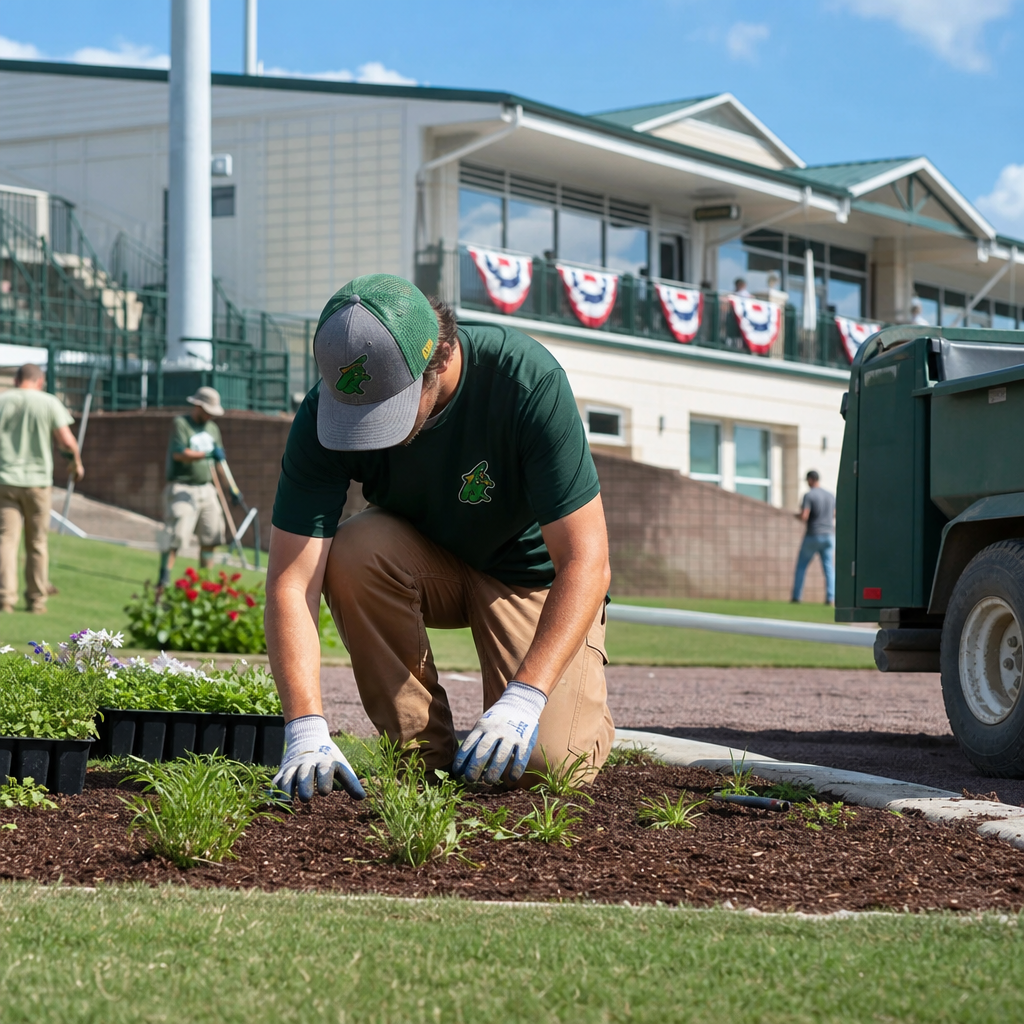
Grounds operations are a distinct sustainability category because agronomy decisions directly affect water, fertilizer, fuel, and labor. Many minor league clubs now use integrated pest management principles, applying treatments only when monitoring data indicates a real need rather than spraying on a fixed habit. Soil testing helps groundskeepers avoid overapplying nutrients, which saves money and reduces runoff risk. Reel mowing, careful blade maintenance, and route planning can also lower fuel use while improving turf quality. On nonfield areas, converting ornamental beds to native or adapted species reduces irrigation and maintenance demand. These changes rarely draw headlines, but they are among the most durable improvements a facility can make.
Procurement also shapes resource use. When clubs replace old hand dryers, faucets, ice machines, or refrigerators, choosing models with recognized efficiency certifications can materially affect utility costs over time. The key is life cycle thinking. The cheapest purchase price is often not the lowest total cost once maintenance, energy use, and replacement frequency are included. Municipal partners and public authorities increasingly understand this point, especially when stadium leases assign utility expenses to teams or split responsibilities in complex ways. A sustainability plan should therefore include an asset inventory, expected replacement schedule, and utility baseline so that upgrades are prioritized by payback and operational risk.
Waste reduction, concessions, and smarter purchasing
Concessions sit at the center of ballpark waste because every game produces packaging, disposable service ware, cooking oil, cardboard, and unsold food. The most reliable strategy is source reduction: eliminate unnecessary material before worrying about disposal. Smaller condiment packets can be replaced with pumps or portion control stations. Bulk beverage programs can reduce individual container volume. Durable cups work well in premium spaces where collection is manageable, while compostable service ware may fit venues with access to industrial composting. The important caveat is local infrastructure. A compostable fork sent to landfill behaves much like ordinary trash, so teams should match packaging decisions to what local processors actually accept.
Donation and diversion programs can also be effective when handled carefully. Unsold prepared food may be eligible for donation through local hunger relief partners if food safety protocols, timing, and storage standards are met. Used cooking oil is commonly collected for recycling. Cardboard should be baled or separated if volumes justify it. Beverage container recovery improves when bins are placed exactly where consumption occurs rather than at random concourse points. Fans sort better when signage uses pictures of actual products sold in that stadium. Generic labels create contamination. That lesson comes up repeatedly in sports venues of every size.
| Operational area | Common action | Primary benefit | Main limitation |
|---|---|---|---|
| Lighting | Convert field and concourse fixtures to LED | Lower electricity use and maintenance | High upfront capital cost |
| Irrigation | Install smart controllers and moisture sensors | Reduced water waste and healthier turf | Requires calibration and staff training |
| Concessions | Reduce packaging and separate cardboard, oil, containers | Less landfill volume and hauling cost | Depends on vendor compliance |
| Transportation | Promote transit, bikes, carpooling, shuttle options | Lower event traffic and emissions | Local transit access may be limited |
| Purchasing | Use reusable, recycled, or certified products | Lower lifecycle impact and stronger vendor standards | Unit prices can be higher initially |
Purchasing policy is the overlooked lever that ties all of this together. If a club writes basic standards into vendor agreements, asks distributors for recycled content and local sourcing options, and reviews packaging during menu planning, it can reduce waste before opening day. Some teams also align sponsors with these goals, which helps fund pilots such as reusable cup systems, water refill stations, or fan education campaigns. The strongest programs do not rely on a single green themed night. They build expectations into everyday purchasing and game day execution.
Transportation, travel, and fan access beyond the parking lot
Transportation is often the largest emissions category linked to sporting events, and in minor league baseball that usually means fan vehicle trips rather than team operations. Most clubs cannot redesign regional transit networks, but they can influence how people arrive. Practical steps include partnering with municipal transit agencies on ticket and fare bundles, improving bike parking, designating rideshare zones that reduce idling, and using pregame communications to promote the easiest low congestion routes. If a stadium is downtown, wayfinding from transit stops matters. If it is suburban, managed carpool parking may be more realistic. Sustainability planning has to fit local geography rather than copying a big league template.
Team and staff travel also deserves attention, even though baseball bus travel is structurally different from air heavy major league schedules. Charter buses are already more efficient per passenger than everyone driving separately, but clubs can still reduce unnecessary trips through smarter scheduling, hotel selection near venues, and consolidated equipment logistics. Front offices can limit shipment waste by reusing totes and standardizing merchandise deliveries. For interns and seasonal workers, transit subsidies or shuttle partnerships may improve both sustainability and retention, especially where parking costs or access barriers are high.
Parking operations offer another underused opportunity. Large paved lots create heat, runoff, and wayfinding issues, yet they can also host practical improvements such as better stormwater management, tree planting, permeable sections in targeted areas, and electric vehicle charging where demand exists. Not every venue needs chargers immediately, and utilization should be evaluated honestly. Still, clubs planning long term facility improvements should consider how vehicle mix is changing. Small incremental upgrades are usually more feasible than dramatic overhauls in the minor league context.
Community partnerships, measurement, and the limits of green promises
The most credible minor league sustainability efforts are locally grounded. Teams succeed when they work with city sanitation departments, watershed groups, utility providers, food rescue organizations, universities, and corporate partners that can supply expertise or rebates. Utility companies frequently offer incentives for lighting retrofits, controls, and efficiency studies. Local colleges may help conduct waste audits or fan surveys. Community organizations can support tree planting, river cleanups, or educational activations that connect the ballpark to regional priorities. These partnerships matter because minor league staffs are small. External expertise helps clubs move faster and avoid expensive trial and error.
Measurement is what separates a serious program from marketing language. At minimum, teams should track electricity, natural gas where applicable, water, total waste, recycling tonnage, hauling frequency, and major purchasing changes. Per capita metrics are useful because attendance varies widely. For example, pounds of waste per attendee, gallons of water per event day, or kilowatt hours per occupied game can reveal whether improvements are real or simply reflect a lighter schedule. Benchmarking should be seasonal and weather aware. A hotter summer will influence irrigation and cooling demand, so trends need context rather than simplistic year over year claims.
There are also real limitations. Older municipally owned ballparks may have deferred maintenance, fragmented control over capital budgets, and lease structures that weaken incentives. Composting may be unavailable. Reusable systems can fail if staffing and washing capacity are inadequate. Eco labeled products can cost more or perform poorly if selected without testing. Fans may ignore bin signage. For these reasons, the strongest sustainability plans prioritize feasible wins, pilot new ideas on a small scale, and report results honestly. The goal is continuous operational improvement, not perfection. For readers exploring related topics under minor leagues and college baseball, this hub should lead naturally into deeper articles on stadium design, concessions management, groundskeeping, sports business strategy, and community engagement. Sustainability touches each of those areas because it is fundamentally about how a club uses resources, manages risk, and serves its market.
Sustainability efforts in minor league baseball operations are most effective when they are treated as a management system that links facilities, concessions, grounds, transportation, purchasing, and community relations. The core lesson is simple: clubs do not need massive budgets to make meaningful progress. They need accurate baselines, practical priorities, vendor cooperation, staff training, and leadership willing to focus on repeatable habits instead of one off campaigns. Energy efficient lighting, smart irrigation, better waste sorting, food donation partnerships, and transit friendly fan guidance all deliver value when they fit local conditions. In my experience, the clubs that sustain momentum are the ones that assign ownership, measure outcomes, and keep refining details after the publicity fades.
As a hub within the minor leagues and college baseball space, this topic matters because it connects operational decisions that are often discussed separately. A greener ballpark is also a better managed ballpark: cleaner concourses, lower avoidable costs, stronger municipal relationships, and a more resilient event operation. The tradeoffs are real, especially in older facilities, but the path forward is clear. Start with utility and waste data, identify the biggest pain points, and build from there. If you manage, cover, or study baseball operations, use this page as your starting point and then explore the related subtopics that turn sustainability from a broad idea into daily practice.
Frequently Asked Questions
1. What does sustainability actually mean in minor league baseball operations?
In minor league baseball, sustainability means managing the club and ballpark in ways that reduce environmental impact while still supporting player development, fan enjoyment, and sound business performance. It goes far beyond a few visible recycling bins. In practice, it includes how electricity is used in stadium lighting and offices, how water is managed on the field and in restrooms, how concessions are sourced and packaged, how waste is sorted and removed, how teams handle transportation and deliveries, and how front offices work with local vendors and community groups. The goal is to conserve resources, lower emissions, reduce unnecessary waste, and create a more resilient operation that can perform well over time.
What makes sustainability especially relevant in minor league baseball is the need to balance tight budgets with community expectations. Clubs often operate in smaller markets and in facilities with varying ages and infrastructure, so every operational decision matters. A practical sustainability strategy can help teams control utility costs, extend equipment life, improve staff procedures, and strengthen relationships with municipal partners, sponsors, and fans. In other words, sustainability in this setting is not just an environmental statement. It is an operating model that helps clubs run smarter, reduce long-term costs, and demonstrate responsible stewardship of both local resources and community trust.
2. What are the most effective sustainability initiatives for a minor league ballpark to implement first?
The most effective starting points are usually the measures that offer clear operational savings, straightforward implementation, and visible impact. Energy efficiency is often first on the list. Upgrading to LED field lighting, concourse lighting, office fixtures, and parking lot lights can significantly cut electricity use and reduce maintenance because LEDs last longer and require fewer replacements. Smart controls for lighting and HVAC systems are also valuable, especially in facilities that host events beyond baseball. These systems help teams avoid cooling, heating, or lighting spaces unnecessarily, which can create immediate savings without affecting the fan experience.
Waste reduction is another high-impact area. Minor league clubs generate substantial volumes of food packaging, cardboard, cans, bottles, and promotional materials during games and events. Establishing clearly labeled waste, recycling, and compost stations in fan-facing areas and back-of-house spaces can dramatically improve diversion rates if staff and vendors are trained properly. Teams can also work with concessionaires to reduce single-use items, shift to recyclable or compostable packaging where local processing exists, and better manage inventory so food waste is minimized. Even simple changes, such as moving from individually wrapped condiments to bulk dispensers where appropriate, can reduce material use at scale.
Water management is equally important, especially because baseball operations involve field irrigation, restroom usage, cleaning, and food service. Installing low-flow fixtures, monitoring leaks, upgrading irrigation controls, and adjusting watering schedules based on weather data can all reduce water consumption. On the field side, grounds crews can often adopt more precise irrigation practices and soil management techniques that maintain high playing standards while conserving water. Starting with these core areas, energy, waste, and water, gives clubs a practical foundation for a broader sustainability plan and often builds momentum for more advanced improvements later.
3. How can sustainability efforts reduce costs for minor league teams without hurting the fan experience?
One of the strongest arguments for sustainability in minor league baseball is that it often aligns with operational efficiency. Lower electricity use from efficient lighting and climate control reduces utility bills. Better water management cuts irrigation and facility costs. Waste reduction can shrink hauling expenses, especially when fewer materials are sent to landfill. Purchasing more strategically, whether through durable service items in select spaces, bulk supplies, or improved inventory controls, can reduce recurring costs over a full season. These savings are especially meaningful in minor league settings, where margins can be tight and clubs are constantly looking for ways to improve performance without major new revenue streams.
Importantly, well-designed sustainability efforts usually enhance rather than diminish the fan experience. Fans generally appreciate cleaner concourses, better-organized waste stations, improved lighting quality, and visible efforts to support the local community. Locally sourced food and beverage offerings can create a stronger sense of place while reducing transportation distance and supporting regional businesses. Refillable water stations can improve convenience. Digital ticketing and paperless communication can streamline the guest journey. When sustainability is implemented thoughtfully, fans experience it as modern, efficient, and community-minded rather than restrictive.
The key is execution. Teams should avoid changes that feel confusing or lower service quality. For example, if a club introduces compostable packaging, it should also provide clear signage and staff guidance so fans know how to dispose of items correctly. If transportation emissions are a focus, clubs can promote shuttle partnerships, bike access, or transit incentives without making parking less functional for those who need it. Sustainability works best when it is integrated into the operation in a way that improves convenience, supports the brand, and quietly lowers waste and costs in the background.
4. What role do food service, field maintenance, and transportation play in a baseball team’s sustainability strategy?
These three areas are central to a credible sustainability strategy because they touch some of the most resource-intensive parts of ballpark operations. Food service influences packaging waste, sourcing decisions, refrigeration energy use, cooking equipment efficiency, and food waste volumes. A team that works closely with concession partners can make substantial progress by choosing reusable, recyclable, or compostable service ware where feasible, donating surplus edible food when regulations and logistics allow, and sourcing from local or regional producers when it supports quality and cost goals. Menu design also matters. Offering more seasonal products or reducing overproduction can lower waste while maintaining variety for fans.
Field maintenance is another critical piece because baseball fields require careful water use, mowing, fertilization, pest management, and equipment operation. Grounds crews play a major role in sustainability by using weather-responsive irrigation systems, monitoring soil moisture, improving drainage practices, and applying fertilizers and treatments with precision rather than excess. Efficient maintenance schedules, upgraded equipment, and responsible turf management can preserve field quality while reducing fuel use, chemical inputs, and water demand. The objective is not to compromise playing conditions. It is to deliver consistently strong field performance with smarter resource management.
Transportation matters both directly and indirectly. Team travel, staff commuting, fan transportation, vendor deliveries, and service vehicles all contribute to emissions. While minor league clubs may have limited control over every part of that system, they can still make meaningful improvements. Examples include consolidating deliveries, using fuel-efficient or electric maintenance carts where possible, coordinating with local transit agencies, incentivizing carpooling among staff, and helping fans understand alternative transportation options on game day. Even small changes in transportation planning can reduce congestion, improve the arrival experience, and support broader local sustainability goals. Taken together, food service, field care, and transportation represent practical areas where clubs can make measurable progress while reinforcing operational discipline.
5. How can a minor league baseball team measure and communicate the success of its sustainability efforts?
Measurement starts with establishing a baseline. A team needs to understand current performance before it can demonstrate improvement. That usually means tracking electricity use, natural gas or fuel consumption, water use, waste generation, recycling and compost diversion rates, purchasing patterns, and in some cases transportation-related indicators. Teams do not need a perfect data system on day one, but they do need consistent methods. Monthly utility bills, waste hauler reports, concession data, maintenance logs, and vendor purchasing records can provide a strong foundation. Once a baseline is in place, clubs can set realistic targets such as lowering water use per event, increasing waste diversion, reducing lighting energy demand, or cutting landfill tonnage over the course of a season.
It is also important to define success in operational terms, not just environmental ones. A successful initiative might reduce utility costs, improve maintenance efficiency, strengthen sponsor interest, increase staff participation, or generate positive fan feedback. For example, if a recycling and compost program reduces contamination and lowers hauling expenses, that is a meaningful result. If a local sourcing program strengthens community partnerships and enhances the concession experience, that also counts as progress. Sustainability in minor league baseball should be evaluated through multiple lenses: environmental performance, financial impact, operational practicality, and community value.
Communication should be clear, specific, and credible. Fans and partners respond better to concrete examples than vague claims. Instead of saying a team is “going green,” it is more effective to explain that the club installed LED lighting, reduced water use on the field, diverted a measurable percentage of game-day waste, or partnered with local organizations on food recovery and neighborhood cleanups. Teams can share updates through signage, in-game messaging, annual community reports, sponsorship materials, and digital channels. The best communication approach is transparent and grounded in actual results. That builds trust, keeps staff engaged, and shows that sustainability is part of how the organization operates, not just a short-term marketing campaign.