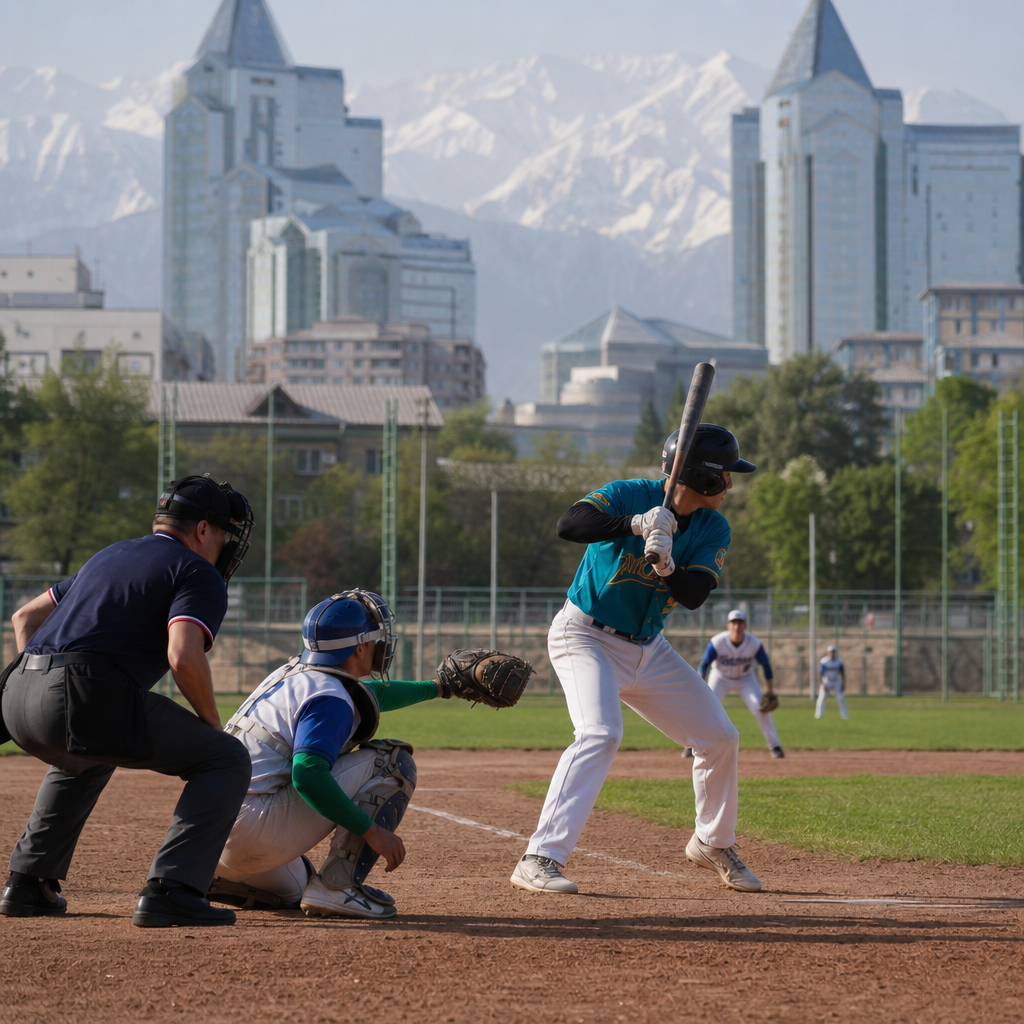
Baseball in Kazakhstan is an unusual story of cultural exchange, institutional persistence, and niche sporting ambition in a country better known for boxing, wrestling, cycling, and winter sports. In practical terms, baseball in Kazakhstan refers to a small but organized ecosystem of youth training, local clubs, national team activity, school outreach, and intermittent international competition. It sits inside the wider landscape of international baseball, where the sport often grows not through mass popularity first, but through educators, expatriates, military contacts, federation organizers, and determined volunteers who build it one field, one team, and one generation at a time.
I have worked with emerging baseball markets long enough to recognize the pattern immediately: the sport rarely arrives as a finished product. It begins with improvised diamonds, borrowed equipment, translated rulebooks, and coaches who must teach both technique and sporting culture together. Kazakhstan fits that pattern. The country has the infrastructure and administrative capacity to support organized sport, yet baseball has had to compete for attention, funding, facilities, and media space against deeply rooted national preferences. That tension is exactly why the topic matters. Kazakhstan shows how a novel sport can survive in a large Eurasian state without becoming mainstream, and how even modest participation can create durable links to global competition, youth development, and regional identity.
For readers exploring international baseball, Kazakhstan belongs in the miscellaneous hub because it illustrates several important themes at once. First, geography matters: Kazakhstan connects Europe and Asia, which affects travel costs, tournament alignment, and federation relationships. Second, sporting legacy matters: Soviet and post-Soviet systems shaped coaching structures, school sports, and public funding expectations. Third, scale matters: in a country with vast distances between cities, baseball development depends heavily on a few local centers of energy. If you want to understand how baseball expands beyond its traditional powerhouses, Kazakhstan offers a useful case study in patience, adaptation, and realism.
How Baseball Reached Kazakhstan and Took Root
Baseball did not emerge organically from traditional Kazakh games, nor did it benefit from a century of professional visibility the way football did. Its development is tied to the broader post-Soviet opening that exposed Kazakhstan to more international sporting influences after independence in 1991. During that period, new federations formed across many sports as administrators sought recognition, access to tournaments, and ties to international governing bodies. Baseball and softball entered that environment as sports with low domestic awareness but clear global structures, rule standardization, and opportunities for youth and national team participation.
In many developing baseball nations, the first durable gains come from institutions rather than spectators. Kazakhstan followed that route. Coaches, teachers, and sports officials introduced the game in schools and youth clubs before any commercial audience existed. Training often depended on multipurpose fields rather than purpose-built diamonds, which meant that basic baseball literacy became as important as athletic ability. Players had to learn the geometry of the field, the logic of force plays, the rhythm of innings, and the strategic split between offense and defense. That educational burden is significant in any new market, and it slows expansion unless committed local leaders keep programs running year after year.
The country’s baseball growth has also reflected the realities of regional competition. Unlike nations in East Asia or the Caribbean, Kazakhstan does not sit next to a dense cluster of baseball-heavy countries offering frequent nearby games. Travel to meaningful opponents can be expensive and administratively complex. As a result, domestic continuity matters even more than international visibility. I have seen this issue repeatedly in emerging federations: one missed year of youth activity can erase several years of progress. Kazakhstan’s story is therefore less about sudden breakthroughs and more about holding a fragile sporting ecosystem together long enough for skills, coaching habits, and local tradition to accumulate.
The Structure of Baseball in Kazakhstan Today
Baseball in Kazakhstan operates through a federation model common across non-mainstream sports. A national governing body typically coordinates registration, competition, coaching, and relations with international organizations, while local clubs and youth schools do the daily work of player development. In practice, the health of the sport depends on a short list of fundamentals: whether children can access equipment, whether trained adults can coach regularly, whether cities can host games, and whether national selections have enough fixtures to improve. Without those basics, a federation can exist on paper but fail to produce a sustainable baseball culture.
At the ground level, most baseball activity is concentrated in urban centers where schools, municipal sports departments, and indoor training options make year-round organization possible. Climate is a serious factor. Kazakhstan’s long winters limit outdoor play, so serious programs must adapt through gyms, indoor halls, strength work, and skill-specific drills. That changes coaching priorities. Programs cannot rely only on game repetitions; they must build throwing mechanics, batting technique, footwork, and tactical understanding in constrained spaces. Good coaches in these environments become highly inventive, using tees, soft toss, medicine-ball routines, and small-area defensive drills to preserve progress until outdoor conditions improve.
Because this article serves as a hub for miscellaneous coverage within international baseball, it is useful to frame Kazakhstan’s baseball ecosystem in operational terms rather than romantic ones. The sport survives through repeatable processes, not novelty. These are the pillars that usually determine whether baseball programs in Kazakhstan advance or stall:
| Development Area | What It Means in Kazakhstan | Why It Matters |
|---|---|---|
| Youth recruitment | School outreach, introductory clinics, and coach-led beginner groups | Creates the player base that every club and national team depends on |
| Coach education | Rule instruction, skill teaching, practice planning, and safety standards | Prevents dropout and raises the quality of training quickly |
| Facilities | Shared fields, adapted spaces, and indoor winter training sites | Determines how often players can practice and compete |
| Equipment supply | Bats, gloves, balls, catchers’ gear, helmets, and field markers | Without gear, beginners cannot transition into real games |
| Competition calendar | Local leagues, regional events, and occasional international fixtures | Games are the test that turns practice into development |
| Federation support | Administration, travel coordination, affiliation, and promotion | Keeps programs connected to broader baseball pathways |
That table captures the practical reality. Baseball in Kazakhstan is not held back by a lack of enthusiasm alone; it is shaped by logistics. Every successful local program has solved some version of these six problems. Where those problems remain unsolved, participation tends to stay temporary and informal.
Why Baseball Remains a Niche Sport in Kazakhstan
The simplest answer is competition. Kazakhstan already has successful, culturally familiar sports with stronger institutional backing, larger talent pipelines, and more visible national heroes. Boxing brings international medals. Cycling gained prestige through riders and major events. Wrestling and judo fit long-standing combat sport traditions. Football dominates general spectator attention. Ice hockey benefits from climate, facilities, and regional relevance. Against that backdrop, baseball asks families, schools, and funders to invest in a sport that many people have never watched in full and may not immediately understand.
Complexity is another barrier. Baseball is easy to misread as simple bat-and-ball recreation, but organized play depends on layered rules, specialized positions, and subtle decision-making. In countries where the sport is already embedded, children absorb these ideas casually through television, family, and playground imitation. In Kazakhstan, many beginners start without that cultural shorthand. Coaches must explain why a runner tags up, when an infield fly applies, why pitch counts matter, how lead-offs work, or why a catcher’s gear and role are unique. That learning curve can be overcome, but it requires time and teaching capacity.
Media visibility also shapes growth. A sport becomes easier to sustain when children can watch elite versions of it. Access to Major League Baseball highlights, international tournaments, and online coaching content has helped newer baseball countries more than many people realize. Still, passive viewing is not enough. What converts curiosity into participation is local visibility: a nearby team, a school demonstration, a municipal tournament, a recognizable coach. Kazakhstan’s challenge has been turning distant global baseball into a local habit. That is why grassroots organizers matter so much more here than celebrity endorsement or occasional news coverage.
There is also a funding tradeoff. Baseball requires relatively modest facilities compared with some sports, but the equipment burden is real, especially for beginners. Gloves are personal and sized. Balls wear out. Catching gear is non-negotiable for safety. Bats vary by age and competition standard. Bases, helmets, protective screens, scorebooks, and field lining all add cost. In an emerging market, these expenses can make baseball look more complicated than football, athletics, or wrestling programs that use more familiar local supply chains.
Player Development, Coaching, and the National Team Pathway
If Kazakhstan is to strengthen its position within international baseball, player development is the decisive issue. In my experience, countries at this stage improve fastest when they stop treating the national team as the beginning of development and start treating it as the final checkpoint in a long pipeline. That pipeline should begin with children learning throwing patterns, movement efficiency, and game awareness before position specialization hardens. Baseball punishes late technical correction. An unrefined throwing action or inefficient hitting sequence can become deeply ingrained if it is not addressed early.
Good youth baseball in Kazakhstan therefore depends on teaching transferable fundamentals. Throwing mechanics are central because they affect arm health, defensive reliability, and eventual pitching potential. Coaches need to teach grip, direction, hip-shoulder sequencing, deceleration, and recovery habits, not just ask children to throw harder. Hitting instruction should emphasize balance, bat path, contact quality, and strike-zone awareness before players chase power. Defensive work should build first-step reactions, glove presentation, footwork around the ball, and communication. Base running, often neglected in new programs, can generate quick competitive gains because disciplined runners create pressure without requiring elite physical tools.
The national team pathway matters because it gives purpose to the system. Even if Kazakhstan is not yet a major force, representing the country provides a clear target for athletes and a benchmark for coaches. International competition exposes weaknesses that local leagues may hide, particularly in pitching depth, strike-zone control, defensive consistency, and situational hitting. Those gaps are not embarrassing; they are diagnostic. The most effective federations use tournament results to redesign training plans, increase coaching specificity, and identify age groups needing intervention. When that loop works, even losses contribute to long-term growth.
Coach development may be even more important than player recruitment. One strong coach can influence hundreds of athletes over a decade. In emerging baseball nations, the best coaching systems combine formal certification, mentorship, translated teaching materials, and regular practice observation. Recognized frameworks from organizations such as the World Baseball Softball Confederation help because they standardize terminology and age-appropriate progressions. Kazakhstan benefits when coaches can align local training with international standards rather than improvising everything independently. Consistency makes players more adaptable when they face foreign opponents and different umpiring, tournament formats, or tactical styles.
Kazakhstan’s Place in International Baseball and What Comes Next
Kazakhstan’s baseball future should be judged by durability, not by whether it suddenly produces a professional superstar. That is the most realistic and most useful lens. A healthy baseball nation at this stage is one that keeps children in the sport for multiple years, adds competent coaches, maintains a domestic calendar, and appears regularly in regional competition. If those markers improve, performance gains usually follow. If they do not, isolated wins mean little. International baseball history is full of countries that flashed briefly and then faded because the base underneath them was too narrow.
There are practical reasons for optimism. Digital coaching resources are easier to access than they were twenty years ago. Global baseball equipment networks are broader. International federations have clearer development pathways. Schools are often open to sports that build coordination, discipline, and teamwork, especially when organizers can present a structured program rather than a vague idea. Kazakhstan also has a population base large enough to support regional clusters if development is managed carefully. A few stable city programs can sustain leagues, coaching communities, and talent identification better than a thin national spread with no local density.
The main opportunity is to treat baseball not as an imported curiosity but as a legitimate developmental sport with clear educational value. It teaches reaction time, rotational power, anticipation, tactical reasoning, and individual responsibility within a team structure. It also offers roles for different body types, which helps retention. Not every child needs to be a fast runner to contribute; some may excel at catching, corner infield defense, or command-based pitching. That inclusiveness is a real advantage in school and community settings.
For readers following international baseball, Kazakhstan deserves attention precisely because it is unconventional. It shows how the sport travels, adapts, and survives beyond its traditional centers. The key takeaway is simple: baseball in Kazakhstan is still niche, but it is organized, teachable, and capable of steady growth when supported by coaching, facilities, equipment, and regular competition. If you are mapping the global game, keep Kazakhstan on your radar and explore the related articles in this international baseball hub to understand how emerging baseball nations build the sport from the ground up.
Frequently Asked Questions
How did baseball first take root in Kazakhstan?
Baseball in Kazakhstan emerged not as a mass spectator craze, but as a gradual project shaped by cultural exchange, committed organizers, and international sporting links. Unlike countries where baseball arrived through deep historical ties to the United States, Japan, or the Caribbean, Kazakhstan encountered the sport through post-Soviet openness, educational exchange, and the efforts of local advocates who saw value in introducing something new. In that sense, its development has been less about inherited tradition and more about deliberate institution-building.
Early growth depended heavily on a small number of coaches, teachers, and sports administrators willing to explain the game from the ground up. Because baseball was unfamiliar to most families, players often needed to learn not only how to throw, hit, and field, but also why the sport was worth pursuing at all. That meant baseball’s first foothold came through training sessions, school programs, youth outreach, and demonstration events rather than packed stadiums or extensive media coverage. The sport’s survival required patience, repetition, and a strong belief that even a niche activity could earn a place in the national sports landscape.
Kazakhstan’s experience also reflects a broader global pattern: baseball often grows in new countries through persistent grassroots work rather than immediate commercial success. Local clubs, small federations, and national team initiatives become the backbone of progress. In Kazakhstan, that has meant building an ecosystem step by step, creating opportunities for young athletes, and maintaining enough continuity for the sport to remain visible despite limited resources. The result is a modest but organized baseball culture that stands out precisely because it has had to be built so intentionally.
Why is baseball considered such an unusual sport in Kazakhstan?
Baseball is unusual in Kazakhstan because it exists outside the country’s most established sporting traditions. Kazakhstan is far more widely associated with boxing, wrestling, weightlifting, cycling, football, and winter sports, all of which have stronger public recognition, more developed pathways, and deeper historical familiarity. Baseball, by contrast, has had to introduce itself to a population that may have little prior exposure to its rules, rhythm, or strategic style. For many people, it remains a curiosity before it becomes a serious athletic option.
Part of what makes baseball feel novel is that it asks athletes and audiences to engage with a very different sporting logic. It is not as immediately intuitive to newcomers as football or wrestling, and it relies on a mix of technical skill, tactical patience, and situational awareness that can take time to appreciate. Concepts such as innings, counts, force plays, sacrifice situations, and defensive positioning are not naturally embedded in Kazakhstan’s mainstream sports culture. That learning curve can make the game seem foreign, even when local coaches work hard to make it accessible.
At the same time, that unusual identity is also part of baseball’s appeal. For some players, families, and organizers, the sport offers a chance to participate in something distinctive and internationally connected. It provides an alternative pathway for young athletes who may not fit neatly into more traditional sports systems. In that sense, baseball’s novelty in Kazakhstan is not just a challenge; it is a defining feature of its story. The sport stands out because it represents experimentation, openness, and the willingness of a smaller sporting community to develop expertise in a field where few expected it to grow.
What does the baseball structure in Kazakhstan look like today?
Baseball in Kazakhstan operates on a relatively small scale, but it is more structured than many outsiders might assume. Rather than existing as a loose collection of hobbyists, the sport typically revolves around a network of youth training programs, local clubs, coaches, school engagement, and periodic national team activity. This does not mean Kazakhstan has a large professional baseball economy or a deeply commercial domestic league. Instead, it means the sport has developed a functioning base that allows players to learn, compete, and occasionally represent the country beyond its borders.
Youth development is especially important within this structure. In countries where baseball is still emerging, long-term progress usually depends on introducing the game early and creating consistent training environments. Kazakhstan’s baseball ecosystem has relied on exactly that model. Coaches and organizers focus on teaching fundamentals, building discipline, and keeping young athletes engaged despite the fact that baseball may not yet offer the same visibility or financial opportunity as better-known sports. Schools and community outreach can therefore play a significant role, because they help identify new players and normalize the sport for a broader audience.
National team participation, even if intermittent, is another key part of the structure. International competition gives players motivation, creates benchmarks for development, and helps local administrators justify continued investment. It also connects Kazakhstan to the wider baseball world, where rankings, regional tournaments, coaching exchanges, and governing bodies matter. While the overall system remains niche, its significance lies in continuity: the existence of organized training, clubs, and representative teams shows that baseball in Kazakhstan is not a passing novelty, but a sustained, if still developing, sporting project.
What are the biggest challenges facing baseball in Kazakhstan?
The biggest challenge is scale. Baseball in Kazakhstan competes for attention, funding, facilities, and athletes in a national environment where other sports are far more established. When a sport is not widely understood by the public, it becomes harder to attract sponsors, secure media coverage, recruit new players, and justify infrastructure spending. This creates a cycle in which limited visibility leads to limited resources, and limited resources make it harder to grow visibility. For a niche sport, breaking that cycle requires unusual persistence.
Infrastructure and expertise are also major issues. Baseball depends on specialized equipment, suitable playing spaces, and trained coaches who can teach both fundamentals and game strategy. In countries where the sport is deeply rooted, those elements are taken for granted. In Kazakhstan, they often must be assembled carefully and maintained with fewer resources. Even something as basic as regular access to baseball-specific fields, bats, gloves, catcher’s gear, and competitive opportunities can influence whether a program thrives or struggles. When those elements are inconsistent, player development becomes harder to sustain.
Another challenge is retention. Young athletes may enjoy baseball initially, but they often face pressure to choose sports with clearer local prestige or stronger institutional support. Families may naturally steer children toward disciplines with more visible success stories. That means baseball organizers must do more than teach the game; they must build trust, demonstrate value, and create a sense of progression. Still, these challenges are not unique to Kazakhstan. Around the world, emerging baseball nations grow through long-term commitment rather than rapid transformation, and Kazakhstan’s experience fits that pattern closely.
Does baseball have a real future in Kazakhstan?
Yes, but its future is most realistic when viewed through the lens of steady development rather than sudden mainstream popularity. Baseball in Kazakhstan is unlikely to overtake the country’s leading sports in the near term, and it does not need to in order to matter. A real future for the sport means sustaining youth pipelines, strengthening coaching standards, increasing school outreach, improving local competition, and ensuring that national teams remain active enough to give the sport visibility and purpose. Growth can be meaningful even when it is incremental.
One reason for optimism is that baseball has already demonstrated a capacity to survive in difficult conditions. Sports that disappear quickly usually lack organization, continuity, or committed advocates. Kazakhstan’s baseball community, though small, has shown institutional persistence. The presence of clubs, training programs, and representative competition suggests that the sport has moved beyond the purely experimental stage. That alone is significant. It means baseball has established enough roots to keep developing if support remains consistent.
The broader international context also matters. Baseball’s global expansion increasingly depends on countries like Kazakhstan, where the sport grows through education, federation work, and grassroots commitment rather than large commercial markets. International partnerships, coaching development, and regional competitions can all help strengthen the game domestically. So while baseball may remain a niche pursuit in Kazakhstan, it can still have a durable and respected place in the sporting ecosystem. Its future is not based on becoming the biggest sport in the country, but on continuing its distinctive journey as a small, organized, and ambitious one.