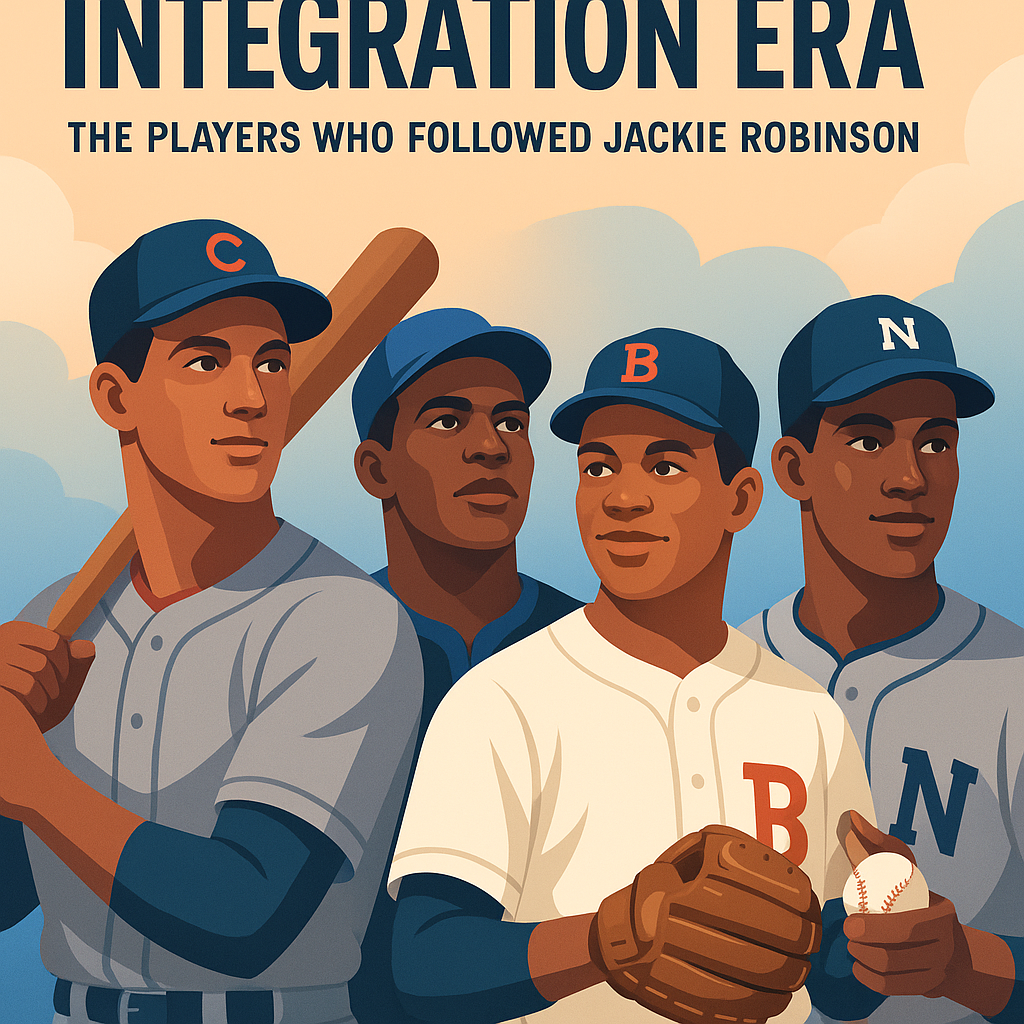
The world of baseball was forever changed on April 15, 1947, when Jackie Robinson took to the field for the Brooklyn Dodgers. This moment marked the end of racial segregation in Major League Baseball (MLB) and initiated the Integration Era. As Robinson shattered the color barrier, his courage and skill opened doors for many African-American and Afro-Latino players to follow. The Integration Era represents a significant moment in not only sports history but also in the broader civil rights movement in America, marking progress in racial equality and harmony.
Understanding the Integration Era is essential because it highlights how sports can act as a microcosm for societal change. While Robinson’s debut is often spotlighted, the era encapsulates the journey of many other athletes who made their mark on the game. Their participation and accomplishments speak to the incredible resilience and talent found within these trailblazers. This article delves into their stories, showcasing how they contributed to the MLB’s transformation into a more diverse and inclusive sport.
Larry Doby: The American League’s First African-American Player
Just 11 weeks after Jackie Robinson’s debut, Larry Doby became the first African-American player in the American League, signing with the Cleveland Indians on July 5, 1947. Doby faced several of the same challenges as Robinson, including racial abuse and discrimination both on and off the field. His entry into the league was a critical step in ensuring that the movement towards integration was not confined to just one league but proliferated throughout professional baseball.
Larry Doby’s impact was profound. Unlike Robinson, who had a short stint in the minor leagues before entering the majors, Doby was thrust directly into the MLB, a testament to his exceptional talent and readiness. Encountering hostility from teammates and opponents alike, Doby persevered and was eventually named to seven All-Star teams. His prowess helped the Indians to a World Series championship in 1948, further solidifying his place as one of the key pioneers following Robinson.
Satchel Paige: The Negro Leagues’ Legend Turned MLB Icon
While Jackie Robinson broke the color barrier, Satchel Paige brought a rich history of African-American talent to the MLB. Paige, a pitching legend from the Negro Leagues, joined the Cleveland Indians at the age of 42, making his debut in 1948. Despite his age, he showed that he could still compete at the highest level, adding depth and skill to an already strong pitching lineup.
Paige’s entrance into the MLB was symbolic. It acknowledged the wealth of talent that had been sidelined in the Negro Leagues due to segregation. Paige was not just a player; he was a bridge between the leagues, showing that Negro League players had much to offer to the majors. His charismatic personality and pitching skill helped garner support for integration and inspired future generations of players.
Roy Campanella: A Force Behind the Plate
Joining Jackie Robinson on the Brooklyn Dodgers roster was Roy Campanella, who became one of the first African-American catchers in the MLB. Campanella’s career with the Dodgers, starting in 1948, was marked by his incredible talent as a catcher and hitter. He was a three-time National League MVP and one of the best catchers in baseball history.
Campanella’s presence on the team highlighted the increasing normalization and acceptance of African-American players in mainstream baseball. His achievements on the field, combined with his professionalism, served to break down racial barriers by demonstrating that African-American players could excel in all facets of the game. This was crucial in continuing the momentum of the Integration Era initiated by Robinson.
| Player | Team | Debut Year | Highlights |
|---|---|---|---|
| Jackie Robinson | Brooklyn Dodgers | 1947 | Broke MLB color barrier, Rookie of the Year |
| Larry Doby | Cleveland Indians | 1947 | First African-American in the American League |
| Satchel Paige | Cleveland Indians | 1948 | MLB All-Star, Negro Leagues legend |
| Roy Campanella | Brooklyn Dodgers | 1948 | 3-time NL MVP, Hall of Famer |
Ernie Banks: Mr. Cub and Trailblazer
Ernie Banks, famously known as “Mr. Cub,” was a transformative figure for the Chicago Cubs and the MLB. Debuting in 1953, Banks spent his entire career with the Cubs, endearing himself to fans as much for his enthusiastic love of the game as for his prowess on the field. Banks was a 14-time All-Star and won back-to-back National League MVP awards in 1958 and 1959.
Banks’ story is one of resilience and joy, proving to be a charismatic ambassador for the sport. His success as one of the few African-American players in the league during the early ’50s provided visibility for integration efforts and inspired other African-American youth to pursue careers in baseball. Banks embodied a sense of optimism and professionalism that transcended the social challenges of his time.
Henry Aaron: From Silent Star to Home Run King
Henry “Hank” Aaron’s influence on baseball extended far beyond his record-breaking numbers. Starting with the Milwaukee Braves in 1954, Aaron’s career was marked by consistent excellence and grace under pressure, despite facing racial prejudice. Aaron broke Babe Ruth’s long-standing home run record in 1974, finishing his career with 755 home runs, a record that stood until 2007.
Aaron’s journey was emblematic of the ongoing struggles faced by African-Americans during the civil rights movement. Often receiving hate mail and threats, Aaron persevered through it all, becoming a symbol of dignity and strength. His impact was immense, inspiring future African-American players to excel and challenging MLB to continue its path toward true equality.
Conclusion: Continuing the Legacy of Integration
The Integration Era, initiated by Jackie Robinson, marked a pivotal shift in Major League Baseball by dismantling racial barriers that had restricted the league for decades. Not merely a series of isolated events, this era consisted of an ongoing struggle for equality and respect faced by every African-American player who followed Robinson’s lead. Players like Larry Doby, Satchel Paige, Roy Campanella, Ernie Banks, and Hank Aaron each faced unique challenges and made distinct contributions, both on and off the field, that paved the way for the generations of diverse talent in today’s game.
Recognizing the impact of these players underscores the power sports hold as a driver for social change and the importance of acknowledging and preserving their legacies. As baseball continues to embrace diversity and inclusion, this legacy serves as a reminder of progress made and the work still necessary to ensure the game is equally open and welcoming to all. Understanding the history of baseball’s integration era enriches our appreciation for the game and the indelible impact these courageous players have had on sports and society.
For fans and historians alike, diving deeper into these stories presents an opportunity to honor the players who shaped the game we love today. As fans of baseball or advocates of equality, we can ensure their contributions are not forgotten and strive to continue their work towards an inclusive future for the sport.
Take a moment to reflect on the current state of baseball and how each fan can contribute to nurturing an environment that celebrates diversity, both on the field and in the stands. We can honor the legacy of the Integration Era by supporting initiatives aimed at promoting equality and inclusion at all levels of the sport.
Frequently Asked Questions
1. Who were some of the key players that followed Jackie Robinson during the Integration Era?
After Jackie Robinson broke the color barrier in 1947, several other prominent African-American and Afro-Latino players paved their way into Major League Baseball, marking the dawn of a new era in the sport. One of the most notable figures was Larry Doby, who became the first African-American player in the American League when he joined the Cleveland Indians just a few months after Robinson. Then there was the legendary Satchel Paige, who despite his advanced age, thrilled audiences with his skilled pitching for Cleveland in 1948, earlier having dominated Negro League Baseball with his showmanship and skill.
Hank Aaron also stands tall among these influential players. Signing with the Milwaukee Braves, Aaron would go on to become all-time great, famously breaking Babe Ruth’s home run record and garnering immense respect for his resilience in the face of racism. Willie Mays is another icon, whose all-around talent and infectious enthusiasm made him one of baseball’s timeless legends during his two-decade career with the New York Giants and later the San Francisco Giants.
Don’t forget Roberto Clemente, the incredible right fielder for the Pittsburgh Pirates. An Afro-Latino from Puerto Rico, Clemente not only achieved immense success on the field but also took pride in his heritage, paving the way for other Latino players. These players collectively redefined the standards of excellence in baseball while forging paths for countless others in various aspects including representation, influence, and skill level.
2. How did Jackie Robinson’s entry into MLB impact the broader civil rights movement?
Jackie Robinson’s debut in Major League Baseball was much more than a sports achievement; it was a seismic event that rippled through every part of American society. During a time when segregation was legally sanctioned across large swaths of the country, especially in the southern states, Robinson stepped onto an integrative stage not just as a sportsman but as a resilient symbol of social change. His presence in MLB confronted the racially oppressive norms of the time, displaying immense courage and grace amid unprecedented hostility and scrutiny.
The visibility that Robinson’s success garnered on such a major platform sent a powerful message—one of inclusion and equality. His perseverance and talent silently challenged the societal status quo, providing hope and inspiration to African-Americans around the nation. Public support for civil rights, fueled by Robinson’s high-profile visibility, grew as America began to recognize the injustice of segregation with newfound clarity.
This moment in sports history also had a lasting influence on future legislation and social advocacy, paving the way for further integration in other sports and public life. Robinson’s contributions extended beyond the diamond, as he took on roles such as a public speaker, businessman, and fierce advocate for fairness and opportunity.
3. What were some challenges that players who followed Robinson faced during the Integration Era?
The players who followed Jackie Robinson into Major League Baseball continued to face significant challenges, despite the groundbreaking achievement of integration. Many African-American and Afro-Latino players were still met with the harsh realities of racism both on and off the field. Instances of racial taunts from fans, overt discrimination from opposing teams, and exclusionary practices within their own clubs were rampant during the early years following integration.
One of the major hurdles was the systemic racism entrenched in the housing and hospitality industries that affected players during travel for games. African-American players often could not stay in the same hotels or eat in the same restaurants as their white teammates, leading to isolation and additional stress. The situation was even more adverse in the South, where Jim Crow laws severely curtailed the movement and basic rights of Black individuals.
The pressure to perform extraordinarily well also weighed heavily on these players, as they knew their actions could directly influence the opportunities for future generations of minority athletes. The psychological and emotional toll was immense, yet their remarkable professionalism and perseverance continued to inspire changes within and outside of the sport.
4. How did the talents of African-American and Afro-Latino players transform Major League Baseball during the Integration Era?
The arrival of a talent pool enriched with African-American and Afro-Latino players propelled Major League Baseball into a renaissance of skill, athleticism, and competitive diversity like never before. These players introduced a variety of playing styles and strengths which were previously unseen in the league. For instance, the speed and tactical intelligence of base running, exemplified by players like Maury Wills and Lou Brock, brought a new dynamic to the game.
The batting prowess and power demonstrated by Hank Aaron and Willie Mays revolutionized offensive strategies, introducing higher standards of play and exciting audiences with their capability to clutch games with home runs and RBIs. On the mound, pitchers like Bob Gibson and Juan Marichal introduced athletic finesse and psychological acumen that baffled and awed opposing batters with their prowess.
This transformation was not merely about raw statistics or accolades; it extended to cultural shifts within baseball. Fans now saw a more inclusive face of American sports, reflecting the country’s rich diversity and proving that talent was not confined to one race. Thus, the integration era not only raised the level of competition within MLB but also paved the path for America’s broader acceptance of racial and cultural integration.
5. Can you discuss the legacy of the Integration Era in modern professional baseball?
Today, the legacy of the Integration Era is deeply embedded within the very fabric of professional baseball and parallels broader societal changes that have continued over generations. This foundational period redefined baseball, not just as America’s pastime but as a platform for change, equality, and excellence across all communities. The direct line from Jackie Robinson’s crossing the color barrier leads to the diverse spectrum of players who grace the MLB today, embodying various races, ethnicities, and nationalities.
The historical context set by the Integration Era continues to inspire Major League Baseball’s commitment to diversity and inclusion. This is evident in initiatives such as the annual Jackie Robinson Day celebrated every April 15, where every player in the league honors Robinson by wearing the number 42. This day is not just a tribute but a constant reminder of the journey from a segregated league to a multicultural and vibrant arena of fair competition.
Furthermore, active recruitment and development programs now foster talents from across the globe, acknowledging that the strength of the sport lies in its rich tapestry of backgrounds. The Integration Era set forth a vision that baseball, like America itself, should be a field where all have the opportunity to showcase their talents and contribute to the rich legacy of the game. Game-changing moments from this era continue to serve as beacons of progress, reminding us of the indomitable human spirit in the pursuit of equality and excellence.