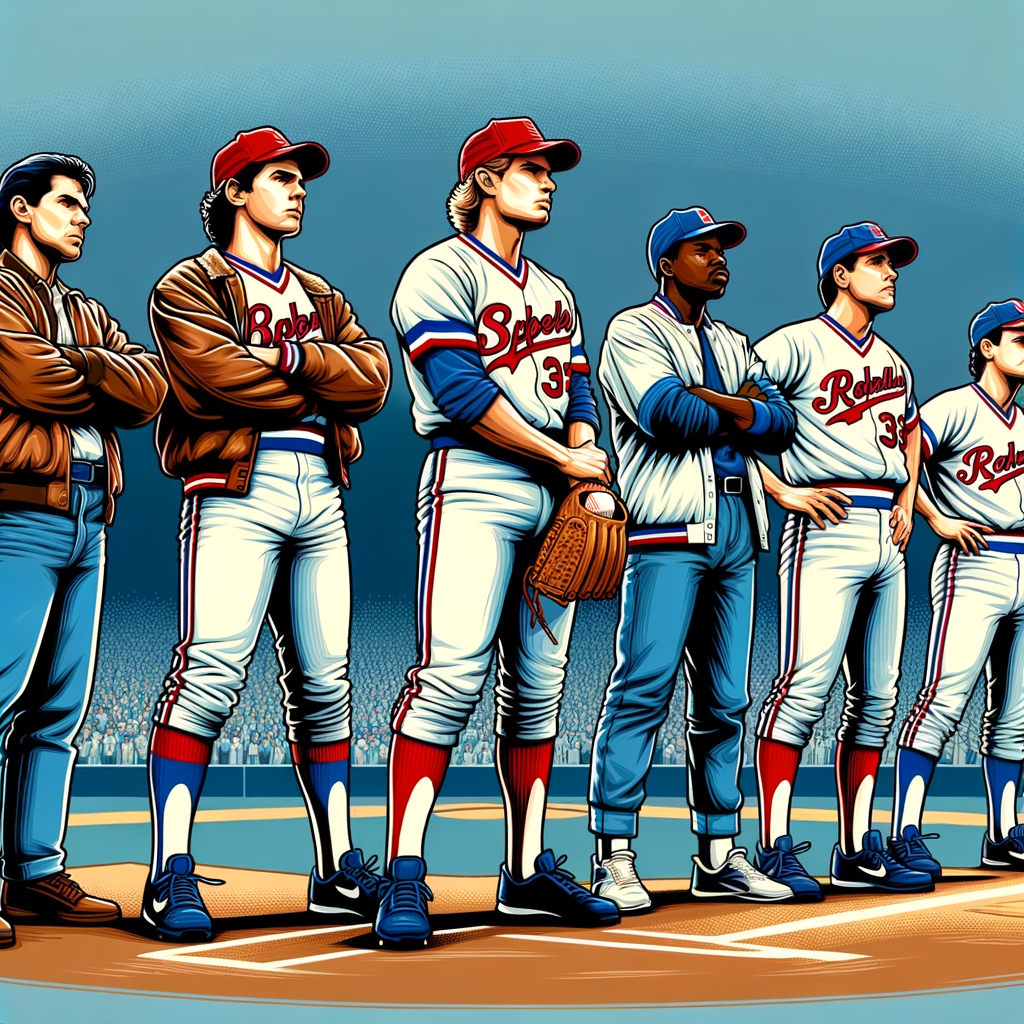
In the realm of Major League Baseball, certain teams rise above the rest, leaving an indelible mark on the sport and etching their legacy in the annals of history. The 1988 Oakland Athletics stand as one such team, having carved a permanent niche with their exceptional performance, distinguished roster, and momentous achievements. Led by manager Tony La Russa, the A’s during this period were a formidable blend of pitching prowess, offensive strength, and defensive precision. Their journey through the 1988 season was characterized by not only stellar individual exploits but also a seamless integration of skills that made them a legendary unit.
This particular season saw the Athletics mesh a unique confluence of burgeoning talent and experienced veterans, creating a team of superstars that dominated the league. The Athletics were not just a team that won games; they a presented baseball in its most electrifying form. From dramatic home runs and immaculate shutouts to the mastery of players like Jose Canseco and Dennis Eckersley, the 1988 Athletics exemplified the spirit of competitive sports. Their journey to the American League pennant was marked by unforgettable moments that continue to resonate with baseball enthusiasts.
This article delves into the various facets that defined the 1988 Oakland Athletics. From their remarkable regular season performance and strategic excellence to significant moments and records, we explore each element that contributed to making this team a chapter of the baseball anthology. Join us as we recount the exploits of this team of superstars – a squad revered for its commitment, talent, and sheer desire to redefine the standards of baseball excellence.
The Stellar Regular Season
The 1988 season was one of record-breaking achievements for the Oakland Athletics, characterized by their ability to dominate both at home and on the road, displaying an extraordinary consistency that few teams have managed over the years. The Athletics finished the regular season with an imposing 104-58 record, showcasing an unparalleled dominance over the American League Western Division. The skillset they demonstrated throughout was a perfect amalgamation of extraordinary talent and strategic acumen that other teams found insurmountable.
Notable in their regular season was the home run hitting prowess of Jose Canseco, who became the first player in Major League history to hit 40 home runs and steal 40 bases in a single season. This “40-40” achievement was not just a personal triumph for Canseco but also lifted the entire team’s performance, exemplifying the Athletics’ aggressive style of play. His contributions were undeniably instrumental in propelling the team forward, inspiring teammates and raising the excitement levels among fans and rivals alike.
Moreover, the leadership under Tony La Russa played an instrumental role in the team’s success. La Russa, renowned for his strategic foresight and ability to extract peak performances from players, built a team culture centered on adaptability and grit. The players’ commitment to La Russa’s vision was manifest in their exceptional cohesiveness and energy, making them a tough opponent in all facets of the game – be it pitching, offense, or defense.
Pitching was another cornerstone of the A’s 1988 triumphs. With stellar performances from starters like Dave Stewart and relievers such as Dennis Eckersley, the Athletics boasted one of the most formidable pitching rosters of the era. Stewart, known for his endurance and control, became an emblem of dependability, often pitching deep into games and providing the backbone for many of the A’s crucial wins. Eckersley, on the other hand, redefined the closer’s role, his near-cinematic saves captivating spectators and often turning the tide to the Athletics’ favor.
Road to the American League Championship
As the postseason loomed, the 1988 Athletics were poised to capitalize on their remarkable regular-season form and aimed at the ultimate honor: the World Series. The team effortlessly translated their regular-season dominance into the American League Championship Series (ALCS), where they were pitted against the Boston Red Sox. What ensued was a testament to their superiority and determination, as the Athletics clinched the ALCS in merely four games.
The ALCS victory was highlighted by Jose Canseco’s continued offensive rampage and a collaborative pitching effort that stifled a potent Boston lineup. Don Baylor, Rickey Henderson, and Mark McGwire all provided critical hits that further weakened Boston’s resolve. Dave Stewart’s composed pitching, coupled with Eckersley’s unmatched closing innings, ensured that Oakland’s supremacy was indisputable. These series of performances certified their position as baseball giants destined for the grandest stage of all.
This dominant display was indicative of their formidable lineup and their expert game management. The strategic prowess of La Russa, who expertly managed the lineup based on situational adaptiveness, was apparent in their swift victories. His decisions, particularly regarding bullpen usage, received accolades and were instrumental in maintaining the team’s momentum and focus.
Memorable Performances and Moments
The season was not only defined by the team’s collective achievements but also by astounding individual performances and iconic moments that are now an integral part of baseball lore. The Athletics were a constellation of stars, each contributing uniquely to the team’s success.
Jose Canseco’s performance throughout the season is often hailed as one of the finest in baseball history, with his monumental 40-40 achievement placing him in an elite class. Mark McGwire, with his consistent power hitting and clutch performances, formed a terrifying offensive duo with Canseco, earning them the nickname “Bash Brothers.”
On the pitching front, Dave Stewart’s Cy Young-caliber season featured multiple complete games, showcasing his durability and tenacity. His unwavering presence on the mound provided stability and confidence that reverberated through the squad.
Dennis Eckersley’s transition to a specialized closer role displayed strategic brilliance. His remarkable ability to save games under pressure was remarkable, with an incredibly low ERA and strikeouts that left batters in awe. Eckersley’s saves were not just game-clinching; they were morale boosters, often converting tight contests into certain victories, underscoring his invaluable presence.
Another memorable instance was the home crowd’s undeniable energy at the Oakland-Alameda County Coliseum, often referred to as the “Coliseum Effect.” The fans’ support was rapturous, acting as the proverbial 10th man. Their enthusiasm was infectious, creating an intimidating atmosphere for visiting teams, and providing the Athletics an additional edge in home games.
The World Series Challenge
Advancing to the World Series, the Athletics were met with the Los Angeles Dodgers, setting the stage for one of the most anticipated matchups in recent history. Despite their relentless pursuit, the series was not without adversity. The Dodgers, led by unyielding pitcher Orel Hershiser and the seemingly fated heroics of Kirk Gibson, presented formidable opposition.
The series opener, which saw Gibson’s dramatic walk-off home run in the bottom of the ninth inning off Eckersley, became a seminal moment in baseball chronicles. This solitary swing of the bat resonated powerfully, altering the series dynamics. Despite the Athletics’ strategic maneuvers and valiant efforts, Gibson’s home run proved to be a psychological watershed moment.
The Athletics fought diligently, yet the Dodgers managed to restrict their offensive output. With Hershiser’s unstoppable pitching leading the charge, Oakland’s explosive batting lineup struggled to find consistency, culminating in a 4-1 series defeat.
Though the Athletics did not clinch the championship, their journey to the World Series was an exhibition of sportsmanship, skill, and determination. They remained a testament to the unpredictable nature of baseball, where a series can pivot on key moments, irrespective of regular season performance.
Conclusion
The 1988 Oakland Athletics remain immortalized as a team of superstars, a narrative that transcends their wins or losses. Their season was a spectacle of sensational innings, power, tactical brilliance, and distinctive personalities. Although the World Series eluded them, the legacy they built resonates as a standard of excellence and passion for the game.
Athletics’ contribution to the sport extends beyond their records; they influenced a generation of baseball enthusiasts who admired their powerhouse style, and sought to emulate their strategies and determination. This team epitomized the essence of baseball—an ensemble act of athletic charm and competitive tenacity that left an everlasting imprint on the landscape of Major League Baseball.
Their story serves as a beautiful reminder of the boundless possibilities inherent in sports, where every season brings a new narrative, every game a new masterpiece. Through unparalleled talent and resilience, the 1988 Athletics showcased the quintessence of baseball—that magical interplay of skill, chance, and destiny.
The Athletics of 1988 remain a team celebrated for their embodiment of championship calibre; their journey through the extraordinary, the fierce battles, and the cherished memories, ensure they will forever be nostalgically venerated as one of the most iconic teams in baseball history.
Frequently Asked Questions
1. What made the 1988 Oakland Athletics a team of superstars?
The 1988 Oakland Athletics were a powerhouse team renowned for their incredible lineup and remarkable pitching staff. Managed by the legendary Tony La Russa, the A’s perfectly combined talent, determination, and strategy. Their roster was packed with stellar players, including Hall of Famers and award winners who not only performed individually but also contributed to the team’s collective success. Legends such as Dennis Eckersley, who excelled as a closer, Jose Canseco, whose offensive prowess earned him the MVP award, and Mark McGwire, a home run titan, anchored their dominance. This synergy between players set them apart as a team capable of achieving extraordinary feats on the field.
2. Who were some of the standout players on the team, and what were their contributions?
The 1988 Oakland Athletics boasted several standout players whose contributions were pivotal to the team’s success. Dennis Eckersley redefined the closer role with lethal effectiveness, securing save after save with ease thanks to his pinpoint control and intimidating presence on the mound. Jose Canseco made history by becoming the first player ever to hit 40 home runs and steal 40 bases in a single season, an achievement that secured him the American League MVP award. Mark McGwire teamed up with Canseco to form the infamous “Bash Brothers,” bringing formidable power to the lineup. The contributions of these superstars, complemented by a solid supporting lineup, were essential to creating a cohesive and destructive baseball force.
3. How did manager Tony La Russa influence the team’s success in 1988?
Tony La Russa’s astute management style played a crucial role in the 1988 Athletics’ success. Known for his strategic acumen and innovative approach, La Russa was a master at optimizing player performance. He effectively utilized his bullpen, led by closer Dennis Eckersley, by implementing a strategy that relied on specialized relief pitching. This revolutionary bullpen management became a hallmark of his managerial career. La Russa’s ability to get the best out of his players and instill a relentless competitive spirit was fundamental in the A’s securing a dominant regular season record and ultimately reaching the World Series.
4. What were the key achievements of the 1988 Oakland Athletics?
The 1988 season was filled with remarkable achievements for the Oakland Athletics. They dominated the American League with a stellar record, finishing with 104 wins, the best in baseball that year. This triumph was a testament to their consistency and teamwork throughout the grueling season. In addition to their regular season success, the A’s won the American League Championship Series convincingly, defeating the Boston Red Sox in a clean sweep. Although their journey ended with a loss to the Los Angeles Dodgers in the World Series, their achievements, particularly Jose Canseco’s 40-40 Club feat and Eckersley’s exceptional saves, solidified their status as one of the best teams of the era.
5. How did the 1988 season impact the legacy of the Oakland Athletics and Major League Baseball?
The 1988 season left an indelible mark on both the Oakland Athletics and Major League Baseball as a whole. It set the standard for modern team-building strategies, particularly in how relief pitchers are deployed thanks to Tony La Russa’s innovative bullpen usage. The season also solidified the late ’80s and early ’90s Athletics as a dynasty in the making, given their sustained success and multiple postseason appearances in the subsequent years. Individually, players like Canseco and Eckersley defined roles and benchmarks for future generations of baseball stars. The legacy of the 1988 A’s endures as a benchmark of excellence, serving as an inspiration to teams aiming to achieve greatness through a blend of talent, strategy, and resilience.