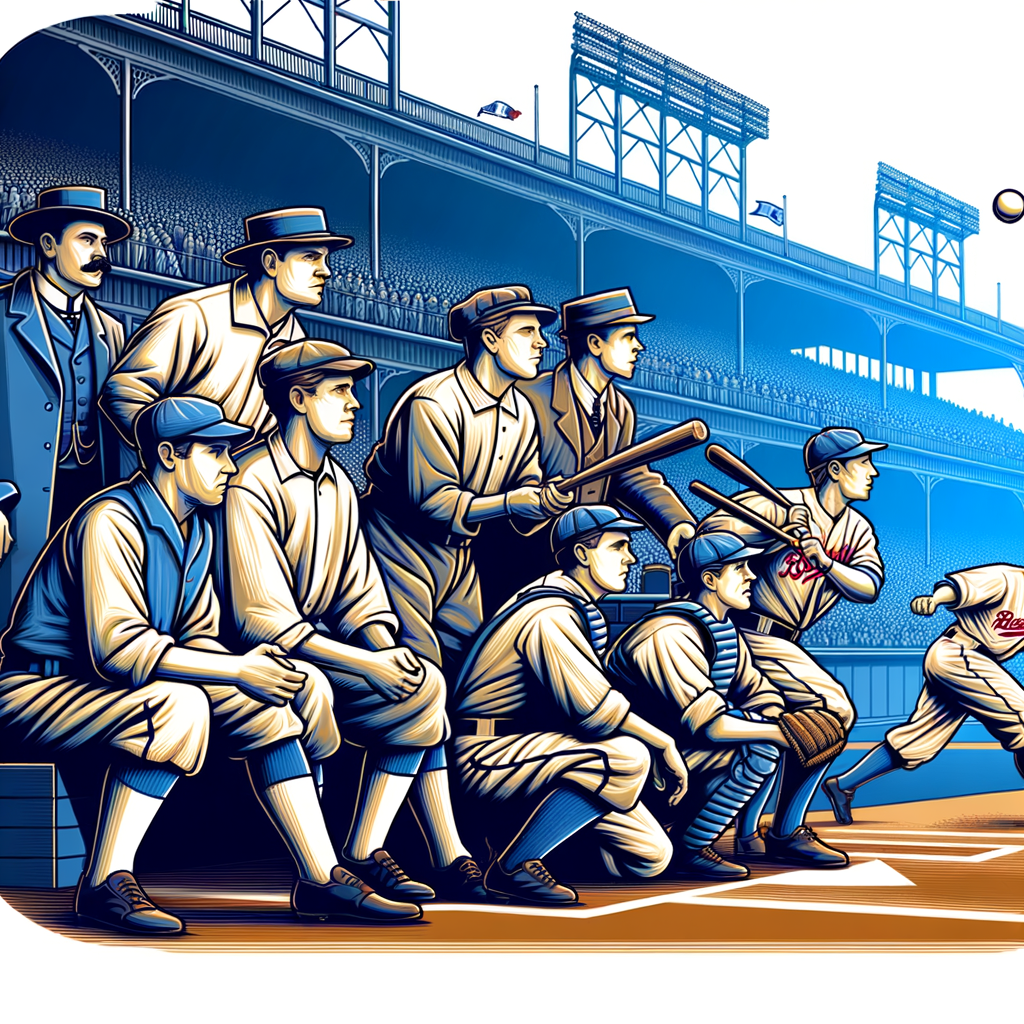
Baseball has been an integral part of American culture since its inception in the late 19th century. Major League Baseball (MLB) has witnessed unparalleled athletic prowess and moments that have become legendary. Yet, there’s something extraordinary about the early records set in the dawn of MLB. These trailblazing feats not only shaped the statistics and benchmarks of the sport but also set the tone for its future. The early years of baseball were characterized by players who broke barriers and records alike, setting precedents and challenging conventions with their remarkable skills. These pioneering figures, through their record-breaking achievements, have ingrained their names in the annals of baseball history. Their accomplishments continue to inspire successive generations, leaving an indelible mark on the sport. Exploring these milestones provides insight into how the game evolved into the cherished pastime known today.
The early days of MLB were ripe with firsts: the first no-hitters, the first grand slam home runs, and the first perfect games, among others. These records were not just numbers imprinted on scorecards; they were emblematic of the growing prowess of athletes who took to the baseball diamond under evolving game conditions. Players were figuring out not only how to play but how to excel in a game with an uncertain future. The competitive zeal of the first MLB players was palpable as they strived to surpass the loftiest achievements and etch their names into the record books. The following sections delve into some of the most significant record-breaking performances from the nascent days of Major League Baseball, providing a glimpse into the personalities and matchups that defined an era.
The First No-Hitter
The concept of a no-hitter is synonymous with pitching excellence in baseball. A seminal moment in baseball history, the first officially recognized no-hitter was pitched by George Bradley on July 15, 1876. Bradley played for the St. Louis Brown Stockings against the Hartford Dark Blues. Achieving a no-hitter was an incredible feat during this period due to the rudimentary equipment and lack of modern pitching techniques. In those days, a pitcher depended predominantly on guile and accuracy rather than velocity and movement. The composition of the baseball was inconsistent by today’s standards, its shape often irregular, and it was used for extended periods during the game. Bradley’s no-hitter paved the way for future pitchers, showcasing the potential of precision and strategy over pure strength. His achievement marked a critical milestone in the recognition of a pitcher’s capability to dominate a game completely, setting a benchmark that subsequent generations aspired to match.
The First Grand Slam Home Run
Nothing electrifies a crowd quite like a grand slam home run; it’s the ultimate combination of bases loaded and home run magic. The very first instance in the annals of the National League occurred on September 10, 1881, when Roger Connor, playing for Troy Trojans, blasted the ball beyond the outfield seats against the Worcester Ruby Legs. Connor’s slam epitomized the unique drama that only a baseball game can offer. It was not just a demonstration of power, but of timing and pressure-handling ability under the most exhilarating conditions. This achievement is particularly significant given baseballs were heavier and misaligned compared to present-day standardized manufacturing. Connor’s record turned heads throughout the league and set expectations for what a commanding batting performance could accomplish. This early event presaged countless other grand slams in baseball, establishing a powerful yardstick for achievement in the sport.
The First Perfect Game
A perfect game remains one of the rarest accomplishments in MLB, with very few instances across its history. The very first official perfect game came in the American League, delivered by Cy Young on May 5, 1904. This legendary perfect game was pitched by Young, while playing for the Boston Americans against the Philadelphia Athletics. This record underlined his already stellar career, showcasing an extraordinary level of control and focus. A perfect game occurs when no opposing player reaches base for any reason, including via hit, walk, or error. It is the pinnacle of dominance by a pitcher over the course of a nine-inning game. Young, already a formidable name in the annals of baseball history, cemented his legacy with this unprecedented performance. The precision required for such a feat spoke volumes about Young’s understanding of batters’ weaknesses and his mental tenacity. This match set a sophisticated precedent for excellence in pitching, signaling the detailed complexity involved in delivering a first-ever perfect game.
The implication of Cy Young’s performance extended far beyond a single match. It laid the groundwork for future accomplishments of pitchers who sought to replicate such a flawless display. The game remains a source of awe, demonstrating a combination of physical talent and psychological resilience. Young’s perfection is highly illustrative of a time when pitchers operated under different rules, adding a layer of complexity to his formidable achievement.
The First Triple Crown Winner
Achieving the Triple Crown in baseball refers to a batter leading the league in three significant categories: home runs, RBIs (runs batted in), and batting average during a single season. In 1878, Paul Hines accomplished this formidable hallmark in the National League with the Providence Grays, paving the way as MLB’s first recorded Triple Crown winner. His remarkable prowess at the plate demonstrated a level of finesse and versatility, combining both power and consistent hitting ability. In an era when the game was intensively rugged and physical endurance was critical, performing at such a consistently high level was indicative of extraordinary talent and determination. The establishment of this award highlighted the all-around skill set required to dominate as a batter, recognizing how a player’s offensive output could swing the outcome of games and the overall performance of a team throughout the season.
Paul Hines’ groundbreaking achievement showcased the breadth of athletic ability needed to achieve such a milestone, which few players have managed to attain since. The enduring relevance and esteem of the Triple Crown echo through the ages, illustrating a benchmark of excellence in individual performance. This dynamism in hitting consistently across categories redefined what it meant to be an all-round player and remains a rare feat.
The First World Series
The advent of the World Series in 1903 marked a turning point in professional baseball, institutionalizing it as the championship decider between the National League and the American League. In this first staging of the series, the Boston Americans triumphed over the Pittsburgh Pirates in an eight-game series (five games to three). The World Series represented baseball’s biggest stage, inviting the best teams of each league to demonstrate their prowess and compete for the ultimate accolade in the sport. This historic event underscored baseball’s growing popularity and its emergence as America’s pastime. The series brought forth a competitive flair that continued the tradition of striving for excellence and pushing the boundaries of athletic performance. It established a new platform for records to be broken and legends to be made, perpetuating the competitive spirit that has characterized baseball’s allure over the years. Teams elevated their strategies and performances, emphasizing the significance of cohesive teamwork intertwined with individual brilliance.
The series was pivotal in shaping how future seasons were oriented, enhancing rivalries, and creating stories that would be passed down through generations. These narratives of victory and defeat resonated deeply with fans, further embedding the emotional connection between the sport and its followers.
Conclusion
Reflecting on these groundbreaking achievements from MLB’s early years offers a window into the past, highlighting how the sport has grown and evolved over time. These milestones not only set the stage for future records but also contributed to the rich tapestry of baseball’s historical narrative. Players like George Bradley, Roger Connor, Cy Young, and Paul Hines were at the forefront of this transformation, achieving feats that remain revered in baseball lore. Their records were forged through a combination of raw talent, determination, and an unyielding competitiveness that sought to redefine what was possible on the baseball field. Each player’s unique contributions underscored various aspects of the game while collectively shaping the foundations of Major League Baseball as we know it today.
These initial record-breaking performances remain a testament to the evolving nature of sports, where boundaries are continuously tested and new heroes emerge, building on the legacy of those who came before them. As future generations of players aim for greatness, they stand on the shoulders of those early pioneers. The first of their kind — those prophets of baseball’s potential — remain immortalized not just in the MLB record books, but also in the hearts of those who have been touched by the sport’s rich heritage. With each passing season, the game honors these remarkable feats, recognizing how far it has come, and looks ahead to those moments that will redefine it once more.
Frequently Asked Questions
1. Who was the first player to hit 500 home runs in MLB, and what made this achievement significant during the early days of baseball?
The first player to hit 500 home runs in Major League Baseball was the legendary Babe Ruth. Achieving this milestone was nothing short of spectacular, especially during the early 20th century. Ruth’s feat was significant not just because of the sheer number of home runs but because it fundamentally transformed the game. Before Ruth’s ascendance, baseball was largely a game of strategy, small ball, and incremental advancements. Ruth’s powerful swing and slugging prowess redefined what was possible on the diamond, electrifying fans and earning him an indelible place in American sports history. His love for the game, combined with his larger-than-life personality, drew unprecedented attention to baseball, helping it become entrenched as America’s pastime. Ruth’s ability to hit home runs with remarkable regularity set a benchmark that players aspired to for generations. This record established home run hitting as a cherished art, and Ruth’s trailblazing spirit laid the foundation for future power hitters.
2. Which pitcher was the first in MLB history to record 300 wins, and what challenges were faced in achieving this milestone during the early days of MLB?
The first pitcher in Major League Baseball history to achieve 300 wins was the remarkable Pud Galvin. Galvin’s achievement is a testament to the endurance and skill required to excel in the pitcher-dominated era of the late 19th and early 20th centuries. Pitching during these days was enormously demanding due to the lack of specialized training, advancements in medical science, or the modern amenities players enjoy today. Games were played more frequently, and pitchers often went the full nine innings, if not more. Galvin’s accomplishment is notable due to the sheer physical toll it took. Pitchers had to rely on instincts, raw talent, and grit to carve paths of success in a less forgiving sporting environment. Carrying his teams as a workhorse during an age that placed enormous burdens on pitchers, Galvin’s enduring legacy is a reminder of the toughness that characterized early baseball prowess.
3. What was the significance of the first unassisted triple play in MLB, and which player was responsible for this unprecedented play?
The first unassisted triple play in Major League Baseball is among the rarest feats and was accomplished by Neal Ball on July 19, 1909, while playing for the Cleveland Naps. This extraordinary play is significant due to its spontaneous and highly improbable nature. In a game synonymous with structured strategy and traditional plays, the unassisted triple play stands out as a brilliant flash of individual skill and intuition. The rarity of this event enhances its historical weight, with Ball’s instinctive reactions encapsulating the unpredictable magic inherent in baseball. Ball captured three outs all by himself in a single play, an achievement that has wowed fans and analysts alike ever since. It reflects the peak of reflexive athletic intelligence and is celebrated as a quintessentially American sports moment. It also underscored the increasingly dynamic and spectacular gameplay that MLB has become known for.
4. How did Jackie Robinson’s breaking of the color barrier in MLB impact the sport, and what records did he achieve during his career that stand out?
Jackie Robinson’s entry into Major League Baseball on April 15, 1947, as the first African American to play in the modern era, transcended sports. His presence in baseball was a pivotal moment in American history, symbolizing progress in the fight against racial segregation. Robinson faced unyielding adversity with remarkable courage and composure, using his opportunity not merely to showcase his undeniable talent but to break down racial barriers. His impact went beyond baseball, serving as a crucial catalyst for the Civil Rights Movement. During his illustrious career, Robinson left an indelible mark with a series of remarkable records and accolades. He was named the inaugural MLB Rookie of the Year in 1947, and his selection to All-Star games six times highlights his consistent excellence. His .311 lifetime batting average, remarkable base-stealing abilities, and potent mix of speed and grit defined his on-field prowess. Robinson’s trailblazing legacy and the barriers he shattered paved the way for future generations, altering the landscape of not only baseball but American society at large.
5. Who was the first player to officially achieve a perfect game in MLB? What made this feat so difficult in the context of the era?
The first officially recognized perfect game in Major League Baseball history was pitched by Cy Young on May 5, 1904. A perfect game is an exceedingly rare accomplishment where a pitcher (or pitchers) retire every batter without allowing a single player to reach base via hit, walk, or error. Cy Young’s achievement came during a time when baseball conditions were considerably different and often tougher than they are now. Pitching in the early 1900s was an exercise in resilience—pitchers were required to navigate an era of heavier workloads and rougher playing conditions. The absence of advanced scouting reports, the lack of specialized bullpen pitchers, and equipment that offered less protection added a layer of difficulty to achieving this flawless performance. The sheer precision, focus, and skill needed were enormous; Young’s feat became a benchmark of pitching excellence that subsequent MLB pitchers would aspire to meet, reinforcing his position as one of the all-time greats in baseball history. Cy Young’s name continues to echo through time, especially with the Cy Young Award, which honors the top pitchers in the league annually.