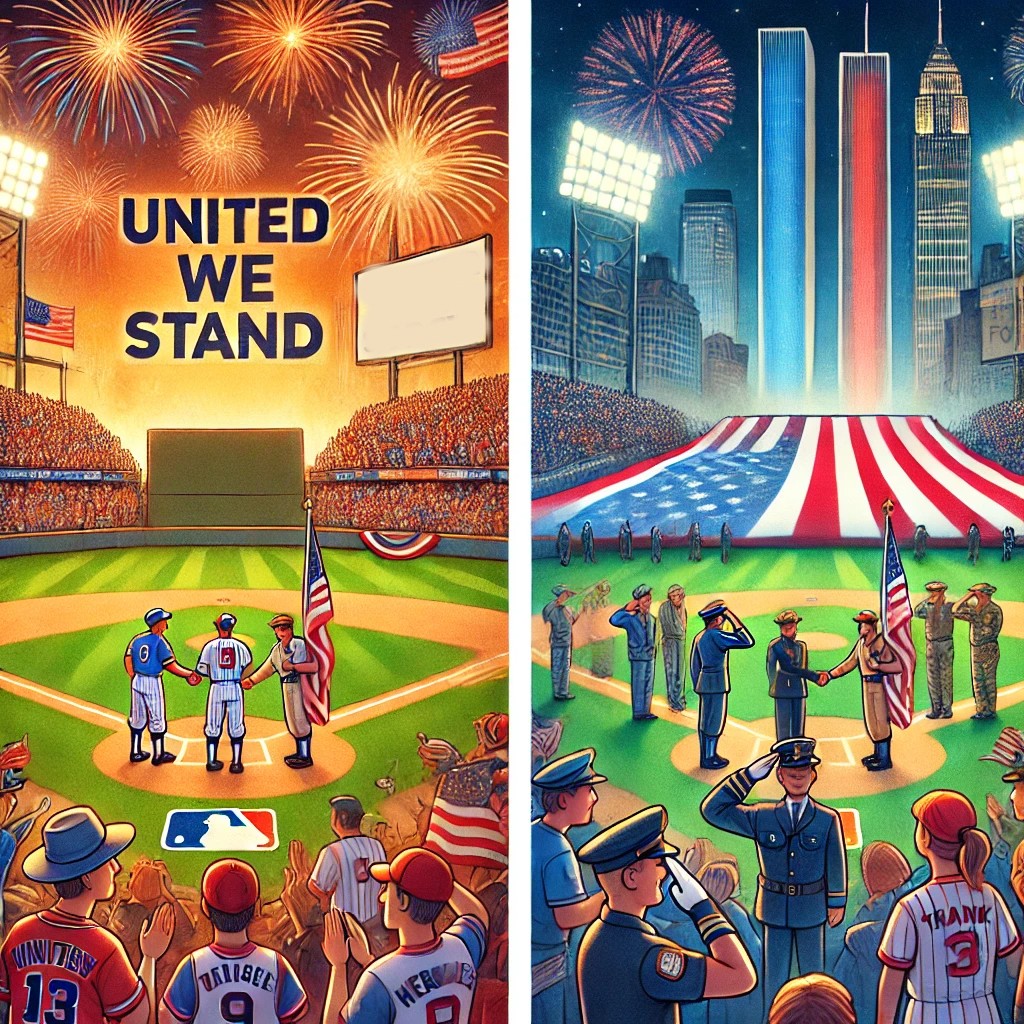
Baseball, often called America’s pastime, has long held a unique place in American culture, fostering unity across generations. But few moments in history highlight the sport’s deeper significance as clearly as the days following the September 11, 2001 attacks. In the aftermath of 9/11, baseball became more than just a game. It offered comfort, a sense of normalcy, and a space for communal healing, proving that sports can help mend emotional wounds during national crises.
The Immediate Halt and Reflection
When the tragic events unfolded, the entire nation came to a standstill, including Major League Baseball (MLB). All games were suspended as the country grappled with shock and grief. Commissioner Bud Selig made the decision to postpone games, recognizing that baseball had to pause until the nation was ready to embrace it again. The uncertainty about when, or if, sports would resume mirrored the emotional state of the country, where normal life felt distant and fragile.
Baseball Returns: A Symbol of Resilience
MLB resumed play on September 17, just six days after the attacks. When fans returned to stadiums, the experience transcended the usual excitement of competition. Every pitch, swing, and cheer carried emotional weight. Games began with moments of silence, heartfelt tributes, and patriotic displays. Ballparks across the country provided spaces for collective mourning, solidarity, and the expression of national pride through acts like singing “God Bless America” during the seventh-inning stretch.
This sense of unity was especially profound in New York, where the tragedy had struck hardest. The New York Mets, in their first home game at Shea Stadium on September 21, provided one of the most unforgettable moments of the post-9/11 sports world. Mike Piazza’s eighth-inning home run became a symbol of resilience, giving the grieving city something to celebrate, if only for a brief moment.
President Bush’s First Pitch: A National Statement
One of the most iconic moments came during the 2001 World Series, held in New York just weeks after the attacks. President George W. Bush threw the ceremonial first pitch at Yankee Stadium before Game 3, donning a bulletproof vest beneath his jacket. In what could have been a tense moment, Bush confidently threw a perfect strike, signaling to the world that America would persevere. Fans erupted in cheers, and that simple act of playing ball took on profound significance—it symbolized that life, though altered, would go on.
A Space for Healing and Normalcy
Beyond the symbolic gestures, the return of baseball gave people permission to experience joy and normalcy once more. Attending games, watching them on TV, or even just tracking scores provided a brief respite from the grief and anxiety that permeated daily life. Baseball’s predictable rhythm, with its innings, pitches, and seasons, offered a reassuring sense of continuity in a world that suddenly felt uncertain.
The Yankees’ World Series Run: A Story of Unity
The 2001 Yankees’ journey to the World Series epitomized how sports can inspire and unite. The team’s dramatic playoff run captivated the nation, not just for its thrilling comebacks, but because it represented the perseverance and determination Americans aspired to during that difficult time. Although the Yankees ultimately lost the series to the Arizona Diamondbacks, their efforts resonated deeply with fans and symbolized the spirit of fighting on, even in the face of loss.
Long-Lasting Impact and Reflection
In the years since 9/11, the significance of baseball’s role in the healing process has remained a powerful part of its legacy. The sport continues to honor the memory of that time, with special ceremonies held every September 11 to pay tribute to those lost and to the resilience shown by survivors. MLB’s “Comeback Season” exhibition at the 9/11 Memorial & Museum captures the emotional role that sports played in helping Americans reconnect and heal.
The Players’ Perspectives and Acts of Generosity
The return to the field was not just significant for fans—it deeply affected the players as well. Many athletes found new purpose and meaning in their roles during the post-9/11 period. Teams actively engaged in charitable efforts, visiting firehouses, police stations, and hospitals to offer support to first responders and survivors. Players made personal contributions to relief funds, further highlighting how sports figures can positively impact society in times of crisis.
Mike Piazza, whose famous home run became a symbol of resilience, later reflected on how overwhelming the moment was. “I think it was just the way things aligned,” he shared. “It was more than just baseball. It was a moment that transcended the game.” His sentiment echoed the experience of many players—what they did on the field carried a far greater meaning than just statistics and standings during that period.
Baseball as a Cultural Connector in Crisis
Baseball’s role extended beyond the United States as well. Internationally, the game served as a lens through which the world observed America’s resilience. Coverage of MLB games and emotional moments such as Piazza’s home run or Bush’s first pitch made headlines globally, showcasing the unique relationship between sports and national identity. It became clear that baseball was not just healing for Americans, but also a message to the world that even in times of darkness, hope and unity could emerge.
In sociology, Emile Durkheim’s theories about social solidarity emphasize that communities come together during moments of shared experience. Baseball’s return provided a platform for Americans to engage in collective solidarity, turning grief into something communal rather than isolating. The game’s familiar rituals, from pregame ceremonies to the national anthem, took on heightened importance as unifying acts.
The Power of Symbolism: Ceremonial First Pitches and Commemorative Hats
Symbolism became a central feature of baseball’s healing role. Beyond President Bush’s first pitch, ceremonial throws by firefighters, police officers, and survivors became common throughout the remainder of the 2001 season. These gestures symbolized the courage of those who had responded to the attacks and reminded Americans of the importance of unity.
Players wore commemorative hats featuring the logos of first-responder units, further blending the game with national pride. These small acts, though seemingly simple, carried profound emotional weight. They allowed fans and players alike to express their support and gratitude to those on the front lines of the crisis.
The 2001 Postseason: Highs and Heartbreaks
The 2001 postseason is remembered not just for thrilling games, but for the emotional weight carried throughout. The Yankees, who represented a city still reeling from the attacks, made an inspiring run to the World Series. The team’s comeback victories in dramatic fashion, such as walk-off wins against the Oakland Athletics and Seattle Mariners, captivated the nation.
Although the Yankees fell short in the World Series, losing to the Arizona Diamondbacks in a seven-game thriller, the journey itself became more meaningful than the outcome. The Yankees symbolized resilience and persistence, qualities that mirrored the country’s spirit during that difficult time. “It wasn’t about winning or losing,” fans and players would later reflect. “It was about the fight”.
Legacy of Baseball’s Role in National Healing
More than two decades later, baseball’s response to 9/11 continues to be remembered as one of the sport’s finest hours. The lessons learned during that period have become embedded in MLB’s culture. Each year, on the anniversary of the attacks, the league holds special ceremonies, reinforcing baseball’s enduring role in honoring the past and fostering national unity.
The healing that baseball provided goes beyond nostalgia—it’s a reminder of the sport’s power to reflect the American spirit. Baseball helped people connect with one another during a time of disconnection and uncertainty, becoming a bridge between grief and hope. Through the rhythm of the game, fans found moments of joy, community, and the reassurance that life, though changed, would go on.
Conclusion: A Game That Transcends Itself
Baseball’s response to 9/11 exemplifies how deeply woven the sport is into the fabric of American life. It played a crucial role not only in providing entertainment but also in facilitating healing and unity at a time when the country needed it most. The players, fans, and moments—whether through Mike Piazza’s home run or President Bush’s first pitch—transcended the sport itself, becoming symbols of perseverance and hope.
Ultimately, baseball’s ability to bring people together during one of the darkest chapters in American history reaffirms its place as more than just a pastime. It serves as a reminder that in times of crisis, shared rituals and collective experiences—whether at the ballpark or beyond—are essential in healing a nation.
Frequently Asked Questions
How did baseball help America heal after the 9/11 attacks?
In the wake of the tragic events of September 11, 2001, America was engulfed in grief, fear, and uncertainty. Baseball, with its deep roots in American culture, became a source of solace for many. When games resumed, they provided a sense of normalcy amidst the chaos. People found comfort in the familiar rituals of attending games, listening to play-by-play broadcasts, and participating in collective traditions like the seventh-inning stretch. Additionally, the sport offered a unifying experience where individuals from varied backgrounds could come together and share a common purpose. Stadiums became places of remembrance and solidarity, with teams honoring first responders and victims in pregame ceremonies, allowing the nation to collectively mourn and begin to heal.
What significant baseball events occurred after 9/11 that symbolized healing and resilience?
One of the most iconic moments was the first game back at Yankee Stadium in New York on September 25, 2001. It was a nationally televised game where the New York Yankees faced the Tampa Bay Devil Rays. The emotional pregame ceremonies included tributes to the victims and heroic first responders, with ceremonies that paid tribute to the resilience and spirit of New York City and the nation. President George W. Bush’s ceremonial first pitch at Game 3 of the World Series at Yankee Stadium on October 30, 2001, also stands out. Wearing a bulletproof vest under his FDNY and NYPD jacket, he confidently threw a strike, reinforcing America’s determination to stand strong against any threat.
What role did teams and players play in supporting their communities after 9/11?
Baseball teams and players were instrumental in offering support to their communities following 9/11. Many teams held fundraisers and charity events to aid families affected by the tragedy. The Yankees and Mets both played pivotal roles, with players visiting Ground Zero, firehouses, and hospitals to provide comfort and encouragement. Many players, using their platform, raised awareness and funds for victims’ families, showcasing the power of sports to transcend entertainment and become a force for good. These actions helped bridge connections between the players, teams, and fans, enhancing the sport’s capacity to uplift and unify communities during difficult times.
How did the public respond to baseball’s efforts following the 9/11 attacks?
The public response was overwhelmingly positive. Fans embraced the games as a brief escape from the harsh realities of the time, while also appreciating the opportunity for community and communal healing. The large crowds and sell-out games following 9/11 were testament to the sport’s significance and its capacity to draw people together during adversity. The blending of patriotic displays with baseball traditions bolstered national spirit and pride. Furthermore, the sincerity and visible effort of players and teams to connect with and support their communities reinforced the public’s appreciation for the meaningful role that sports can play beyond entertainment.
Why is baseball considered more impactful than other sports in the context of national healing after 9/11?
Baseball holds a special place in American history and identity, often mirrored during periods of immense national challenge. After 9/11, it symbolized endurance, continuity, and unity. The sport’s historic ties to American culture, its leisurely nature, which encourages reflection and discussion, and its traditional association with familial and community bonding, made it particularly effective in fostering healing. While other sports also contributed to the national recovery, baseball’s deep-rooted presence as America’s pastime uniquely positioned it as a cultural and emotional anchor, enabling it to play a pivotal role in rallying national morale, providing a forum for processing collective grief, and instilling hope for the future.