
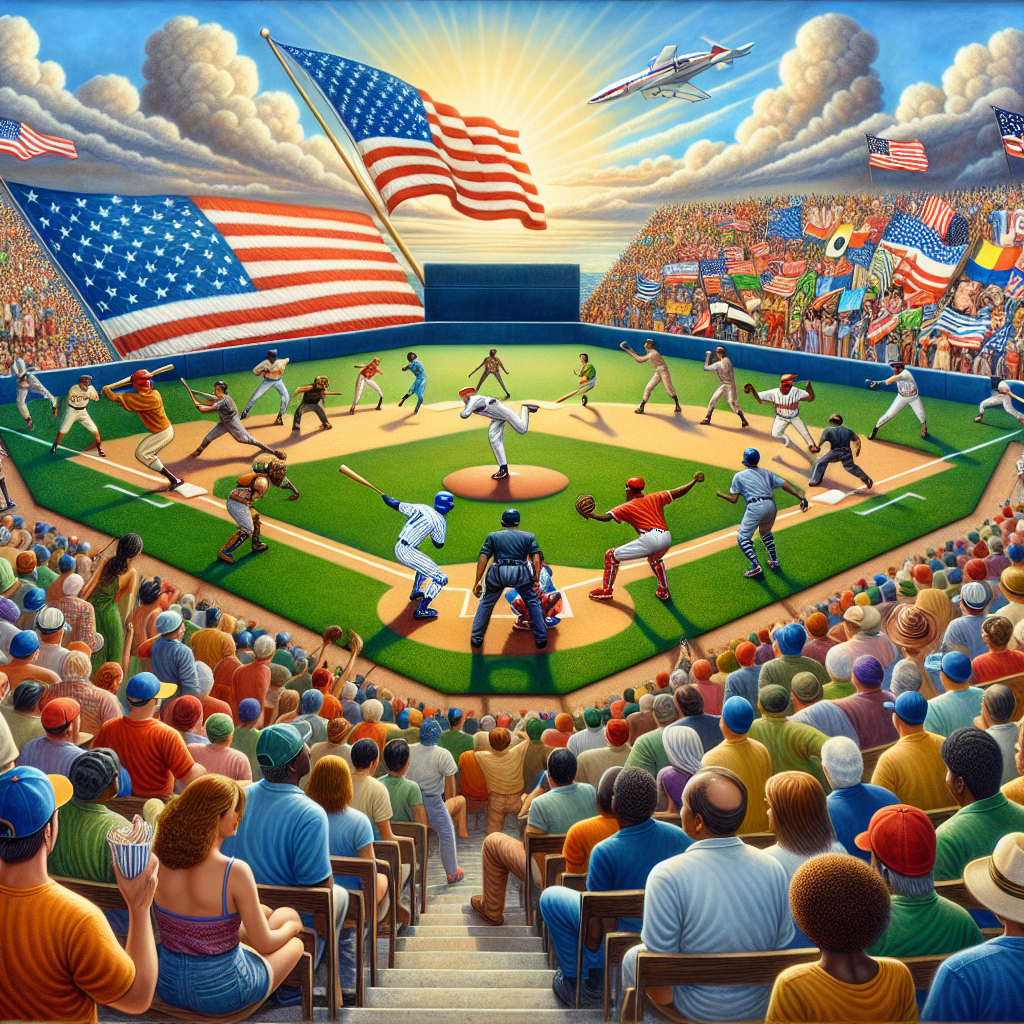
Baseball and the story of American immigration are inextricably linked, forming a beautiful tapestry of diversity and inclusion over the years. The game, often regarded as America’s pastime, mirrors the broader narrative of the American experience, where people from various corners of the globe come together, bringing with them unique traditions, perspectives, and innovations. This article delves into how immigration has shaped baseball and, in turn, how baseball has served as a melting pot of cultures, acting as a unifying force in times of social upheaval and providing a platform for immigrants to achieve the American Dream.
The origins of baseball trace back to the mid-19th century, a period coinciding with a significant wave of immigration from Europe to America. As immigrants arrived, they brought with them countries’ games and pastimes, shaping what has evolved into modern baseball. The sport offered these newcomers a way to assimilate into their new communities, providing a common language through which diverse ethnicities could interact and bond. Through its teams and community events, baseball became not just a sport but a crucial part of the social fabric, where immigrants could contribute to and partake in American culture.
Throughout the 20th century, the potential of baseball as an inclusive platform became increasingly apparent. As America grappled with prejudice and segregation, baseball seemed to preemptively embrace integration, albeit slowly. Jackie Robinson’s integration into Major League Baseball in 1947 stands as a seminal moment in sports history, symbolic of the broader quests for equality and civil rights across the nation. In subsequent years, players from Latin America, Asia, and other regions have enriched the game, showcasing their culture’s distinct playing styles and tenacity.
Immigration Waves and Baseball’s Growth
The Industrial Revolution and subsequent economic boom attracted millions of immigrants from Ireland, Germany, Italy, and Eastern Europe in the late 19th and early 20th centuries. These groups settled mostly in urban centers, where baseball was rapidly growing in popularity. Baseball clubs sprang up in ethnic neighborhoods, where the sport served as both leisure and a means of integration. Immigrants began to see baseball as a way to gain acceptance in American society and to express their pride in their new country.
In parallel, the birth of professional baseball leagues in the late 1800s, including the formation of the National League in 1876, occurred during this massive influx of immigrants. As baseball games became popular public spectacles, they attracted diverse audiences. Players from immigrant backgrounds began to emerge, paving the way for the game to reflect more ethnic diversity. The rise of figures like Honus Wagner, whose parents were German immigrants, highlighted how baseball became an avenue for social mobility amidst a society often resistant to cultural integration.
Through the years, many immigrant communities have found that participating in and organizing baseball games provided valuable social connections, helped build community spirit, and created a familiar sense of home amid an often unwelcoming environment. The 20th century saw an increase in players with Italian, Irish, and Jewish heritages, who brought their skills to the major leagues, demonstrating perseverance and adaptability on the field.
The Latin American Influence
The Latin American influence on baseball is one of the most profound examples of how immigration has enriched the sport. This influence began in the early 20th century when players from Cuba, the Dominican Republic, and other Caribbean nations first made their way to the United States to play professional baseball. Their numbers grew steadily, with waves of athletes in the 1950s and beyond. These players were instrumental in introducing new styles and flair to the game, from explosive batting techniques to skillful fielding.
Racial and cultural barriers were significant for these players, especially during years when major leagues were predominantly white. Despite these challenges, their impact was undeniable. Stars like Roberto Clemente, the Puerto Rican right fielder for the Pittsburgh Pirates who debuted in 1955, illustrated how Latin American players could excel in the major leagues, inspiring generations of Latino athletes to pursue baseball as a career and a dream.
The contributions of Latin American players have transformed baseball into an international sport. By the late 20th century, professional leagues across the Caribbean and in various Central and South American nations had established robust programs to mentor and train aspiring young players, focusing on eventually bringing them to the Major League Baseball scene in the United States.
Asian Players Enter the Scene
The latter part of the 20th century and into the 21st witnessed the rise of Asian players in American baseball. This began with Japanese pitcher Masanori Murakami, who debuted with the San Francisco Giants in 1964. His entry paved the way for a future influx of Asian talent into Major League Baseball. However, the significant breakthrough came decades later, with iconic players like Hideo Nomo, Ichiro Suzuki, and Yu Darvish not only entering MLB but thriving within it.
The arrival of such talents challenged stereotypes about baseball as a predominantly western pursuit and opened the gates to further international participation. Japanese players, in particular, have demonstrated a work ethic and discipline that have become synonymous with their cultural approach to the sport. Similarly, players from Korea, Taiwan, and more recently, China, have entered the MLB, broadening its global reach and appeal. The regional rivalries in Asia, mirrored on American soil, have infused the sport with new levels of competition and athleticism.
These developments have not only diversified the leagues but have put a more global face on what was once a uniquely American pastime. With each Asian player’s success, the league witnessed increased interest from their home countries contributing to baseball’s exponential growth as a global sport. Today, baseball enjoys a passionate following in countries like Japan and South Korea, serving as bilateral cultural touchpoints between nations.
Baseball as a Unifying Force
Baseball’s ability to transcend cultural boundaries and serve as a unifying social force cannot be understated. In a country as diverse as the United States, the sport has provided common ground for fans and players alike to celebrate their heritage while simultaneously embracing their American identity. On the field and in the stands, the game brings people from different backgrounds together, reinforcing shared values and mutual respect.
This unifying power has often been most evident during significant societal challenges. Baseball ballparks have been venues for healing and community spirit during times of national crisis, such as the post-9/11 games and the emotional return to ballparks after the COVID-19 pandemic. Through these events, baseball has provided continuity and hope, emphasizing cooperation, teamwork, and fair play.
In recent decades, changes in MLB’s recruitment policies and a commitment to diversity have further emboldened baseball’s role as an emblem of inclusion. Programs like MLB’s RBI (Reviving Baseball in Inner Cities) aim to encourage young people from diverse backgrounds to engage with the sport, ensuring that baseball remains a vital part of the multicultural American tapestry.
Challenges and the Road Ahead
Even as baseball has surged forward in inclusivity, challenges remain. Engaging younger audiences and championing diversity in leadership—as well as on the field—are contemporary hurdles for the sport. The decline in African American participation in recent years points to broader socio-economic issues that the MLB is attempting to address through various community initiatives and outreach programs.
The league recognizes that its future success lies in accurately reflecting the rich diversity of its fanbase and the wider American populace. By actively working on structured diversity programs, baseball aims to foster an ecosystem where young talents from all ethnic backgrounds can see themselves not just as players, but also as coaches, analysts, executives, and more.
Continued international scouting and partnerships with international leagues promise to keep the game competitive and infuse it with fresh dynamism. Through these collaborations, baseball can draw inspiration from its rich history of immigrant players and stakeholders, ensuring that diversity and inclusion remain at its forefront.
Conclusion: Baseball as a Mirror of America
In conclusion, baseball and American immigration share a dynamic and symbiotic relationship that has significantly influenced the sport’s development and cultural importance. As a reflection of American society, baseball thrives on its diversity, embodying both the struggles and triumphs of immigrants over more than a century. From the game’s grassroots in immigrant communities to its national and global implications, baseball serves not just as an athletic contest but as a symbol of possibility, equity, and the enduring spirit of the amalgamated American Dream.
The stories of players hailing from different parts of the world and finding success on American soil reiterate the quintessential narrative of finding opportunity, acceptance, and success despite adversity. As it embraces an even more multicultural identity, baseball continues to weave together the varied strands of the American identity, nurturing a sense of unity amidst diversity while preserving the timeless ethos of a truly American game.
Through the lens of baseball, one can gain a transformative perspective on immigration’s profound impact on society and the inherent beauty found within the mosaic of different cultures. This tale of teamwork, determination, and cooperation foreshadows a promising future, where barriers continue to erode and the tapestry of this great game welcomes steeds of new colors and textures.
Frequently Asked Questions
1. How has immigration influenced the diversity seen in baseball today?
Baseball provides a vivid reflection of the rich tapestry of American immigration. It’s not simply a game but a living, breathing representation of how people from every corner of the globe have come together over decades to contribute to America’s cultural and social landscape. Starting from the late 19th and early 20th centuries, waves of immigrants from places like Ireland, Germany, and Italy brought with them not only their dreams but unique skills and a passion for the sport. As time went on, players from Latin America, Asia, and other regions followed, each group adding new dimensions and styles to the game.
The influence of immigration is evident every time players step onto the field. Today, a typical Major League Baseball (MLB) team roster includes athletes from countries like the Dominican Republic, Venezuela, Japan, and Cuba. This global representation on the field introduces varied playing techniques and perspectives, creating a vibrant and dynamic gameplay experience. Off the field, the cultural fusion further enriches the league—players bring their native dishes, music, and languages into the clubhouse, fostering a unique environment of inclusivity and mutual respect. In essence, baseball is more than America’s pastime; it’s a symbol of America’s diversity and the harmonious blending of cultures through shared love and passion for the game.
2. In what ways have immigrant players changed the way baseball is played in America?
Immigrant players have profoundly changed both the strategy and artistry of baseball. Early European immigrants, for example, laid down the foundation with basic playing techniques and a steadfast mental approach to the game. As players from Latin America started to dominate the scene, their influence began to reshape baseball style with flamboyance and flair. These players are known for their agility, inventive batting stances, and aggressive base-running tactics, which have challenged and evolved traditional American playing methods.
The infusion of players from Japan and Korea later added a layer of meticulous discipline and precision pitching techniques, reflecting the structured and technique-focused approach seen in competitions back home. On the home run horizon, you’d find the Cuban and Puerto Rican players making significant contributions with power hits that consistently draw international acclaim. These diverse influences have not only added layers to how the game is played but have elevated competition levels—pushing domestic talents to raise their performance to match these diverse styles.
Immigrant players bring a wealth of tradition and heritage that inspire new generations of baseball enthusiasts and players in the U.S. Their contribution goes beyond stats and records; it embodies the evolution of the game into a more inclusive and collaborative sport, which is an essential reflection of society’s broader changes.
3. Why is baseball considered a “melting pot” of cultures and talents?
Baseball’s status as a “melting pot” stems from its evolution through both eras of socio-political change and immigration patterns. From the mid-20th century up to today, international leagues and recruitment efforts by MLB teams have actively sought to integrate talent from diverse backgrounds. The game’s ability to embrace different cultures underlines its role as a platform where diverse stories and personalities can converge to create something universally cherished.
On the field, athletes from across continents demonstrate a melting pot in action. Each player brings raw talent, cultural flair, and distinct play styles that merge to form a unique yet cohesive team dynamic. Teams unite under shared goals despite differing languages, traditions, and experiences. This fusion creates a sense of camaraderie and teamwork that transcends cultural boundaries, representing a true melting pot.
Off the field, community engagements and outreach programs reflect this diversity. They celebrate cultural events, food fairs, and collaborative humanitarian efforts, often rallying around players’ home country traditions and philanthropic endeavors. This intertwining of identities into the everyday fabric of the sport makes baseball a genuine expression of the diverse American spirit.
4. How do the experiences of immigrant baseball players reflect larger themes in the American immigrant journey?
The journey of immigrant baseball players often mirrors the broader immigrant experience in America—a life filled with challenges, adaptation, resilience, and triumph. Many immigrant players arrive in the U.S. with hopes and dreams, often overcoming language barriers, cultural adjustments, and economic challenges. Their journey to make it in professional baseball parallels the proverbial American dream, involving sheer determination, hard work, and sacrifice.
These athletes signify the ethos of opportunity—proving that skill and passion can transcend borders. The resilience they show is inspired by a greater desire, often for family and country. By thriving in MLB, these players highlight the collective and perennial spirit of immigrants who have long fueled America’s growth. Their success stories inspire future generations, breaking stereotypes and expanding the future workforce’s imagined possibilities.
Moreover, the stories of these players often emphasize the importance of community and identity. As they share their cultures with their teams and fans, they bridge gaps and create mutual understanding—an important narrative within the constantly evolving fabric of American society. Consequently, their journeys reflect both the unique challenges and the incredible opportunities that define the immigrant experience in America.
5. Can baseball be considered a catalyst for social integration among different immigrant communities in the U.S.?
Absolutely, baseball has consistently played a crucial role as a catalyst for social integration among various immigrant communities in the U.S. By its very communal and participatory nature, the sport encourages interactions and collaborations across cultural lines. Spectators from distinct backgrounds gather to support the game, fostering unity and mutual appreciation through a shared pastime.
Within teams, players from diverse backgrounds develop strong, familial bonds, learning about each other’s cultures, and creating a microcosm of integrated society. These relationships—based on teamwork and common goals—often translate beyond the field, as they participate in local community events and cultural exchanges. Such interactions allow deeper understanding and dismantling of preconceived notions or biases.
Additionally, many baseball programs and leagues actively promote inclusivity by offering platforms for immigrant youth to engage with the sport. By doing so, they provide opportunities for young participants to learn teamwork, leadership, and the values of equality and respect. These programs act as bridges—encouraging socialization among different ethnic groups, thereby easing their integration into the broader American community. Baseball’s role transcends mere entertainment, serving as a vehicle for cultural dialogue, understanding, and enrichment—epitomizing the ideal of social cohesion.