
Hoyt Wilhelm’s remarkable journey in Major League Baseball (MLB) is a testament to innovation, resilience, and exceptional skill. Born on July 26, 1922, in Huntersville, North Carolina, Wilhelm’s professional career spanned across 21 seasons, from his debut in 1952 to his retirement in 1972. Known for his mastery of the knuckleball, a notoriously difficult pitch to perfect and to hit, Wilhelm’s contributions to the game have left an indelible mark on the sport and its history. His legacy is not only defined by his impressive statistics but also by his pioneering spirit and the unique challenges he overcame.
Wilhelm’s journey to MLB was far from conventional. Serving in the U.S. Army during World War II, Wilhelm’s baseball aspirations were put on hold. However, it was during this period that he began honing his knuckleball technique. After the war, he played in minor league baseball for several years, determined to make it to the majors despite his relatively late start. Wilhelm’s perseverance paid off when he made his MLB debut with the New York Giants at the age of 29, a testament to his unwavering commitment to the sport.
The early years of Wilhelm’s career were marked by steady improvement and increasing recognition of his knuckleball prowess. Despite the general skepticism about the viability of the knuckleball, Wilhelm proved that it could be a devastating weapon in a pitcher’s arsenal. His success opened the door for future generations of pitchers to explore and develop their own knuckleball styles, making him a true pioneer of the pitch.
By the end of his career, Wilhelm had compiled an impressive list of achievements, including being the first pitcher to reach 200 wins, 200 saves, and 200 innings pitched entirely using the knuckleball. His influence on the game extends beyond his statistical accolades; he exemplified the potential of unconventional approaches in a sport often resistant to change.
The Early Years: From Minor Leagues to the Big Stage
Hoyt Wilhelm’s path to the majors was a winding one, marked by numerous hurdles that tested his resolve. After his military service, Wilhelm began his professional baseball career in the minor leagues, where he played for teams such as the Mooresville Moors and the Danville Leafs. Despite his relatively advanced age and the skepticism that surrounded the knuckleball, Wilhelm’s performance in the minors garnered attention. His impressive statistics, including a standout season with a 21-8 record and a 2.82 ERA with the Minneapolis Millers, convinced the New York Giants to give him a shot.
Wilhelm made his MLB debut with the Giants on April 18, 1952, at the age of 29. His debut season was nothing short of spectacular, as he quickly established himself as one of the league’s premier relief pitchers. Wilhelm’s knuckleball baffled hitters and confounded catchers, who often struggled to handle the unpredictable pitch. He finished his rookie season with a remarkable 15-3 record, a 2.43 ERA, and led the National League in earned run average.
Despite his success, Wilhelm’s early years in the majors were not without challenges. The knuckleball, while effective, was often viewed with suspicion and skepticism by traditionalists within the game. Many questioned whether a pitcher who relied so heavily on a single, unpredictable pitch could sustain long-term success in the majors. However, Wilhelm’s determination and unwavering belief in his abilities allowed him to overcome these doubts and continue to thrive.
Wilhelm’s early success set the stage for a remarkable career that would see him pitch for nine different teams over 21 seasons. His journey from the minor leagues to the big stage is a testament to his perseverance, adaptability, and innovative spirit. By proving the effectiveness of the knuckleball at the highest level of the sport, Wilhelm paved the way for future generations of pitchers to embrace and perfect this unique pitch.
The Evolution of the Knuckleball
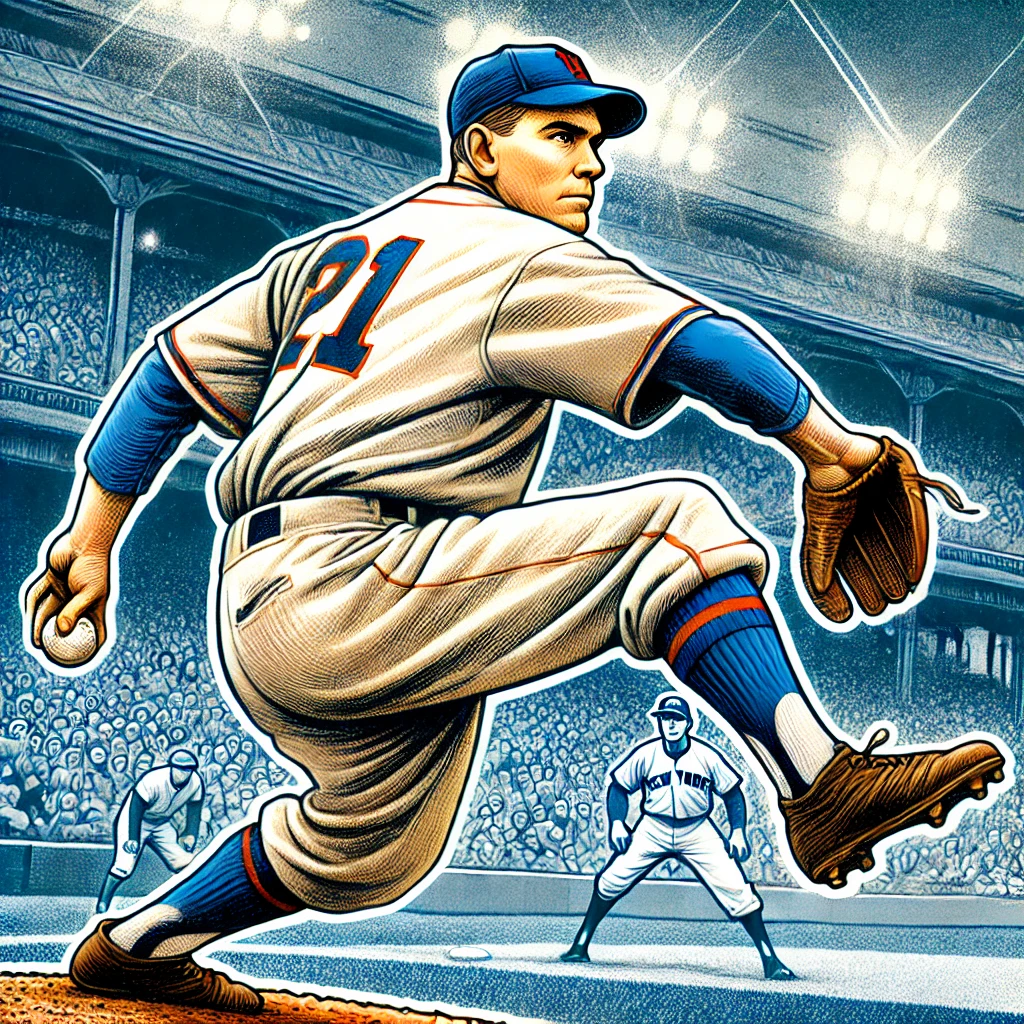
Hoyt Wilhelm’s mastery of the knuckleball transformed the pitch from a novelty to a cornerstone of his Hall of Fame career. The knuckleball is a pitch thrown with little to no spin, causing it to move unpredictably as it approaches the plate. This unpredictability makes it extremely difficult for hitters to track and make solid contact. However, the same unpredictability also presents challenges for pitchers, as controlling the knuckleball can be an elusive skill.
Wilhelm’s journey to mastering the knuckleball began during his military service in World War II. While stationed in Europe, Wilhelm played baseball with his fellow soldiers and began experimenting with different pitches, including the knuckleball. By the time he returned to the United States after the war, Wilhelm had developed a knack for throwing the pitch with remarkable control and effectiveness.
Over the course of his career, Wilhelm refined his knuckleball technique, turning it into one of the most effective and feared pitches in baseball. His ability to consistently throw strikes with the knuckleball set him apart from other pitchers who struggled with the inherent unpredictability of the pitch. Wilhelm’s success with the knuckleball demonstrated that, with dedication and practice, a pitcher could achieve extraordinary results with a pitch that had often been considered a gimmick.
In addition to his own successes, Wilhelm’s influence on the game can be seen in the subsequent generations of pitchers who have embraced the knuckleball. Pitchers such as Phil Niekro, Charlie Hough, and Tim Wakefield followed in Wilhelm’s footsteps, using the knuckleball as a cornerstone of their own successful careers. Wilhelm’s pioneering efforts helped to legitimize the knuckleball as a viable and effective pitch in professional baseball, ensuring that its legacy would endure long after his retirement.
Wilhelm’s Impact on the Game
Hoyt Wilhelm’s impact on the game of baseball extends far beyond his individual achievements. As one of the pioneers of the knuckleball, Wilhelm demonstrated that success in the sport could be achieved through innovation and a willingness to challenge conventional wisdom. His career serves as an inspiration to pitchers who may not possess the traditional attributes of power and velocity but instead rely on skill, strategy, and finesse.
Throughout his 21-year career, Wilhelm set numerous records and achieved several milestones that underscore his impact on the game. He was the first pitcher to amass over 200 wins and 200 saves, a testament to his versatility and effectiveness in various roles. Wilhelm’s career ERA of 2.52 remains one of the lowest in baseball history, further cementing his legacy as one of the greatest pitchers of all time.
Beyond his statistical achievements, Wilhelm’s influence can be seen in the way the game evolved over the years. By showcasing the knuckleball’s potential, he inspired other pitchers to adopt and refine the pitch, contributing to the rich tapestry of pitching styles in the sport. His success with the knuckleball also encouraged teams to consider unconventional approaches and strategies, ultimately broadening the scope of what was possible in baseball.
Wilhelm’s impact extended to his teammates and opponents as well. Known for his calm demeanor and unwavering focus on the mound, Wilhelm was a respected figure in the clubhouse and a mentor to younger pitchers. His professionalism and dedication to the craft of pitching set a standard for others to follow, and his influence can still be felt in the game today.
Career Highlights and Achievements
Hoyt Wilhelm’s illustrious career is filled with numerous highlights and achievements that underscore his exceptional talent and impact on the game. Some of the most notable milestones include his induction into the Baseball Hall of Fame in 1985, recognition that solidified his status as one of the all-time greats. Wilhelm’s career statistics are a testament to his skill and longevity, with 143 wins, 227 saves, and an impressive career ERA of 2.52.
One of Wilhelm’s most memorable achievements came on September 20, 1958, when he threw a no-hitter against the New York Yankees while playing for the Baltimore Orioles. This feat was particularly remarkable given the difficulty of controlling a knuckleball, highlighting Wilhelm’s mastery of the pitch. The no-hitter remains a defining moment in his career and a shining example of his ability to dominate even the best hitters in the game.
In addition to his no-hitter, Wilhelm achieved several other significant milestones throughout his career. He was named an All-Star eight times, reflecting his consistent excellence and the high regard in which he was held by his peers. Wilhelm also led the league in ERA twice and in saves five times, further underscoring his effectiveness and versatility as a pitcher.
Wilhelm’s career longevity is another notable achievement. Playing until the age of 49, he became the first pitcher to appear in 1,000 games, a testament to his durability and enduring skill. His ability to maintain a high level of performance over such an extended period is a rare accomplishment in the world of professional sports and speaks to his dedication and passion for the game.
Hoyt Wilhelm’s Legacy
Hoyt Wilhelm’s legacy in baseball is one of innovation, perseverance, and mastery of a unique and challenging pitch. His success with the knuckleball not only transformed his own career but also left an enduring impact on the sport as a whole. Wilhelm’s willingness to embrace an unconventional approach and his determination to prove its effectiveness serve as an inspiration to players and fans alike.
Wilhelm’s influence can be seen in the generations of pitchers who followed in his footsteps, including Hall of Famers like Phil Niekro and modern-era knuckleballers like Tim Wakefield. These pitchers have carried on the tradition of the knuckleball, demonstrating its viability and effectiveness at the highest levels of the game. Wilhelm’s pioneering efforts helped to legitimize the pitch and ensure that it remains a valuable weapon in a pitcher’s arsenal.
Beyond the knuckleball, Wilhelm’s legacy is characterized by his professionalism, dedication, and unwavering commitment to excellence. He approached the game with a level of focus and determination that set a standard for future generations. Wilhelm’s career serves as a reminder that success in baseball—and in life—can be achieved through innovation, hard work, and a willingness to challenge the status quo.
Hoyt Wilhelm’s legacy is firmly etched in the annals of baseball history. His remarkable career, groundbreaking achievements, and lasting influence on the game have earned him a place among the sport’s all-time greats. As fans and players continue to celebrate his contributions, Wilhelm’s story remains a source of inspiration and a testament to the power of perseverance and innovation in the world of sports.
Conclusion
Hoyt Wilhelm’s journey from a small-town North Carolina boy to a Hall of Fame pitcher is a remarkable story of perseverance, innovation, and mastery. His impact on the game, particularly through his pioneering use of the knuckleball, has left an indelible mark on baseball history. Wilhelm’s career serves as a powerful reminder that success can come from the most unexpected places and that challenging conventional wisdom can lead to extraordinary achievements.
As we reflect on Wilhelm’s legacy, it is clear that his influence extends far beyond his impressive statistics and accolades. He demonstrated that success in baseball is not solely determined by physical attributes such as power and velocity but can also be achieved through skill, strategy, and a willingness to embrace unconventional approaches. Wilhelm’s career is a testament to the power of innovation and the enduring value of perseverance.
The story of Hoyt Wilhelm is one of inspiration and triumph, a shining example of what can be achieved through dedication and a pioneering spirit. His contributions to the game of baseball have earned him a permanent place in the sport’s history, and his legacy continues to inspire and influence players and fans alike. As we celebrate Wilhelm’s remarkable career, we are reminded that true greatness is not confined by traditional boundaries but is often found in those who dare to be different.
Hoyt Wilhelm’s knuckleball may have confounded hitters and catchers alike, but his legacy is clear and enduring. He transformed a quirky, unpredictable pitch into a cornerstone of his Hall of Fame career and, in doing so, left an indelible mark on the game of baseball. Wilhelm’s pioneering efforts and relentless pursuit of excellence serve as a lasting reminder of the power of innovation and the remarkable achievements that can result from challenging the status quo.