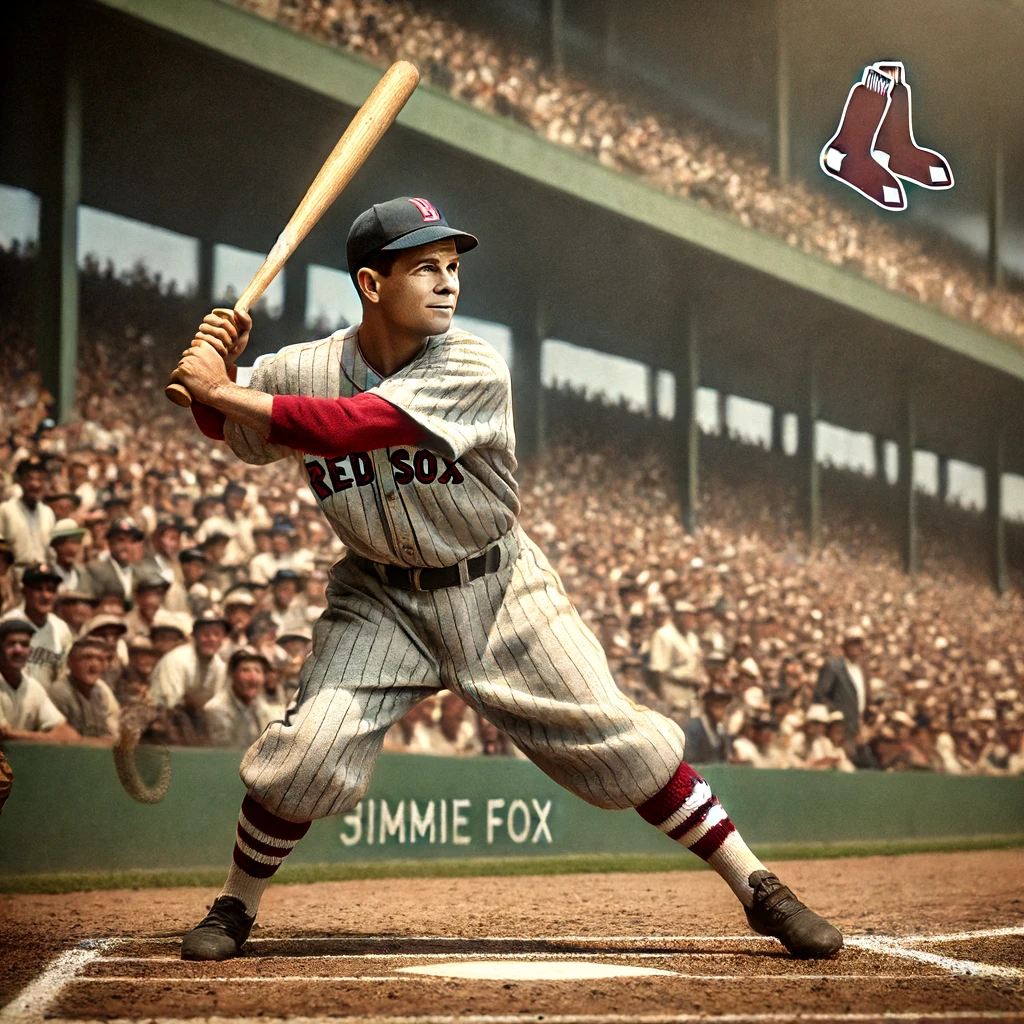
Jimmie Foxx, affectionately known as “Double X” or “The Beast,” remains one of baseball’s most storied legends. His prowess in power hitting during the Golden Age of Baseball earned him a place among the sport’s immortals. To enthusiasts and analysts alike, Foxx epitomized the blend of raw talent and relentless work ethic required to dominate America’s favorite pastime. With an imposing physique, he combined brute strength with remarkable bat control, making him an indomitable force at the plate.
Born in Sudlersville, Maryland, in 1907, Foxx’s early life gave little hint of the grand career he was destined to pursue. Breaking into the major leagues at a tender age, his path to fame was set in motion by his undeniable talent and unwavering determination. As a first baseman primarily for the Philadelphia Athletics and the Boston Red Sox, Foxx carved out a career that many would describe as a masterclass in hitting.
Across two decades in the major leagues, Jimmie Foxx amassed impressive statistics that still hold up in the annals of baseball history. His 534 home runs, a triple crown win, and three MVP awards speak volumes of his abilities and consistency. For modern baseball fans, understanding Foxx’s journey provides invaluable insights into the evolution of the sport and how early legends laid the groundwork for today’s game.
This article delves into the remarkable career of Jimmie Foxx, exploring his early years, major league achievements, unique playing style, and lasting legacy. By the end, you’ll see why Foxx’s name is still spoken with reverence in baseball circles – a testament to his incredible impact on the sport.
Early Life and Rise to Fame
Jimmie Foxx’s journey from the small town of Sudlersville to the grand stadiums of Major League Baseball is nothing short of inspiring. Growing up on a farm, Foxx developed a strong work ethic, an attribute that would become central to his later success. His early exposure to baseball came through local leagues, where his extraordinary skills quickly set him apart from his peers.
In 1924, at the age of 16, Foxx signed with the Philadelphia Athletics, making his debut a year later. What stood out immediately was not just his hitting, but his maturity and composure on the field. His natural ability to read pitchers and control the bat made him a prodigious talent from the get-go.
Under the tutelage of legendary manager Connie Mack, Foxx’s skills were honed to perfection. Mack’s belief in nurturing young talent provided Foxx the platform to explore and refine his abilities. The early years were a blend of learning and excelling, as he balanced playing different positions before finally settling in as a first baseman.
By the late 1920s, Foxx had already established himself as one of the most dangerous hitters in the league. His combination of power and precision led to breakout seasons that began to draw the attention of baseball commentators and fans nationwide. His rapid rise through the ranks of baseball’s elite set the stage for what would be a remarkable career.
The Golden Years with the Athletics
The pinnacle of Jimmie Foxx’s career arguably came during his tenure with the Philadelphia Athletics. These were the years when “Double X” fully affirmed his status as one of baseball’s premier power hitters. Between 1929 and 1935, Foxx’s performance was nothing short of phenomenal, as he collected almost every major accolade available to a hitter.
In 1932, Foxx had a season for the ages, clinching the American League Triple Crown with a .364 batting average, 58 home runs, and 169 RBIs. This incredible feat put him in the elite category of players who have won the Triple Crown, further solidifying his place in baseball history. During this same period, he was instrumental in leading the Athletics to consecutive World Series titles in 1929 and 1930, proving that his prowess extended beyond individual stats to significant team success.
Foxx’s accolades didn’t stop there. He won the American League MVP award three times (’32, ’33, ’38), a testament to his sustained excellence. His 1933 season saw him post a .356 batting average with 48 home runs and 163 RBIs, demonstrating his consistency and versatility as a hitter. Fans in Philadelphia were treated to a virtuoso performance almost every time Foxx stepped up to bat.
Manager Connie Mack often cited Foxx’s contributions as one of the key reasons behind the Athletics’ success during this golden era. Whether it was hitting crucial home runs or anchoring the infield with his defensive skills, Foxx was the quintessential complete player that every manager dreams of having on their roster.

A New Chapter with the Boston Red Sox
In 1935, after more than a decade with the Athletics, Jimmie Foxx was traded to the Boston Red Sox. This change of scenery marked a new chapter in his illustrious career. Fans in Boston were eager to see what the already-established legend could bring to their team, and Foxx did not disappoint.
At Fenway Park, Foxx continued to amaze, particularly benefiting from the ballpark’s hitter-friendly dimensions. In 1938, he had another extraordinary season, capturing his third MVP award. That year, he belted 50 home runs and drove in 175 runs, with a batting average of .349, narrowly missing a second Triple Crown. His powerful swings often resulted in balls landing far beyond the outfield fences, a sight that thrilled the Fenway faithful.
Foxx’s relationship with the Red Sox was mutually beneficial. For a team that had often been in the shadow of the New York Yankees, Foxx provided a beacon of hope and excitement. His decade-long tenure with the Red Sox was filled with personal milestones and memorable moments that added to his rich legacy.
Despite the lack of team success compared to his years with the Athletics, Foxx’s individual brilliance continued unabated. By the time he left Boston in 1942, he had solidified his status as one of the greatest hitters to ever wear a Red Sox uniform. His feats in Boston ensured that he would be remembered not just as an Athletic but as a Red Sox legend as well.
Challenges and Later Years
Like many athletes, Jimmie Foxx’s career was interspersed with challenges and moments of adversity. As he moved into his later years in baseball, the demands of the sport began to take their toll. Injuries became more frequent, and his playing time started to diminish. However, even with these setbacks, Foxx’s spirit remained unbroken.
The 1940s were a period of transition for Foxx. He had brief stints with the Chicago Cubs and Philadelphia Phillies, but by this time, age and injury had begun to erode the magic that had once defined his playing style. Nevertheless, he continued to contribute wherever he could, drawing on his vast experience and deep understanding of the game to help younger players.
World War II also played a role in Foxx’s career trajectory. Like many players of his generation, he took a step back from professional baseball to contribute to the war effort. This hiatus added to the physical and emotional strain, but it also underscored his commitment to his country and the values he held dear.
Even after retiring from professional play, Foxx remained involved in baseball. He took on several coaching roles, sharing his wealth of knowledge with a new generation of players. His influence extended beyond the diamond as he inspired those around him to approach the game with the same passion and integrity that he had displayed throughout his career.
Legacy and Impact on Baseball
The legacy of Jimmie Foxx transcends the statistics and accolades he accumulated during his playing years. Often considered a bridge between the legends of the early 20th century and the modern era of baseball, Foxx’s impact on the sport is immeasurable. His name often comes up in discussions about the greatest hitters of all time, a testament to his enduring legacy.
Foxx was inducted into the Baseball Hall of Fame in 1951, a fitting tribute to his monumental contributions to the game. His career statistics, including 534 home runs and a .325 batting average, are benchmarks that many aspiring players still look up to. His ability to hit for both power and average made him a complete hitter, a rarity in any era.
Beyond the numbers, Foxx is remembered for his sportsmanship and the way he carried himself on and off the field. He was a role model for perseverance, showing that hard work and dedication could overcome even the most daunting challenges. His cordial relationships with teammates and opponents alike earned him respect and admiration across the baseball community.
In many ways, Jimmie Foxx set the standard for what it means to be a true baseball legend. His influence can be seen in the way modern players approach the game, combining athleticism with a deep understanding of baseball mechanics. For fans and historians, “Double X” remains a symbol of baseball’s rich and storied past, a past that continues to shape the present and future of the sport.
Conclusion
In the grand tapestry of baseball history, certain names stand out as titans of the game. Jimmie Foxx is unequivocally one of those titans. From his humble beginnings in Maryland to his record-shattering seasons with the Philadelphia Athletics and Boston Red Sox, Foxx’s career was a testament to what can be achieved through talent, dedication, and an unyielding love for the game.
Foxx’s story is more than just a chronicle of home runs and MVP awards; it is a narrative of resilience, adaptability, and an enduring influence on baseball. His ability to rise above challenges, whether they were on-field adversities or personal battles, highlights the qualities that make sports legends truly great.
For today’s fans, players, and baseball historians, Jimmie Foxx offers a rich legacy to draw from. His approach to hitting, his mental tenacity, and his commitment to excellence are lessons that transcend generations. As baseball continues to evolve, the foundational pillars laid down by icons like Foxx remain as relevant and inspiring as ever.
As we recount the stories and achievements of baseball’s legendary players, Jimmie Foxx’s name is inscribed in bold letters. “Double X” was more than a nickname; it was a symbol of his larger-than-life presence on the field. His power-hitting prowess captivated audiences and left an indelible mark on the game, ensuring that his legacy will be celebrated for generations to come.