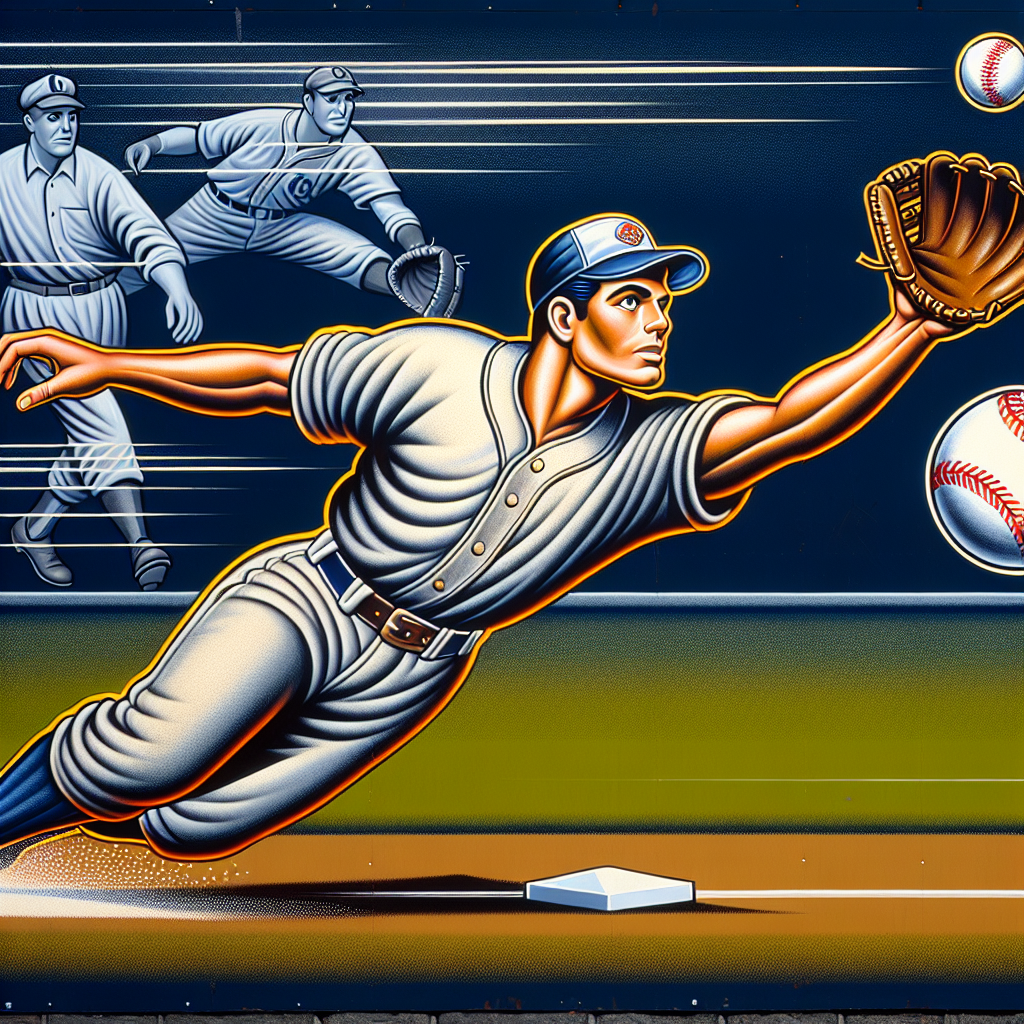
When the discussion turns to the greatest defensive players in baseball history, one name that inevitably comes up is Brooks Robinson. Nicknamed “The Human Vacuum Cleaner” for his unparalleled skill at third base, Robinson’s career was filled with stellar performances that left fans and players in awe. Over the span of 23 seasons with the Baltimore Orioles, Robinson became synonymous with defensive brilliance. His impact on the field was so significant that he redefined the third base position, setting new standards for what was possible defensively.
Known for his remarkable reflexes, agility, and consistency, Robinson earned 16 consecutive Gold Glove Awards, more than any other third baseman in history. His defensive prowess was not just about making routine plays; it was about making the impossible look easy. Whether it was diving stops, bullet-like throws across the diamond, or snagging hard-hit line drives, Robinson did it all with a grace that seemed almost effortless.
Beyond his defensive abilities, Brooks Robinson was also a competent hitter and an extraordinary leader. He was a key figure in the Orioles’ success during the 1960s and 70s, including their World Series victories in 1966 and 1970. His performance in the 1970 World Series, in particular, is often cited as one of the greatest defensive displays in postseason history. In this article, we will delve deep into Brooks Robinson’s career, examining the qualities that earned him the nickname “The Human Vacuum Cleaner” and solidified his place among the legends of the game.
Early Life and Career Beginnings
Brooks Calbert Robinson Jr. was born on May 18, 1937, in Little Rock, Arkansas. From a young age, he showed a keen interest in sports, particularly baseball. He played for the American Legion team in Little Rock and quickly made a name for himself as a promising talent. It didn’t take long for professional scouts to take notice of his skills on the diamond.
In 1955, at the age of 18, Robinson signed with the Baltimore Orioles and began his journey through the minor leagues. Despite his modest stature at 6 feet and 180 pounds, Robinson’s talent was undeniable. His quick reflexes and strong arm made him a standout at third base, earning him a call-up to the majors later that same year. While his initial stint with the Orioles was brief and filled with growing pains, it was evident that he possessed the raw talent needed to excel at the highest level.
By the late 1950s, Robinson had become a regular fixture in the Orioles’ lineup. It was during this period that he began to truly hone his defensive skills, developing the remarkable abilities that would earn him his famous nickname. With each game, his confidence grew, and so did his reputation as one of the finest third basemen in the league. As Robinson’s career progressed, his defensive mastery would continue to evolve, captivating fans and baffling opponents.
The Rise to Stardom
The 1960s were a transformative decade for both Brooks Robinson and the Baltimore Orioles. Under the guidance of manager Earl Weaver, the team began to emerge as a dominant force in the American League. Robinson played a pivotal role in this resurgence, both through his leadership and his exceptional play at third base.
Robinson’s first major breakthrough came in 1960 when he won his first Gold Glove Award, a testament to his defensive prowess. This accolade was just the beginning of what would become a record-setting streak of 16 consecutive Gold Gloves. His ability to make extraordinary plays look routine earned him the adoration of fans and the respect of his peers.
Offensively, Robinson was no slouch either. He was named the American League Most Valuable Player (MVP) in 1964, a season in which he batted .317 with 28 home runs and 118 RBIs. His consistent hitting and clutch performances made him a key contributor to the Orioles’ lineup. However, it was his defense that truly set him apart from his contemporaries, and it was at the hot corner where Robinson made his most indelible mark.
As the 1960s progressed, Robinson continued to amaze with his highlight-reel plays. Whether it was diving to his left to snag a grounder or making a barehanded grab on a slow roller, his defensive feats became the stuff of legend. By the end of the decade, Brooks Robinson was firmly established as the premier third baseman in Major League Baseball.

The 1970 World Series: A Defensive Showcase
If one single event encapsulated Brooks Robinson’s defensive brilliance, it was the 1970 World Series. The Orioles were up against the Cincinnati Reds, a formidable team known for their powerful offense. However, Robinson turned the series into his personal stage, delivering one of the most memorable defensive performances in baseball history.
Throughout the series, Robinson was a wall at third base, making spectacular plays game after game. His performance was so dominating that it demoralized the Reds and left fans and commentators in awe. Play after play, Robinson defied the laws of physics with his ability to react to sharply hit balls and make perfect throws to first base.
One of the most iconic moments came in Game 1 when Robinson dove to his right to snag a groundball hit by Lee May. With a quick, powerful throw from his knees, he managed to get the out at first, leaving the crowd stunned and the Reds’ dugout in disbelief. This play was just one of many that demonstrated Robinson’s unparalleled defensive skills and earned him the Series MVP honors.
Robinson’s glove was so dominant in the 1970 World Series that it overshadowed even his contributions at the plate. He batted .429 for the series, but it was his defensive artistry that stole the show and cemented his legacy as one of the greatest fielders the game has ever seen. That World Series not only solidified Robinson’s place in baseball history but also elevated the standards of defensive play at third base.
Career Achievements and Legacy
Over the course of his illustrious career, Brooks Robinson accumulated numerous accolades and records that reflect his exceptional talent and dedication to the game. His 16 consecutive Gold Glove Awards remain a record for third basemen and serve as a testament to his sustained excellence on the field. Robinson was selected to 18 All-Star Games, further demonstrating the high regard in which he was held by fans, coaches, and fellow players.
In addition to his individual awards, Robinson played a crucial role in the Orioles’ team success. He helped lead them to four American League pennants and two World Series titles in 1966 and 1970. His leadership and steady presence at third base were integral to the Orioles’ dominance during this era.
Robinson’s contributions to baseball were acknowledged through his induction into the Baseball Hall of Fame in 1983, his first year of eligibility. This honor was a fitting recognition for a player who had redefined the third base position and left an indelible mark on the sport. Beyond the statistics, Robinson’s legacy is also defined by the respect and admiration he garnered from the baseball community.
Known for his humility and sportsmanship, Robinson was a role model both on and off the field. His charitable work and community involvement further endeared him to fans and solidified his reputation as one of the game’s true gentlemen. Today, his influence can be seen in the numerous young players who aspire to emulate his defensive excellence and carry forward the standards he set.
In Retrospect: The Human Vacuum Cleaner
Reflecting on Brooks Robinson’s career, it is clear that his nickname, “The Human Vacuum Cleaner,” was well-deserved. His defensive mastery at third base set a benchmark that few have matched. Robinson’s ability to anticipate, react, and execute plays with precision made him a defensive marvel whose impact on the game is still felt today.
His contributions to the Baltimore Orioles and to Major League Baseball as a whole extended beyond his physical talents. Robinson’s work ethic, dedication, and sportsmanship embodied the qualities that define true greatness in sports. He was a leader on the field and a beloved figure off it, leaving a legacy that transcends his statistical achievements.
As baseball continues to evolve, the standards set by players like Brooks Robinson serve as a guiding light for future generations. His defensive excellence forced others to elevate their game, and his all-around contributions helped shape the modern concept of what a third baseman can be. Even decades after his retirement, Robinson’s influence is evident in the way the position is played and the reverence with which he is remembered.
In celebrating Brooks Robinson’s career, we not only honor his individual achievements but also acknowledge the timeless qualities of skill, determination, and sportsmanship that he epitomized. As fans and historians look back on his contributions, it becomes clear that Brooks Robinson will forever be remembered as “The Human Vacuum Cleaner,” a true legend of the game.
Conclusion
Brooks Robinson’s career is a testament to the power of dedication, skill, and character. Over 23 seasons with the Baltimore Orioles, he established himself as the greatest defensive third baseman in baseball history. His 16 Gold Glove Awards, stellar World Series performances, and countless unforgettable plays have left a lasting legacy.
Robinson’s impact went beyond the numbers; he was a role model and an ambassador for the sport. Known for his humility and sportsmanship, he became a beloved figure in the baseball community and inspired countless players to strive for excellence. His charitable efforts and community involvement further highlighted his commitment to making a positive difference beyond the playing field.
As we reflect on Brooks Robinson’s contributions to baseball, it’s clear that his nickname, “The Human Vacuum Cleaner,” encapsulates his remarkable defensive capabilities. His ability to make the extraordinary look routine and his unwavering consistency set new standards for defensive play at third base. Robinson’s legacy is not just measured by his accolades and records but by the inspiration he provides to future generations of players.
Brooks Robinson’s influence on the game endures, and his story continues to be told with reverence and admiration. He remains a shining example of what it means to be a true baseball legend, and his defensive mastery will be celebrated for generations to come. In honoring Brooks Robinson, we celebrate the timeless qualities that define greatness in the sport of baseball.