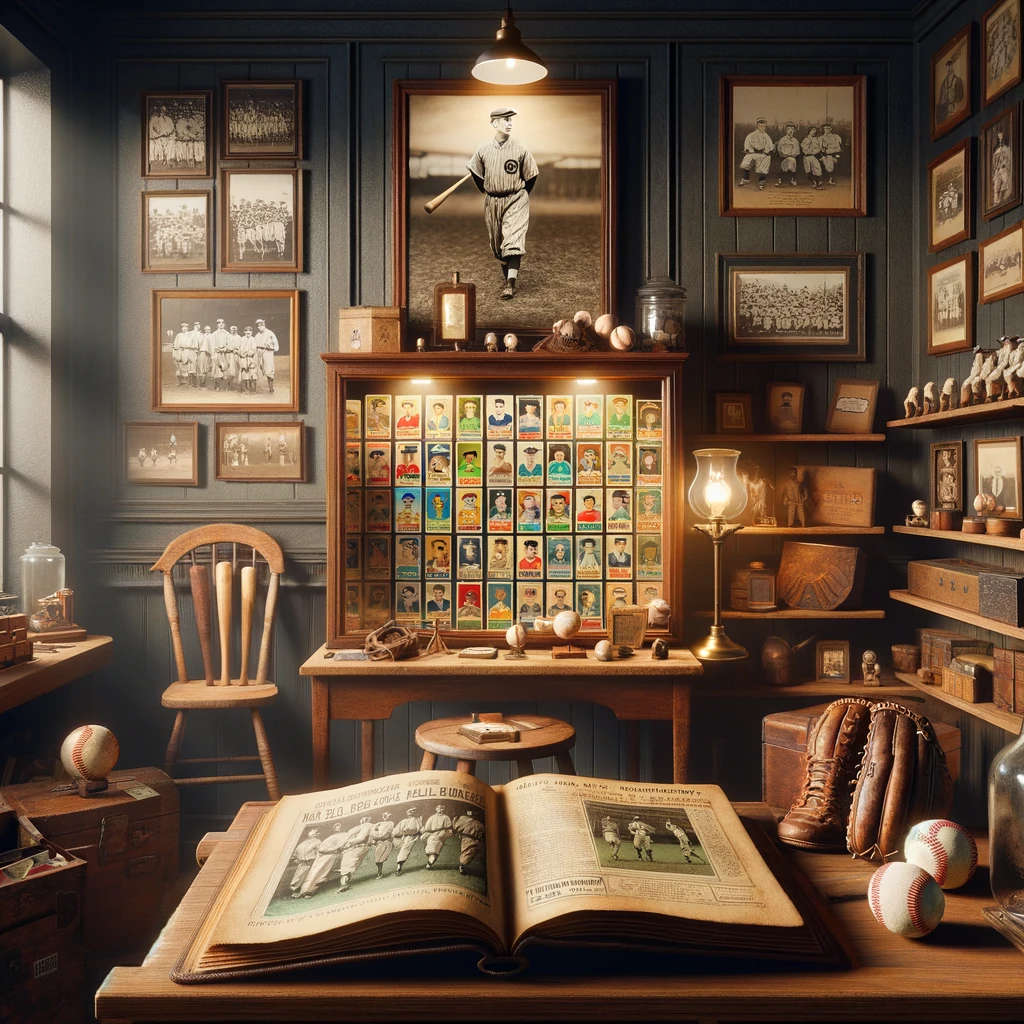
Baseball, America’s beloved pastime, has a rich and storied history that has captivated fans for over a century. Integral to this history are baseball cards and memorabilia, which have played a significant role in both chronicling the sport’s evolution and shaping its cultural impact. This article delves into the early history of baseball, focusing on how baseball cards and memorabilia were not just collectibles, but pivotal in the development and popularization of the game.
The Dawn of Baseball and Its Early Memorabilia
Baseball’s origins can be traced back to the mid-19th century. It was a period marked by amateur matches and local clubs, such as the New York Knickerbockers, who played a key role in formalizing the rules of the game. During these early days, memorabilia consisted mainly of simple items: tickets, programs, and hand-written scorecards. These pieces are now treasured for providing a glimpse into the nascent days of the sport.
Rise of Baseball Cards: From Advertising Tools to Collectibles
The introduction of baseball cards in the late 19th century marked a significant evolution in baseball memorabilia. Initially, these cards were not intended as collectibles. Produced by tobacco companies, like Allen & Ginter and Goodwin & Company, they were included in cigarette packs as stiffeners to protect the product. Featuring lithographed images of players, these cards quickly became popular, turning into a marketing tool that bolstered both the tobacco and baseball industries.
The most famous early baseball card is the Honus Wagner T206 card, produced by the American Tobacco Company. Wagner, a superstar shortstop for the Pittsburgh Pirates, famously demanded his card be pulled from production, likely due to his objection to tobacco. This move inadvertently made his card one of the rarest and most sought-after in history.
The Role of Memorabilia in Fan Engagement and Baseball’s Popularity
Baseball cards and memorabilia played a crucial role in increasing fan engagement with the sport. Before the advent of radio and television, these items were among the few ways fans could connect with players and teams. Collecting cards allowed fans to possess a tangible piece of the game, fostering a deeper emotional connection to baseball.
Memorabilia also served as a bridge between past and present players. As the sport evolved, memorabilia became a way to remember the legends of the game, connecting generations of fans. This historical linkage was crucial in building baseball’s mythology and elevating it to a cultural institution.
Early 20th Century: Golden Age of Baseball Cards
The early 20th century is often referred to as the golden age of baseball cards. This era saw a surge in the production and diversity of cards, with companies like Cracker Jack, Old Judge, and American Caramel Company joining the fray. The designs became more intricate, and the inclusion of player statistics and biographies added an educational element to the hobby.
This period also witnessed the emergence of the first baseball card collecting communities. Clubs and trade events began to form, laying the foundation for the modern card collecting industry. These early communities were instrumental in preserving cards and memorabilia, ensuring their survival for future generations.
Memorabilia Beyond Cards: Bats, Balls, and Uniforms
While cards were popular, other forms of memorabilia also held significant value. Game-used items like bats, balls, and uniforms became highly coveted. These items provided a more direct connection to the players and the on-field action, making them essential pieces of baseball history.
One notable example is Babe Ruth’s 1927 bat, used during his record-setting 60-home run season. This bat, along with other game-used memorabilia, offers an intimate link to baseball’s golden era, allowing fans to touch and feel the history of the game.
Preservation and Legacy
The preservation of baseball cards and memorabilia has been vital in maintaining the sport’s history. Museums, private collectors, and institutions like the National Baseball Hall of Fame have played key roles in safeguarding these treasures. Their efforts have ensured that the legacy and memories of baseball’s early icons continue to inspire and educate future generations.

The Evolution of Card Collecting: From Pastime to Industry
As baseball cards transitioned from promotional items to collectibles, a hobby turned into a burgeoning industry. By the mid-20th century, card collecting evolved with the introduction of companies like Topps, which revolutionized the field with their 1952 baseball card set. This set, featuring the iconic Mickey Mantle rookie card, is considered a cornerstone of modern baseball card collecting. The hobby’s growth was not just in numbers but in sophistication, with collectors starting to grade cards for condition, rarity, and historical significance.
Memorabilia in the Public Eye: Auctions and Record Sales
The public’s fascination with baseball memorabilia surged as items began fetching astronomical sums at auctions. Record-breaking sales, such as the auction of a Honus Wagner T206 card or Babe Ruth’s 1920 jersey, highlighted the monetary and historical value of these items. These high-profile sales brought memorabilia into the mainstream, attracting new collectors and elevating the hobby to a form of investment.
Technology and Trading Cards
The advent of technology further transformed the baseball card industry. The digital era introduced new ways to collect and trade, with online marketplaces and digital trading platforms expanding the hobby’s reach. Additionally, the production of cards became more sophisticated, featuring high-quality photography, autographs, and even embedded game-used memorabilia, creating a new level of allure and value.
Baseball Memorabilia as Historical Documentation
Beyond their monetary value, baseball cards and memorabilia serve as important historical documents. They offer insights into the social and cultural contexts of their times. For example, early 20th-century cards reflect the segregation era of baseball, while post-war cards capture the integration of the leagues. The evolution of card design and the players featured on them mirror changes in the sport and society, making them valuable tools for historians and enthusiasts alike.
Fan Interaction and Community Building
The role of memorabilia in building baseball communities cannot be overstated. Collecting creates a shared language and culture among fans, transcending generations. It fosters a sense of camaraderie and competition, as collectors hunt for rare items and complete sets. Fan conventions, trade shows, and online forums have become hubs for this vibrant community, uniting people from all walks of life in their shared love for the game and its history.
The Influence on Popular Culture
Baseball cards and memorabilia have also permeated popular culture, influencing art, literature, and film. They are symbols of nostalgia, evoking memories of childhood and simpler times. This cultural impact reinforces baseball’s status as more than a sport; it’s an integral part of the American experience.
Looking to the Future
The future of baseball memorabilia is as promising as its past. With advancements in technology and a continuously evolving sport, new forms of memorabilia will emerge. Digital collectibles and virtual experiences may become as sought-after as traditional items, adapting to the changing landscapes of both technology and baseball.
Conclusion
Baseball cards and memorabilia are much more than mere collectibles. They are historical artifacts that have played a pivotal role in the development, popularization, and preservation of baseball. As tangible links to the sport’s past, they continue to fascinate and engage fans, serving as enduring symbols of America’s pastime.
From the rudimentary scorecards of the 19th century to the iconic cards and game-used gear, these pieces of memorabilia have chronicled the evolution of baseball, capturing its essence and enshrining its legends. They remind us that baseball is not just a game, but a cultural heritage that continues to resonate with fans around the world.
Frequently Asked Questions
1. What is the significance of baseball cards in the history of the sport?
Baseball cards have been a pivotal aspect of baseball’s history, serving as more than just collectible items. In the late 19th century, tobacco companies began inserting cards into their products to boost sales. These cards often featured images of popular players and teams, making them an early form of sports marketing. They helped to popularize the game by transforming players into national celebrities and sparking a wave of fan engagement. Over time, baseball cards have become historical artifacts that chart the evolution of the sport and its stars, offering a unique glimpse into the past. They are crucial for researchers and historians who analyze how the game has changed over the decades and how its cultural significance has grown.
2. How did baseball memorabilia contribute to the popularization of baseball?
Baseball memorabilia, including items like jerseys, bats, balls, and other game-used or player-signed artifacts, have been key in not only promoting the game but also in cementing its place in American culture. These items offer fans a tangible connection to the sport, allowing them to own a piece of its history. The cultural impact of memorabilia is enormous; they often serve as historical landmarks, marking significant events, achievements, and milestones in the game. Memorabilia collections and exhibits in museums help to educate new generations of fans about the game’s history and greats and have kept the sport’s legacy alive even as it evolves.
3. When did baseball cards first become a popular collectible, and why?
Baseball cards first became popular in the late 1800s when tobacco companies included them in cigarette packs to encourage purchase. These early cards, known as “tobacco cards,” featured players and became highly sought after by collectors. The cards heightened public interest in the players and the games, leading to increased attendance and viewership. The collection craze gained further momentum in the early 20th century when candy and gum companies started producing baseball cards, making them more accessible to children and teenagers. As such, they quickly became a beloved American tradition, contributing to family bonding activities and establishing a longstanding hobby shared across generations.
4. How are early baseball cards and memorabilia preserved and authenticated?
Preserving early baseball cards and memorabilia requires careful handling and storage to maintain their condition and value. For cards, this often means storing them in protective plastic sleeves or hard plastic cases to prevent damage from air, moisture, or direct handling. Memorabilia like jerseys and bats are best displayed in controlled environments with regulated temperature and humidity to prevent deterioration. Authentication has become increasingly important, with professional third-party services offering certification to verify the authenticity of items through signature analysis, historical context, material scrutiny, and sometimes provenance tracing. This certification process is important not just for collectors but also for museums and auction houses to maintain the integrity and value of each item.
5. How do baseball cards and memorabilia reflect the cultural shifts within the sport over time?
Baseball cards and memorabilia are more than just collectibles; they are annual updates on the cultural and economic dynamics of the sport. Over time, cards have evolved from simple player portraits to complex items featuring statistics, game highlights, holograms, and even autographs, reflecting technological advancements and the changing demands of collectors. Memorabilia captures historic events and player achievements, such as the breakthrough of Jackie Robinson as the first African American MLB player, whose memorabilia is cherished not only for its monetary value but also for representing a significant socio-cultural shift. Moreover, the diversification of baseball memorabilia—like video highlights, photo cards, or virtual game moments—mirrors how media and technology have expanded how fans interact with and preserve baseball’s history.