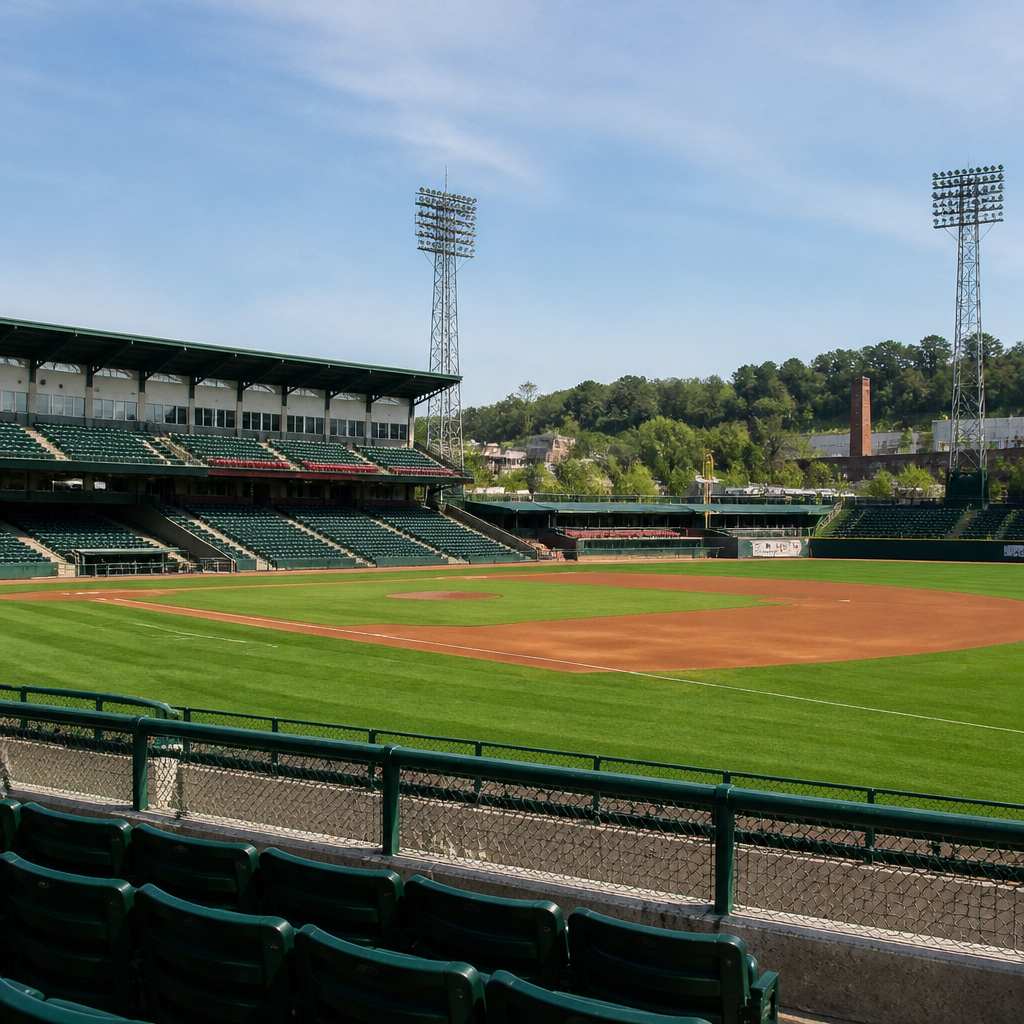
Greenlee Field was more than a baseball park: it was the first modern stadium built, owned, and controlled by an African American entrepreneur for a top Black professional team, and it became the defining home of the Pittsburgh Crawfords during the strongest years of Negro Leagues baseball. Opened in 1932 in Pittsburgh’s Hill District by businessman and numbers king Gus Greenlee, the ballpark anchored a club loaded with Hall of Fame talent, including Satchel Paige, Josh Gibson, Cool Papa Bell, Judy Johnson, and Oscar Charleston. Within the broader story of Negro Leagues ballparks, Greenlee Field stands apart because it was purpose-built rather than borrowed, improvised, or rented from white-owned clubs. That distinction matters. Ballparks shape revenue, scheduling, crowd experience, neighborhood identity, and historical memory. When a team controls its own venue, it controls gates, concessions, branding, and the simple dignity of playing on its own terms.
For readers exploring iconic ballparks, Greenlee Field also serves as the ideal hub for understanding Negro Leagues ballparks as a whole. Most Black clubs in the 1920s, 1930s, and 1940s were forced into unstable arrangements, playing in municipal parks, minor league stadiums, or major league venues on off-days. Those conditions affected everything from travel to field maintenance to recordkeeping. Greenlee Field shows what changed when ownership, location, and community support aligned behind a Black baseball enterprise. It helps explain why certain parks became cultural centers, why others disappeared with little physical trace, and why historians treat surviving evidence with such care. To study Greenlee Field is to study the economics of Black sport, the geography of segregated cities, and the ambitions of Negro Leagues owners who understood that a ballpark could be both a business asset and a statement of permanence.
What Made Greenlee Field Different
Greenlee Field mattered because it was intentionally designed to house an elite Negro Leagues team at a time when Black baseball usually operated within someone else’s infrastructure. Gus Greenlee had already established himself as a powerful figure in Pittsburgh’s Hill District, and he used that influence to acquire the site and finance construction. Contemporary reports and later research place the opening in 1932, with the stadium located at Bedford Avenue and Summerlea Street. The outfield dimensions commonly cited by historians were distinctive, with a notably high left-field wall and asymmetrical shape that reflected the constrained urban site. The park seated several thousand spectators, with estimates varying by source, a reminder that Negro Leagues facilities were not always documented with the same precision as white major league parks.
In practical terms, Greenlee Field gave the Crawfords scheduling control. That alone changed the business model. Teams that rented parks often had to accept undesirable dates, nightmarish travel windows, and constant displacement when white clubs had priority. At Greenlee Field, the Crawfords could promote games aggressively in their own neighborhood, build repeat attendance, and host major events without negotiating from a position of dependency. I have found that this is the central operational difference between Greenlee Field and many other Negro Leagues venues: the park was not just a backdrop for baseball; it was a tool of organizational stability. Even its existence sent a message to players. The Crawfords were a destination club because they offered salaries, visibility, and a home field that looked and felt like a first-class professional setting.
The park also became associated with innovation. Greenlee sponsored the East-West All-Star Game era broadly through his league leadership, and Greenlee Field itself was linked to a famous annual event, the Crawford Colored Championship and later major exhibitions that drew packed crowds. Historians also note the connection between Greenlee Field and one of the earliest known uses of a wall distance marker style in Black baseball settings, though details differ across surviving accounts. The larger point is clear: the venue was not makeshift. It projected ambition. In an era when Black institutions were routinely denied capital and permanence, building a stadium in the heart of a Black neighborhood represented both commercial strategy and civic symbolism.
Greenlee Field and the Rise of the Pittsburgh Crawfords
The Pittsburgh Crawfords had existed before Greenlee Field, but the stadium elevated the franchise from a strong club into a landmark organization. Greenlee recruited relentlessly, and by the mid-1930s the Crawfords were arguably the most talented team in Black baseball. Satchel Paige brought unmatched star power and gate appeal. Josh Gibson combined colossal home run ability with elite catching. Cool Papa Bell gave the lineup speed and defensive range that became legend. Oscar Charleston provided veteran leadership and all-around brilliance. Judy Johnson and other stars added credibility at every position. A great roster needs a great stage, and Greenlee Field delivered one. Fans did not simply attend a game; they attended a showcase of Black baseball excellence in a venue identified with Black ownership and neighborhood pride.
The Crawfords’ success at Greenlee Field also illustrated how ballparks influence competitive identity. Home fields create familiarity with caroms, sightlines, wind, sun angles, and foul territory. In an asymmetrical park, left-handed and right-handed hitters may face different opportunities. Pitchers learn how the dimensions punish mistakes. Outfielders practice wall play until difficult chances become routine. Although Negro Leagues statistics remain incomplete, eyewitness accounts consistently suggest that Greenlee Field functioned as a genuine home-field advantage because the Crawfords played there regularly enough to know it intimately. That consistency was a luxury many Black clubs did not have. The stadium helped turn a talented roster into a polished machine.
Greenlee Field also served the wider ecosystem of Negro Leagues baseball. The park hosted league games, exhibitions, and civic gatherings, making it a social node as much as a sports venue. In the Hill District, baseball crowds intersected with nightlife, restaurants, music, and local business traffic. That pattern was common in Black urban entertainment districts, but Greenlee Field made the connection unusually visible because it sat within one of the nation’s most dynamic Black neighborhoods. When people discuss iconic ballparks, they often focus on architecture alone. With Greenlee Field, the essential feature was integration into community life. It was close to where fans lived, worked, and socialized, which reinforced loyalty and made attendance part of a broader cultural routine.
How Greenlee Field Fits the Wider History of Negro Leagues Ballparks
To understand Greenlee Field fully, it helps to compare it with the main types of Negro Leagues ballparks. Most fell into four categories: rented major league parks, rented minor league parks, municipal athletic fields, and purpose-built or owner-controlled venues. Greenlee Field belongs to the rarest and most historically significant category. Yankee Stadium hosted Black baseball, for example, but it was never a Black-controlled space. Kansas City’s Muehlebach Field and later Ruppert Stadium served important functions, yet they reflected shared or subordinate use. Chicago’s Comiskey Park staged major events like the East-West All-Star Game, but again under white ownership. By contrast, Greenlee Field represented autonomy. That single factor affected revenue retention, maintenance decisions, branding, and prestige.
Other Negro Leagues ballparks help map the subtopic this hub covers. Hinchliffe Stadium in Paterson, New Jersey, is among the best-preserved surviving Negro Leagues-era venues and demonstrates the role of municipally owned sites. Rickwood Field in Birmingham is vital for understanding Black baseball in a segregated Southern industrial city, even though the Black Barons did not own it. Hamtramck Stadium near Detroit is a rare surviving park directly associated with Black professional clubs and shows how community-level preservation can rescue overlooked sites. League Park in Cleveland, Stars Park in St. Louis, and Griffith Stadium in Washington each illuminate different arrangements between Black teams and existing venues. Greenlee Field is the benchmark against which those cases are often measured because it crystallizes what ownership could mean.
| Ballpark | City | Primary Significance | Ownership Pattern |
|---|---|---|---|
| Greenlee Field | Pittsburgh | Purpose-built home of the Crawfords | Black-owned and team-controlled |
| Hinchliffe Stadium | Paterson | Major surviving Negro Leagues venue | Municipal ownership |
| Rickwood Field | Birmingham | Key Southern site tied to Black Barons history | White-owned shared-use park |
| Hamtramck Stadium | Hamtramck | Rare surviving Black club venue | Locally controlled professional park |
| Comiskey Park | Chicago | Home of marquee Black baseball events | Major league rental setting |
This comparison shows why Greenlee Field is central in any serious guide to Negro Leagues ballparks. It answers a basic question directly: what did Black baseball look like when it possessed a stadium built for its own needs? The answer includes stronger neighborhood ties, more predictable operations, and a visible expression of institutional confidence. It also exposes the fragility of that progress, because even a landmark park could be short-lived if the surrounding economics shifted. That tension between aspiration and instability defines much of Negro Leagues architectural history.
The Fan Experience, Neighborhood Setting, and Design
Descriptions of Greenlee Field from newspapers, researchers, and oral histories emphasize a compact urban ballpark with character rather than monumental scale. It was not intended to rival the largest major league cathedrals seat for seat. Instead, it was built to serve a concentrated, baseball-hungry public in the Hill District. Fans could reach it from nearby streets and commercial corridors, and game day energy spilled into surrounding businesses. In my experience studying historic parks, this kind of urban intimacy often creates a stronger sense of place than larger but more isolated venues. Greenlee Field belonged to its neighborhood. That belonging is one reason its memory endured long after the structure vanished.
The design itself reflected practical constraints and local opportunity. The irregular lot produced an unusual field geometry, and contemporary references to the left-field wall suggest a feature that gave the park visual identity while shaping strategy. Urban Black ballparks were rarely lavish in the way later suburban stadium discourse imagines luxury, but they were sophisticated in function. Seating placement, sightlines, entry points, and wall construction all mattered to revenue and crowd control. At Greenlee Field, those decisions served a club that expected significant attendance for top-level games. The ballpark had to handle excitement, noise, and peak-event congestion. That it did so in a dense city district is part of what makes it historically compelling.
Fan experience at Negro Leagues parks also included elements that box scores cannot capture. Bands played. Vendors moved through the stands. Spectators debated players inning by inning with an intensity that sportswriters frequently noted. Doubleheaders and exhibitions turned the park into an all-day destination. Greenlee Field was especially suited to this environment because the Crawfords were a showpiece team. A fan might come to see Paige’s fastball, Gibson’s power, Bell’s speed, or simply the spectacle of Black excellence presented without apology. That emotional atmosphere is crucial to understanding why ballparks matter in this subtopic. They were not passive containers. They amplified identity, aspiration, and community performance.
Decline, Demolition, and the Challenge of Memory
Greenlee Field’s peak was intense but relatively brief. By the late 1930s, the Crawfords were declining as a dynasty, Black baseball economics were shifting, and franchise instability returned. Greenlee himself faced mounting pressures. The stadium was eventually demolished, and the site was later repurposed, leaving historians to reconstruct the park through maps, photographs, newspapers, and recollections rather than standing architecture. That loss is typical of Negro Leagues ballparks. Because so many existed in borrowed or undervalued spaces, preservation came late or not at all. Even exceptional venues disappeared when redevelopment, disinvestment, or changing sports economics removed their immediate use.
The challenge for historians is not simply locating where Greenlee Field stood. It is interpreting what the site meant without overstating what the surviving evidence can prove. Field dimensions, seating capacity, and exact construction details sometimes vary across sources. That does not weaken the core historical case. We know Greenlee Field was real, influential, heavily used, and central to the Crawfords’ identity. We know it was unusual in Black baseball because of ownership and purpose. We know it mattered to Pittsburgh’s Hill District and to national Negro Leagues history. Good scholarship on ballparks balances certainty with humility, and Greenlee Field rewards that method because it sits at the intersection of rich symbolism and incomplete archival survival.
For preservationists and baseball travelers, Greenlee Field also raises a practical question: how should vanished parks be commemorated? Markers, public history projects, digital reconstructions, and neighborhood walking tours all help. The best interpretations place the ballpark back into its urban context rather than treating it as an isolated sports site. Visitors should understand the Hill District, Gus Greenlee’s business empire, the migration-era Black city, and the players whose careers gave the stadium national reach. That broader framing turns a lost structure into a readable landscape. It also links Greenlee Field to related articles on other Negro Leagues ballparks, where survival, reuse, and memory take different forms.
Greenlee Field remains the essential starting point for anyone studying Negro Leagues ballparks because it shows what Black baseball could build when talent, capital, and community converged. It was the Pittsburgh Crawfords’ home, but it was also a declaration that Black teams deserved permanent, professional spaces designed around their own ambitions. Its history clarifies why ownership mattered, why neighborhood ballparks became cultural anchors, and why the disappearance of these sites represents a major loss to American sports history. As a hub within the larger story of iconic ballparks, Greenlee Field connects readers to the full landscape of Negro Leagues venues, from surviving stadiums like Hinchliffe and Hamtramck to legendary shared stages like Comiskey and Rickwood.
The key takeaway is simple. If you want to understand Negro Leagues ballparks, start with the place that best embodied independence. Greenlee Field explains the economics, architecture, community role, and historical vulnerability of Black baseball venues in one powerful case study. It gives depth to every related article in this subtopic because it establishes the standard against which other parks can be compared. Explore the connected ballpark histories next, and use Greenlee Field as the lens that brings the rest of Negro Leagues baseball into sharper focus.
Frequently Asked Questions
Why was Greenlee Field so historically important in baseball history?
Greenlee Field was historically important because it represented a rare and powerful form of Black ownership, control, and ambition in segregated American sports. When Gus Greenlee opened the park in 1932 in Pittsburgh’s Hill District, he did more than provide the Pittsburgh Crawfords with a home field. He created what is widely recognized as the first modern stadium built, owned, and operated by an African American entrepreneur for a major Black professional baseball team. In an era when Black clubs often rented municipal parks, borrowed white-owned facilities, or played unstable schedules, Greenlee Field stood as a physical declaration of independence and permanence.
Its importance also comes from timing. The stadium emerged during one of the strongest periods in Negro Leagues baseball, when the Crawfords were assembling a roster that read like a Hall of Fame roll call. By giving the team a dependable, purpose-built home, Greenlee helped establish the infrastructure needed for top-level competition, larger crowds, and a more professional presentation. Greenlee Field was not just a place where games happened; it was a symbol of Black business leadership, community investment, and sporting excellence during the Jim Crow era. That combination makes it one of the most meaningful ballparks in American baseball history.
Who built Greenlee Field, and what was Gus Greenlee’s role in the Pittsburgh Crawfords?
Greenlee Field was built by Gus Greenlee, one of the most influential figures in Negro Leagues history. Greenlee was a prominent Pittsburgh businessman and a leading figure in the city’s underground numbers economy, which gave him the financial power to invest heavily in Black institutions at a time when traditional avenues of capital were often blocked by racism. His role with the Pittsburgh Crawfords went far beyond that of a typical team owner. He was the driving force behind the club’s rise, using his resources and ambition to turn the Crawfords into one of the premier teams in Black baseball.
Greenlee recruited elite talent, funded operations, and provided the organization with something very few Black teams had: stability. By building Greenlee Field in the Hill District, he anchored the Crawfords in a neighborhood that was central to Black cultural and commercial life in Pittsburgh. His investment gave the team legitimacy and visibility, while also creating a gathering place for fans and the broader community. In practical terms, Greenlee was owner, builder, promoter, and visionary. In historical terms, he helped prove that Black baseball could be run at the highest level with first-class facilities and championship aspirations.
What made Greenlee Field different from other Negro Leagues ballparks?
What set Greenlee Field apart was that it was purpose-built for a top Black professional team rather than borrowed, shared, or improvised. Many Negro Leagues clubs operated under difficult conditions, often forced to rent parks from white-owned teams or municipalities and adjust their schedules around other tenants. That arrangement created constant uncertainty and reinforced unequal power structures. Greenlee Field broke that pattern. It gave the Pittsburgh Crawfords control over their own gate receipts, game dates, fan experience, and public identity.
The ballpark also stood out because it reflected modern stadium thinking for its time. It was designed as a serious baseball venue, not a temporary solution, and it projected a sense of permanence that carried enormous symbolic value. For players, that meant a more stable and professional environment. For fans, it meant seeing Black baseball presented with the dignity and scale it deserved. For the community, it meant having a landmark that embodied pride, enterprise, and self-determination. In that sense, Greenlee Field was different not only structurally but institutionally: it was a ballpark that represented ownership, autonomy, and the highest ambitions of Negro Leagues baseball.
Which legendary players were associated with Greenlee Field and the Pittsburgh Crawfords?
Greenlee Field is closely associated with one of the greatest concentrations of talent ever assembled in Black baseball. The Pittsburgh Crawfords of the early 1930s featured stars such as Satchel Paige, Josh Gibson, Cool Papa Bell, and Judy Johnson, among others. These were not simply good players for their era; they were all-time greats whose reputations have only grown as historians have more fully documented the quality of Negro Leagues competition. Their presence made Greenlee Field a stage for elite baseball at a time when many of the best Black athletes were excluded from Major League Baseball.
Josh Gibson brought extraordinary power and remains one of the most revered sluggers in baseball history. Satchel Paige was a magnetic pitcher whose skill, charisma, and showmanship made him a national attraction. Cool Papa Bell was celebrated for his blazing speed and all-around excellence, while Judy Johnson added Hall of Fame pedigree and infield brilliance. When fans came to Greenlee Field, they were not just watching a local club. They were witnessing a powerhouse loaded with transcendent talent. That star power helped define the stadium’s legacy and explains why Greenlee Field occupies such an important place in the story of the Negro Leagues.
What legacy did Greenlee Field leave behind in Pittsburgh and in the broader story of the Negro Leagues?
The legacy of Greenlee Field is larger than the years it physically existed. In Pittsburgh, it became a symbol of the Hill District’s central role in Black civic, economic, and cultural life. It showed what Black ownership and community-based investment could look like in a segregated America that routinely limited access to capital, land, and institutional power. Even after the ballpark itself disappeared, its memory endured because it represented a moment when Black baseball was not simply surviving but building, flourishing, and claiming space on its own terms.
In the broader history of the Negro Leagues, Greenlee Field stands as a landmark of self-determination and professional excellence. It helped define the golden era of the Pittsburgh Crawfords and offered a model of what was possible when Black teams had real control over facilities and operations. Historians continue to view it as one of the clearest examples of the business sophistication behind Negro Leagues baseball, as well as the deep ties between sports, neighborhood identity, and Black entrepreneurship. Its legacy lives on in scholarship, public memory, and ongoing efforts to give Negro Leagues history the recognition it has long deserved.