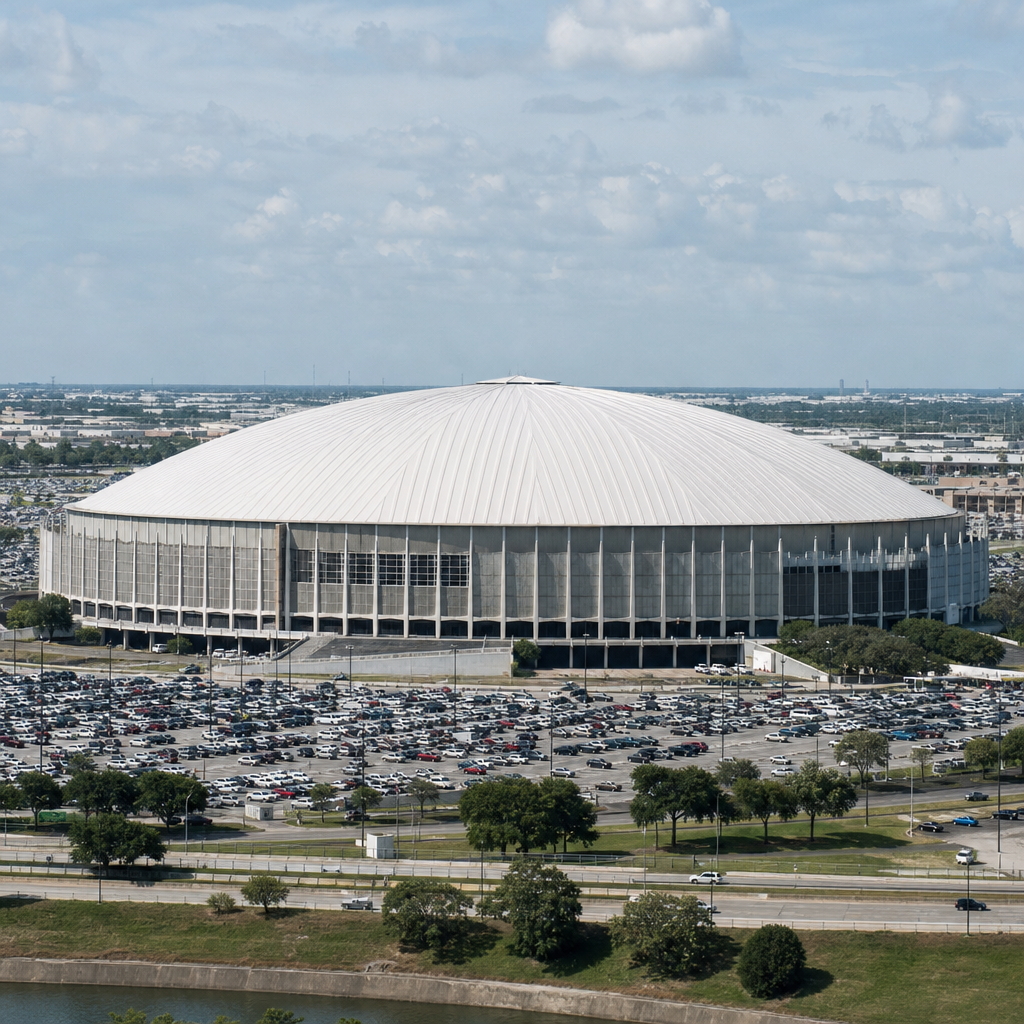
Domed baseball stadiums changed the sport by turning weather, engineering, and fan comfort into part of the game-day experience. In ballpark design, a dome is more than a roof: it is a structural system that encloses the field, controls climate, shapes acoustics, and influences everything from turf selection to sightlines and scheduling. From the moment the Astrodome opened in Houston in 1965, architects, owners, and city leaders treated the covered ballpark as a symbol of modernity, a way to guarantee events, expand revenue, and present baseball as a year-round entertainment product. I have worked on venue content and stadium research projects where one lesson kept surfacing: once a roof is added, every design decision downstream changes. Lighting must mimic daylight, ventilation must handle enormous air volume, playing surfaces react differently, and crowd experience becomes more theatrical. That is why the history of domed baseball stadiums matters within the wider story of iconic ballparks. It explains how teams moved from neighborhood parks shaped by local climate to controlled indoor environments built for multipurpose use, then to more refined retro-modern parks with retractable roofs. Understanding that progression gives fans a practical framework for evaluating ballpark design and features, whether the focus is turf, capacity, concourses, or urban impact.
The Astrodome and the Birth of the Indoor Ballpark
The Astrodome is the unavoidable starting point because it was the first fully enclosed major league stadium and the prototype for every dome that followed. Opened in 1965 for the Houston Astros, it was designed by Hermon Lloyd and W.B. Morgan with engineer Walter P. Moore contributing to the structural solution. Houston’s heat and humidity made outdoor summer baseball uncomfortable and commercially limiting, so local judge Roy Hofheinz pushed for an air-conditioned stadium that could host baseball, football, conventions, and spectacles. The resulting building, often called the “Eighth Wonder of the World,” used a long-span steel lamella roof and covered roughly 9.5 acres. For stadium design, its importance was immediate: it proved that climate control could be a market advantage and that an enclosed venue could dramatically expand a team’s calendar.
The Astrodome also revealed the tradeoffs of indoor baseball. Its original translucent roof panels were intended to support natural grass, but glare interfered with fielders tracking fly balls. The solution was to paint sections of the roof, which reduced light and killed the grass. That problem led directly to the adoption of ChemGrass, later renamed AstroTurf, in 1966. Few design choices have had a larger ripple effect. Artificial turf changed ball speed, bounce, maintenance routines, injury conversations, and even roster construction, because teams in turf-heavy parks often valued speed and range. The Astrodome therefore was not simply a covered stadium; it was the birthplace of a linked design ecosystem involving roof material, lighting strategy, and playing surface technology.
Why Cities and Teams Embraced the Dome
After the Astrodome, domed stadiums spread because they solved business problems that open-air parks could not. A dome protects gate revenue from rainouts, supports television scheduling, and allows teams to market a consistent fan experience regardless of temperature. In cold-weather markets, that reliability mattered to civic leaders trying to attract or retain franchises. Domes also fit the multipurpose stadium era from the late 1960s through the 1980s, when public funding often depended on accommodating both baseball and football. One large enclosed venue seemed more efficient than building separate parks. That logic drove projects such as the Kingdome in Seattle, the Metrodome in Minneapolis, the SkyDome in Toronto, and Tropicana Field in St. Petersburg.
In practice, however, multipurpose domes often compromised baseball geometry. Baseball works best when dimensions, seating bowls, foul territory, and visual backdrops are tailored to the sport. Football-first or dual-use designs produced symmetrical outfields, distant lower decks, and cavernous interiors that diluted intimacy. I have reviewed many historic stadium plans where the same pattern appeared: the easier a building was to reconfigure, the less distinctive the baseball experience became. Fans gained weather certainty and broad concourses, but often lost the asymmetry and neighborhood texture that make classic parks memorable. This tension between convenience and character sits at the center of dome history.
How Domed Design Changed Ballpark Features
A domed baseball stadium alters nearly every major design feature. Sightlines must account for steeper upper decks and deeper structural spans. Acoustics become louder and more reflective, which can create an energetic atmosphere but also amplify public-address systems and crowd noise in ways some fans find fatiguing. HVAC systems become core infrastructure rather than background support, because temperature, humidity, and air movement affect comfort, concessions, and field conditions. Lighting becomes architectural, not merely functional. Indoor baseball requires high, even illumination levels to support player tracking, broadcast standards, and color accuracy. The best domes hide that complexity; the worst make fans feel the building before they feel the game.
Field surfaces are especially important. Natural grass needs sunlight, drainage, root-zone management, and air exchange, all of which are harder under a fixed roof. Before modern grow-light systems and retractable-roof engineering improved options, many domes turned to artificial turf. Turf reduced maintenance conflicts and supported non-baseball events, but it changed baseball itself. Ground balls moved faster, infield hops could be severe, and outfielders played caroms differently. Basepaths were harder, and the cumulative wear on players became a frequent concern. When evaluating ballpark design and features across domed venues, surface selection is not a footnote; it is one of the defining decisions.
Key Domed Stadiums After the Astrodome
Several venues carried the concept forward, each illustrating a different phase in stadium evolution. The table below highlights major domed baseball parks and why they matter in design history.
| Stadium | Opened | Roof Type | Baseball Design Significance |
|---|---|---|---|
| Astrodome | 1965 | Fixed dome | First fully enclosed major league stadium; led to AstroTurf |
| Kingdome | 1976 | Fixed dome | Concrete multipurpose model emphasizing capacity and weather protection |
| Hubert H. Humphrey Metrodome | 1982 | Air-supported roof | Low-cost enclosed solution with extreme baseball quirks and turf play |
| SkyDome | 1989 | Retractable roof | Proved roofs could combine climate control with open-air flexibility |
| Tropicana Field | 1990 | Fixed dome | Modern fixed-roof example shaped by catwalks, turf, and controlled conditions |
| Chase Field | 1998 | Retractable roof | Hot-climate roof strategy paired with baseball-first planning |
| T-Mobile Park | 1999 | Retractable umbrella roof | Weather coverage without fully enclosing the ballpark atmosphere |
| Marlins Park | 2012 | Retractable roof | Contemporary integration of roof engineering, humidity control, and art-driven identity |
The Kingdome represented the brute-force phase of covered stadiums. Its massive concrete shell gave Seattle weather insurance and helped secure big-event hosting, but baseball inside could feel distant and gray. The Metrodome pushed economy further with an air-supported roof, a radically different engineering approach. It became famous for bright white roofing, difficult ball visibility, fast turf, and unusual bounces off rigid outfield walls. Those quirks were not charming accidents; they were direct consequences of enclosed design under budget constraints. SkyDome, now Rogers Centre, changed the conversation by introducing a retractable roof in 1989. That innovation showed teams no longer had to choose between complete enclosure and open-air identity. A venue could adapt to weather while preserving daylight and skyline connection when conditions allowed.
The Retractable Roof Revolution
Retractable roofs became the long-term answer because they corrected the biggest weakness of fixed domes: the loss of outdoor baseball character. Engineering improvements in rail systems, panel movement, structural weight distribution, and weather sealing made these roofs viable at major league scale. Rogers Centre was the proof of concept, but the idea matured in parks like Chase Field, Miller Park, now American Family Field, Minute Maid Park, and loanDepot park. These venues are not all “domes” in the pure fixed-roof sense, yet they clearly descend from the Astrodome’s central insight that climate control can protect baseball economics.
What changed was the design philosophy. Instead of treating baseball as one tenant inside a generic event shell, retractable-roof parks increasingly treated the roof as one feature within a baseball-first environment. Outfield views returned. Seating bowls tightened. Materials became warmer and more regional. In Houston, Minute Maid Park replaced the Astrodome-era multipurpose mindset with a downtown setting, asymmetrical field, and roof used selectively rather than as a permanent separation from outdoors. In Milwaukee, the roof addressed spring and fall weather while preserving fan intimacy. In Phoenix and Miami, the roof became essential infrastructure in extreme heat and humidity. The lesson is clear: the best roofed ballparks are the ones that use enclosure strategically, not dogmatically.
How Domed Stadiums Shaped the Game and Fan Experience
Domed stadiums influenced baseball tactics, player development, and fan expectations. On fast artificial surfaces, line drives skipped through gaps, stolen bases gained value, and fielders had to adapt to truer yet quicker hops. Teams built with speed often benefited indoors, especially in the 1970s and 1980s when turf parks were common. Visiting players frequently commented on sightline differences under white or off-white roofs, and broadcasters had to adjust camera exposure to indoor lighting. These effects were not minor. Ballpark design can subtly influence run environments, defensive positioning, and roster priorities over time.
For fans, domes normalized comfort and predictability. Parents could buy tickets without worrying about thunderstorms or oppressive heat. Teams could add premium clubs, enclosed suites, and large concession zones that functioned in any weather. That shift helped transform baseball venues from simple spectator stands into all-day entertainment facilities. At the same time, critics argued that enclosed parks detached baseball from seasonal rhythm. The smell of cut grass, the changing light at dusk, and local weather patterns have always been part of the sport’s emotional texture. Domed stadium history therefore is not a simple march of progress. It is a record of competing values: control versus atmosphere, flexibility versus specificity, revenue stability versus tradition.
Legacy in Modern Ballpark Design and Features
The legacy of domed baseball stadiums is visible even in parks without fixed roofs. Modern ballpark planning now assumes that environmental control, premium hospitality, maintenance logistics, and multipurpose revenue must be considered from day one. The Astrodome taught the industry that architecture can expand the commercial boundaries of baseball. The failures of some later concrete domes taught a second lesson: fans still want place, texture, and a field that feels made for baseball. Today’s best stadiums combine those insights. They use advanced steel spans, operable panels, drainage systems, LED sports lighting, and computational airflow modeling while preserving neighborhood integration and sport-specific geometry.
For anyone exploring iconic ballparks through the lens of ballpark design and features, domed stadiums form the essential hub topic because they connect so many subtopics. Roof engineering leads naturally to articles on retractable-roof mechanics, artificial versus natural turf, climate control systems, acoustics, multipurpose stadium history, and the economics of year-round event booking. The Astrodome remains the foundational case study, but its real significance is what it started: a continuing search for the ideal balance between shelter and authenticity. If you want to understand why modern parks look and operate the way they do, start with the dome era, then follow how each generation corrected the last. That history makes every current stadium feature easier to read, compare, and appreciate.
Frequently Asked Questions
Why was the Astrodome such a turning point in the history of baseball stadiums?
The Astrodome marked a genuine break from the traditional logic of baseball architecture. When it opened in Houston in 1965, it was celebrated as the first fully enclosed, climate-controlled major sports stadium, and that alone changed how owners, architects, and public officials thought about the future of the game. Before the Astrodome, baseball was still deeply tied to the open-air park, where weather, daylight, and local climate shaped both the schedule and the fan experience. The dome introduced a new idea: baseball could be staged inside a controlled environment without rain delays, oppressive heat, or many of the uncertainties that had long been accepted as part of the sport.
Its importance also went beyond comfort. The Astrodome became a symbol of technological confidence in mid-20th-century America. It suggested that engineering could solve longstanding problems in sports facility design, from spectator comfort to field maintenance to event scheduling. In practical terms, it allowed teams and venue operators to host baseball, football, concerts, conventions, and other events with far fewer weather-related disruptions. That multipurpose promise made domed stadiums especially attractive to cities seeking year-round economic use from major public investments.
Just as importantly, the Astrodome exposed the tradeoffs that would define later domed stadiums. Its enclosed environment affected grass growth, lighting, acoustics, and even the visual experience of the game. Those challenges led to innovations such as artificial turf and new lighting systems, while also starting debates about whether indoor baseball felt fundamentally different from the outdoor version. In that sense, the Astrodome was not simply a novelty. It became the prototype, the test case, and the reference point for every domed baseball stadium that followed.
How did domed stadiums change the actual playing conditions of baseball?
Domed stadiums changed baseball by removing many of the environmental variables that had always influenced the sport. In an open-air park, wind can carry fly balls, sunlight can blind fielders, humidity can affect grip, and rain can delay or completely reshape a game. Under a dome, many of those forces are reduced or controlled. The result is a more standardized environment, where temperature, air movement, and field conditions can be managed with a level of consistency that older ballparks could never provide.
That consistency had major consequences for how the game was played. One of the earliest and most famous examples involved turf. Because early domes made it difficult to sustain natural grass, several enclosed stadiums turned to artificial surfaces. Artificial turf produced faster ground balls, quicker bounces, and often a more speed-oriented style of play. Teams built for indoor conditions could emphasize quick infield defense, aggressive baserunning, and line-drive hitting in ways that reflected the surface as much as the roster. In some domed parks, the stadium itself helped shape team identity.
Acoustics and sightlines also mattered. A dome traps and reflects sound differently than an open stadium, often making routine crowd noise feel louder and more intense. That altered the atmosphere for players and fans alike. Lighting became another important factor, since enclosed parks relied entirely or heavily on artificial illumination. Designers had to make sure players could track the ball cleanly off the bat and into the roof structure without visual confusion. Even scheduling changed, because domed teams could promise more reliable start times and avoid weather postponements that had long complicated travel and league calendars. In short, domed stadiums did not merely shelter baseball; they subtly rewrote the conditions under which baseball was played.
Why did so many cities and teams become interested in domed baseball stadiums after the Astrodome?
After the Astrodome demonstrated that enclosed baseball was possible on a major-league scale, many cities saw the dome as both a practical facility type and a civic statement. From a business perspective, a covered stadium offered predictability. Teams could reduce rainouts, protect attendance from bad weather, and market a comfortable environment in regions known for heat, humidity, cold, or frequent precipitation. For owners and municipal leaders, that made a dome easier to justify as a long-term investment, especially when public funding was involved.
There was also a broader cultural appeal. In the decades after World War II, major stadium construction was often tied to ideas of progress, modernization, and urban prestige. A domed stadium signaled that a city was ambitious, technologically advanced, and willing to invest in a high-profile public venue. Many projects were promoted as more than ballparks; they were presented as multipurpose civic centers capable of hosting baseball, football, trade shows, concerts, and large conventions. That flexibility was a major selling point because it promised more dates on the calendar and more potential revenue streams than a single-use open-air baseball park.
Geography played a role as well. Sun Belt cities in particular found the concept appealing because enclosed, air-conditioned facilities could make summer sports more comfortable for fans and players. Northern cities also saw value in weather protection and event versatility. Over time, the dome became associated with a larger era of stadium design in which efficiency, scale, and multi-event use often took priority over the intimate, neighborhood-based character of older ballparks. Even when opinions differed on aesthetics, the appeal of weather control, scheduling reliability, and civic visibility made domed stadiums a powerful trend for several decades.
What were the biggest design and engineering challenges of building domed baseball stadiums?
Designing a domed baseball stadium has always been far more complicated than simply placing a roof over a field. Baseball requires a very large uninterrupted interior volume, especially because of the height and spread of fly balls, the size of the outfield, and the need for clear spectator views. Engineers had to create long-span roof systems capable of covering enormous spaces without forests of interior columns that would obstruct sightlines. That requirement alone pushed architects and structural engineers toward ambitious solutions in steel, concrete, air-supported membranes, and other specialized systems.
Climate control was another major challenge. A dome encloses tens of thousands of spectators along with athletes, lighting systems, concessions, and other heat-generating operations. Maintaining comfortable temperatures in that environment requires sophisticated ventilation and mechanical systems. In warm-weather markets, cooling costs could be substantial, while in colder climates heating and condensation control became equally important. The building envelope had to manage moisture, air circulation, and temperature differences without creating fogging, glare, or uncomfortable drafts.
Field performance added yet another layer of complexity. Early enclosed stadiums struggled with natural grass because roof structures and translucent materials did not always deliver enough healthy sunlight. That problem directly contributed to the adoption of artificial turf in several domed venues. Lighting design had to support both player visibility and television broadcasting, which became increasingly important as sports media evolved. Acoustics had to be considered as well, since a fully enclosed bowl can amplify crowd noise dramatically. Finally, architects had to solve for circulation, seating geometry, premium spaces, and the demands of multiple sports if the building was intended to be multipurpose. The best domed stadiums were therefore not just roofed arenas; they were highly integrated systems in which structure, climate, playing surface, and spectator experience all had to work together.
How did later domed and retractable-roof stadiums build on the legacy of the Astrodome?
Later domed stadiums inherited both the ambition and the lessons of the Astrodome. On one hand, they embraced the same core promise: weather protection, event reliability, and the prestige of advanced stadium engineering. On the other hand, they tried to improve on the shortcomings of early enclosed venues, particularly the issues involving artificial lighting, turf quality, aesthetics, and the sometimes impersonal feel of large multipurpose interiors. As a result, the history of domed baseball stadiums after the Astrodome is really a story of adaptation and refinement.
Some later facilities focused on better fan comfort and more baseball-specific layouts, moving away from the circular multipurpose “cookie-cutter” model that defined many late-20th-century stadiums. Designers worked to improve sightlines, bring spectators closer to the field, and create more distinct baseball atmospheres even within enclosed buildings. Advances in structural systems and building materials also made roofs more efficient and visually expressive. In many cases, teams and cities wanted indoor reliability without completely giving up the sensory appeal of outdoor baseball.
That goal helped drive the rise of retractable-roof stadiums, which can be seen as one of the most important descendants of the Astrodome idea. Retractable-roof parks preserve the dome’s practical advantages while restoring many of the qualities fans associate with traditional baseball: open sky, natural light, and a stronger connection to local climate and skyline. They represent a compromise between control and authenticity. In historical terms, that is the Astrodome’s enduring legacy. It proved that baseball architecture could be technologically transformative, and every domed or retractable-roof stadium since has responded in some way to the possibilities and problems first made visible in Houston in 1965.