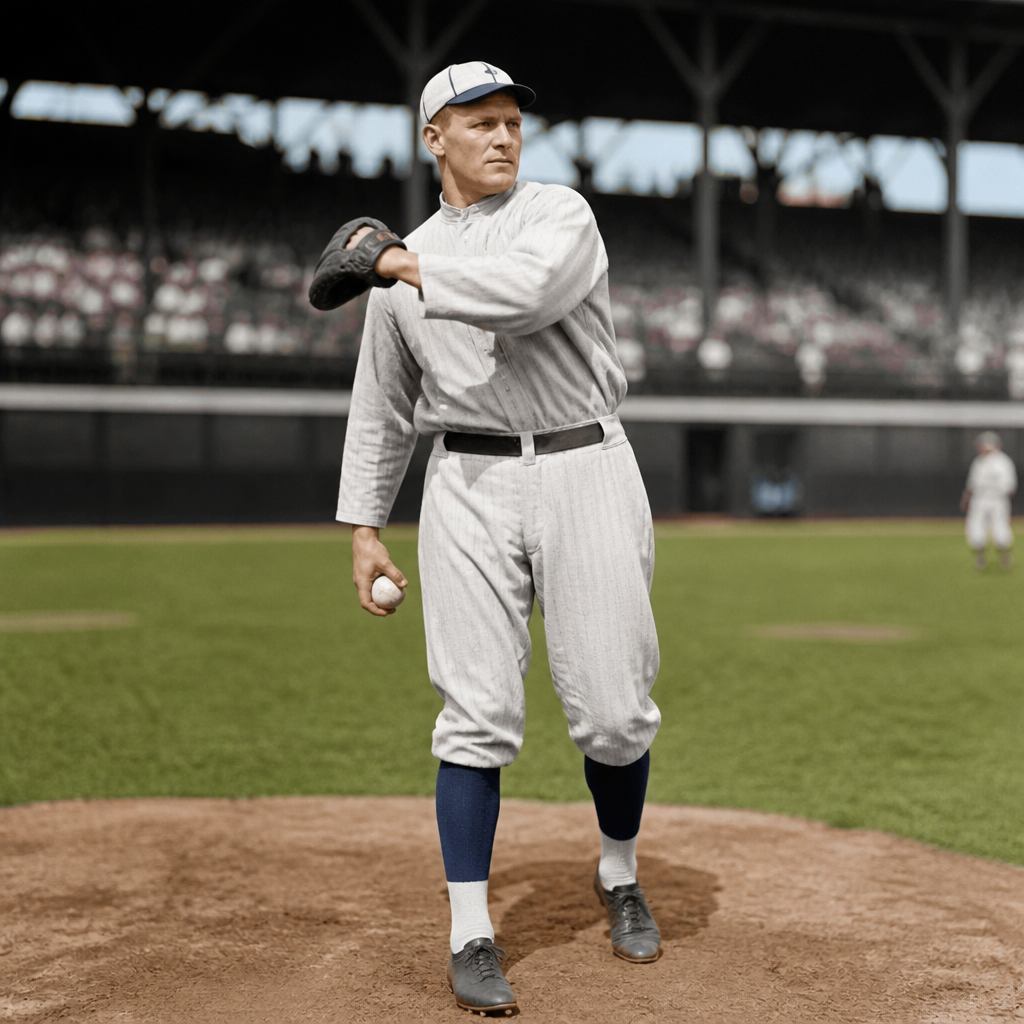
Eddie Plank stands as one of baseball’s foundational pitching legends, the first left-hander to reach 300 career wins and a defining figure within any serious discussion of player profiles under the broader topic of legendary players. A player profile, in this context, is more than a biography. It combines career milestones, playing style, historical setting, statistical evaluation, and long-term influence to explain why one athlete still matters more than a century after his final game. Plank deserves that treatment because his record was not built on novelty or short-lived dominance, but on durable excellence across eras, teams, and competitive environments.
When I evaluate old pitchers, I look for traits that survive changes in rules, schedules, and storytelling. Plank checks every box. He won 326 games, pitched from 1901 through 1917, starred for Connie Mack’s Philadelphia Athletics, and helped anchor multiple pennant-winning clubs. He also did it with a style that contrasted with the stereotype of the overpowering ace. He was known for command, poise, deception, and an exceptional pickoff move, not for piling up strikeouts in the way later left-handed stars such as Warren Spahn, Steve Carlton, or Randy Johnson would. That difference is exactly why his profile matters: it shows how greatness can be built through precision and longevity.
This article serves as a hub-style profile, meaning it covers the essential dimensions readers typically search for: who Eddie Plank was, how he became historically important, what his statistics actually say, how he compared with peers, and why modern fans should still care. It also places him in baseball’s early American League context, when pitching workloads were heavier, field conditions rougher, and the strategic value of controlling baserunners was enormous. Understanding Plank means understanding an early version of pitching craft itself. His career is a bridge between nineteenth-century pitching traditions and the more systematized baseball that followed.
For readers exploring legendary players, Plank is especially useful because his career raises the core questions that define the best player profiles. How should longevity be weighed against peak value? How much should team quality shape our reading of win totals? What does left-handed advantage look like before radar guns, television, and modern analytics? By answering those questions through Plank’s record, we get both a portrait of one remarkable pitcher and a framework for evaluating many others.
Who Eddie Plank Was and Why He Made History
Eddie Plank was born in Gettysburg, Pennsylvania, in 1875 and reached the majors with the Philadelphia Athletics in 1901, the American League’s first season as a major league. That timing alone gave him a special place in baseball history. He was present at the launch of a new competitive structure, and he immediately became one of its defining pitchers. Over 17 major league seasons, he compiled a 326-194 record, making him the winningest left-handed pitcher in major league history at the time of his retirement and the first southpaw to hit the 300-win mark.
The phrase “first left-hander to win 300 games” matters because left-handed pitching has always carried strategic intrigue. Lefties create different angles, disrupt timing for many hitters, and usually hold first base more naturally. Yet for decades, very few accumulated wins at Plank’s level. Reaching 300 requires not only talent, but also health, adaptability, and managerial trust over many seasons. Plank achieved all of that in an era when complete games were common and roster management was far less protective of pitchers’ arms.
His reputation among contemporaries was strong. Connie Mack trusted him as a staff cornerstone, and opposing teams respected his intelligence on the mound. Though Chief Bender often received more dramatic headlines and Rube Waddell more flamboyant attention, Plank provided steadiness. On winning clubs, steadiness is often the difference between a contender and a champion. That was true in Philadelphia, where Plank helped the Athletics win American League pennants in 1902, 1905, 1910, 1911, and 1913, plus World Series titles in 1910, 1911, and 1913.
How Plank Pitched: Command, Tempo, and Left-Handed Craft
Plank’s style was built on location, variation, and calm under pressure. Reports from the era consistently describe him as a polished technician rather than a pure power arm. He changed speeds, worked quickly, and forced weak contact. In dead-ball baseball, that skill set was ideal. Home runs were scarce, fielders mattered enormously, and pitchers who avoided free baserunners had a major advantage. Plank understood this environment better than most.
One of his signature weapons was his move to first base. Left-handed pitchers naturally face the runner, but not every lefty turns that geometry into an elite deterrent. Plank did. He kept runners close, reduced stolen-base opportunities, and shortened innings before they became dangerous. In an era built around bunting, hit-and-run plays, and aggressive advancement, controlling the running game was not a side skill. It was central to run prevention.
Another important element in Plank’s profile is efficiency. He did not chase strikeouts at the expense of pitch economy. Modern fans sometimes underrate pitchers like that because highlight culture favors velocity and swing-and-miss dominance. But a pitcher who induces routine contact, limits walks, and stays in games deep into the afternoon provides enormous value. That was Plank’s formula. He gave his team innings, composure, and a reliable chance to win nearly every time he took the ball.
Career Statistics That Define Eddie Plank’s Greatness
Plank’s headline total is 326 wins, but his statistical case goes well beyond one number. He finished with a 2.35 earned run average, 4,495.2 innings pitched, 410 complete games, 66 shutouts, and 2,246 strikeouts. Context matters here. The early twentieth century produced lower scoring than many later eras, so ERA must be read relative to league conditions. Even with that adjustment, Plank remains impressive because he sustained above-average prevention for nearly two decades against strong competition.
His workload also demonstrates unusual resilience. Throwing nearly 4,500 innings in the American League while staying effective is not accidental. It reflects repeatable mechanics, strategic intelligence, and the ability to adjust as lineups learned his tendencies. Many pitchers can dominate for three to five years. Very few can remain useful long enough to stack value across 17 seasons. That is why career wins, innings, and shutouts still carry interpretive weight when paired with contextual analysis.
| Category | Eddie Plank | Why It Matters |
|---|---|---|
| Career Wins | 326 | Made him the first left-hander to 300 and one of baseball’s all-time winning pitchers |
| ERA | 2.35 | Shows durable run prevention across dead-ball conditions and heavy workloads |
| Innings Pitched | 4,495.2 | Reflects elite durability and sustained trust from managers |
| Complete Games | 410 | Highlights how often he finished what he started |
| Shutouts | 66 | Indicates true game-level dominance, not merely good team support |
Advanced metrics support the traditional record. Baseball-Reference credits Plank with strong career value in WAR terms, and his Hall of Fame standing is not based on nostalgia alone. His total contribution combines quality and quantity at a level that clearly exceeds the threshold for all-time significance. While modern metrics cannot capture every detail of dead-ball defense and scorer judgment, they reinforce rather than weaken his historical case.
His Role on Connie Mack’s Athletics Dynasty
Plank’s greatness becomes even clearer when placed inside the Athletics’ rise under Connie Mack. Those Philadelphia teams were among the smartest and most complete clubs of their era. Mack built around pitching, defense, situational offense, and roster discipline, and Plank fit that blueprint perfectly. He was not simply along for the ride on talented teams. He was one of the reasons those teams could function at a championship level year after year.
On staffs that also featured Chief Bender, Rube Waddell, and later strong support arms, Plank provided balance. Waddell brought volatility and strikeout brilliance. Bender offered power and big-game stature. Plank offered reliability. Across long seasons, reliability can be the hardest thing to replace. Managers know exactly what a dependable starter does for bullpen planning, defensive confidence, and losing-streak control. Even in the dead-ball era, those principles held.
His postseason record was mixed by modern expectations, and that should be acknowledged. In the World Series, Plank had memorable moments but not an untouchable October résumé. Still, championship evaluation cannot rely only on a handful of postseason starts, especially in an era with tiny playoff samples. Over the full arc of pennant races, he was essential. Philadelphia’s dynasty had stars, but dynasties endure because someone repeatedly stops trouble before it spreads. Plank was that type of pitcher.
Comparing Eddie Plank With Other Legendary Left-Handers
Comparisons help clarify Plank’s place in baseball history. Warren Spahn later surpassed him as the standard for left-handed career wins, finishing with 363. Steve Carlton brought a more modern strikeout profile and won 329 games. Lefty Grove, another Athletics legend, probably had the higher peak. Randy Johnson combined intimidation, velocity, and strikeouts in a way Plank never did. Yet Plank remains distinct because he opened the path. He established that a left-handed starter could be not just useful or tricky, but historically durable and overwhelmingly successful.
His profile is closer in spirit to pitchers who win with intelligence and repeatability than to those who overwhelm hitters physically. That does not make him lesser; it makes him different. In scouting terms, Plank maximized command, deception, pace, and game management. If he pitched in a modern organization, coaches would likely praise his sequencing, hold times, and contact management. The language changes across eras, but the underlying skills are recognizable.
He also compares favorably with his direct contemporaries. In early American League history, only a handful of pitchers combined his win total, ERA quality, and longevity. That is the correct frame for judging old stars: first by the demands of their own era, then by cross-era indicators of sustained excellence. By both standards, Plank rates as elite.
Why Eddie Plank Still Matters in Player Profiles Today
Modern baseball coverage often focuses on players whose careers are easier to see on video and easier to summarize through recent statistics. That creates a risk: figures like Plank become footnotes, mentioned only in Hall of Fame lists or trivia about 300-game winners. A strong player profile corrects that. It explains not just what happened, but why the achievement retains meaning. Plank matters because he represents a complete model of pitching value: durability, run prevention, strategic intelligence, and championship relevance.
He also matters as a reminder that left-handed pitching has never been only about angle or rarity. The best lefties change the game’s geometry. They alter lead lengths, batter comfort, defensive positioning, and managerial options. Plank did all of that long before analysts had public data to map it. His success was observed in results first, then understood through baseball logic. That sequence is common in the sport’s history. Players often prove truths on the field before language catches up.
For readers using this article as a hub within legendary player profiles, Plank offers a valuable template. To evaluate any historic player well, start with the setting, identify the signature tools, test the numbers against era context, and ask how the player affected winning beyond highlights. That method works for pitchers and hitters alike. In Plank’s case, it leads to a clear conclusion: he was not merely the first left-hander to win 300 games. He was one of the most dependable and accomplished pitchers baseball has ever produced.
Eddie Plank’s legacy is secure because it rests on more than one milestone. The 300-win breakthrough gives his career an easy headline, but the deeper story is sustained excellence through craft, discipline, and uncommon longevity. He helped define the Athletics’ early dynasty, excelled in the first decades of the American League, and showed how a left-handed pitcher could control games without relying on spectacle. His numbers still stand up, his influence still makes sense, and his career still rewards close study.
For anyone building a serious understanding of legendary players, Plank belongs near the front of the conversation, not at the margins. He is a model case in how to read baseball history responsibly: respect the era, measure the performance, and recognize the skills that translated into wins. If you are exploring player profiles across baseball’s greatest names, use Eddie Plank as a starting point and continue with the other legends who shaped the game’s standards.
Frequently Asked Questions
Why is Eddie Plank such an important figure in baseball history?
Eddie Plank is important because he represents both a major statistical milestone and a larger turning point in the history of pitching. He was the first left-handed pitcher in Major League Baseball history to win 300 games, a benchmark that has long signaled sustained excellence, durability, and elite command over many seasons. That fact alone would make him historically significant, but Plank’s legacy goes further. He starred during baseball’s early modern era, when the game was still shaping many of its competitive traditions, and he helped define what a great pitcher could look like at a time when power arms did not dominate in the same way they often do today.
What makes Plank especially compelling in a player profile is the combination of achievement and style. He was not simply piling up wins through luck or brief success. He built a long, highly effective career through control, intelligence, and consistency. For much of his time with the Philadelphia Athletics, he was a central part of one of the American League’s most important early dynasties under manager Connie Mack. That places him at the intersection of individual greatness and team history. When historians discuss legendary players, Plank belongs in the conversation because he helped establish the standard for left-handed pitching greatness while also contributing to championship baseball in one of the sport’s formative periods.
How did Eddie Plank become the first left-hander to win 300 games?
Plank reached 300 wins by combining longevity, reliability, and a style of pitching that aged well. He debuted in 1901 and quickly became one of the American League’s steadiest starters. Over a long career, he consistently took the ball, worked deep into games, and gave his teams a chance to win. In an era when pitchers were expected to handle heavy workloads, Plank proved remarkably durable, and that durability was paired with genuine effectiveness rather than mere accumulation. He did not rely exclusively on overpowering hitters. Instead, he succeeded with precise command, changing speeds, intelligent pitch selection, and the natural difficulty hitters often faced against a skilled left-hander.
His success was also tied to the context of the teams he played for, especially the Philadelphia Athletics. Plank was a key part of a club that became a powerhouse in the early 1900s and again in the early 1910s. Strong team support certainly helped him collect victories, but that should not diminish the accomplishment. Reaching 300 wins requires far more than playing for a good team. It demands years of excellent performance, health, adaptation, and the ability to remain effective against generations of hitters. By the time Plank reached the milestone, he had demonstrated all of those qualities. Becoming the first left-hander to do it gave the achievement extra weight, because it showed that a southpaw could dominate baseball history in a category that had previously been associated more often with durable right-handed aces.
What was Eddie Plank’s pitching style, and why was it so effective?
Eddie Plank was known less for raw velocity than for polish, deception, and command. He was a classic example of a pitcher who understood how to disrupt timing and exploit hitter weaknesses. As a left-hander, he already offered a different look from many of his contemporaries, but what made him special was his ability to pair that natural advantage with control and baseball intelligence. Reports from the era consistently describe him as calm, strategic, and difficult to square up. He was the kind of pitcher who could stay in control of an at-bat even without overwhelming speed, which is often a hallmark of truly great long-career pitchers.
That style was particularly effective in the dead-ball era, when run scoring was generally lower and pitchers who could prevent solid contact had tremendous value. Plank excelled at keeping hitters uncomfortable. He changed pace well, located pitches carefully, and worked with the confidence of someone who trusted his full approach rather than one dominant weapon. This matters in a modern evaluation of his career because it helps explain how he remained productive for so long. Pitchers whose games are built on command and intelligence can often adapt better over time than pitchers who depend only on youthful power. In that sense, Plank was not just successful for his era; he was a model of sustainable pitching excellence.
How should modern fans evaluate Eddie Plank’s statistics and accomplishments?
Modern fans should start by recognizing that comparing pitchers across eras requires context. Plank played in a vastly different version of baseball, with different offensive conditions, usage patterns, mound expectations, and strategic norms. Win totals were influenced by pitchers throwing far more complete games and logging heavier workloads than modern starters, so his 300-plus victories should be seen through that lens. At the same time, context should not be used to dismiss the achievement. Every era has its own demands, and Plank met the demands of his better than almost anyone. He remained one of the winningest and most respected pitchers of his generation, which is exactly what matters when evaluating greatness historically.
Beyond wins, Plank’s value shows up in his longevity, his place among the top pitchers of the early American League, and his role on championship-caliber teams. His earned run prevention, innings totals, and consistency across many seasons all support the view that he was not merely a compiler. He was an elite performer with staying power. For a player profile, that distinction is essential. A legendary player is not just someone with a famous milestone, but someone whose broader body of work confirms that the milestone was earned through sustained excellence. Plank fits that description well. He should be evaluated as one of the foundational great pitchers of baseball’s first great generation, especially among left-handers.
What is Eddie Plank’s lasting legacy in discussions of legendary players and baseball player profiles?
Eddie Plank’s lasting legacy is that he provides a blueprint for how baseball remembers greatness beyond modern celebrity. He may not be as immediately recognizable to casual fans as some later stars, but serious discussions of legendary players consistently bring his name forward because his career checks every important box: innovation in the sense of setting a handedness-based milestone, sustained performance, championship relevance, statistical distinction, and enduring influence on how left-handed pitching excellence is understood. He helped establish the historical standard for southpaw greatness, and that alone secures his place in baseball memory.
In player profile terms, Plank is valuable because he illustrates how history, performance, and legacy interact. A strong player profile is not just a list of dates and totals. It explains why a player mattered in his own time and why he still matters now. With Plank, the answer is clear. He was a pillar of early twentieth-century baseball, a key contributor to one of the sport’s defining franchises, and the first left-hander to reach one of pitching’s most revered milestones. More than a century after his final game, he still represents durability, craft, and excellence. That is why he remains a meaningful subject in any broader article about legendary baseball players and why his story continues to reward close attention.