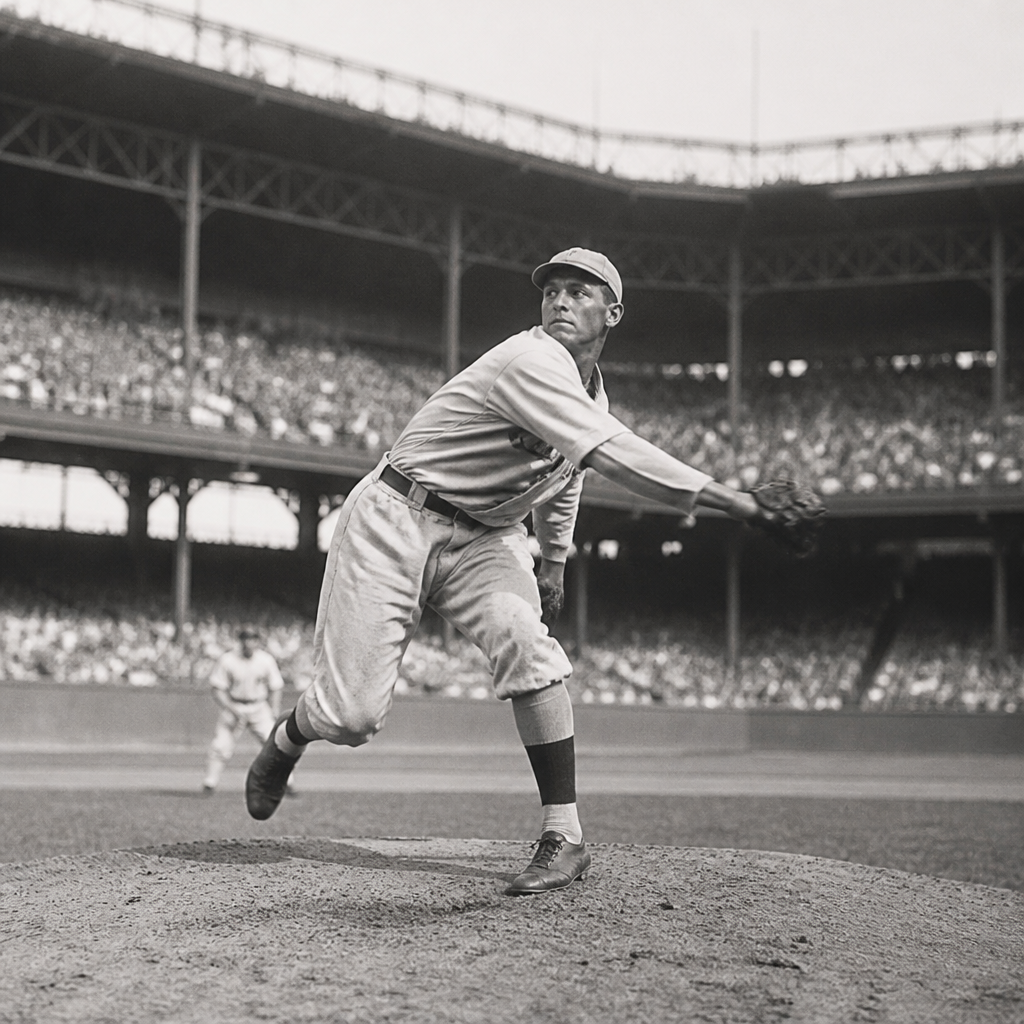
Baseball in the 1910s was defined by low-scoring games, dominant pitchers, daring baserunning, and a crisis of credibility that reshaped the sport. Historians call most of the decade part of the Deadball Era, a period usually dated from about 1900 to 1919, when teams emphasized bunts, steals, hit-and-run plays, and run prevention because home runs were scarce and baseballs were less lively than they became in the 1920s. As someone who has spent years studying box scores, rule changes, and team construction from this period, I see the 1910s as the hinge point between nineteenth-century strategy and modern power baseball. It matters because nearly every core debate in baseball history appears here: how rules shape style, how equipment affects offense, how stars influence public interest, and how gambling can threaten the legitimacy of competition.
To understand the Deadball Era, start with conditions on the field. Ballparks were often large and asymmetrical, gloves were smaller and less specialized, foul balls were treated differently than today early in the era, and one baseball might remain in use for long stretches until it became soft, dark, and difficult to hit. Spitballs, shine balls, emery balls, and other doctored pitches gave pitchers additional advantages. The result was a game in which batting average, bunting skill, basestealing judgment, and pitching command could matter more than slugging percentage. Yet the decade was not monotonous. It featured the brilliance of Ty Cobb, Walter Johnson, Christy Mathewson, Tris Speaker, Honus Wagner, Grover Cleveland Alexander, and Joe Jackson, while also setting the stage for Babe Ruth to end the old order. By the close of the 1910s, baseball had become more popular, more national, and more vulnerable than ever.
What defined Deadball baseball on the field
The clearest way to define Deadball baseball is strategic scarcity. Because extra-base hits were harder to produce consistently, offenses tried to manufacture single runs. Managers relied on the sacrifice bunt, stolen bases, hit-and-run plays, squeeze bunts, and aggressive first-to-third advancement. In practical terms, clubs aimed to get one runner aboard, move him into scoring position, then score him with a single, a ground ball, or a well-placed bunt. This style rewarded teams with speed and discipline. The Detroit Tigers built around Ty Cobb’s relentless pressure. The New York Giants under John McGraw turned chaos into a system, forcing defenders to rush throws and make mistakes. The Philadelphia Athletics under Connie Mack paired strong pitching with opportunistic offense, winning titles through precision rather than brute force.
Pitching sat at the center of the era. Walter Johnson’s fastball overpowered hitters despite the low-offense context; his 1913 season, when he went 36-7 with a 1.14 ERA, remains one of the greatest ever recorded. Christy Mathewson mastered command and deception, especially with his famous fadeaway, a screwball variation that neutralized right-handed hitters. Mordecai Brown, Eddie Plank, and later Grover Cleveland Alexander demonstrated that movement, location, and stamina were as valuable as velocity. Complete games were expected. Rotations were smaller, relief specialization barely existed, and aces routinely threw well over 300 innings. In 1916, Alexander won 33 games and completed 16 shutouts, evidence of both his skill and the era’s workload expectations.
The equipment and rules help explain why this happened. The baseball itself was not standardized to the degree later generations expected, and before the 1920 reforms, umpires commonly kept balls in play until they were badly scuffed or misshapen. A darkened ball was hard to track, especially in late afternoon light. Add legal spitballs and other altered deliveries, and hitters faced conditions tilted heavily toward pitchers. Park dimensions mattered too. Outfields were expansive, with deep alleys that turned some hard-hit balls into triples but suppressed routine home runs. The game rewarded line drives, placement, and daring advancement more than loft. In that context, a .300 hitter with speed and bunting skill could anchor an offense as effectively as many later sluggers did with home run power.
The stars who shaped the decade
No player better represents 1910s intensity than Ty Cobb. He won batting titles almost annually, hit for average with astonishing consistency, and weaponized fear through spikes-high slides, bunts, steals, and constant pressure. Cobb was not simply fast; he read pitchers, catchers, and infield positioning with uncommon precision. In 1911 he hit .420, stole 83 bases, and turned routine singles into immediate scoring threats. His style showed that offense in the Deadball Era was not passive. It was predatory. Opponents knew that one walk or one infield hit could unravel an inning if Cobb or Sam Crawford were on the bases. That pressure influenced defensive alignments long before modern analytics gave the practice a name.
Walter Johnson was the decade’s most imposing pitcher. Contemporary hitters described his fastball as uniquely explosive, and unlike many flamethrowers in any era, he paired speed with exceptional control. Johnson won 417 career games, but his peak in the 1910s explains his legend. He carried Washington teams that often lacked the offensive support of the Athletics or Red Sox. Tris Speaker offered a different template for greatness. Playing a shallow center field that anticipated hitters’ tendencies, he converted line drives into outs and then punished mistakes at the plate. Honus Wagner, though older by this decade, remained a complete player whose defense, baserunning, and batting intelligence embodied turn-of-the-century excellence. These stars were not merely statistical leaders; they defined how winning baseball looked before the home run became central.
The decade also introduced figures who linked the old game to the new one. Joe Jackson was a devastating natural hitter, capable of high averages and loud contact in any environment. Babe Ruth entered as a dominant left-handed pitcher for Boston, helping the Red Sox win the 1915, 1916, and 1918 World Series. Even before his full conversion to everyday slugger, Ruth’s raw power signaled a coming disruption. In an era when league home run leaders sometimes finished in single digits, Ruth began hitting the ball farther and more often over fences than the game was built to accommodate. Meanwhile, managers such as Connie Mack, John McGraw, and Bill Carrigan demonstrated that leadership in this period meant mastering pitching usage, defensive positioning, and situational offense rather than waiting for a three-run homer that was unlikely to come.
How teams won championships in the 1910s
The most successful teams of the decade built run prevention first. Connie Mack’s Philadelphia Athletics won pennants in 1910, 1911, 1913, and 1914 with elite pitching from Eddie Plank, Chief Bender, and Jack Coombs, plus defense and timely hitting. The Boston Red Sox won four World Series between 1912 and 1918 by combining deep pitching staffs with strong defense and enough top-end offense from players such as Tris Speaker, Harry Hooper, Duffy Lewis, and later Ruth. The New York Giants captured National League pennants from 1911 through 1913 by maximizing every tactical edge. What all these clubs shared was efficiency. They avoided outs on the bases when possible, converted batted balls into outs, and trusted starters to work deep into games. In a low-scoring environment, one misplayed bunt or one extra walk could decide a pennant race.
League offense during the 1910s remained modest by later standards, though it was not uniformly stagnant. The Federal League challenge in 1914 and 1915 disrupted rosters and salaries, drawing talent away from the established American and National Leagues. That competition mattered because it briefly gave players more bargaining power and forced owners to defend their labor system. It also helped reshape franchise geography and ownership structures after the league collapsed. From a style perspective, however, the core principles remained stable. Teams emphasized contact, speed, and prevention. Fans expected close scores, dramatic steals, and complete-game duels. A 2-1 contest featuring fifteen total hits and multiple sacrifice attempts was not considered dull; it was considered high-level baseball executed under pressure.
| Team | Key 1910s strength | Representative stars | Why it worked |
|---|---|---|---|
| Philadelphia Athletics | Balanced pitching and execution | Eddie Plank, Chief Bender, Frank Baker | Limited runs, controlled tempo, capitalized on mistakes |
| Boston Red Sox | Deep staff and defense | Tris Speaker, Smoky Joe Wood, Babe Ruth | Strong rotation support made one-run leads hold up |
| New York Giants | Aggressive tactical play | Christy Mathewson, Chief Meyers, Fred Merkle | John McGraw exploited bunts, hit-and-run plays, and pressure |
| Detroit Tigers | Speed-driven offense | Ty Cobb, Sam Crawford | Created scoring chances without needing home runs |
The 1919 Black Sox scandal and baseball’s credibility crisis
No discussion of baseball in the 1910s is complete without the Black Sox scandal. In the 1919 World Series, eight members of the Chicago White Sox were accused of conspiring with gamblers to throw the series against the Cincinnati Reds. The allegations centered on stars and regulars including Shoeless Joe Jackson, Eddie Cicotte, and Chick Gandil. The scandal did not emerge in a vacuum. Baseball had long coexisted uneasily with gambling, low player salaries relative to owner power, and weak central enforcement. The reserve clause bound players tightly to clubs, resentment toward owners ran deep, and some gamblers believed underpaid players could be reached. The White Sox were talented enough to win honestly, which made the accusations especially damaging. Fans did not just question one outcome; they questioned whether competition itself could be trusted.
The response permanently changed governance. After the scandal’s fallout, owners moved away from the weak National Commission structure and installed Kenesaw Mountain Landis as the first commissioner in 1920 with broad authority to protect the game. Landis banned the implicated players for life, even after acquittals in court, establishing that baseball would punish threats to integrity according to its own standards. That decision was severe and remains debated, particularly in Jackson’s case, but it restored confidence at a moment when the sport needed decisive action. In practical terms, the scandal marked the end of the old informal order. Baseball could no longer rely on custom and club-level discipline. A national game required centralized authority, visible enforcement, and a public commitment that results on the field were legitimate.
Why the Deadball Era ended
The end of the Deadball Era was not caused by one event, but 1920 became the decisive break. Several changes converged. Baseballs began to be replaced more frequently during games, making them cleaner, whiter, and easier to see and drive. Rules and enforcement cracked down on doctored pitches, though a group of existing spitball pitchers was grandfathered temporarily. Teams and players also adjusted mentally after Ray Chapman’s death in August 1920, when he was struck by a pitch he likely did not see clearly; cleaner balls were part of the safety response. Most important, Babe Ruth demonstrated that power hitting could be an offensive system rather than a novelty. His 54 home runs in 1920 exceeded the total of many entire teams from earlier years and forced clubs to rethink roster construction, swing paths, and game strategy.
That shift did not erase everything that came before. Pitching still mattered, defense still won games, and speed remained valuable. But the hierarchy changed. Under Deadball conditions, clubs often played not to make the first big mistake. In the emerging live-ball game, a deficit could disappear with one swing, and lineups were increasingly built to drive the ball. For readers exploring baseball eras, the 1910s serve as the essential hub because they explain both the culmination of old baseball and the birth of modern baseball. Study this decade and later developments make sense: the rise of Ruth, the commissioner’s office, the new economics of stars, and the strategic decline of the sacrifice-heavy offense. If you want to understand how baseball became recognizable to modern fans, start with the 1910s, then follow the transition into the 1920s.
Frequently Asked Questions
What made baseball in the 1910s part of the Deadball Era?
Baseball in the 1910s is usually grouped into the Deadball Era because the sport was built around run prevention, field position, and pressure rather than power hitting. Offenses rarely expected to win with home runs. Instead, teams tried to manufacture runs with bunts, stolen bases, hit-and-run plays, sacrifice flies, aggressive first-to-third baserunning, and constant attempts to force fielders into mistakes. Several factors fed that style. Baseballs themselves were generally less lively than they would be in the 1920s, and the same ball was often used deep into games, becoming softer, dirtier, and harder to drive. Parks were often spacious, which turned many hard-hit balls into long outs rather than home runs. On top of that, pitchers had advantages in how they handled the ball, and many were masters of changing speeds, locating pitches, and exploiting weak contact.
The statistical results matched the style of play. League scoring levels were modest, batting averages were not inflated by modern standards, and home run totals were extremely low compared with later decades. In that environment, one run could decide a game, so managers treated every baserunner as precious. That is why the 1910s produced a brand of baseball that can seem foreign to modern fans: tight games, strategic small ball, dominant pitching performances, and an intense focus on defense and execution. Even though the decade was not completely static, and offense began to shift near the end, most of the 1910s still fit the core identity of the Deadball game.
Why were pitchers so dominant during the 1910s?
Pitchers dominated in the 1910s because the entire baseball environment favored them. The ball itself did not jump off the bat the way it did in the live-ball years that followed, which meant even solid contact often stayed in the park. Pitchers also benefited from looser standards about the condition of the baseball. A scuffed, darkened, softened ball was harder for hitters to see and easier for pitchers to manipulate. That helped produce weak contact, pop-ups, and grounders rather than loud extra-base damage. Just as important, pitchers of the period worked constantly, threw huge inning totals, and learned to survive by mixing control, deception, stamina, and command rather than simply overpowering hitters with velocity.
The decade was filled with extraordinary arms. Walter Johnson stands out as the era’s defining power pitcher, but he was hardly alone. Christy Mathewson, Grover Cleveland Alexander, Eddie Plank, Joe Wood, Smoky Joe Williams in Black baseball, and many others showed how broad pitching excellence was in the period. These pitchers were expected to finish what they started, adapt to different lineups, and pitch effectively under demanding workloads that would be almost unthinkable today. Defenses also mattered. Since the game emphasized balls in play, strong fielding behind a pitcher could turn contact management into a repeatable strategy. When you combine durable starters, low-scoring tactics, less lively baseballs, and rules and customs that often benefited the mound, you get a decade in which elite pitchers could control the shape of the sport.
How important was speed and baserunning in 1910s baseball?
Speed was absolutely central to winning baseball in the 1910s. In a low-scoring environment, teams could not sit back and wait for multi-run homers, so they had to create offense with motion and risk. A fast runner could turn a walk into a scoring chance, pressure an infielder into rushing a throw, score from second on a single, or steal a base that put the tying run in position. Managers valued players who could bunt for hits, take the extra base, read pitchers carefully, and force mistakes. The running game was not an accessory to offense; it was one of the main engines of offense.
This is why stars such as Ty Cobb became so feared. Cobb was not just a great hitter; he weaponized speed, aggression, and intimidation. He stretched singles into doubles, challenged outfield arms, stole bases, and created constant discomfort for opponents. That style reflected the strategic logic of the age. Teams practiced bunting, double steals, squeeze plays, and hit-and-run execution because one successful sequence could decide the game. It is also important to remember that baserunning in that era was not simply about raw stolen-base totals. It included jumps, reads, slides, judgment, and an almost relentless willingness to attack defenses. In many ways, the 1910s showcased baseball as a game of movement and nerve as much as a game of batting and pitching.
How did scandal affect baseball in the 1910s, especially near the end of the decade?
Scandal struck at the heart of baseball’s credibility at the end of the 1910s, most famously through the fixing of the 1919 World Series by members of the Chicago White Sox. The Black Sox scandal did not happen in a vacuum. Gambling had long hovered around the sport, and the structure of baseball’s governance was not strong enough to reassure the public when suspicion appeared. When evidence emerged that players had conspired with gamblers to throw the championship, it triggered a crisis because the sport sold itself on honest competition. If fans could not trust that the World Series was real, then the game’s legitimacy was in danger.
The consequences were enormous. Even though the formal legal and administrative reckoning continued into the early 1920s, the scandal belongs to the story of 1910s baseball because it exposed the weaknesses of the era’s business and moral structure. Owners responded by centralizing authority under Commissioner Kenesaw Mountain Landis, whose role was designed to restore public confidence and send a clear message that the integrity of the game came before any individual player or club. The scandal also changed how historians remember the decade. The 1910s were not just about bunts, steals, and great pitchers; they were also about a sport confronting the fact that competitive credibility had to be protected more forcefully. In that sense, scandal did not merely stain the era. It helped transform the way professional baseball governed itself.
What ended the Deadball Era, and how did baseball begin to change after the 1910s?
The end of the Deadball Era was not caused by one single event, but by a cluster of changes that gathered force around 1919 and into the early 1920s. Historians often use 1920 as the practical dividing line because offensive conditions began to change in visible ways. Baseball started replacing balls more frequently, which meant hitters saw cleaner, firmer baseballs that were easier to track and drive. The spitball and other doctored-pitch practices were restricted, reducing some of the pitcher’s old advantages, though a handful of established spitballers were allowed to continue for a time under grandfather clauses. Strategic thinking also evolved as teams realized that power could be a more reliable path to runs than constant sacrifice tactics.
The symbol of the transition was Babe Ruth. His rise demonstrated that home runs did not have to be rare accidents; they could be a central offensive weapon. Ruth did not single-handedly invent the live-ball game, but he became the clearest proof that baseball’s economic and competitive future could revolve around extra-base power, star-driven spectacle, and higher scoring. At the same time, rule enforcement, equipment conditions, and public expectations were shifting. Fans responded enthusiastically to a more open offensive style, especially after the sport needed renewed trust and excitement in the wake of scandal. So while much of the 1910s remained firmly rooted in Deadball logic, the end of the decade set the stage for a very different version of baseball: louder, more offensive, more star-centered, and much closer to the modern game.