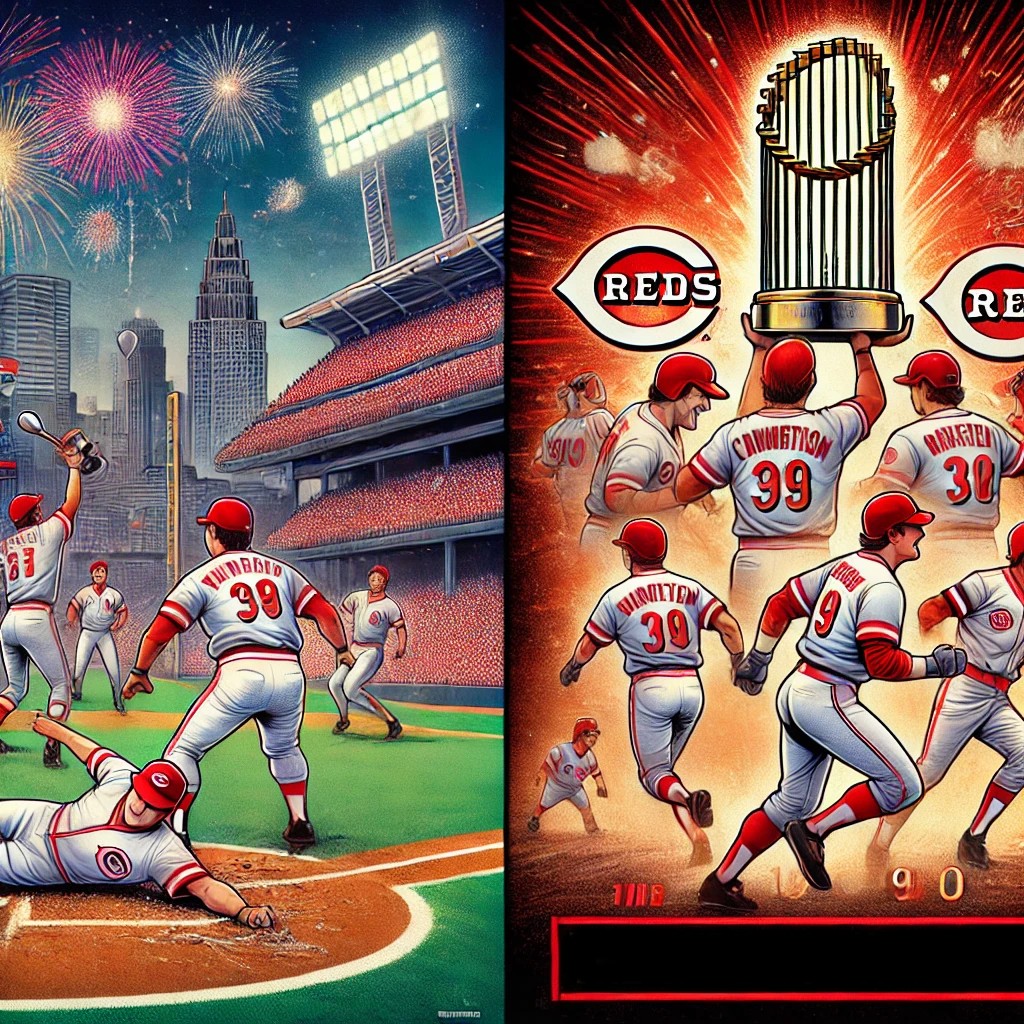
The 1990 Cincinnati Reds are one of the most iconic teams in baseball history, achieving the remarkable feat of going wire-to-wire — leading their division from the first day of the season all the way through to a World Series victory. This team, under the management of Lou Piniella, captivated the baseball world with its consistency, depth, and relentless play. While the Reds were not heavily favored at the start of the season, they quickly proved themselves as a force to be reckoned with. Their triumph wasn’t just about winning games; it was about embodying teamwork, grit, and resilience.
A Season Like No Other
The 1990 season began with little fanfare for the Cincinnati Reds. Many experts predicted they might have a solid season, but few thought they were destined for greatness. In fact, they hadn’t won a division title since 1979 and had been struggling to find consistency in the preceding years.
On Opening Day, April 9, 1990, the Reds set the tone for what was to come, defeating the Houston Astros 8-4. With that victory, Cincinnati moved into first place in the National League West, a spot they would never relinquish. This wire-to-wire performance was only the third time in Major League Baseball history that a team led its division from start to finish, a rare achievement that speaks volumes about their dominance.
The Key Players
The Reds’ success was built on a solid roster that featured a blend of veteran leadership, emerging stars, and a bullpen that became one of the most feared in baseball.
- Barry Larkin: A key figure in the Reds’ success, shortstop Barry Larkin was the team’s backbone. A Hall of Famer, Larkin’s leadership and consistency on both sides of the ball helped keep the Reds on track throughout the season. His ability to hit for average and play stellar defense earned him a Silver Slugger award in 1990.
- Eric Davis: Though injuries limited him during the season, Eric Davis was one of the most dynamic players in baseball at the time. His blend of power, speed, and defensive prowess made him a fan favorite and a critical piece of the Reds’ success. He was also the emotional heart of the team, driving them forward with his passion and energy.
- Chris Sabo: With his trademark goggles and scrappy play, third baseman Chris Sabo was a symbol of the gritty attitude that defined the 1990 Reds. Sabo was not only a defensive stalwart but also an offensive threat, providing key hits throughout the season and leading the team with his work ethic.
The Nasty Boys
Perhaps the most famous part of the 1990 Reds, aside from their wire-to-wire finish, was their bullpen, known as “The Nasty Boys.” This trio of hard-throwing relievers — Rob Dibble, Randy Myers, and Norm Charlton — became legends for their ability to shut down opposing teams late in games.
- Rob Dibble: Known for his fiery temperament and blazing fastball, Dibble was one of the most intimidating pitchers in baseball. His dominance in the eighth and ninth innings, combined with his no-nonsense attitude, made him a perfect fit for the “Nasty Boys” persona.
- Randy Myers: The left-hander of the group, Myers was just as tough as Dibble, regularly shutting down lefty-heavy lineups with ease. Myers’ ability to handle pressure situations in late-game scenarios was a crucial asset for the Reds.
- Norm Charlton: Charlton, who could also start when needed, was the Swiss Army knife of the bullpen. He brought versatility and toughness, ready to take the mound whenever Piniella called on him. His role as a reliever and spot starter proved invaluable in giving the Reds options.
These three relievers gave Cincinnati a tremendous advantage, as opposing teams found it nearly impossible to score runs once the game reached the late innings. The Nasty Boys dominated in the regular season and were just as crucial in the postseason.

Regular Season Dominance
The Reds finished the regular season with a record of 91-71, comfortably winning the National League West by five games over the Los Angeles Dodgers. The team’s offensive power was matched by its pitching prowess, making them a well-rounded squad. Though injuries and slumps affected key players like Eric Davis and Paul O’Neill during the season, the Reds always found ways to win, showcasing their depth and resilience.
One of the pivotal moments of the 1990 season came on June 4, when the Reds faced the defending World Series champion Oakland Athletics in a regular-season game. The Reds’ dominant 8-2 victory not only boosted their confidence but also foreshadowed the showdown that would come in October.
The 1990 Postseason
As the Reds entered the playoffs, they were considered underdogs despite their impressive regular season. Facing the Pittsburgh Pirates in the National League Championship Series (NLCS), Cincinnati found themselves up against a star-studded team featuring Barry Bonds and Bobby Bonilla.
The Reds quickly took control of the series, winning the first two games in Pittsburgh. The Pirates fought back, but Cincinnati ultimately took the series 4-2, securing their place in the World Series for the first time since 1976.
The World Series: Reds vs. Athletics
In the 1990 World Series, the Reds were heavy underdogs against the Oakland Athletics, a team that had won the World Series the previous year and featured stars like Jose Canseco, Mark McGwire, and Rickey Henderson. Many experts predicted a quick series, with the A’s expected to repeat as champions.
However, the Reds shocked the baseball world by sweeping the Athletics in four straight games. From the opening game, it was clear that Cincinnati wasn’t intimidated by the A’s power-packed lineup. The Reds took Game 1 with a 7-0 shutout, and they never looked back.
- Game 2 was a nail-biter, with the Reds winning 5-4 in extra innings, thanks in large part to a key hit from Billy Hatcher, who had a World Series batting average of .750.
- Game 3 saw Cincinnati cruise to an 8-3 victory, putting them one win away from the title.
- Game 4 was a fitting end to the series, as the Reds clinched the championship with a 2-1 victory, capping off their improbable sweep.
The Nasty Boys played a crucial role throughout the series, with Rob Dibble and Randy Myers dominating in relief. José Rijo, the series MVP, was spectacular on the mound, winning two games, including the clincher in Game 4.
Legacy of the 1990 Reds
The 1990 Cincinnati Reds’ wire-to-wire season is remembered as one of the greatest accomplishments in baseball history. Not only did they win the World Series in convincing fashion, but they also did it against all odds, taking down a team many thought was unbeatable.
What made the Reds so special wasn’t just their talent, but their chemistry and resilience. This team had an unshakeable belief in their abilities, no matter the challenge. From their dominant bullpen to their clutch hitters, the 1990 Reds were a team built to win.
In the years since, no team has matched the Reds’ wire-to-wire feat, which speaks to how difficult it is to sustain success over a full season and through the playoffs. The 1990 Reds were truly a wonder, and their place in baseball history is secure as one of the most iconic teams ever.
The legacy of the Nasty Boys, the leadership of Lou Piniella, and the contributions of players like Barry Larkin, Eric Davis, and José Rijo continue to be celebrated by Reds fans and baseball historians alike. The 1990 Reds will forever be remembered as the team that went wire-to-wire, capturing the hearts of fans and etching their name in the record books.
Frequently Asked Questions
1. What does it mean that the 1990 Cincinnati Reds went “wire-to-wire”?
Going “wire-to-wire” in baseball means that a team leads its division from the very first day of the season all the way through the last day of the regular season. It’s an extremely rare and impressive achievement because it requires a team to maintain top performance consistently across the long, often grueling, baseball season. Moreover, the 1990 Cincinnati Reds didn’t just lead their division from start to finish; they carried their stellar performance through the playoffs and ultimately triumphed in the World Series. This exceptional feat underscores the team’s dominance, resilience, and performance under pressure throughout the entire year.
2. How did the Cincinnati Reds manage to maintain their division lead throughout the 1990 season?
The 1990 Cincinnati Reds were a well-rounded team featuring a balanced combination of talented players, strategic management, and an unyielding spirit. Managed by Lou Piniella, the team showcased a unique blend of seasoned veterans and ambitious young players. Key contributors included Eric Davis, who provided offensive firepower with his hitting and base running skills, and pitcher Jose Rijo, whose command on the mound made him a key figure in many Reds victories. The bullpen, famously known as the “Nasty Boys,” consisting of Rob Dibble, Norm Charlton, and Randy Myers, was another cornerstone of their success. They were among the most feared relievers during that era, capable of shutting down games and securing leads. The team’s depth meant they were well-prepared to handle injuries or slumps that might have derailed a less robust squad. Furthermore, Piniella’s experience and ability to adapt strategy game by game played a vital role in maintaining the Reds’ leading edge all season long.
3. Were the 1990 Cincinnati Reds anticipated to perform so well at the start of the season?
Amazingly, no, the 1990 Cincinnati Reds were not overwhelmingly favored as a title contender before the season began. Many experts and predictions placed them as middle-of-the-pack in terms of success prospects. This could be attributed to a mixture of skepticism about certain player performances and a strong division that housed other seemingly formidable teams. However, as the season unfolded, the Reds quickly began to prove the doubters wrong. Their impressive mix of young talent and experienced leadership created a dynamic and competitive team atmosphere. The Reds wasted no time in establishing their dominance, catching the league off-guard with their consistency and impressive teamwork right from the opening day. This ability to outpace expectations and continually surprise pundits and competitors alike became a defining aspect of their memorable season.
4. What role did manager Lou Piniella play in the Reds’ success in 1990?
Lou Piniella was indispensable to the success of the 1990 Cincinnati Reds. His managerial style, marked by fiery intensity and deep strategic understanding, energized the team and inspired confidence. Piniella’s role extended beyond just in-game tactics to include managing player dynamics and fostering a sense of unity within the clubhouse. His ability to read the game and adapt in real-time often provided the team with key advantages against their opponents. A master motivator, Piniella urged his players to embrace the challenge of the wire-to-wire race, turning potential pressure into motivation to perform at their best. His decisions often reflected his faith in both the established stars and the emerging talent on the roster, ensuring the team could leverage all its resources effectively. His influence was evident in not only the team’s regular season success but also in their steady composure and strategic execution throughout the playoffs, ultimately leading them to a triumphant World Series victory.
5. What were some of the standout moments or games from the Reds’ 1990 season?
The 1990 season for the Cincinnati Reds was packed with exhilarating moments and pivotal games that underscored their championship run. One of the most memorable events was their clash against the Pittsburgh Pirates, which underscored their competitive edge and tenacity as they battled their way to the top of the division. This rivalry reached a fever pitch during the National League Championship Series, where the Reds emerged victorious with decisive victories that paved their way to the World Series. In the World Series, the Reds’ sweep of the heavily favored Oakland Athletics was a standout moment, characterized by their comprehensive domination in all aspects of the game. Jose Rijo’s exceptional pitching performances earned him the World Series MVP, playing crucial roles in both shutting down the powerful Oakland offenses and epitomizing the Reds’ no-nonsense style of baseball. Each of these moments was a testament to the Reds’ unbeatable combination of skill, determination, and championship mettle that defined their historic wire-to-wire campaign.