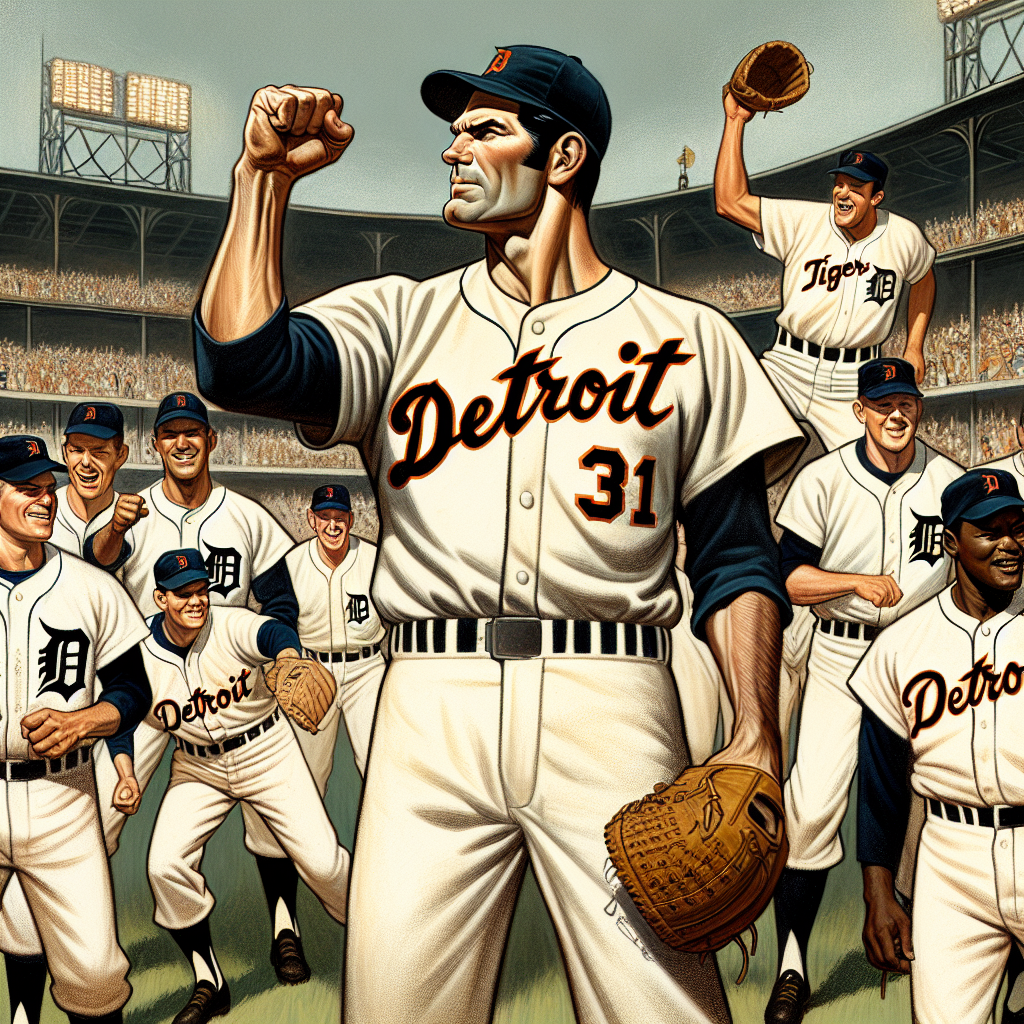
When it comes to baseball legends, the 1968 Detroit Tigers firmly hold their place among the greats. This team, characterized by resilience, grit, and stellar performances, not only secured a World Series title but also boasted a remarkable 31-win season by pitcher Denny McLain. The 1968 Detroit Tigers became a beacon of hope and pride for the city of Detroit, especially in a year marked by social and political upheaval.
The 1968 season is often remembered as the “Year of the Pitcher,” and for good reason. It saw some of the most outstanding performances on the mound in baseball history. Central to this narrative was Denny McLain, who dominated hitters throughout the season, becoming the first pitcher to win 31 games in a single season since Dizzy Dean in 1934.
But McLain’s 31 wins were just one chapter in the compelling story of the Tigers’ 1968 campaign. This team overcame various adversities, utilized a blend of veteran leadership and youthful exuberance, and ultimately captured the imagination of baseball fans everywhere. As we dive into the triumphs and trials of this iconic team, we’ll explore the key contributors, unforgettable moments, and lasting legacy of the 1968 Detroit Tigers.
The Path to Dominance: Building the 1968 Team
The foundation of the 1968 Detroit Tigers was laid over several years, with a shrewd combination of draft picks, trades, and player development. Coming off a disappointing 1967 season, the Tigers were hungry for success. The roster that would eventually conquer the World Series was a well-balanced mix of experienced veterans and emerging stars.
Key players from previous seasons like outfielder Al Kaline and catcher Bill Freehan provided the stable core the team needed. Al Kaline, a future Hall of Famer, was known for his powerful bat and impressive outfield skills. Meanwhile, Freehan’s leadership behind the plate and defensive prowess helped solidify the Tigers’ defense.
Alongside these stalwarts, the team added critical pieces that provided the necessary spark. Mickey Lolich, the left-handed pitcher who would later prove pivotal in the World Series, complemented Denny McLain’s right-handed excellence. Younger players like Willie Horton and Jim Northrup brought fresh energy to the lineup, adding depth to the Tigers’ offensive arsenal.
The management under General Manager Jim Campbell and Manager Mayo Smith was instrumental in bringing this talent together and turning them into a cohesive unit. The strategy included a focus on pitching and defense, and an emphasis on fundamentals—qualities that would serve them well in the high-pressure environment of the postseason.
Denny McLain’s Historic Season
No discussion of the 1968 Detroit Tigers would be complete without delving into Denny McLain’s historic season. With a 31-6 record, a 1.96 ERA, and 280 strikeouts, McLain’s performance was nothing short of extraordinary. He pitched a remarkable 336 innings and threw 28 complete games, showcasing durability and dominance rarely seen in today’s game.
McLain’s ability to control the game from the mound made him an invaluable asset. His fastball and pinpoint accuracy left batters struggling to mount any significant offense against him. The highlight of his season came on September 14, 1968, when he secured his 30th win against the Oakland A’s, a feat that had not been accomplished in over three decades.
Beyond the numbers, McLain’s impact was felt in the clubhouse and among the fans. His confidence and swagger provided a psychological boost for his teammates and served as a symbol of the Tigers’ dominance. The possibility of seeing McLain pitch was a major draw for fans, adding to the growing excitement surrounding the team.
McLain’s contributions didn’t go unnoticed on the national stage either. He received the American League MVP and the Cy Young Award, underscoring his significance not only to the Tigers but to Major League Baseball as a whole. His season remains one of the most celebrated pitching performances in baseball history.
Key Moments of the Regular Season
The 1968 regular season was filled with unforgettable moments that propelled the Detroit Tigers to the top of the standings. One such moment was the dramatic come-from-behind victory against the Baltimore Orioles on September 17. Trailing 3-0 in the ninth inning, the Tigers rallied to score four runs and clinched the American League pennant, sending Tiger Stadium into a frenzy.
Another highlight was the incredible no-hitter thrown by Earl Wilson on June 26 against the Chicago White Sox. Wilson’s masterful performance provided another marquee event in a season packed with extraordinary individual and team efforts.
The Tigers also exhibited incredible resilience. When star outfielder Al Kaline was sidelined with a fractured arm, other players stepped up. Jim Northrup, Gates Brown, and Willie Horton all delivered critical performances, showing the depth and versatility of the team. Northrup, in particular, led the team with 90 RBIs, while Horton provided power with 36 home runs.
In addition to their offensive prowess, the Tigers’ defense was stellar throughout the season. Bill Freehan, an 11-time All-Star, was a rock behind the plate, guiding the pitchers and shutting down opposing base runners. The infield, anchored by second baseman Dick McAuliffe and shortstop Ray Oyler, was efficient and reliable.
The World Series Showdown
The 1968 World Series pitted the Detroit Tigers against the St. Louis Cardinals, a team that had its own share of formidable talent, including legendary pitcher Bob Gibson. The series was a clash of titans and more than lived up to its billing, going the full seven games with several heart-stopping moments.
Mickey Lolich emerged as the hero of the World Series for the Tigers, winning three games, including the decisive Game 7. Lolich’s performance, particularly in Game 7 where he outdueled Bob Gibson in a 4-1 victory, was crucial to the Tigers’ championship success. He finished the series with a 1.67 ERA and was deservedly named the World Series MVP.
Key offensive contributions also came from unlikely heroes. Jim Northrup’s two-run triple in Game 5 gave the Tigers a crucial victory and shifted the momentum in their favor. Meanwhile, series stalwarts like Al Kaline and Bill Freehan delivered consistent performances both at bat and in the field.
The team’s resolve was tested multiple times during the series. After falling behind 3-1 in the series, the Tigers mounted a comeback that showcased their character and determination. Wins in Games 5, 6, and 7 demonstrated their refusal to quit and solidified their place in baseball history.
A Legacy Remembered
The 1968 Detroit Tigers’ World Series win had a lasting impact on the city of Detroit and the larger baseball community. At a time when the city was grappling with issues related to civil rights and social change, the Tigers’ triumph offered a shared moment of pride and unity. Fans from all walks of life came together to celebrate the success of their team, finding common ground in their love of baseball.
For the players, the 1968 season was a defining moment in their careers. Denny McLain’s 31-win milestone remains a singular achievement, and Mickey Lolich’s World Series heroics are still remembered fondly by fans. The leadership of Mayo Smith and the cohesive team chemistry were often cited as critical factors in their success.
Years later, the 1968 Tigers are still celebrated in Detroit. Commemorative events, reunions, and tributes highlight the community’s enduring appreciation for this team. Statues, plaques, and stories keep the memories alive, ensuring that new generations of fans understand the significance of this historic season.
Moreover, the success of the 1968 team set a benchmark for future Tigers squads. It instilled a culture of excellence and a standard of achievement that subsequent teams aspired to match. The ’68 Tigers exemplified what is possible when talent, determination, and teamwork come together, leaving an indelible mark on the franchise’s history.
Conclusion: The Enduring Impact of the 1968 Detroit Tigers
The story of the 1968 Detroit Tigers is one that transcends the confines of a single baseball season. It’s a tale of exceptional athletes, remarkable individual achievements, and unyielding team spirit. Denny McLain’s 31-win season alone is legendary, but when viewed within the context of the team’s overall success, it becomes part of a larger, more compelling narrative.
This Tigers team proved that greatness in baseball is achieved through a combination of skill, strategy, and heart. From the clubhouse to the fans, everyone associated with the 1968 Detroit Tigers contributed to their historic World Series victory. Their resilience not only brought a championship to Detroit but also offered a sense of unity and joy to a city in need of hope.
As we continue to celebrate the legacy of the 1968 Detroit Tigers, it’s important to remember the lessons their journey teaches us: the value of hard work, the power of teamwork, and the enduring impact of sports as a unifying force. These Tigers are more than just champions; they are icons of a transformative era in baseball history.
Frequently Asked Questions
1. Who was Denny McLain and what was so special about his 31 wins in 1968?
Denny McLain was the ace pitcher for the 1968 Detroit Tigers and is remembered for his phenomenal performance that year, securing an unmatched 31 victories. In the modern era of Major League Baseball, reaching 30 wins is an extraordinary feat, primarily because of the changes in the game that favor offense and limit pitches to prevent injuries. McLain’s achievement not only showcased his exceptional skill and resilience but also highlighted his ability to consistently outperform opponents throughout a demanding season. His performance underlined his value to the Tigers and was critical in leading the team to their World Series title. McLain’s 31 wins remain etched in baseball history as the last time any pitcher in the majors has reached this milestone, further enhancing his legendary status.
2. How did the 1968 Detroit Tigers contribute to the city of Detroit amidst the social and political turbulence of the time?
In 1968, Detroit was a city marked by significant unrest, stemming from profound social and political issues. The Tigers, with their exceptional season, provided a much-needed sense of hope and unity. As the team rose to the occasion on the field, they inadvertently helped uplift the spirits of the city’s residents, offering them a momentary respite from the challenges they faced. The Tigers’ World Series victory became a symbol of triumph and perseverance, allowing the citizens to rally behind a common cause, transcending the societal divisions of the time. The team’s success gave the city a reason to celebrate, creating memories that would be cherished for generations.
3. What was the significance of the 1968 World Series victory for the Detroit Tigers?
The 1968 World Series triumph was a landmark achievement for the Detroit Tigers, marking their first title since 1945. This victory was not only a testament to the team’s exceptional talent and determination but also solidified their standing in the annals of baseball history. Coming at a time when pitching dominated the game, the Tigers’ ability to win was a testament to their strategic prowess and depth. The series featured a memorable showdown with the St. Louis Cardinals, highlighted by a dramatic comeback in Game 7. This win underscored the Tigers’ resilience and further cemented their status as one of the sport’s legendary teams. For fans, the victory was a source of immense pride and joy, creating a lasting legacy in the hearts of Detroit sports enthusiasts.
4. Why is the 1968 baseball season often referred to as the “Year of the Pitcher”?
The 1968 baseball season earned the moniker “Year of the Pitcher” due to the extraordinary performances turned in by pitchers across the league, which led to a significant reduction in offensive output. This era was marked by historically low batting averages and high numbers of shutouts and complete games. Alongside Denny McLain’s incredible 31-win achievement for the Tigers, other pitchers like Bob Gibson, who posted a record 1.12 ERA, also made headlines. This dominance by pitchers sparked a series of rule changes in subsequent seasons to return balance to the batting and pitching aspects of the game, including lowering the pitching mound. The exceptional talents displayed during this season are still discussed today as one of the most intriguing periods in baseball history.
5. How did the team’s overall performance in 1968 complement Denny McLain’s pitching excellence?
The 1968 Detroit Tigers were much more than just Denny McLain; they were a well-rounded team with a blend of powerful hitters, skilled fielders, and a competent pitching staff that supported McLain’s historic season. Players like Al Kaline, Norm Cash, and Willie Horton contributed significantly with their batting prowess, often providing the offensive firepower needed to secure victories. The defensive capabilities of the team complemented the pitching staff, minimizing errors and assisting in close, crucial games. The bullpen, led by exceptional closers, effectively preserved McLain’s and other pitchers’ leads. Collectively, these elements worked in harmony to reinforce McLain’s stellar pitching, culminating in a 103-win regular season and ultimately a World Series championship, showcasing a team effort of epic proportions.