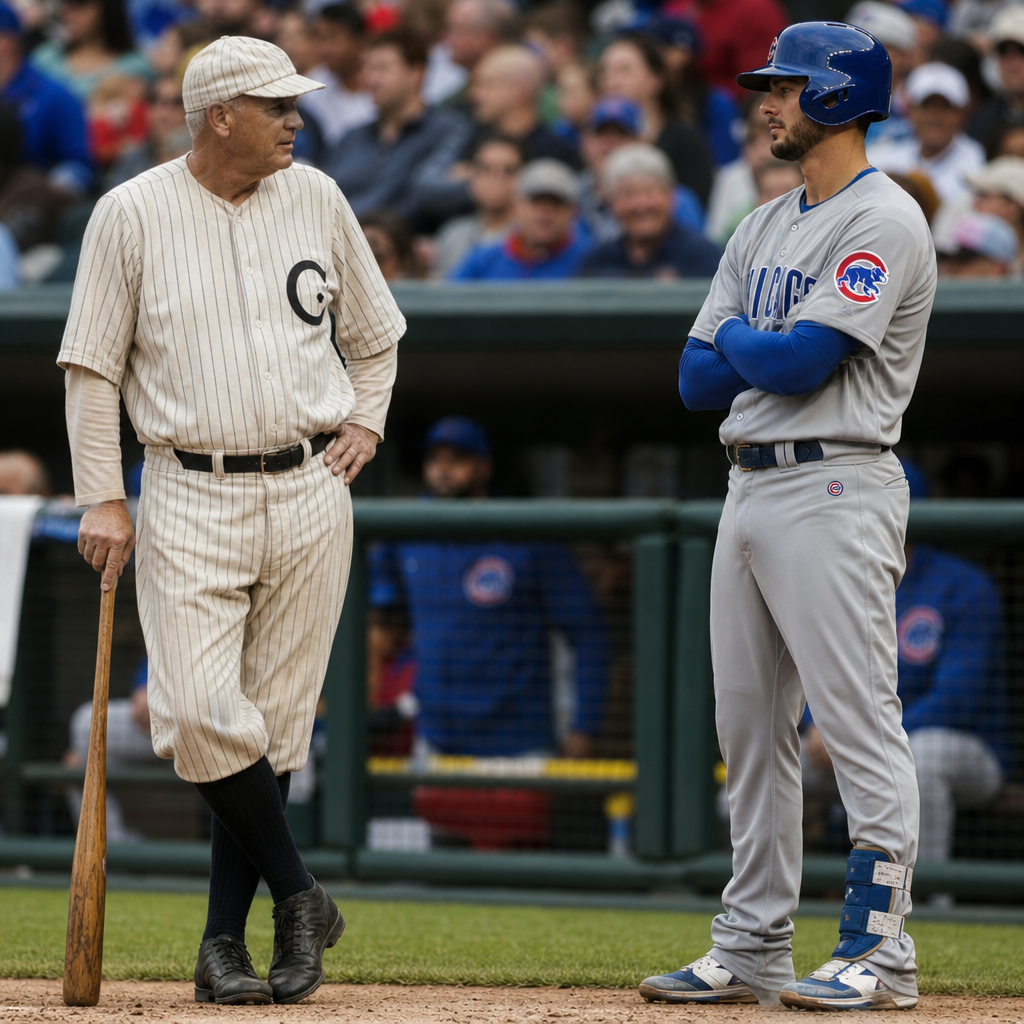
Baseball has always lived in tension between preserving tradition and embracing change, and that tension explains nearly every debate surrounding the modern game. Tradition in baseball means the customs, rhythms, records, aesthetics, and unwritten expectations that connect today’s players and fans to previous generations. Change means rule adjustments, technological adoption, new business models, evolving training methods, and shifts in how the sport is presented and consumed. When people argue about baseball becoming too modern or not modern enough, they are really arguing about identity: what must stay fixed for baseball to remain baseball, and what must evolve for it to stay healthy, competitive, and relevant.
I have worked on baseball content and strategy long enough to see that the strongest organizations do not frame tradition and innovation as opposites. They treat them as complementary forces. The clubs that honor history best are often the ones most willing to modernize player development, improve pace of play, rethink fan experience, and use data intelligently. The leagues, coaches, and front offices that resist every adjustment usually protect symbols while neglecting the conditions that allow the sport to thrive. At the same time, groups that chase novelty without respecting the emotional architecture of baseball often alienate loyal fans and undermine what makes the game distinct.
This closing thoughts on innovation and change hub matters because baseball is currently navigating foundational questions. Rules have been revised to speed games and encourage action. Advanced analytics influence lineups, defensive positioning, and player valuation. Biomechanics labs, high-speed cameras, and bat-tracking systems shape development from the minor leagues through the majors. Streaming, sports betting integration, social media storytelling, and direct-to-consumer media products are changing how audiences follow teams. Youth participation, access, and affordability remain pressing concerns. Each issue belongs to the same larger conversation about preserving tradition versus embracing change in baseball.
This article serves as the central guide to that conversation. It pulls together the key themes that define innovation and change in baseball, explains where reform has clearly improved the sport, identifies where caution is justified, and offers a practical framework for evaluating future proposals. If you are exploring related topics such as baseball rule changes, analytics in baseball, technology in player development, pace of play reforms, fan engagement strategies, or the future of baseball culture, this page provides the context that ties them together.
Why Baseball Tradition Still Matters
Baseball tradition matters because it creates continuity, and continuity is one of the sport’s strongest competitive advantages. The dimensions of an old ballpark, the cadence of a summer series, scorekeeping by hand, retired numbers, seventh-inning rituals, radio broadcasts, and intergenerational storytelling all give baseball a sense of place that faster-moving sports often lack. Tradition also provides structure for meaning. Milestones such as 3,000 hits, 500 home runs, and the 162-game season carry weight because they link players across eras. Without some stable reference points, records become less interpretable and fandom loses part of its inherited language.
In practical terms, tradition also supports business value. Historic franchises monetize nostalgia through heritage branding, alumni events, throwback uniforms, and ballpark tourism. Fenway Park and Wrigley Field are not just venues; they are living assets. Even newer parks borrow from classic design principles because baseball audiences respond to intimacy, asymmetry, neighborhood identity, and visual cues that signal authenticity. Tradition is not merely sentimental. It shapes ticket demand, media narratives, merchandising, and civic attachment.
There is also a developmental reason to preserve tradition. Baseball teaches patience, failure management, and strategic thinking in ways that are deeply tied to its slower pace and accumulated routines. Coaches I have spoken with repeatedly note that rituals, standards of preparation, and clubhouse customs can stabilize young players entering highly scrutinized environments. Preserving tradition, then, is not just about old rules. It is about retaining the game’s cultural texture and developmental value.
Why Change Is Necessary for Baseball’s Future
Change is necessary because baseball does not compete in a vacuum. It competes for attention, participation, media rights, sponsorship, and cultural relevance. If the sport ignores how people consume entertainment, train athletes, and interact with digital products, it falls behind. Some of baseball’s most important reforms have come only after prolonged resistance. Instant replay corrected consequential officiating errors. Improved protective gear reduced avoidable harm. Data-driven workload management has helped teams better understand injury risk, even if it has not solved the pitching health crisis. Changes in travel, nutrition, strength training, and recovery have also raised the sport’s performance standard.
The recent pace-of-play reforms are the clearest example. Major League Baseball’s pitch timer, shift restrictions, and larger bases were not cosmetic changes. They addressed declining game tempo and reduced dead time without removing core elements such as the duel between pitcher and hitter. Average game time dropped significantly in the first season of the timer era, while stolen base attempts increased because larger bases and disengagement limits changed incentives. Fans saw more action, broadcasters had a more predictable product, and the sport demonstrated that smart rule design can improve watchability without erasing identity.
Change also matters below the major league level. Player development has been transformed by tools such as TrackMan, Hawk-Eye, Rapsodo, K-Vest, force plates, and high-speed motion capture. These systems measure pitch movement, bat speed, attack angle, spin efficiency, kinematic sequencing, and ground-force production with extraordinary precision. Used well, they help coaches turn vague advice into actionable instruction. A pitcher no longer hears only “get on top of the ball.” He can see release height, vertical approach angle, seam effects, and elbow timing. A hitter no longer hears only “stay through it.” She can evaluate swing decisions, contact quality, and bat path efficiency. Baseball cannot responsibly abandon advances that make coaching more accurate.
Where Innovation Has Improved the Game Most
Innovation has improved baseball most clearly in four areas: competitive fairness, athlete development, injury prevention infrastructure, and fan access. Competitive fairness improved with replay review and better camera systems. While replay remains imperfect and occasionally slow, it is better than allowing obvious missed calls to decide meaningful games. Athlete development improved because objective measurement now complements expert observation. Good scouts still matter, but modern organizations combine live looks with biomechanical and performance data, leading to better decisions and more individualized plans.
Fan access has expanded through streaming clips, social media highlights, alternate broadcasts, and data-rich viewing experiences. Younger fans often discover players through short-form video before they ever watch a full game. Purists may dislike that reality, but it is preferable to invisibility. Meanwhile, injury prevention infrastructure has advanced through force-plate testing, workload monitoring, and return-to-throw protocols grounded in sports science. Teams still struggle with pitcher injuries, especially amid rising velocity and breaking-ball stress, but no informed baseball operator wants to return to the era of intuition-only health management.
| Area of Change | Traditional Concern | Measured Benefit | Practical Example |
|---|---|---|---|
| Pace-of-play rules | Game rhythm could feel rushed | Shorter average games and more action | Pitch timer reduced downtime between pitches |
| Replay review | Interrupts flow and umpire authority | Fewer game-changing missed calls | Safe/out reviews at first base in close games |
| Player tracking technology | Too much reliance on machines | More precise coaching and development plans | Rapsodo session refining pitch shape |
| Digital media distribution | Fragmented viewing habits | Broader reach to younger audiences | Highlights shared across streaming and social platforms |
The lesson from these examples is straightforward. Innovation works when it solves a clearly defined problem, preserves the game’s essential competitive structure, and produces benefits that players, teams, and fans can actually feel. Baseball does not need endless disruption. It needs disciplined modernization.
Where Change Creates Real Risks and Tradeoffs
Not every change improves baseball. Some innovations create second-order problems that are easy to miss during rollout. Analytics offer a useful example. Better information has undeniably sharpened roster construction and in-game tactics, yet optimization can produce bland sameness if every club reaches similar conclusions. At peak three-true-outcomes baseball, many fans felt the game had become repetitive: strikeouts, walks, and home runs dominated while balls in play declined. That was not caused by analytics alone, but data-informed incentives accelerated it.
Technology can also widen competitive inequality. Wealthier organizations can build larger research-and-development staffs, install more advanced systems, and translate findings faster. That does not mean small-market teams cannot innovate; many have. It does mean baseball must recognize that modernization costs money, expertise, and time. At the youth level, the risks are sharper. Expensive private instruction, showcase circuits, travel ball, and performance technology can create a pay-to-develop ecosystem that excludes talented players. If innovation improves elite training while shrinking access, the sport damages its long-term talent base.
There is a cultural tradeoff as well. Over-standardized presentation can flatten local identity. Historic organ music, regional broadcast styles, quirky park features, and slow-building rivalries are part of baseball’s appeal. If every stadium experience, broadcast package, and social campaign is optimized to the same template, baseball becomes more efficient but less memorable. The right response is not to reject change. It is to insist that modernization respect context, community, and the emotional expectations that make baseball feel rooted rather than generic.
How Baseball Should Balance Tradition and Innovation
The best framework for balancing tradition and innovation in baseball is simple: protect the essence, modernize the delivery, and test the consequences. The essence includes the contest between pitcher and hitter, the importance of defense, the statistical continuity that supports historical comparison, the daily rhythm of the season, and the local culture of teams and ballparks. The delivery includes pace, broadcast formats, ticketing, player development tools, scheduling presentation, and digital engagement. Baseball can change the delivery more aggressively than the essence.
In practice, that means future reforms should pass three tests. First, does the change solve a real problem supported by evidence rather than social-media noise? Second, does it preserve baseball’s core logic instead of replacing it with gimmickry? Third, can the sport measure intended and unintended effects over time? MLB has done this better in recent years by testing rules in the minor leagues before introducing them broadly. That model should continue. Experimental environments reduce risk and produce cleaner evidence.
For teams, the same principle applies. Use data, but do not ignore scouting. Use biomechanics, but do not reduce players to outputs on a dashboard. Market stars digitally, but do not abandon local broadcast storytelling. Improve stadium connectivity, mobile ordering, and dynamic ticketing, but keep sightlines, neighborhood integration, and in-park traditions strong. The healthiest baseball environments are hybrid systems. They are modern in operations and timeless in feel.
Closing Thoughts on Innovation and Change
Closing thoughts on innovation and change in baseball come down to stewardship. Every generation inherits the game, alters it, and passes it forward. The goal is not to freeze baseball in amber or to rebuild it around every new trend. The goal is to leave it more playable, more accessible, more understandable, and more compelling than we found it. That requires judgment. Some traditions deserve defense because they carry meaning that cannot be replicated once lost. Some habits deserve retirement because they survive only through inertia.
If you use this hub as a starting point, the central takeaway is clear. Baseball is strongest when it welcomes useful innovation without severing its historical roots. Rule changes should increase action and fairness, not novelty for its own sake. Technology should sharpen coaching and health management, not replace human expertise. Media strategy should expand access and build new fans while preserving the local voices and rituals that give teams character. Youth development should embrace better tools while confronting cost barriers that limit participation. These are not separate debates. They are one conversation about the future of baseball.
As you explore the broader Innovations and Changes in Baseball topic, use this page as your anchor for evaluating every subtopic. Ask what problem is being solved, what part of baseball is being protected, who benefits, who may be excluded, and how success will be measured. That approach leads to better decisions than reflexive nostalgia or automatic disruption. Baseball has endured because it adapts carefully. The next chapter should follow the same standard. Keep the game recognizable, make it better where evidence supports change, and stay engaged with the discussions shaping baseball’s future.
Frequently Asked Questions
Why is the debate between preserving tradition and embracing change so central to baseball?
The debate sits at the heart of baseball because the sport has always defined itself through continuity. More than many other games, baseball invites comparison across eras: fans talk about records set generations ago, ballparks are treated like landmarks, and even the pace of the game carries emotional meaning. Tradition in baseball is not just nostalgia for old uniforms or famous players. It includes the structure of a long season, the importance of statistics, the rituals between pitches, the unwritten expectations of sportsmanship, and the idea that today’s game should still feel connected to what earlier generations watched and played. That deep historical identity makes any change feel larger than a simple update.
At the same time, baseball has never been truly static. The game has continually adapted to new realities, from integration and expansion to night games, free agency, replay review, advanced analytics, and recent pace-of-play rules. Those changes were responses to competitive fairness, business pressures, audience habits, and broader cultural shifts. In that sense, change is not a betrayal of baseball but one of the ways the sport has survived. The tension becomes so intense because both sides are protecting something real: one side wants to preserve the game’s identity, while the other wants to keep the sport relevant, watchable, and sustainable. Nearly every modern baseball argument, whether it involves technology, rules, player development, or media presentation, grows out of that same basic question: how much can the game evolve before it stops feeling like baseball?
Do rule changes like the pitch clock and defensive shift limits help baseball, or do they undermine its tradition?
For many people, rules such as the pitch clock, larger bases, and limits on defensive shifts represent baseball trying to solve practical problems without abandoning its core structure. Supporters argue that these changes improve the viewing experience by reducing dead time, encouraging more action on the bases, and restoring a style of play that feels more dynamic. They point out that baseball has always adjusted its rules when the balance of the game drifted too far in one direction. From lowering the mound to introducing the designated hitter in some leagues, the sport has a long history of intervention when officials believed entertainment, competitive balance, or player safety required it. From that perspective, recent changes are part of an established pattern rather than a radical break from history.
Critics, however, often see these reforms as examples of baseball reacting too aggressively to modern attention spans or trying to package itself more like other sports. To them, the game’s slower rhythm is not a flaw but a defining feature. Baseball traditionally leaves room for tension, strategy, and anticipation, and they worry that speeding it up risks flattening part of its character. Shift restrictions also raise philosophical concerns because defensive positioning can be viewed as a legitimate strategic choice, and limiting it may feel artificial. In practice, whether these rules help or hurt baseball depends on what a fan values most. If the priority is preserving the traditional cadence and strategic freedom of the game, the changes can feel intrusive. If the priority is keeping the sport lively and accessible for players, fans, and broadcasters, they can feel necessary and even healthy. The most balanced view is that these rules do alter the game’s presentation, but they do not automatically erase its tradition. Baseball’s challenge is making adjustments that solve modern problems while preserving the deeper experience that makes the sport distinctive.
How has technology changed baseball without completely separating it from its past?
Technology has transformed baseball at nearly every level, but it has not severed the sport from its roots as much as some fear. On the field, teams now rely heavily on high-speed cameras, biomechanical analysis, bat tracking, pitch design tools, and vast data systems to evaluate performance. This has changed how pitchers develop arsenals, how hitters build swings, how defenders position themselves, and how front offices make decisions. Off the field, technology has reshaped how fans consume the game through streaming, real-time statistics, social media highlights, and advanced broadcast graphics. Even officiating has changed, with replay review adding a layer of accountability that earlier generations did not have. These developments make baseball more precise, more measurable, and often more transparent.
Yet the foundation of the sport remains recognizable. A pitcher still has to retire a hitter, a manager still weighs risk and matchups, and fans still invest emotionally in the same core drama of innings, rallies, and big moments. In many ways, technology has deepened appreciation for baseball’s complexity rather than replacing it. Advanced metrics can illuminate why a player succeeds, while video tools can help preserve health and extend careers. At the same time, technology can create tension when numbers seem to overshadow instinct, or when constant analysis makes the game feel clinical. The key distinction is that technology is a tool, not a replacement for baseball’s identity. When it is used to sharpen competition, improve fairness, and help fans understand the game more fully, it can coexist with tradition. Problems arise only when efficiency becomes the sole value and the human, emotional, and historical dimensions of baseball begin to get pushed aside.
Why do so many baseball fans care about unwritten rules and old-school customs?
Unwritten rules matter to many fans because they represent baseball’s informal culture, the code that developed over decades of competition. These customs cover everything from how players celebrate, to how they respond to perceived disrespect, to expectations around sportsmanship, retaliation, pacing, and professionalism. For supporters of these traditions, unwritten rules are not random restrictions. They are seen as part of the game’s social fabric, a way players communicate respect for opponents, the moment, and the history of the sport. Fans who value these customs often believe they help distinguish baseball from more openly theatrical sports, preserving a sense of discipline and continuity across generations.
At the same time, criticism of unwritten rules has grown because some of them can be vague, inconsistently enforced, or tied to outdated ideas about behavior and authority. Younger players, international stars, and many modern fans often prefer a version of baseball that allows more personality, visible emotion, and individual flair. They argue that the sport benefits when players are free to celebrate excellence and express themselves authentically. This is where the larger tradition-versus-change debate becomes especially visible. Unwritten rules can preserve respect and shared identity, but they can also be used to resist cultural evolution. The strongest modern perspective is usually not that all customs should vanish, but that baseball should distinguish between traditions that add meaning and those that unnecessarily suppress expression. In other words, customs that protect sportsmanship may still have value, while customs that punish joy or individuality are increasingly difficult to defend in a changing game.
Can baseball evolve and still remain true to what makes it unique?
Yes, baseball can evolve and still remain true to itself, but that outcome depends on how carefully the sport defines its essentials. Baseball’s uniqueness does not come from refusing all change. It comes from a combination of features that give the game its identity: the duel between pitcher and hitter, the absence of a clock governing the final outcome, the long season that rewards endurance, the layered strategy of each inning, the connection between past and present through records and storytelling, and the ritualistic pace that allows tension to build. If those core elements are respected, the game has room to modernize around them. Changes in scheduling, training, presentation, safety protocols, or certain rules do not automatically damage baseball’s soul if they support the sport’s long-term health.
The real danger is not change itself but change driven without historical awareness or cultural sensitivity. If baseball modifies too much simply to chase trends, it risks becoming less distinctive in an already crowded entertainment landscape. But if it resists every adjustment, it risks becoming inaccessible to new audiences and less responsive to the needs of modern players and fans. The healthiest path is selective evolution: preserve the principles, adapt the methods. That means honoring the game’s history, aesthetics, and rhythms while still welcoming smarter rules, better technology, broader participation, and more contemporary ways of connecting with audiences. In practical terms, baseball remains most true to itself when it remembers that tradition is not just about protecting the past; it is also about passing something meaningful forward. Change works best when it helps the sport do exactly that.