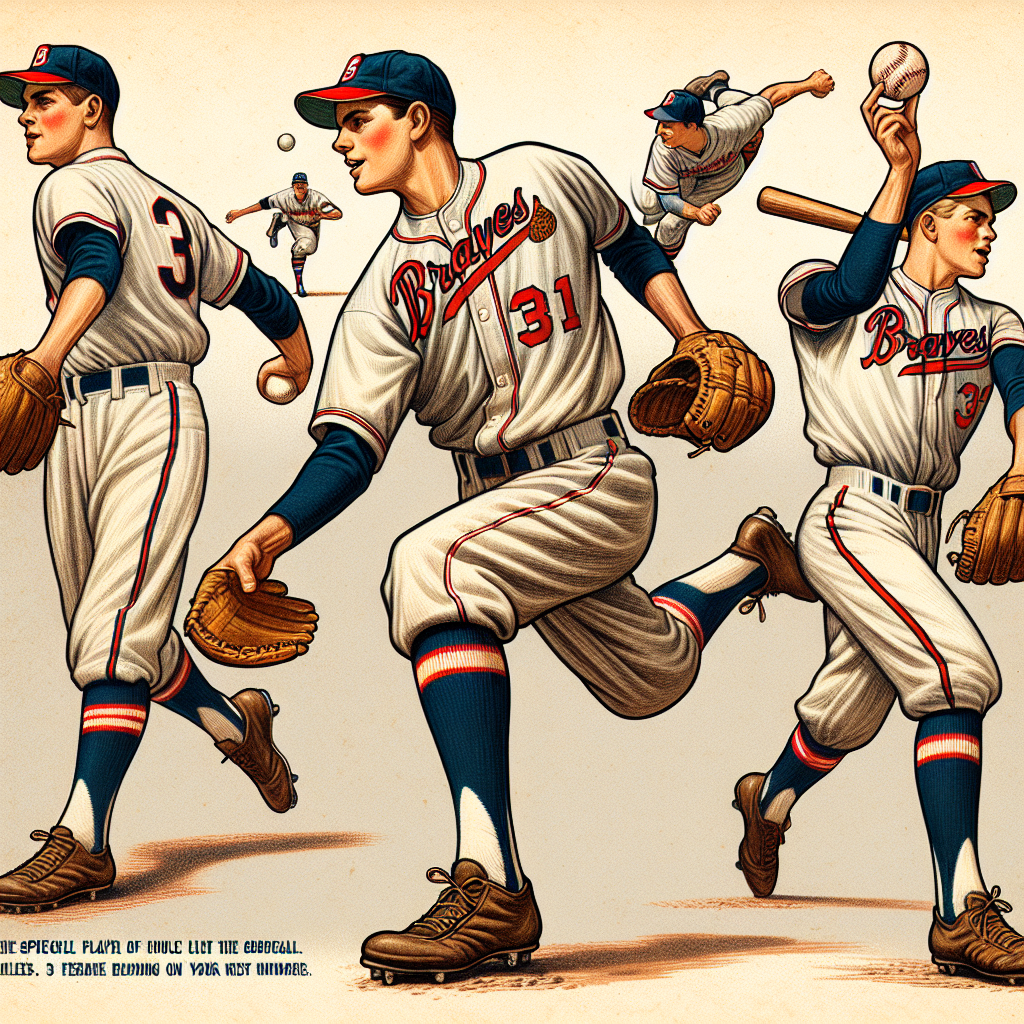
The 1957 Milwaukee Braves stand tall in the annals of baseball history as a team that showcased extraordinary talent, drive, and resilience. This team didn’t just play baseball—they executed it with artful precision, producing unforgettable moments that still resonate with fans today. Instrumental to their success were three key players: Hank Aaron, Eddie Mathews, and Warren Spahn. Each brought a unique set of skills and determination that transformed the Braves from contenders to World Series champions. In this exploration of the 1957 Braves, we’ll uncover how Aaron’s batting prowess, Mathews’ powerful hitting, and Spahn’s pitching mastery contributed to a remarkable season and a lasting legacy.
Under the management of Fred Haney, who took charge mid-season in 1956, the Braves were a formidable lineup that had their eyes set on the World Series from the very beginning. With a mix of young talent and experienced veterans, the 1957 squad was built to compete at the highest levels. Their journey was not without its challenges, but resilience is often forged in the crucible of adversity. The 1957 season was marked by thrilling victories, nail-biting finishes, and historic achievements that cemented the Braves’ place in baseball lore.
Join us as we revisit the illustrious 1957 season, delve into the contributions of key players, and celebrate the iconic moments that defined the Milwaukee Braves’ path to glory. By the end of this tale, you’ll have a deeper appreciation for the game of baseball and the indelible imprint left by the 1957 Milwaukee Braves.
Aaron’s Unstoppable Bat
Hank Aaron, often referred to as “Hammerin’ Hank,” was an unparalleled force during the 1957 season. His extraordinary ability to connect with the baseball not only earned him personal accolades but also played a crucial role in driving the Braves to their successful season. Aaron’s statistics are a testament to his remarkable offensive capabilities: he batted .322 with 44 home runs and 132 RBIs, leading the league in runs scored and total bases.
One of Aaron’s most memorable achievements came on September 23, 1957, when he hit a walk-off home run against the St. Louis Cardinals. This pivotal moment clinched the National League pennant for the Braves, igniting celebrations among fans and setting standards for clutch performances in baseball history. Aaron’s consistent and, oftentimes, heroic play besides his humility made him a fan favorite and an indispensable part of the Milwaukee Braves.
Beyond his stats, Aaron’s presence in the lineup disrupted the opposing pitchers and fielders alike. His confidence at the plate and ability to deliver in critical situations made the Braves a formidable opponent. As we reflect on the 1957 season, Hank Aaron’s contribution stands out not just for his numbers but for his impact on the team dynamics and the psychological edge he provided every time he stepped up to bat.
Mathews’ Power-Hitting Prowess
Eddie Mathews, the Braves’ powerful third baseman, played a pivotal role in the team’s 1957 success. Known for his prodigious hitting abilities, Mathews was a two-time National League home run champion before the 1957 season and continued to be a dominant force in the league. His ability to hit for power and consistency kept the Braves’ offense potent and versatile.
In the 1957 season, Mathews hit .292 with 32 home runs and 94 RBIs, demonstrating his knack for delivering crucial hits when the team needed them the most. His left-handed swing was a perfect complement to Aaron’s right-handed power, creating a dynamic duo that posed a significant challenge to every pitcher they faced. Mathews’ presence in the lineup provided protection for Aaron, often giving Aaron better pitches to hit and amplifying the team’s overall offensive threat.
One standout moment for Mathews during the 1957 World Series occurred in Game 4. With two outs in the bottom of the 10th inning, Mathews hit a walk-off home run against the New York Yankees to tie the series. This dramatic moment exemplified his clutch hitting and his ability to perform under pressure, further solidifying his reputation as one of the all-time greats in baseball.
Mathews’ contributions extended beyond his batting prowess. His leadership on and off the field provided a steadying influence on the team, and his competitive fire inspired his teammates to perform at their peak. Mathews’ legacy with the 1957 Braves is a testament to the power of skill, determination, and an unwavering commitment to excellence.
Spahn’s Pitching Brilliance
Warren Spahn, the legendary left-handed pitcher, was a cornerstone of the Braves’ pitching staff in 1957. Known for his remarkable longevity and consistent excellence, Spahn was already an established star by the time the 1957 season rolled around. His pitching mechanics, control, and strategic acumen made him a nightmare for opposing hitters.
During the 1957 season, Spahn posted a 21-11 record with a 2.69 ERA, leading the National League in wins. His reliability and effectiveness on the mound provided the Braves with a dependable ace who could be counted on during critical moments of the season. Spahn’s ability to pitch deep into games alleviated pressure on the bullpen, allowing the team to strategically manage their pitching resources.
In the World Series, Spahn delivered several masterful performances, including a complete-game shutout in Game 4. His ability to rise to the occasion during high-stakes games highlighted his competitive spirit and mental toughness. Over his career, Spahn was known for his meticulous preparation and relentless work ethic, traits that he continued to exhibit throughout the 1957 season.
Spahn’s influence extended beyond the statistical contributions. His leadership and experience were invaluable to the Braves’ younger pitchers, offering guidance and mentorship that helped develop the team’s overall pitching staff. Warren Spahn’s legacy with the 1957 Milwaukee Braves underscores the critical role of a dominant ace in achieving championship success.
Team Dynamics and Key Moments
While Aaron, Mathews, and Spahn were undeniably vital to the Braves’ success, the 1957 team’s achievements were also shaped by their overall dynamics and contributions from other key players. The Braves’ roster was stacked with talent, including players like Del Crandall, Joe Adcock, and Lew Burdette, who each made significant impacts throughout the season.
Del Crandall, the team’s catcher, was renowned for his defensive prowess and ability to handle the pitching staff. His performance behind the plate and leadership skills were instrumental in managing the game’s critical moments. Joe Adcock, the first baseman, provided additional power in the lineup, with his clutch hits and solid defense further strengthening the team’s overall play.
Lew Burdette, another star pitcher for the Braves, delivered one of the most memorable performances in the World Series. He pitched three complete games, including two shutouts, earning the World Series MVP honors. Burdette’s remarkable showing against the New York Yankees underscored the depth and versatility of the Braves’ pitching staff.
Key moments during the 1957 season, such as Hank Aaron’s pennant-clinching home run and Eddie Mathews’ World Series walk-off, showcased the team’s resilience and knack for rising to the occasion. These defining moments, combined with the contributions of a deep and talented roster, culminated in the Braves clinching the National League pennant and ultimately triumphing in a seven-game World Series against the formidable Yankees.
Legacy of the 1957 Braves
The legacy of the 1957 Milwaukee Braves extends far beyond their World Series victory. This team exemplified the essence of teamwork, determination, and excellence, setting a standard for future generations of baseball players and fans. The individual achievements of Aaron, Mathews, and Spahn, along with the collective triumphs of the team, left a lasting impact on the sport.
Hank Aaron continued to build on his remarkable career, eventually breaking Babe Ruth’s all-time home run record and becoming one of the most celebrated figures in baseball history. Eddie Mathews’ consistent power-hitting and leadership solidified his status as one of the game’s greatest third basemen. Warren Spahn’s longevity and sustained excellence on the mound earned him a place among the all-time great pitchers.
The success of the 1957 season also helped cement the Braves’ place in Milwaukee’s sports history. Despite the team relocating to Atlanta in 1966, the memories of the 1957 championship continue to resonate with fans in Milwaukee and beyond. The 1957 Braves are a constant reminder of the passion and excitement that baseball can bring to a community.
Reflecting on the 1957 season, one cannot help but marvel at the confluence of talent, strategy, and sheer willpower that powered the Milwaukee Braves to glory. Their story is a testament to the unpredictability and beauty of baseball, where moments of individual brilliance and collective effort intertwine to create unforgettable history.
Conclusion
The 1957 Milwaukee Braves remain an iconic team in baseball lore, having achieved greatness through the extraordinary talents of Hank Aaron, Eddie Mathews, and Warren Spahn, along with the collective efforts of a skilled and determined roster. The team’s journey to World Series champions was marked by thrilling moments, resilience in the face of challenges, and unparalleled performances that have left an indelible mark on the sport.
Hank Aaron’s consistent offensive brilliance, Eddie Mathews’ power-hitting skills, and Warren Spahn’s pitching mastery were central to the Braves’ success. Yet, it was the synergy of the entire team, under the capable leadership of manager Fred Haney, that ultimately propelled them to their historic World Series triumph. The legacy of the 1957 Braves resonates well beyond the confines of the baseball diamond, serving as a source of inspiration and pride for fans and players alike.
As we look back on the 1957 season, it’s clear that the Milwaukee Braves exemplified the spirit of competition and the enduring appeal of America’s pastime. Their story is a celebration of talent, teamwork, and the pursuit of excellence, qualities that will continue to inspire future generations of baseball enthusiasts. The 1957 Milwaukee Braves are more than just World Series champions—they are a symbol of the timeless allure and magic of baseball.
Frequently Asked Questions
1. Who were the standout players of the 1957 Milwaukee Braves, and what roles did they play?
The 1957 Milwaukee Braves were an exceptional team, and they were notably led by three key players: Hank Aaron, Eddie Mathews, and Warren Spahn. Each of these players had a pivotal role in the team’s success. Hank Aaron, known for his powerful hitting and incredible consistency, was a central figure in the Braves’ offensive lineup. His ability to hit for both power and average made him a formidable opponent. Eddie Mathews, playing alongside Aaron, was equally impressive with his batting prowess and played a crucial part on the field as a third baseman, providing excellent defense. Meanwhile, Warren Spahn stood out as the team’s ace pitcher. His ability to dominate the mound with a baffling array of pitches was instrumental in the Braves’ ability to shut down opposing teams. Together, these three players formed a powerhouse trio that helped elevate the Braves to World Series champions in 1957.
2. What made Hank Aaron a standout player in 1957, and how did his performance contribute to the Braves’ success?
Hank Aaron’s performance in 1957 was nothing short of spectacular. Known for his “quick wrists,” Aaron was a nightmare for opposing pitchers. At the plate, he was a threat both in terms of batting average and power. In the 1957 season, Aaron hit 44 home runs and drove in 132 runs, delivering a pivotal season that helped the Braves clinch the National League pennant. His batting average of .322 was not only impressive but a career high at the time, allowing him to consistently contribute throughout the season. Aaron’s defining moment came during the World Series against the New York Yankees, where he continued to shine and played a crucial role in the Braves winning the championship. His performance that year solidified his reputation as one of baseball’s greats, and he continued this level of play for many years, ultimately becoming the all-time home run leader until 2007.
3. How did Eddie Mathews serve as a key player for the Braves in 1957?
Eddie Mathews was another key figure in the success of the 1957 Milwaukee Braves. Known for his power at the plate and skill at third base, Mathews had an exceptional season wherein he belted 32 home runs and recorded 94 RBIs. His ability to hit home runs was second only to Hank Aaron on the team. In addition to his power, Mathews was a solid defender, with a strong arm and quick reflexes that added depth to the Braves’ defense. His presence in the lineup balanced the offensive threat presented by Aaron, offering pitchers little respite and ensuring that the middle of the Braves’ order was one of the most feared in baseball. Mathews’ contributions were vital throughout the regular season and into the post-season, where against the Yankees, he continued to deliver clutch hits and provided stalwart defense, helping the team to secure their championship.
4. Why is Warren Spahn considered one of the greatest pitchers in Braves history, particularly in the context of the 1957 season?
Warren Spahn’s legacy, especially regarding the 1957 season, is a testament to his skills as one of the greatest left-handed pitchers in the history of baseball. In that season, Spahn led the Braves’ pitching staff with 21 wins, a testament to both his dominance and reliability on the mound. He was vital in setting the tone for the Braves’ pitching efforts, bringing a leadership quality that propelled them through tough games. Spahn’s arsenal of pitches included a wicked fastball and a devastating screwball, which kept hitters off balance throughout the season. Notably, his efforts extended into the postseason, where he helped guide the team to a World Series victory, cementing his status as one of the greats. Spahn’s excellence wasn’t a one-season phenomenon; he was consistently brilliant, which earned him enshrinement in the Baseball Hall of Fame later in his career.
5. How did the 1957 Milwaukee Braves make history, and what was their impact on baseball?
The 1957 Milwaukee Braves etched their name into baseball history by clinching the World Series title, one of the most coveted achievements in the sport. The series was a hard-fought battle against the New York Yankees, a team brimming with talent and history of their own. The Braves’ victory marked a critical achievement for the city of Milwaukee, as it was their first major league championship. This triumph was monumental in enhancing the team’s national profile and left a lasting impact on Milwaukee as a baseball city. The combination of Aaron, Mathews, and Spahn with a support cast of dedicated players, created one of the most celebrated teams of the era. Their success also set the stage for the Braves franchise’s future accomplishments, proving that talent, teamwork, and perseverance could indeed conquer giants, and it invigorated a fan base that celebrated the thrill and glory well beyond that championship year.