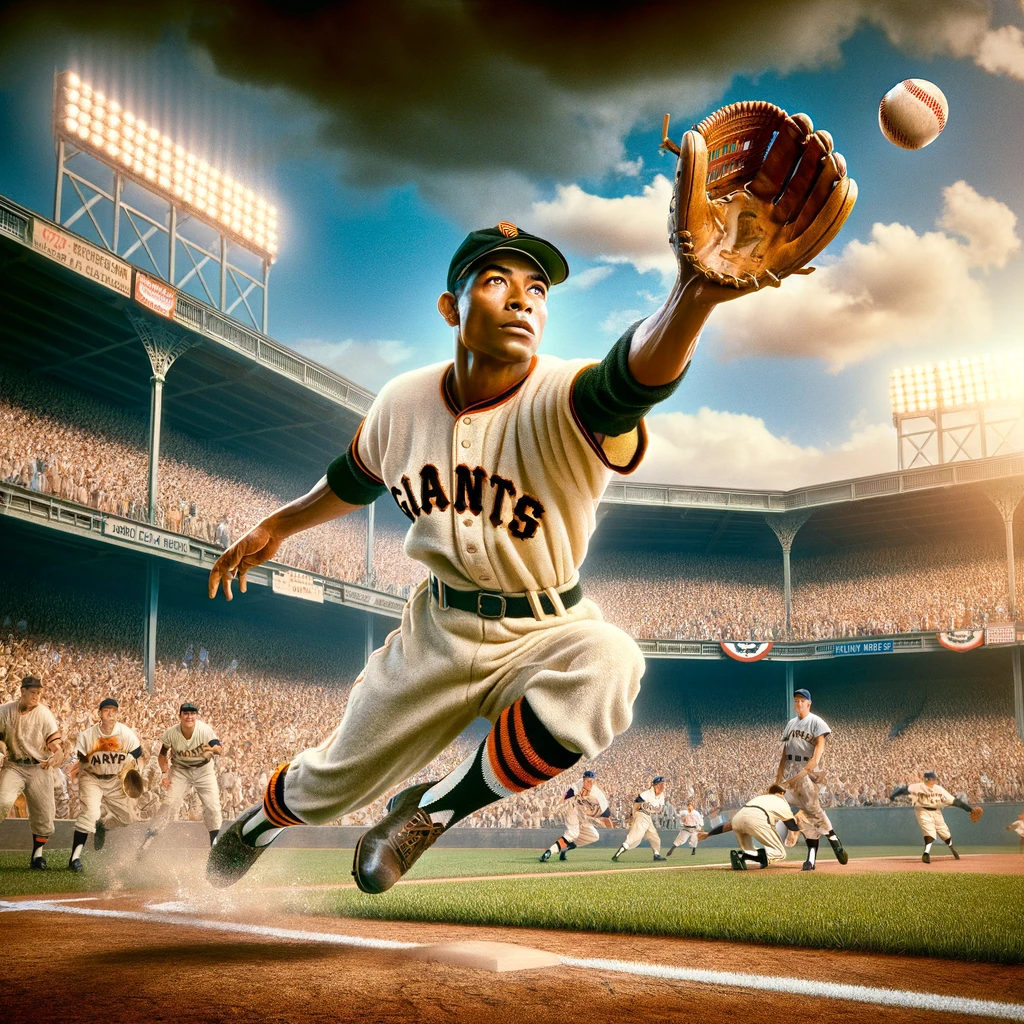
In the annals of baseball history, few names shine as brightly as Willie Mays. Known affectionately as “The Say Hey Kid,” Mays’ career spanned over two decades, leaving an indelible mark on the world of sports. His combination of power, speed, and defensive prowess made him a spectacle in Major League Baseball (MLB), transcending the boundaries of the game and becoming a cultural icon.
Early Life and Entry into Baseball
Willie Howard Mays Jr. was born on May 6, 1931, in Westfield, Alabama. Growing up in a family deeply rooted in baseball – his father played semi-professionally and his grandfather was a talented player in his own right – Mays quickly developed a passion for the game. He honed his skills in the Negro Leagues, playing for the Birmingham Black Barons, before making his MLB debut with the New York Giants in 1951.
Rookie Sensation
Mays’ entry into MLB was nothing short of spectacular. Despite a challenging start, he soon found his footing, displaying a rare blend of skills that electrified fans and players alike. His rookie year culminated in him winning the National League Rookie of the Year award, a testament to his immediate impact on the game.
The Making of a Legend
Throughout the 1950s and 1960s, Willie Mays established himself as one of the greatest players in baseball. His ability to hit for power and average, combined with his exceptional fielding skills, made him a perennial All-Star. One of his most memorable moments came in the 1954 World Series with “The Catch” – a breathtaking over-the-shoulder grab that remains one of the most iconic plays in baseball history.
Offensive Powerhouse
Mays’ prowess at the plate was undeniable. He hit over 50 home runs in a single season twice and finished his career with 660 home runs, ranking him among the all-time leaders. His batting average consistently hovered around .300, showcasing his ability to not just hit home runs, but also be a reliable hitter.
Defensive Mastery
Defensively, Mays was unmatched in center field. His speed, intuition, and incredible arm strength allowed him to make plays that seemed impossible. He won numerous Gold Glove awards, solidifying his reputation as one of the best defensive players in the history of the game.
Impact Beyond the Field
Willie Mays’ influence extended beyond his statistical achievements. He played with a joy and enthusiasm that endeared him to fans and players alike. His charisma and flair brought an added excitement to the game, helping to popularize baseball across America and beyond.
A Role Model
Mays also emerged as a role model, particularly for African American athletes. Playing during a time of significant racial tension, he faced discrimination and adversity but handled it with grace and dignity, paving the way for future generations of players.
Career Achievements and Honors
Over his 22-season career, Willie Mays amassed a plethora of awards and accolades. He was a two-time National League MVP, a 24-time All-Star, and played a key role in leading the Giants to a World Series victory in 1954. His achievements were recognized in 1979 when he was inducted into the Baseball Hall of Fame on the first ballot.
Legacy and Influence
Willie Mays’ legacy is not just in the records he set or the awards he won, but in the way he played the game and the impact he had on those who watched him. He is often cited as the greatest all-around player in baseball history, and his style of play influenced generations of players who came after him.

The 1960s: Dominance and Transition
As the 1960s rolled in, Willie Mays continued to dominate the baseball world. His performance remained stellar, even as the sport and the country underwent significant changes. The decade saw Mays leading the Giants to consistent success, though a World Series title eluded them despite their star’s efforts.
A New Era for the Giants
In 1958, the Giants moved from New York to San Francisco. Mays was instrumental in helping the team establish a strong fan base in their new home. His play was a critical factor in the Giants’ immediate success on the West Coast, including a memorable pennant race in 1962 that culminated in a World Series appearance.
Continued Excellence
Throughout the 1960s, Mays consistently put up impressive numbers. He led the league in home runs and slugging percentage multiple times and remained a fixture in the All-Star game. His excellence during this decade solidified his status as one of the game’s all-time greats.
Challenges and Resilience
Despite his success on the field, Mays faced challenges off it. The civil rights movement was reshaping America, and as a prominent African American athlete, Mays was often at the center of these societal changes. He navigated these challenges with poise, focusing on his game and using his platform to quietly but effectively advocate for racial equality.
Leadership in the Clubhouse
Mays also emerged as a leader in the Giants’ clubhouse. His work ethic, coupled with his approachable demeanor, made him a mentor to younger players. He was known for offering advice and support to his teammates, helping to foster a positive and inclusive team culture.
The Twilight Years
As the 1970s began, Willie Mays entered the twilight of his career. In 1972, in a move that shocked many, he was traded to the New York Mets. Though his best years were behind him, Mays continued to show flashes of his former brilliance and remained a beloved figure among baseball fans.
A Fond Farewell
Mays retired from baseball in 1973. His farewell tour was a testament to his impact on the game, as fans in every ballpark he visited paid homage to his legendary career. His final appearance in the World Series with the Mets that year, although not victorious, was a fitting end to a storied career.
Post-Retirement and Continuing Legacy
After hanging up his cleats, Willie Mays stayed connected to baseball, serving in various roles for the San Francisco Giants. His presence around the team continued to inspire players and fans alike.
Honoring The Say Hey Kid
Mays’ contributions to baseball have been continuously celebrated. In addition to his Hall of Fame induction, he has received numerous honors, including the Presidential Medal of Freedom in 2015. The Giants have retired his number 24, and in 2000, Major League Baseball introduced the Willie Mays World Series Most Valuable Player Award, named in his honor.
An Enduring Influence
Decades after his retirement, Willie Mays’ influence on baseball remains profound. His style of play, marked by a combination of power, speed, and grace, set a new standard for future generations. Players like Ken Griffey Jr. and Barry Bonds, among others, have cited Mays as a major influence on their careers.
Reflecting on Greatness
Willie Mays’ story is more than a tale of athletic prowess; it’s a journey of resilience, leadership, and impact. From the Negro Leagues to the Major Leagues, from New York to San Francisco, Mays left an indelible mark on the game he loved. His legacy is not just in the records he set or the accolades he received, but in the way he played the game with joy, the barriers he helped break, and the lives he touched.
Conclusion
“The Say Hey Kid’s” magical career is a tapestry of extraordinary moments and enduring influence. Willie Mays remains a symbol of excellence in baseball and beyond, a testament to what talent combined with character can achieve. As one of the greatest players to ever grace the diamond, his story continues to inspire and captivate fans of all ages.