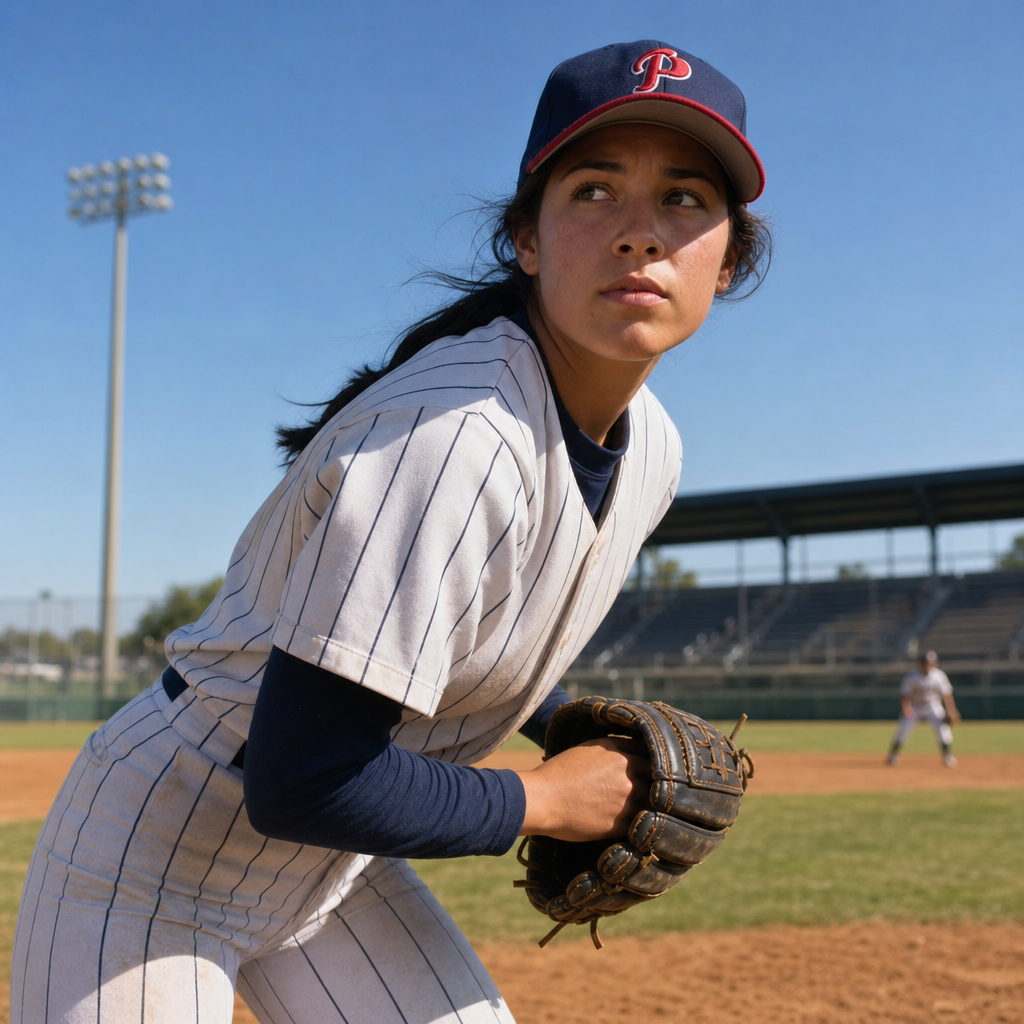
Women have shaped college baseball history in ways that are often overlooked, yet their presence has steadily expanded the sport’s definition of who belongs on the field, in the dugout, and in athletic leadership. In the context of minor leagues and college baseball, women in college baseball history includes players, coaches, administrators, umpires, broadcasters, and advocates whose work challenged assumptions inside a sport long treated as male only. That broader definition matters because college baseball is not just a competition level; it is a pipeline, a proving ground, and a public stage where rules, recruiting habits, media narratives, and access to opportunity are tested in real time. I have covered college baseball programs, spoken with coaches about roster construction and compliance, and watched how one woman joining a staff or trying out for a club team can alter an entire campus conversation. The subject is bigger than isolated firsts. It is about structural change, cultural resistance, and the practical realities of participation.
Understanding this topic requires a few clear distinctions. Varsity baseball in the NCAA, NAIA, and junior college ranks is different from softball, even when institutions support both. Title IX does not require schools to let women play baseball specifically, but it does require equitable athletic opportunity overall, a nuance that affects how programs frame participation. Club baseball, governed in many cases by the National Club Baseball Association, has often served as an accessible doorway for women players when varsity paths were closed. College baseball also sits alongside the minor league ecosystem through scouting, player development, summer wood-bat leagues, and coaching networks, so progress made on campus can influence professional baseball culture. Why does this matter now? Because the visibility of women in baseball is increasing, institutions are under pressure to broaden opportunity, and fans are finally asking more precise questions: Who were the pioneers, what barriers did they face, and what does meaningful inclusion actually look like in college baseball?
Early pioneers and the significance of “firsts”
Any serious look at trailblazers must begin with Ila Borders, the most cited pioneer in women’s college baseball history for good reason. Borders pitched at Southern California College, now Vanguard University, and later at Whittier College in the 1990s, becoming the first woman to pitch and win a complete men’s NCAA college baseball game. Her career was not symbolic window dressing; she logged real innings, handled pressure, and forced opponents, teammates, and media members to deal with performance rather than novelty. When I revisit coverage from that era, what stands out is how often her competence had to be re-proven after every outing. That is a pattern many women in baseball still recognize. A “first” is important because it creates a record, but it is incomplete unless it changes expectations for the people who follow.
Julie Croteau is another essential figure. Before Borders’ NCAA breakthrough, Croteau played college baseball at St. Mary’s College of Maryland and became one of the first women to play NCAA men’s baseball. She later coached, advocated, and helped preserve women’s baseball history through organizations such as the International Women’s Baseball Center. Her career illustrates a key truth: progress in college baseball has rarely moved in a straight line. A woman might break into a roster, but then face limited recruiting pathways, sparse media support, or assumptions that her appearance was a one-off publicity event. The pioneers mattered not because they were exceptions, but because they exposed weak arguments against participation. Once a woman competed successfully in college baseball, the claim that women categorically could not play was no longer defensible.
Where women have participated in college baseball
Women’s participation in college baseball has appeared across several channels, each with distinct standards and obstacles. Varsity NCAA baseball receives the most attention because it is highly visible and tied to institutional prestige, conference competition, and the professional scouting apparatus. Yet junior colleges, NAIA programs, and independent settings have often been more flexible in offering opportunities. Community colleges in particular can become practical entry points because roster churn is high, coaching staffs sometimes take a more skills-first approach, and local recruiting can uncover overlooked athletes. Club baseball has been even more important. On many campuses, women who were denied serious looks in varsity environments found innings, at-bats, and leadership roles through club teams. That experience can still be developmental, competitive, and meaningful, especially when club programs are well organized and travel nationally.
Beyond playing, women have built college baseball careers in support and leadership roles that directly affect performance. Women now work as directors of operations, athletic trainers, strength coaches, analysts, recruiting coordinators, academics staff, equipment managers, and sports information professionals attached to baseball programs. Some have advanced to on-field coaching positions, bullpen coaching roles, and player development jobs. These positions matter because baseball knowledge grows through daily repetitions: charting bullpens, coding video, managing workloads, planning travel, and preparing scouting reports. A woman who enters through operations or analytics may become a trusted baseball voice whose influence is felt in lineup decisions, pitcher usage, or recruiting evaluations. In practice, inclusion often expands when programs stop treating baseball expertise as something that only former male players can possess.
Barriers that have limited women in college baseball
The central barriers have been cultural, developmental, and institutional. Culturally, baseball has long been framed in the United States as a boys’ and men’s sport, while softball was positioned as the designated pathway for girls and women. That distinction shaped youth coaching, travel ball funding, access to baseball-specific instruction, and assumptions about what college coaches should recruit. Developmentally, many girls simply were not given the same reps with baseballs, wood bats, longer base paths, larger fields, or advanced pitching environments. By the time college recruiting intensified, a talented female baseball player often had fewer showcases, fewer high-level competition opportunities, and fewer evaluators willing to project her forward. Institutional barriers added another layer: some coaches feared clubhouse disruption, donor backlash, or media distraction more than they valued potential competitive upside.
Facilities and logistics also matter more than outsiders realize. I have seen programs struggle with basic questions that reveal deeper bias: How will a mixed-gender team handle locker room access, travel rooming, or uniforms? None of these issues are impossible to solve. Athletic departments manage comparable logistics across other sports all the time. The real problem is often willingness. When leaders want to include qualified women, they create practical protocols quickly and professionally. Another barrier is the scarcity of role models. If a female player never sees women coaching first base, throwing batting practice, leading analytics meetings, or earning roster spots, she receives a constant message about what is supposedly realistic. That is why visibility is not cosmetic. In college baseball, visibility changes self-selection, recruiting behavior, and administrative comfort all at once.
Key milestones, roles, and lasting impact
Milestones in women’s college baseball history are best understood as categories of breakthrough rather than a simple timeline of isolated names. Some breakthroughs happened on the field, others in dugouts, offices, and media booths. Together, they widened the sport’s talent pool and changed what campuses considered normal.
| Area | Milestone | Why it mattered |
|---|---|---|
| Player participation | Ila Borders and Julie Croteau competing in college baseball | Established that women could earn meaningful baseball roles, not ceremonial appearances |
| Coaching | Women joining college baseball staffs in operations, development, and on-field instruction | Expanded the definition of baseball expertise and created visible career pathways |
| Club baseball | NCBA and campus club teams welcoming women players | Provided a practical entry point when varsity opportunities were limited |
| Administration | Women leading compliance, academics, communications, and baseball operations | Influenced recruiting, player support, and program culture from inside departments |
| Advocacy | Organizations preserving women’s baseball history and promoting national teams | Connected college participation to a wider baseball ecosystem and future opportunity |
These milestones produced lasting effects beyond individual campuses. Once women were visible in baseball operations, player development, and coaching, administrators had precedents to reference instead of relying on abstract debate. Once club baseball showed women could compete within existing structures, the burden shifted to varsity programs to explain exclusion. Once pioneers were documented in books, news archives, and museum work, younger players had a usable history rather than scattered anecdotes. That accumulation of evidence is how sports cultures change. It also matters for minor league baseball and professional development. College programs influence who gets internships, analytics jobs, video roles, and coaching apprenticeships. When women enter college baseball in any serious capacity, they gain skills and connections that can carry into MLB organizations, summer collegiate leagues, and independent ball.
How college baseball is changing today
Recent progress is being driven by better information, broader baseball infrastructure, and more public accountability. National women’s baseball events, girls baseball initiatives, and digital communities have made it easier for athletes to find coaching, competition, and visibility outside traditional local channels. Colleges now have more examples of women succeeding in baseball-adjacent roles, which reduces institutional hesitation. Data and technology have helped too. Tools such as TrackMan, Rapsodo, Blast Motion, and Synergy allow coaches to evaluate movement profiles, swing decisions, bat speed, and pitch characteristics with more precision. That can reduce bias when staffs genuinely rely on measurable performance indicators. If a player’s induced vertical break, command profile, or contact quality is competitive, the conversation becomes harder to dismiss with stereotypes.
Still, change is uneven. Some programs are inclusive in rhetoric but passive in practice. Others actively recruit diverse talent, hire women into substantive jobs, and support club baseball with real resources. The most credible programs do three things consistently: they judge baseball skill with clear standards, they solve logistical issues without drama, and they create visible advancement paths. For readers exploring the miscellaneous side of minor leagues and college baseball, this topic works as a hub because it connects to recruiting, player development, administration, media, labor pipelines, and the future of the sport itself. Women in college baseball history is not a niche sidebar. It is a lens for understanding how baseball institutions adapt, who gets overlooked, and where the next wave of innovation will come from. Follow the related stories in this subtopic, and use this history as a guide to spot the next true trailblazers.
Frequently Asked Questions
What does “women in college baseball history” actually include?
It includes far more than the small number of women who have appeared on college baseball rosters. In the broadest and most accurate sense, women in college baseball history includes players, coaches, athletic administrators, team support staff, umpires, broadcasters, trainers, and advocates who helped shape the sport at the collegiate level. That wider definition matters because college baseball has never been influenced only by the athletes standing in the batter’s box or on the mound. The game has also been built by people who recruited talent, organized programs, fought for access, called games, created policy, covered teams in the media, and pushed institutions to rethink who was welcome in baseball spaces.
Looking at women’s history in college baseball through this wider lens helps correct a common misconception: that women’s impact is too recent or too limited to matter. In reality, women have long contributed to baseball culture and development, even when they were excluded from formal participation. Their presence often showed up in pioneering firsts, incremental policy changes, and visible leadership roles that challenged the idea that baseball belonged only to men. When historians, fans, and students use this broader definition, they gain a more complete understanding of how the sport evolved and how barriers were gradually tested from multiple directions.
Have women actually played college baseball, or has their impact mostly been off the field?
Women have absolutely played college baseball, though their appearances have been relatively rare compared with men because of longstanding structural and cultural barriers. Some women earned roster spots as position players or pitchers, while others participated in tryouts, practice squads, or developmental roles that still represented important breakthroughs. Each player who entered a college baseball environment challenged assumptions about strength, skill, competitiveness, and baseball IQ. Even when those opportunities were limited, they carried real historical significance because they forced programs, conferences, and fans to confront the fact that baseball ability is not determined by gender alone.
At the same time, it would be incomplete to focus only on players. A major part of women’s impact in college baseball history has occurred off the field, where women have influenced the sport in coaching, athletic administration, operations, sports medicine, compliance, scouting, communications, and broadcasting. These roles have often been just as important as roster breakthroughs because they changed how baseball programs functioned and who had decision-making power. In many cases, women’s off-field leadership created the conditions that made on-field participation more imaginable. So the most accurate answer is both: women have played college baseball, and women have also shaped the sport in essential ways beyond direct competition.
Why has women’s role in college baseball often been overlooked in sports history?
One reason is that baseball has been culturally framed for generations as a male-only tradition, especially at the college and professional levels. Because of that framing, many stories involving women were treated as exceptions rather than as part of the sport’s real history. Media coverage often emphasized novelty over substance, which meant a woman’s involvement might be briefly celebrated as a curiosity but not preserved as part of the broader historical record. When institutions fail to document contributions carefully, those contributions become harder to trace, cite, and teach later on.
Another reason is that women’s influence has often been spread across roles that sports histories traditionally undervalue. Histories centered only on star players, championship teams, or major statistical milestones can miss coaches, administrators, advocates, and support staff who changed the game more quietly but no less meaningfully. There is also the issue of limited archival material. Smaller college programs, local newspapers, and athletic departments have not always preserved records in ways that make women’s contributions easy to recover. As a result, many pioneering stories remain underreported. Recognizing this pattern is important because it shows that women were not absent from college baseball history; rather, their presence was frequently minimized, fragmented, or excluded from mainstream retellings.
How did women help expand opportunities and redefine leadership in college baseball?
Women expanded opportunities in college baseball by showing that expertise in the sport exists at every level of participation and leadership. When women entered coaching staffs, athletic departments, officiating crews, and media booths, they helped break down the assumption that authority in baseball had to look a certain way. Their presence mattered not just symbolically but practically. Women recruited athletes, designed training plans, managed operations, evaluated performance, handled compliance and administration, and shaped how baseball programs were presented to the public. Those contributions helped redefine what baseball leadership could be within colleges and universities.
Just as important, women often expanded opportunity by advocacy as much as by title. Some challenged exclusion directly through tryouts, hiring battles, visibility campaigns, or professional persistence in spaces where they were underestimated. Others opened doors simply by succeeding in roles where people had previously claimed women did not belong. Over time, these examples shifted expectations for players, coaches, administrators, and fans. That shift is one of the most important themes in women’s college baseball history: not only the achievement of individual milestones, but the gradual reshaping of the sport’s culture. Leadership in baseball became easier to imagine more broadly because women demonstrated competence, resilience, and strategic knowledge in highly visible ways.
Why is this history important for understanding college baseball today?
This history matters because it reveals that college baseball has always been more dynamic and contested than many people assume. Understanding women’s role in that history helps readers see the sport as something shaped by ongoing challenges to exclusion, not just by wins, losses, and famous programs. It also provides important context for current conversations about inclusion, opportunity, representation, and athletic leadership. When people recognize that women have long contributed to college baseball, today’s developments do not look like sudden departures from tradition. Instead, they appear as part of a longer story of persistence and change.
It is also important because history shapes expectations. If fans, athletes, and institutions only hear a narrow version of baseball’s past, they may continue to imagine a narrow future. By contrast, telling a fuller history encourages a more accurate and more welcoming view of the game. It shows young athletes and future sports professionals that baseball careers and baseball influence can take many forms. It also encourages colleges to better document, celebrate, and support the people whose work broadens the sport. In that sense, women in college baseball history are not just a topic from the past. They are central to understanding where the sport has been, how it has evolved, and where it can go next.