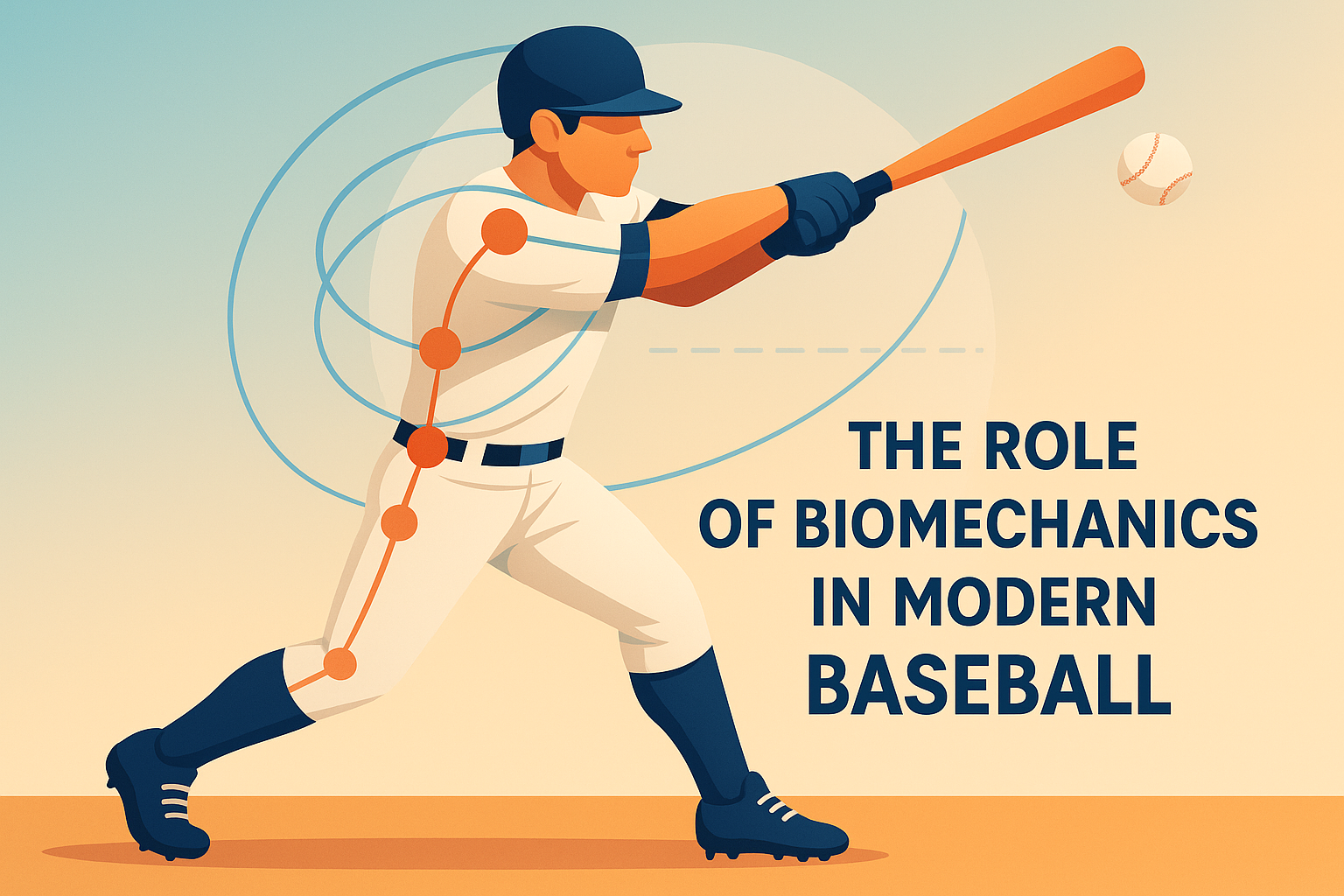
Baseball has long been dubbed America’s pastime, a sport imbued with history, culture, and passion. Yet, like many traditional games, baseball has not remained static. Technology and scientific advancements are continuously reshaping athletes’ performance on the field. One key area that has seen a significant impact on the sport is biomechanics. This branch of science examines the mechanics of human movement, applying principles of physics and engineering to understand how players can optimize their physical performance. Biomechanics is increasingly influencing training, injury prevention, and performance analysis in modern baseball. Understanding the role of biomechanics in this revered sport is not just fascinating; it’s essential for anyone looking to appreciate or contribute to its future.
Biomechanics matters in baseball because it allows players and coaches to analyze intricate movements with unprecedented precision. Whether it’s pitchers perfecting their pitch, batters optimizing their swing, or fielders enhancing their throw, biomechanics offers insights that can lead to tangible improvements. With baseball embracing technology more than ever, biomechanics stands at the forefront of these innovations, making it crucial to understand its applications in baseball today. Through detailed analysis of player motions, biomechanics helps in minimizing the risk of injuries and maximizing performance, ultimately contributing to the longevity and efficiency of a player’s career.
Analyzing Pitching Mechanics
Pitching is one of the most physically demanding tasks in baseball, requiring a high degree of skill and power. Biomechanics plays an indispensable role in analyzing and improving pitching mechanics. By assessing the pitcher’s movements, from the wind-up to the release, biomechanics helps identify inefficiencies or potential injury risks. For example, a common problem is shoulder and elbow strain, often due to improper mechanics.
Biomechanical analysis has helped develop tools such as the high-speed camera and motion capture systems, which allow teams to record and analyze a pitcher’s delivery frame by frame. For instance, researchers at the American Sports Medicine Institute (ASMI) have used biomechanics to reduce the rates of injuries among pitchers by studying their throwing mechanics. By correcting these mechanics, pitchers can not only reduce their risk of injury but may also throw harder and more accurately.
Enhancing Batting Performance
Batting is another area where biomechanics significantly impacts a player’s performance. An effective swing requires the perfect mix of balance, timing, and power. Biomechanical analysis helps players by breaking down the components of their swing, offering insights into how they can improve their technique. For instance, using motion capture technology, coaches can assess elements like shoulder rotation, hip movement, and the follow-through of the swing.
One real-world application comes from the work of the Biomechanics Research Group, which demonstrated that by understanding the torque and angle of bat swings, players can make subtle adjustments that lead to increased batting averages. This scientific approach to batting not only enhances a player’s performance but also instills a deeper understanding of the mechanics behind every hit, allowing batters to adapt and refine their skills even during a game.
Injury Prevention and Recovery
Baseball’s downtime can be as critical as its gameplay when it comes to a player’s overall career. This is where biomechanics truly shines, offering tools and insights that help prevent common injuries and aid in recovery. By understanding the mechanical stresses placed on joints and muscles during gameplay, sports scientists and medical staff can design exercises and recovery plans that address individual needs.
For example, Tommy John surgery, once a career-ending procedure, is now more predictable thanks to biomechanical studies done by institutions like ASMI. They have evaluated the mechanics leading to ulnar collateral ligament (UCL) injuries, enabling more effective rehabilitation protocols. Consequently, players are returning to the field stronger and sooner than previously possible, sometimes with enhanced performance.
Fielding Efficiency
Fielding might not always get the spotlight, but it’s an area ripe for biomechanical optimization. The art of fielding requires not just agile movements but also precise throws. Understanding the kinetics and kinematics of a player’s throw can lead to more efficient and reliable fielding performance.
Biomechanics allows teams to analyze the trajectory of throws, the coordination between the limbs during a throw, and even the timing of these actions. For instance, the New York Yankees have employed biomechanical analyses to improve their fielders’ throwing accuracy and speed, leading to quicker plays and reduced rates of errors. By honing the intricacies of fielding mechanics, players can make more informed and consistent plays.
Technological Innovations Fueling Biomechanical Research
Recent technological advancements have significantly boosted biomechanical studies in baseball. State-of-the-art motion capture technology, wearable sensors, and advanced video analytics are now common in training facilities and stadiums, providing detailed data on every athlete’s movements.
Teams integrate these technologies into player development programs, offering real-time analytics, which coaches leverage to make immediate adjustments during practice sessions. This continuous feedback loop is crucial for players seeking to perfect their game. For instance, wearable sensors can provide data on a pitcher’s arm speed, angle, and strain, allowing coaches to make precise interventions aimed at improving performance while preventing potential injuries.
- Real-time motion capture systems
- In-depth video analytics
- Wearable technology for biomechanics
- Advanced simulation software
Case Study: The Rise of Data-Driven Teams
Perhaps no better example of biomechanics’ impact on modern baseball is the success of data-driven teams. The Houston Astros exemplify a franchise that harnessed biomechanical insights efficiently. They invested in advanced analytics and biomechanics to complement their data-driven philosophy, leading to significant achievements, including their 2017 World Series win.
Through biomechanics, the Astros were able to transform underperforming players into key contributors. By quantifying aspects like swing dynamics, pitch mechanics, and even player fatigue, they could make informed decisions that extended beyond traditional scouting and training techniques.
Implications for Coaches and Scouts
Biomechanics is not just a tool for players; it has profound implications for coaches and scouts too. It’s changing how talent is evaluated and developed. By having a detailed biomechanical profile, coaches can tailor training programs to fit individual needs and maximize player potential.
Scouts use biomechanical data to assess prospective players more accurately than traditional methods. Their evaluations are no longer solely based on what they can see during a game. Instead, they can assess underlying mechanics that might predict a player’s future performance and longevity in the sport. This shift results in more informed drafting and trading decisions.
Adapting to New Challenges
As biomechanics continues to evolve, so too must the sport adapt to new challenges it presents. The question isn’t just about how to use biomechanics, but how to integrate it into the fabric of the sport’s culture. Teams and players need to embrace innovation while preserving the rich traditions of baseball.
This requires a balance that respects the game’s history while being open to the transformative potential of science and technology. As biomechanics insights become more accessible, it’s up to the stakeholders of baseball—teams, players, and fans—to embrace these advancements and adapt to a future where biomechanical analysis plays an integral role in all aspects of the sport.
Summary and Call to Action
The growth of biomechanics in baseball represents a profound shift in how the game is played and understood. By dissecting every movement on the field, biomechanics serves not only to enhance performance but also to redefine training strategies and extend players’ careers. It’s an exciting time for the sport as new technologies offer deeper insights into the mechanics of play, allowing teams to make more informed decisions and continuously push the boundaries of what’s possible.
For players, embracing biomechanics means committing to a mindset of continuous improvement and learning. Coaches and scouts must adapt to these rapid changes, enhancing their traditional roles with cutting-edge technology to maximize team success. As fans, understanding and appreciating these advancements offer deeper insights into the nuances of the game, fostering a greater connection to the sport.
As you watch your next baseball game, consider the seamless integration of modern science and age-old traditions that make up today’s baseball. Whether you’re an athlete seeking to improve your on-field skills, a coach looking to refine a training program, or a fan eager to understand more deeply the ever-evolving world of baseball, the impact of biomechanics is unmistakable. Let’s continue to support and explore this fascinating fusion of sport and science to unlock even greater potentials of baseball.
Frequently Asked Questions
1. What is biomechanics and how is it applied in modern baseball?
Biomechanics is essentially the study of the movements of living systems, a fascinating blend of biology, physics, and engineering principles. It zooms in on how forces interact with the body and how that affects movement. When we talk about baseball, biomechanics becomes incredibly important because it dives into the nitty-gritty of how players can move better, play better, and avoid injuries. Imagine a professional baseball player. Every swing of the bat or throw of the ball contains infinite possibilities for tweaking and optimizing movement, allowing them to achieve the best results. Biomechanical analysis looks at each motion’s dynamics, breaking it down and figuring out how players can maximize their strengths while minimizing any strain or risk of injury.
In modern baseball, biomechanics is applied through video analysis, motion capture technology, and computer simulations. These tools meticulously break down high-speed actions that occur in mere fractions of a second. This helps coaches and players understand the nuances of a pitcher’s throw or a batter’s swing. The insights derived from this analysis help tailor training programs that focus on developing skills while maintaining player health.
2. How has biomechanics changed the way baseball players train?
Baseball training has dramatically evolved thanks to advances in biomechanics. Traditionally, training might focus on building general strength or practising certain motions repetitively. With biomechanics, there’s a new depth to understanding what the body does during those motions. To put it simply, biomechanics takes the guesswork out of training. By understanding how specific muscle and joint actions contribute to movements like pitching or batting, trainers can develop exercises that specifically enhance those actions.
For example, by studying the biomechanics of a pitch, trainers can pinpoint which muscles are most engaged and how they’re being used. This can help pitchers refine their technique to prevent injuries like those to the shoulder or elbow, which are common due to the intense forces involved in pitching. Similarly, understanding the forces at play in batting can help players improve their swing mechanics for more consistent performance and power. Thus, training regimens are tailored far more precisely than ever before, with a focus on injury prevention, efficiency, and maximizing each athlete’s unique potential.
3. What role does biomechanics play in injury prevention for baseball players?
Injury prevention is one of the most significant benefits of applying biomechanics in professional athletics. Due to the repetitive and high-intensity movements required in baseball, players are at risk of developing overuse injuries. Biomechanics helps identify risky body movements and the strains on particular body parts before they result in injury. By understanding the specific biomechanical demands of pitching, hitting, or fielding, professionals can develop personalized programs that reduce unnecessary stress on muscles and joints.
For pitchers, biomechanics can identify stress points during the delivery phase, such as excessive shoulder rotation or elbow tension. By addressing these specific issues early on, players can modify their techniques to distribute forces more safely. For batters, weaknesses in hip or spine alignment can be rectified before they lead to back injuries. This preventive approach is invaluable, keeping players healthy and extending their careers while maintaining peak performance levels.
4. How has technology enhanced the understanding of biomechanics in baseball?
Technology and biomechanics are a dynamic duo that has revolutionized baseball. With the advent of motion capture systems, high-speed cameras, and sophisticated software, every movement made by players can be analyzed with striking precision. Motion capture technology involves placing markers on a player’s body to track movements in three-dimensional space as they perform various actions on the field. The resulting data reveals the tiniest details of movement dynamics that are not visible to the naked eye.
When this data is fed into advanced software, coaches and sports scientists gain insights into the optimal techniques for pitching, swinging, and running. Video analysis software allows frame-by-frame observation to identify inefficiencies or potential injury mechanisms, helping players correct techniques in real-time. Moreover, virtual simulations can model potential changes in motion to predict how adjustments might improve performance or reduce injury risks, turning biomechanics from a purely descriptive science into a predictive one.
5. Are there any controversial aspects of using biomechanics in baseball?
While biomechanics offers numerous benefits, its integration into baseball does spark some controversy. One aspect is how it might affect the traditional coaching methods. Some purists argue that relying heavily on technology and biomechanical data might undermine the traditional coaching wisdom and the intangibles of athletic performance, like “feel” and instinct. There’s a subtle art to coaching that involves more than just numbers and data, elements that cannot be fully captured by science alone.
Additionally, not all players respond equally to biomechanically driven changes. For some, the emphasis on data and technical details can detract from their natural style of play, potentially affecting performance on the field. There’s also the argument of access and equity. Smaller, less wealthy teams or amateur players might not have access to the same biomechanical technology as larger, wealthier organizations, leading to disparities in training quality and injury prevention efforts. Despite these challenges, the prevailing attitude in the baseball community is seeing biomechanics as a tool to complement and enhance, rather than replace, the traditional elements of the sport.