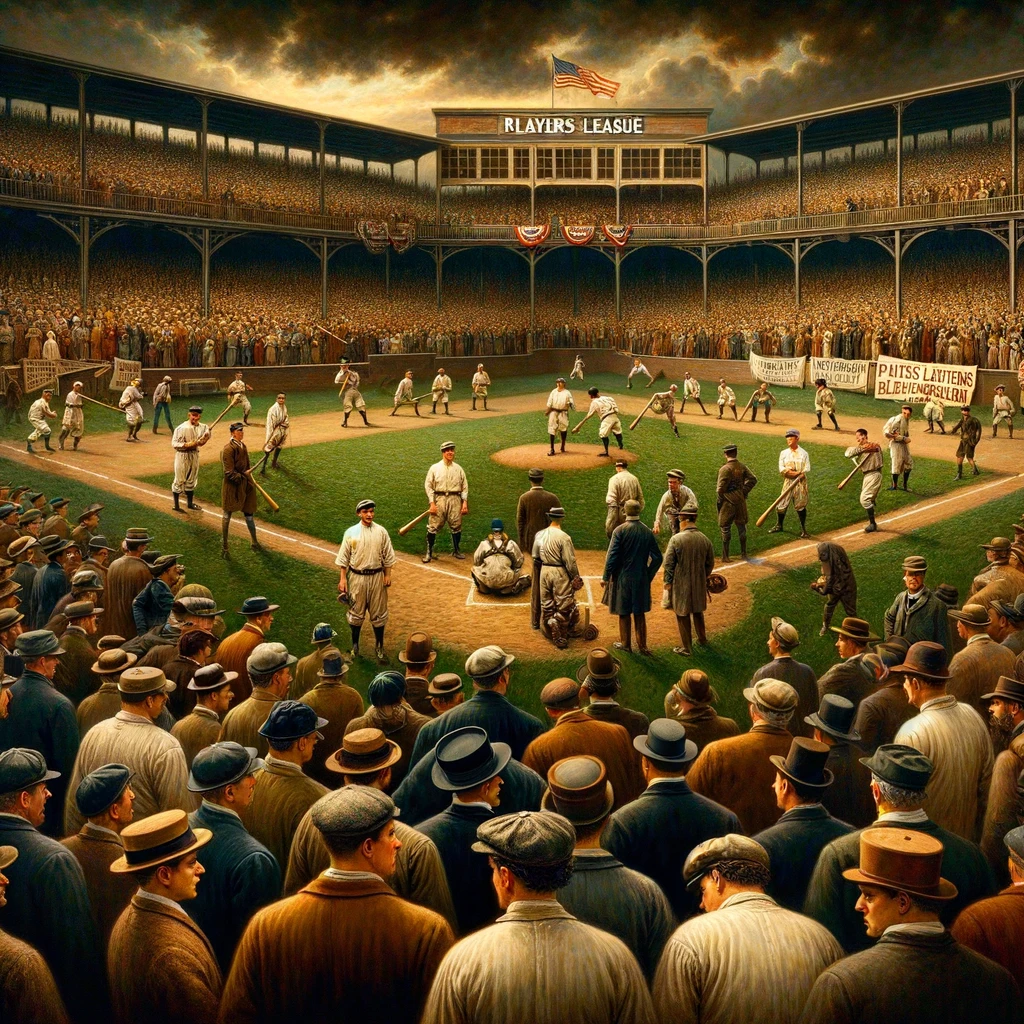
In the annals of baseball history, few events have had as significant an impact as the formation of the Players’ League in 1890. This short-lived professional baseball league, entirely operated by players, marked a revolutionary moment in the sport’s history. It was not just a challenge to the established National League (NL) and the American Association (AA), but also a bold statement against the control team owners had over players. This article delves into the origins, development, and eventual dissolution of the Players’ League, and its lasting impact on the game of baseball.
The Rise of Player Discontent
The late 19th century was a turbulent time for baseball. The National League, established in 1876, had gained prominence as the premier professional baseball league in the United States. However, the league was dominated by team owners who exercised strict control over their players. The “reserve clause” in player contracts essentially bound players to their teams indefinitely, preventing them from negotiating better terms or moving to other teams.
This control led to widespread discontent among players. Salaries were often low, working conditions were far from ideal, and players had little say in the governance of the league. The Brotherhood of Professional Base-Ball Players, an early players’ union formed in 1885, began to challenge these injustices. Led by star shortstop John Montgomery Ward, the Brotherhood became the voice of the players in their struggle for rights and fair treatment.
Formation of the Players’ League
The conflict reached a boiling point in 1889. Despite ongoing negotiations and protests, the National League owners refused to concede any significant power to the players. In response, the Brotherhood made a bold move. They decided to form their own league, where players would have a say in league policies and share in the financial success of the game. Thus, the Players’ League was born.
The Players’ League was officially established on December 17, 1889. It was structured as a cooperative, with players holding shares in their teams and having a say in their management. This structure was radically different from that of the National League and represented a significant shift in the power dynamics of professional baseball.
The 1890 Season
The 1890 season was the first and only season of the Players’ League. The league consisted of eight teams, located in Boston, Brooklyn, Buffalo, Chicago, Cleveland, New York, Philadelphia, and Pittsburgh. Many of the era’s top players, including Ward, King Kelly, and Charles Comiskey, left the National League to join the new venture.
The Players’ League began with great fanfare and initially enjoyed significant success. Fans were drawn to the league, sympathetic to the players’ cause and attracted by the high-caliber play. The league also introduced several innovations, including more equitable revenue sharing and better treatment of players.
However, the season was not without its challenges. The National League and the American Association, feeling threatened, took steps to undermine the new league. They expanded their schedules to compete directly with Players’ League games and engaged in various tactics to discourage fans and players from supporting the new league.
The Demise of the Players’ League
Despite a successful inaugural season in terms of attendance and play, the Players’ League faced significant financial difficulties. The costs of running a league were higher than many players had anticipated, and the constant competition with the National League and American Association strained their resources.
By the end of the 1890 season, it was clear that the Players’ League was not financially viable. The league was losing money, and many players were willing to return to the National League for stability. The dream of a player-run league began to crumble.
In a series of meetings after the 1890 season, the fate of the Players’ League was sealed. Many players returned to their former teams in the National League or the American Association. The Players’ League officially disbanded in early 1891, marking the end of this bold experiment in baseball history.
Legacy and Impact
Though short-lived, the Players’ League had a lasting impact on the game of baseball. It highlighted the growing discontent among players with the existing power structures in professional baseball and set the stage for future labor disputes and reforms.
The revolt led by the Players’ League brought significant attention to the issues of player rights and working conditions. It forced team owners and league officials to acknowledge the importance of player welfare and their role in the success of the sport.
In the years following the dissolution of the Players’ League, several changes were made in professional baseball, including improvements in player salaries and working conditions. The reserve clause, however, remained a contentious issue for decades, ultimately leading to the free agency system in the modern era.
The Aftermath: Shaping the Future of Baseball
The dissolution of the Players’ League in 1891 did not signify the end of its influence. In many ways, the league’s existence and subsequent collapse set into motion a series of events that would reshape the landscape of professional baseball for decades to come.
Immediate Aftermath
In the immediate aftermath, the National League emerged as the dominant force in professional baseball. The American Association, weakened by the competition, eventually merged with the National League. This consolidation led to a near-monopoly in professional baseball, further entrenching the power of team owners.
However, the spirit of the Players’ League lived on. The players had tasted the possibility of having a say in their professional lives, and this experience would not be easily forgotten. The issues raised by the Players’ League, particularly regarding the reserve clause and player rights, continued to be points of contention.
Influence on Labor Relations
The most significant impact of the Players’ League was on labor relations within baseball. The league had brought the issues of player rights and power dynamics to the forefront. In the following years, these issues would lead to the formation of new players’ unions and associations, each striving to improve conditions and negotiate better terms for players.
The National League, in response to the challenges posed by the Players’ League, made some concessions to players, including slight improvements in salaries and working conditions. However, these changes were often superficial, and the fundamental power imbalance remained.
The Road to Free Agency
The struggle for player rights continued well into the 20th century. The reserve clause, which the Players’ League had sought to challenge, remained a major barrier to player freedom and fair compensation. It wasn’t until the 1970s, with the advent of free agency, that players would gain significant control over their careers.
The establishment of free agency, where players could negotiate contracts with different teams after a certain period, fundamentally changed the nature of professional baseball. This shift can be traced back to the challenges and questions raised by the Players’ League.
Legacy in Baseball History
The Players’ League remains a pivotal chapter in baseball history, symbolizing the ongoing struggle between labor and management in professional sports. Its formation was a bold statement against the status quo and set the stage for the many labor disputes that would follow in various sports leagues.
The league’s innovative approach to revenue sharing and player involvement in decision-making are concepts that have gained traction in modern professional sports. The idea that players should have a voice in the administration and profits of the sport they play has become increasingly accepted.
Conclusion
In conclusion, the Players’ League of 1890 was more than just a fleeting rebellion in the history of baseball. It was a harbinger of the changes that would slowly but inevitably come to professional sports. The league challenged the prevailing norms of player management, sowed the seeds of player empowerment, and left an indelible mark on the evolution of baseball.
The legacy of the Players’ League is a testament to the power of collective action and the importance of fair labor practices. It reminds us that the history of sports is not just about the games played on the field but also about the ongoing struggle for rights, respect, and recognition off the field.