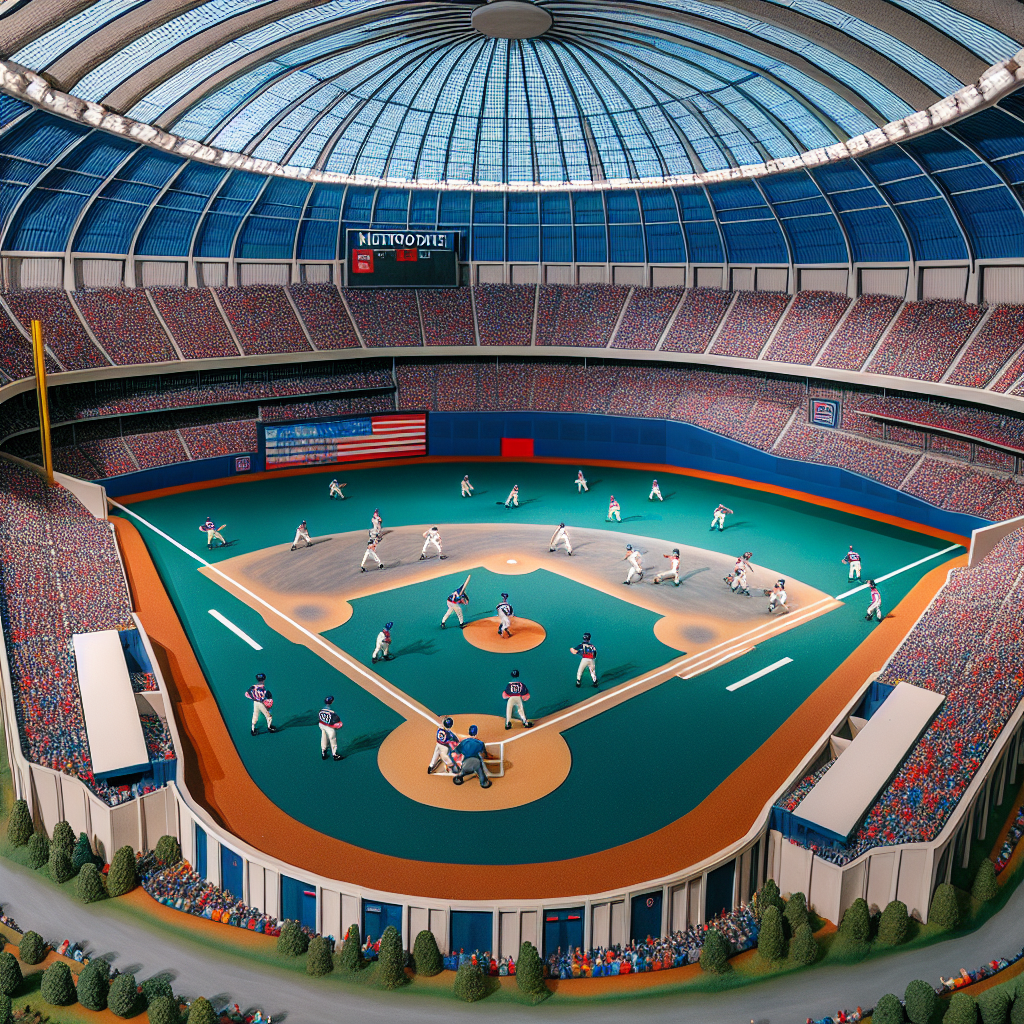
The Hubert H. Humphrey Metrodome, commonly referred to as the Metrodome, was more than just a stadium; it was a symbol of the Minnesota Twins’ glory days. Opening its doors in 1982, this iconic ballpark served as the playground for countless memories, historical baseball moments, and unforgettable games for over three decades. Located in the heart of Minneapolis, the Metrodome was not only the home of the Twins but also hosted a variety of major athletic events, including Super Bowls, college football games, and concerts.
One could argue that no other stadium has had such a profound impact on the local community and sports culture as the Metrodome. Its unique architecture, characterized by the Teflon-coated fiberglass roof, earned it the nickname “The Dome.” Fans, players, and even rival teams held a mixture of feelings about the stadium—from admiration for its innovative design to frustration with its somewhat unpredictable playing conditions. Despite its controversies, the Metrodome remains an indelible part of baseball history, and for Minnesota Twins fans, it symbolizes an era of dramatic triumphs, unexpected defeats, and endless excitement.
Construction and Design
The Metrodome was a product of its time, designed to be a multi-purpose stadium that could cater to various sports and events. The construction began in December 1979 and was completed in just over two years, with the total cost coming to approximately $68 million. The result was a marvel of engineering: an all-weather stadium that protected fans and players from the harsh Minnesota climate.
The stadium’s most distinctive feature was its roof, which was made from Teflon-coated fiberglass and supported by air pressure. This roof was both a blessing and a curse: it kept the playing field dry and comfortable, but the air-supported structure could sometimes lead to peculiar gameplay dynamics. The roof would often come into play during games, with pop flies behaving differently compared to open-air ballparks.
Seating played a crucial role in the stadium’s design, accommodating up to 56,000 fans during baseball games. However, the flexibility of the venue meant that it could be rearranged to host as many as 64,000 guests for football games. The Metrodome also featured retractable seats that changed configurations quickly, allowing seamless transitions between different types of events. This adaptability made it a favorite venue for various sports and entertainment events beyond baseball.
The Twins’ Golden Years
The Metrodome will forever be etched in the annals of Major League Baseball history, primarily because it was the site of the Minnesota Twins’ most triumphant moments. The Twins called the Metrodome home for the majority of their most successful years, including their World Series victories in 1987 and 1991.
The 1987 World Series marked the Twins’ first championship win in more than six decades, and they did it in spectacular fashion. With the support of the roaring fans in the Metrodome, the Twins defeated the St. Louis Cardinals in seven games. The Dome provided an enormous home-field advantage, amplifying the cheers of Twins supporters to a deafening roar that disoriented visiting teams.
Four years later, the Twins were again crowned champions, this time in a dramatic seven-game series against the Atlanta Braves. The 1991 World Series is often remembered as one of the greatest of all time, with the Metrodome playing host to two of the most unforgettable games in baseball history. Game 6 featured Kirby Puckett’s iconic walk-off home run, which forced a decisive Game 7. The subsequent Game 7 was a nail-biter, ending with a 1-0 victory for the Twins, clinching their second World Series title in five years.
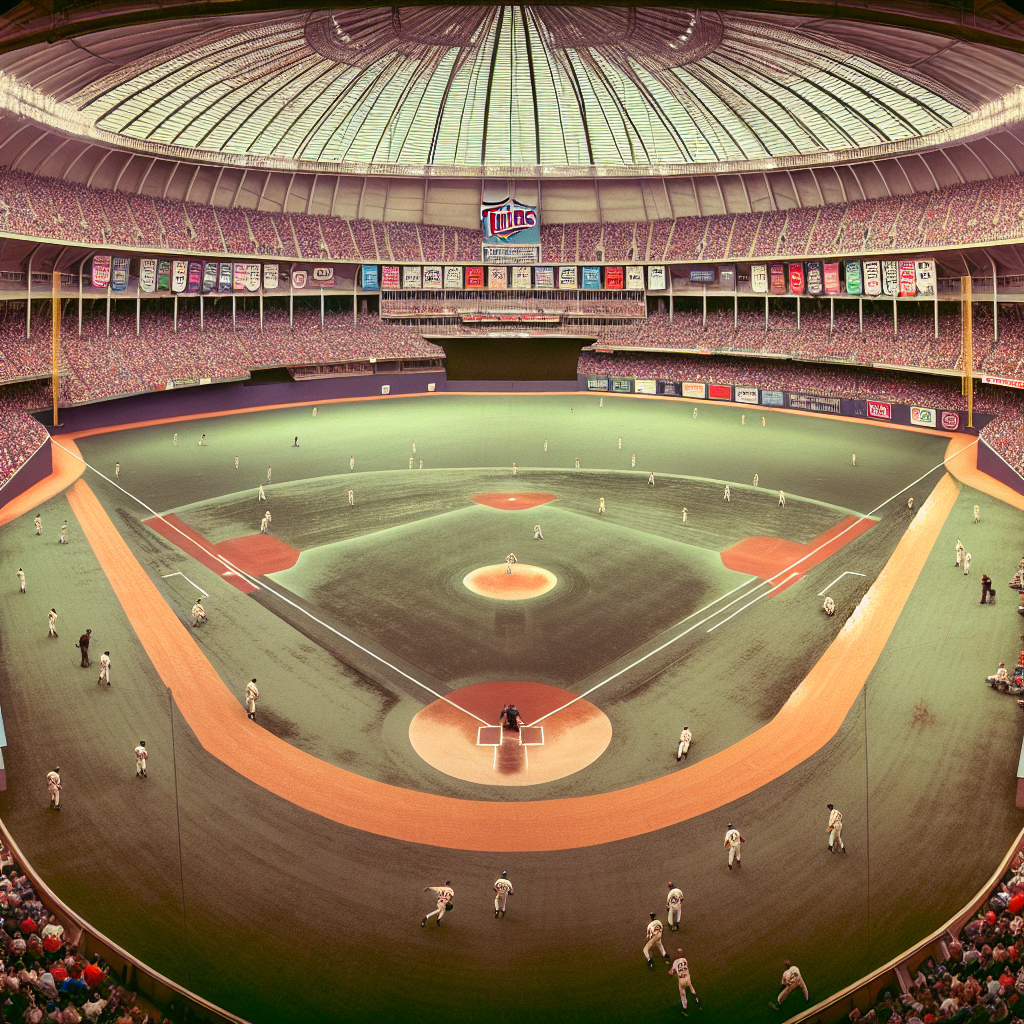
Memorable Moments
While the World Series victories are undoubtedly the highlights, the Metrodome witnessed numerous other memorable moments that captivated baseball fans. One such event was the 1985 All-Star Game, where the brightest stars in the MLB converged on Minneapolis for a mid-summer showcase. Another unforgettable moment occurred in 1986 when Twins pitcher Joe Niekro was famously caught with an emery board on the mound, leading to his ejection from the game.
The Metrodome was also the site of several record-breaking performances. In 2007, the Twins’ Justin Morneau became the first player in history to hit a home run off the center-field speakers, a testament to both his power and the unique intricacies of the stadium. Additionally, legendary Twins players like Kirby Puckett, Rod Carew, and Harmon Killebrew all left their mark on the Metrodome through their stellar performances.
Beyond these individual moments, the Metrodome was a venue where fans experienced countless thrilling games characterized by dramatic comebacks, pitching duels, and walk-off victories. It was a place where the unexpected became commonplace, and where both triumph and heartbreak played out under the Dome’s iconic roof.
The Controversies
Despite its many positive attributes, the Metrodome was not without its controversies and criticisms. Players and fans experienced both the pros and cons of its unique design. The air-supported roof, while innovative, was prone to failures. It collapsed several times due to heavy snow, most notably in 2010 when the weight of accumulated snow caused the roof to tear and deflate, resulting in game cancellations and significant repairs.
The artificial turf was another source of contention. It provided faster play, which some players and coaches appreciated, but it was also harder on the body than natural grass. Injuries attributed to the turf were common, drawing ire from both players and trainers.
Additionally, the stadium’s dual-purpose design meant that it wasn’t always the best fit for baseball. Sightlines could be awkward, and seating arrangements weren’t always ideal for viewing a baseball game. Fans and even team management often voiced their desire for a more baseball-specific venue, ultimately leading to the decision to build Target Field, the open-air ballpark that would become the new home of the Twins in 2010.
The End of an Era
The final years of the Metrodome saw a mixture of nostalgia and anticipation for the future among Twins fans. As the team transitioned to Target Field in 2010, many reflected on the years spent under the Dome and the indelible memories made there. The Metrodome had its last hurrah with the Twins at the end of the 2009 season, culminating in an emotional farewell ceremony that paid tribute to the stadium’s storied history.
The departure to Target Field marked the end of an era, but it also symbolized the beginning of a new chapter in Twins history. The team, the fans, and even the city of Minneapolis carried forward the legacy of the Metrodome, with its unique features and memorable moments forever etched in their collective memory.
Interestingly, the Metrodome continued to serve various functions even after the Twins moved out. It hosted college baseball games, high school events, and even monster truck rallies until its ultimate demolition in 2014. The dismantling of the iconic stadium was a bittersweet moment for many, as it represented both progress and the bittersweet end of a beloved chapter in Minnesota sports history.
Conclusion
The Hubert H. Humphrey Metrodome was more than just a venue; it was a cultural landmark that played a significant role in the history of the Minnesota Twins and the broader sports community in Minneapolis. From its innovative air-supported roof to its unforgettable moments in baseball history, the Metrodome left an indelible mark on everyone who experienced it.
While the stadium had its share of controversies and criticisms, it also provided a unique and versatile environment for hosting a variety of events. The Twins’ glorious years under the Dome, capped by two World Series championships, will forever be cherished by fans and players alike.
As time marches on and memories of the Metrodome fade into the history books, its legacy lives on in the hearts of those who witnessed its moments of magic. The Metrodome may be gone, replaced by the state-of-the-art Target Field, but its place in the annals of baseball history and in the collective memory of Minnesota sports will never be forgotten.
Frequently Asked Questions
1. What made the Hubert H. Humphrey Metrodome unique compared to other baseball stadiums?
The Hubert H. Humphrey Metrodome was distinctive for several reasons. Opening in 1982, its most notable feature was its inflatable roof, which was a pioneering design at the time. This iconic white dome not only gave the stadium its nickname but also allowed events to be held regardless of weather conditions, offering a controlled environment shielded from Minnesota’s notorious cold snaps and summer storms. Its versatility was another standout feature, making it a multi-use facility capable of transforming from a baseball field to a football or concert venue with relative ease. Furthermore, its ability to host such a variety of events, including two World Series that the Twins won in 1987 and 1991, brought additional fame and memories to the venue. While some criticized its aesthetics and acoustics (often cited as notoriously loud due to its domed structure), fans and players alike share fond memories rooted deeply in the Metrodome’s idiosyncratic charm.
2. How did the Metrodome contribute to the Minnesota Twins’ success during its use?
The Metrodome significantly contributed to the Minnesota Twins’ success and identity. It served as the team’s home field advantage due to its unique characteristics, such as the fast-playing artificial turf and the notorious “Hefty Bag” right-field wall, which influenced many games. The dome’s conditions meant the Twins could strategically build their roster and playing style around speed and agility, taking advantage of the fast infield. The controlled environment ensured that weather would never be a hindering factor during home games, allowing for consistent play. The 1987 and 1991 World Series Championships were monumental events, with the Twins benefiting from solid fan support and familiarity with the playing conditions, which often challenged visiting teams. The dome reverberating with the sounds of cheering fans was something opponents couldn’t easily prepare for. Additionally, these championship wins under the dome were a pivotal part of the Twins’ history, cementing the bond between the city, the fans, and the stadium.
3. What events besides Twins baseball games were hosted at the Metrodome?
The Metrodome was truly a multipurpose facility, accommodating a vast array of events beyond Twins baseball games. It notably hosted two Super Bowls (including Super Bowl XXVI), concert tours by major music artists, and collegiate events such as NCAA basketball tournaments and football bowl games. The Minnesota Vikings, the University of Minnesota’s Golden Gophers, and even the Major League Soccer team have all called the Metrodome home at some point, illustrating its flexibility as a venue. The dome also hosted the MLB All-Star Game in 1985, providing a national stage for the city of Minneapolis. Each event, whether a high-stakes sports showdown or a vibrant concert, added a layer to the Metrodome’s rich legacy.
4. What factors led to the decision to replace the Metrodome with a new stadium for the Twins?
Several key factors prompted the decision to replace the Metrodome with Target Field as the home for the Minnesota Twins. Over the years, the Metrodome gradually fell behind modern standards for amenities and fan experiences, lacking many of the comforts and conveniences that newer ballparks offered. Issues such as limited concourse space, insufficient restrooms, and concession options were constant fan complaints. Additionally, the infield’s artificial turf was often criticized for increasing injury risks to players. As Twin Cities and its fan base evolved, it became clear that a dedicated open-air baseball park could enhance the spectator experience and revitalized the urban environment around the stadium. Architectural limitations and maintenance issues with the ageing dome, including several infamous roof collapses due to snow build-up, underscored the necessity for a more robust and contemporary stadium design. The transition culminated with the construction of Target Field in 2010, delivering a venue tailored specifically for baseball, thus addressing the shortcomings the Metrodome presented over time.
5. What were some memorable moments in the Twins’ history that took place at the Metrodome?
The Metrodome was the backdrop for numerous unforgettable moments in Twins’ history that have left lasting imprints on fans. Among these, the 1987 World Series victory stands out, marking the first championship in franchise history following their relocation to Minnesota. The image of jubilant fans pouring onto the field after their win is iconic. Four years later, the Twins triumphed again in 1991 in what is widely considered one of the greatest World Series ever, culminating in a nail-biting Game 7 victory over the Atlanta Braves, forever engraving names like Kirby Puckett and Jack Morris into baseball lore. Kirby Puckett’s game-winning homerun in Game 6 is often recounted with reverence, epitomizing his “we will see you tomorrow night” moment. The Metrodome was also the site of memorable records, including Cal Ripken Jr.’s tying and breaking of Lou Gehrig’s consecutive games played streak and David Ortiz’s early career displays before his legendary status with the Boston Red Sox. Each of these events added layers of history and heart to every tale told about the Metrodome era in Twins baseball.