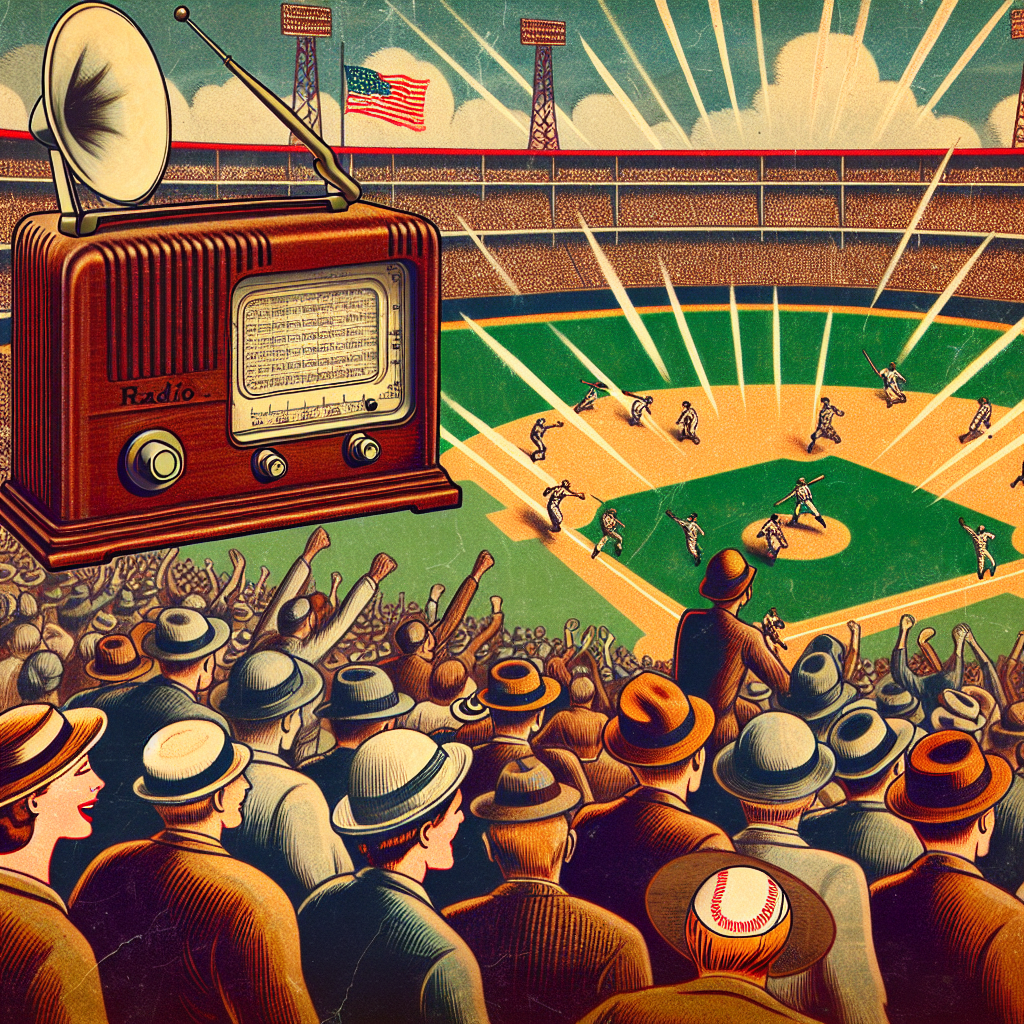
Baseball, often dubbed America’s pastime, has been an integral part of American culture since the mid-19th century. Its early years were marked by local teams playing in open fields, with fans gathering to watch in person. But as technology advanced, so did the ways in which the game was enjoyed by its fans. One of the most transformative periods in baseball’s history came with the advent of radio broadcasts in the 1920s. The introduction of radio not only increased the sport’s popularity but also fundamentally changed the way baseball games were consumed by the public. This article dives into the transformative impact of radio and early broadcasts on baseball’s popularity in its formative years.
Introduction
Before the era of radio, baseball was primarily a local pastime. Fans had to physically attend the games to keep up with their favorite teams and players. Newspapers provided some coverage, but it was not instantaneous. The invention of the radio broadcast changed this dynamic dramatically. It brought the games into people’s living rooms, making it possible to follow the action from miles away. This accessibility revolutionized how people engaged with the sport.
The first baseball game broadcast on the radio took place on August 5, 1921, when Harold Arlin announced a game between the Pittsburgh Pirates and the Philadelphia Phillies. The impact was immediate and significant. Suddenly, fans who couldn’t attend the games in person still felt a part of the action. It wasn’t just about expanding the audience; it was about creating shared experiences that transcended geographical boundaries. People all over the country could celebrate a home run hit in New York or lament a strikeout that happened in Chicago, fostering a sense of community among baseball lovers.
Radio broadcasts also played a crucial role in the sport’s commercialization. Advertisers quickly recognized the potential of reaching a captivated, nationwide audience. This led to an increase in sponsorships and endorsements, which financially benefited both radio stations and baseball clubs. The symbiotic relationship between baseball and radio became evident, as each helped the other grow in popularity and profitability.
The Rise of Radio Broadcasting
The 1920s marked the beginning of the radio era, and baseball was quick to seize the opportunity. Pittsburgh’s KDKA, considered the first commercial radio station in the U.S., was at the forefront. Harold Arlin’s broadcast of the 1921 Pirates-Phillies game demonstrated the medium’s potential, generating excitement and paving the way for future broadcasts.
As radio technology improved, the quality of broadcasts also saw enhancements. Early broadcasts were often plagued by poor sound quality and limited range. However, advancements in microphone technology and transmitter power gradually overcame these issues. By the late 1920s, nearly every major city in the U.S. had its own radio station, and baseball games became a staple of their programming schedules.
Stations started hiring dedicated sports announcers, whose vivid descriptions and enthusiastic commentaries brought games to life. Figures like Red Barber and Mel Allen became household names, their voices synonymous with baseball. These announcers not only described the on-field action but also shared anecdotes and insights, keeping listeners engaged even during the slower parts of a game.
The rise of radio broadcasting also saw the development of specific broadcasting styles. Some announcers preferred a more factual approach, sticking strictly to the play-by-play, while others injected their personalities into the broadcast, offering opinions and engaging in banter. This variety catered to different listener preferences, further widening baseball’s appeal.
Creating a National Audience
One of the most significant impacts of radio on baseball was the creation of a national audience. Before radio, the sport was primarily enjoyed by local fans. A person living in New York might be a die-hard Yankees fan, but they would have little connection to a team like the Chicago Cubs. Radio changed this dynamic by making games accessible to fans regardless of their geographical location.
The ability to listen to games from different parts of the country helped to grow baseball’s popularity nationwide. Fans began to follow not just their local team but also other teams and players from across the league. This broadened interest made the sport more competitive, as players and teams strived to gain national recognition and build their fanbases.
National broadcasts of the World Series further cemented baseball’s place in American culture. These games had previously only been accessible to those in attendance or through next-day newspaper reports. With radio, fans everywhere could experience the excitement and drama in real time. This created a sense of unity and shared experience, as millions tuned in to listen to the same game.
Radio also helped bridge social and economic divides. Even those who couldn’t afford to attend games or subscribe to newspapers could listen to the broadcasts for free, making baseball a truly egalitarian sport. By bringing the game into homes across the country, radio played a crucial role in shaping baseball’s identity as America’s pastime.

Impact on Players and Teams
The advent of radio broadcasting had profound effects on players and teams as well. For players, radio exposure meant increased fame and recognition. Stars of the game, such as Babe Ruth and Lou Gehrig, became household names, their exploits on the field detailed by enthusiastic announcers. This widespread recognition translated into higher popularity and, consequently, better contract negotiations for the players.
Teams benefited similarly. A higher level of exposure meant increased attendance at games, as more people became invested in following their favorite teams and players in person. It also paved the way for more lucrative sponsorships and partnerships. Companies saw value in associating themselves with popular teams and players, leading to innovative marketing strategies and promotions.
Furthermore, the ability to draw large audiences via radio broadcasts allowed smaller-market teams to assert their presence. Teams from cities that couldn’t match New York or Chicago in terms of local population could still build significant followings through radio broadcasts, balancing the competitive landscape of the league.
Radio also introduced the concept of “armchair” fandom, where fans could passionately follow their teams without ever stepping foot in a ballpark. This new form of fandom led to changes in the way teams marketed themselves, with increased emphasis on creating engaging radio content and establishing connections with their remote fanbases.
Technological Advancements and Improvements
Technological advancements played a crucial role in the evolution of baseball radio broadcasts. Initially, the equipment used for broadcasting was rudimentary, and the quality was often unreliable. However, the industry quickly adapted and improved, enhancing the listening experience for fans.
One significant advancement was the development of more sensitive microphones, which could capture a wider range of sounds. This allowed broadcasters to provide more detailed descriptions of the action, such as the crack of the bat or the roar of the crowd. Improved transmitter technology also meant that broadcasts could reach a larger audience, as signals could travel greater distances without degrading.
In addition to these technical improvements, innovations in broadcasting techniques also emerged. Sound effects, such as crowd noise and the organ music commonly heard at ballparks, began to be incorporated into broadcasts. This helped to create a more immersive experience, making listeners feel as though they were part of the excitement, even if they were miles away.
As the quality of broadcasts improved, so too did the popularity of baseball radio programs. Fans appreciated the increased detail and realism, and they flocked to their radios to catch the latest game. This ongoing cycle of technological advancement and increased listenership ensured that radio would remain a vital part of baseball culture for years to come.
Challenges and Controversies
While the impact of radio on baseball was overwhelmingly positive, it was not without its challenges and controversies. One significant issue was the initial resistance from team owners, who feared that radio broadcasts would hurt attendance at games. They worried that if fans could listen to the games for free, they would be less likely to purchase tickets and attend in person.
This led to some teams, especially in the early years, being reluctant to embrace radio broadcasts. However, as the positive effects on the sport became more apparent, most teams gradually changed their stance. The realization that radio could build a larger, more dedicated fanbase outweighed the initial concerns.
A related controversy was the issue of broadcast rights and revenue sharing. As radio became more lucrative, disputes arose over who should benefit from the profits. Teams, radio stations, and players all wanted a share of the pie, leading to negotiations and, at times, conflicts. These issues were eventually resolved through agreements that ensured fair compensation for all parties involved.
Despite these challenges, the overall impact of radio on baseball was undeniably beneficial. The sport grew in popularity, players and teams saw increased recognition and revenue, and fans enjoyed greater access to the game they loved. The controversies and challenges were a testament to the transformative power of radio, as it forced the sport to adapt and evolve in response to new opportunities and obstacles.
Conclusion
The introduction of radio broadcasts marked a pivotal moment in the history of baseball. It transformed the way fans engaged with the sport, expanded its reach nationwide, and brought the excitement of the game into homes across America. Through radio, baseball became more than just a local pastime; it became a unifying force, connecting fans from coast to coast.
The rise of radio broadcasting also had profound effects on players and teams. It increased their exposure and popularity, leading to higher revenues and greater recognition. Technological advancements further enhanced the listening experience, ensuring that fans remained captivated and engaged.
While there were challenges and controversies along the way, the overall impact of radio on baseball was overwhelmingly positive. It helped to solidify the sport’s place in American culture and paved the way for future innovations in how baseball is consumed and enjoyed by fans.
Today, as we reflect on the early history of baseball and the advent of radio broadcasts, we can appreciate the revolutionary changes that took place during this period. Radio brought baseball to life for millions of fans, created shared experiences, and played a crucial role in shaping the sport’s identity as America’s pastime.
Frequently Asked Questions
1. How did radio broadcasts change the way baseball games were experienced by fans?
The introduction of radio broadcasts in the 1920s revolutionized how baseball games were experienced by fans. Before radio, attending a game in person was the only way to watch your favorite teams play. This naturally limited fan interaction mainly to locals who could physically visit the stadium. With radio, however, the entire landscape changed. Suddenly, fans from across the country could listen to games live as they happened. They could follow the action play-by-play from the comfort of their homes. Radios became a household necessity, bringing the baseball diamond right into one’s living room. This expansion of access meant that fans could now maintain a connection with the teams, irrespective of distance, fostering a greater sense of community and attachment to the sport. The ability to listen to games also meant that even those who couldn’t afford a ticket or travel to a game could still be part of the action, effectively democratizing access to baseball and helping the sport grow in popularity and cultural significance nationwide.
2. What role did radio play in increasing the popularity of baseball?
Radio played a vital role in boosting the popularity of baseball during the 1920s and beyond. By broadcasting games to homes across America, radio made baseball more accessible to a much wider audience. Radio announcers brought gritty play-by-play dynamos, infusing games with vivid descriptions that allowed listeners to visualize the action as if they were right there in the stadium. This reach and engagement were unparalleled. The immediacy of radio contrasted sharply with the reliance on next-day newspaper reports, offering fans a real-time connection to the sport’s thrills and heartbreaks. Moreover, radio made major league stars out of local heroes, turning names like Babe Ruth into national legends. By knitting together a nationwide fanbase, radio broadcasts not only grew the sport’s popularity but also helped build its brand, creating lifelong devotees who passed their passion from one generation to the next. It was radio that first paved the way for the national pastime to become a truly shared experience across America.
3. How did baseball broadcasts influence the business side of the sport?
Baseball broadcasts on radio changed the business dynamics of the sport significantly. By expanding the audience, broadcasts also opened new revenue streams. Radio created an environment where sponsors and advertisers could reach far more people in an hour on-air than static ads in newspaper columns could manage. This resulted in lucrative partnerships between baseball teams and radio stations, often seeing stations pay teams for the privilege of broadcasting their games. Such collaborations were mutually beneficial; broadcasters gained access to sports content that attracted significant audiences, while teams received financial boosts and heightened popularity. Additionally, the exposure that games received through radio meant that star players became household names, boosting attendance when fans had a chance to see their favorites live. The visibility broadcast via radio offered was significant in creating a new financial model for baseball that linked media with sport, paving the way for future innovations including television coverage that would follow in subsequent decades.
4. What were some challenges faced by radio broadcasters of early baseball games?
Radio broadcasters of early baseball games faced a variety of challenges that required creativity and dexterity. One primary challenge was the technology itself; early radios had limitations in sound quality and reliability, making it crucial for broadcasters to be both descriptive and engaging to retain listener interest. Announcers had to vividly paint pictures with their words since fans relied entirely on their descriptions to visualize the action. This often involved elaborate descriptions of the setting, players’ movements, and more. Another issue was the potential delay in communication lines in remote areas, affecting live broadcast efficiency. Additionally, early announcers were navigating uncharted waters in sports commentary—there was no established blueprint for how to conduct a broadcast, meaning many had to develop their styles and methods for game narration as they went. These pioneering efforts laid the groundwork for the polished broadcasts we enjoy today. Furthermore, the licensing and economic aspects of radio contracts introduced complexities in rights negotiations, necessitating new negotiations between clubs and media providers.
5. Did radio broadcasts have any impact on the way baseball was played or managed?
Interestingly, radio broadcasts did ripple back into the gameplay and management side of baseball. With games increasingly broadcast to a wider audience, the scrutiny on players and coaches intensified. This visibility placed pressure on teams to consistently perform well, knowing their every action was being listened to by potentially tens of thousands. As a result, some argue that this scrutiny encouraged greater emphasis on strategy and discipline within teams. Managers became more tactically astute to keep the game interesting both on the field and over the airwaves, aware that their decision-making was now subject to public discourse by fans and commentators alike. Additionally, teams began to embrace radio as a tool for fan engagement, leading to more interactive fan experiences such as live in-game updates, interviews, and post-game analysis, which continued to swell the sport’s fandom. Such changes ultimately fed back into the way the sport was marketed, managed, and appreciated, leading to the polished and highly strategized version of modern baseball. The narrative around games also shifted, with radio creating a more epic sense of storytelling, turning single matches into legendary encounters through the art of broadcasting.