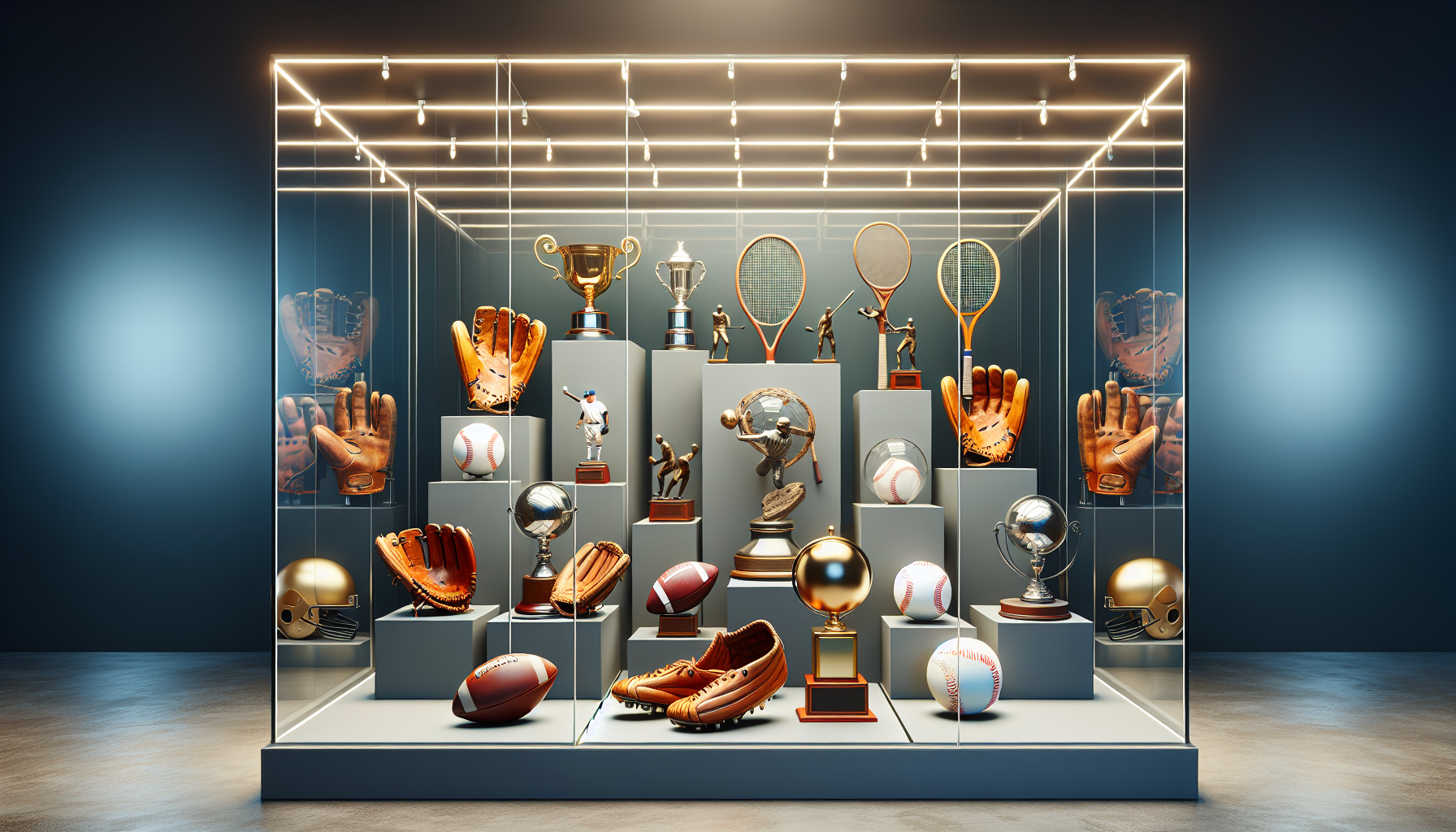
The Baseball Hall of Fame is often described through bronze plaques and induction speeches, yet many visitors remember something even more vividly: the objects. A locker, a scorecard, a jersey stained by pine tar, a bat cracked in a pennant race, or a glove shaped by thousands of innings can say more about baseball history than a wall of text ever could. The Hall of Fame’s most iconic memorabilia matters because it turns legend into evidence. It shows what greatness looked like, what the game felt like, and how different eras of baseball can still be understood through the things players used, wore, signed, saved, and left behind.
In museum terms, memorabilia refers to three-dimensional artifacts and documentary items connected to a person, event, season, or cultural moment. In Cooperstown, that category is broad by design. It includes game-used equipment, uniforms, awards, scorebooks, championship rings, contracts, lineup cards, protest signs, ticket stubs, photographs, and personal effects. Some pieces are famous because they are attached to singular achievements, like a record-breaking home run. Others are important because they reveal texture: how players traveled, how teams marketed themselves, how integration changed clubhouses, or how a single object became shorthand for an entire career. I have worked through enough museum exhibits and archival collections to know that the strongest artifacts are not always the flashiest ones. The best pieces connect fact, memory, and context in one glance.
For a sub-pillar hub under the broader Baseball Hall of Fame topic, miscellaneous memorabilia is the right place to bring those stories together. It links visitors and readers to every corner of Hall of Fame collecting, from immortal achievements to overlooked cultural artifacts. This subject also answers practical questions fans regularly ask: What are the most famous items in the Hall? Why are certain objects preserved while others are not? How does the museum decide what belongs on exhibit? Which pieces best represent baseball’s changes in race, technology, media, business, and fandom? A strong hub page should answer those questions directly while pointing toward deeper coverage of individual players, exhibits, and historical moments. The Hall’s iconic memorabilia is not random nostalgia. It is the curated material history of baseball.
What makes Hall of Fame memorabilia iconic
An object becomes iconic at the Hall of Fame when it meets at least one of three tests: it marks a historic first, it captures a widely recognized achievement, or it symbolizes a larger shift in the sport. A bat used for a milestone home run has obvious significance, but a hand-typed scouting report, a Negro Leagues program, or a women’s baseball uniform can be equally important because each preserves evidence that might otherwise disappear. Curators do not simply collect celebrity leftovers. They build a historical record. Provenance, condition, interpretive value, and representational balance all matter. If an item cannot be tied convincingly to a player or event, its display value drops sharply, no matter how attractive it looks in a case.
That standard explains why game-used artifacts dominate public memory. Fans trust them. A jersey worn during a perfect game, a pitching rubber from a no-hitter, or a lineup card from a World Series clincher is immediate and legible. You do not need advanced knowledge to understand why it matters. At the same time, some of the Hall’s most effective memorabilia is paper-based. Scorecards, telegrams, contracts, and letters can illuminate labor disputes, expansion decisions, wartime service, or the first years of integration. When I have seen visitors linger longest in galleries, it is often because the label and the object work together: the item is concrete, and the story it unlocks is larger than one player.
Game-used gear that defines baseball history
The most recognizable Hall of Fame memorabilia tends to be game-used equipment because it preserves the physical link between athlete and accomplishment. Think of bats from milestone home runs, gloves from award-winning seasons, catcher masks from championship runs, and spikes from unforgettable base-stealing records. These items are powerful because baseball is a tool-driven sport. The bat, ball, glove, and uniform are not decorative; they are instruments of performance. When the Hall displays a bat connected to Hank Aaron, Babe Ruth, or Derek Jeter, the artifact carries the marks of use that photographs cannot reproduce. Grain wear, pine tar residue, taped handles, and repair patterns become part of the evidence.
Equipment also helps explain how the game changed. Dead-ball era bats were shaped differently from modern power bats. Gloves grew larger as fielding strategies evolved. Catcher’s gear improved dramatically as safety standards advanced. A side-by-side display of masks, mitts, and bats can teach more about baseball technology than a general timeline. The Hall has long used such comparisons effectively, showing that memorabilia is not only about fame but also about function. Even small design details tell stories: knob labels reveal manufacturers, uniform patches date specific seasons, and custom alterations expose player preferences. For readers exploring miscellaneous Hall of Fame content, equipment artifacts are a gateway into performance, innovation, and the material culture of the sport.
Uniforms, textiles, and the visual identity of an era
Uniforms are among the Hall’s most compelling memorabilia because they combine biography with branding. A flannel jersey from the 1930s communicates different information than a double-knit pullover from the 1970s or a modern synthetic set tailored for movement and moisture control. Numbers, sleeve patches, lettering styles, manufacturer tags, and league insignia all help date the piece and explain the period it came from. Some uniforms are iconic because they were worn during a historic feat; others matter because they represent teams or leagues that changed baseball’s social landscape, including Negro Leagues clubs, All-American Girls Professional Baseball League teams, and expansion franchises that reshaped regional fandom.
Textile artifacts also preserve emotional memory unusually well. Fans instantly recognize the pinstripes of the Yankees, the Dodger script, the Cardinals birds-on-bat logo, or the bright experimentation of late twentieth-century alternates. In exhibition work, I have seen how a single jersey can anchor an entire gallery, especially when paired with photos, audio, and season context. Fabric wear around the collar, repaired seams, and dirt staining make a player feel present. The Hall uses uniforms not just to celebrate stars but to show baseball as a visible American language of identity, migration, race, class, and regional loyalty. That is why uniforms belong at the center of any hub page on iconic memorabilia.
Documents, awards, and personal artifacts that reveal the hidden game
Not every unforgettable item was carried onto the field. Some of the Hall’s richest memorabilia consists of documents and personal effects that expose the hidden structure of baseball. Contracts show the economics of different eras. Diaries and letters reveal travel conditions, segregation, military service, injury recovery, and family pressure. Scorebooks and lineup cards preserve managerial decision-making in real time. Awards such as MVP trophies, Gold Gloves, and World Series rings trace how baseball recognizes excellence and markets prestige. Even press credentials, ticket stubs, and media guides matter because they map the relationship between the sport, journalism, and the paying public.
Personal artifacts can be especially moving when they humanize players otherwise reduced to statistics. A pair of eyeglasses, a road suitcase, a harmonica, or a handwritten note can show habits and vulnerabilities that never appear on the back of a baseball card. The best museum interpretation uses these objects carefully, connecting them to documented events rather than drifting into sentimental speculation. At Cooperstown, personal items are strongest when they illuminate major themes: the burden of fame, the routines of daily baseball life, the economics of barnstorming, or the cultural significance of crossover celebrity. Memorabilia in this category broadens the meaning of baseball history beyond the final score.
How iconic memorabilia maps baseball’s biggest themes
The Hall’s miscellaneous collections are most useful when organized around the major themes that define the sport. Integration is one of the clearest examples. Artifacts connected to Jackie Robinson, Satchel Paige, Larry Doby, and Negro Leagues clubs do more than honor individuals; they document structural change in American life. The same is true for wartime baseball, labor history, expansion, internationalization, women’s baseball, and the analytics era. A signed petition, a team passport, a bilingual media guide, or an early computer printout can be as historically meaningful as a superstar’s bat if it marks a turning point in how the game was played or understood.
| Theme | Representative memorabilia | Why it matters |
|---|---|---|
| Integration | Negro Leagues uniforms, signed contracts, debut-related equipment | Documents baseball’s role in broader civil rights change |
| Postseason history | Lineup cards, championship rings, clinching-game baseballs | Preserves moments fans remember collectively |
| Records and milestones | Home run bats, strikeout balls, scorecards | Ties statistics to tangible proof |
| Fan culture | Pennants, tickets, programs, stadium giveaways | Shows baseball as lived community experience |
| Innovation | Equipment prototypes, scouting tools, analytic reports | Explains how baseball adapts over time |
This thematic approach is valuable for a hub article because it naturally supports internal pathways to deeper topics. A reader interested in integration memorabilia may next want a page on Negro Leagues artifacts. Someone drawn to postseason items may click into World Series exhibits or famous October game-used objects. In practice, the Hall itself often encourages this kind of movement through galleries, labels, and rotating displays. The best miscellaneous overview does the same on the page, treating memorabilia not as a random assortment but as an organized map of baseball’s enduring questions.
How the Hall acquires, authenticates, and preserves memorabilia
One reason Hall of Fame memorabilia carries authority is that acquisition and preservation are handled through professional museum standards. Items generally arrive through donation, long-term loan, direct transfer from players or teams, or targeted collecting tied to historic events. Curators evaluate provenance first. They want documentation such as player letters, team records, manufacturer data, photographic matches, or chain-of-custody details that connect the object to a specific use. Authentication may involve comparing uniform characteristics with season records, examining manufacturer tagging, checking autograph consistency, or matching photo evidence down to stitching patterns and equipment modifications.
Preservation is equally important. Textiles require stable temperature and relative humidity, low light exposure, and carefully engineered supports to prevent stress on seams and fabric. Paper documents need acid-free housing and controlled storage. Leather and wood artifacts demand monitoring because they react differently to moisture and handling. The Hall follows the same broad conservation logic used by leading museums: minimize light damage, reduce environmental fluctuation, document every intervention, and separate display goals from long-term preservation needs. That is why many famous pieces rotate on and off exhibit. Visitors sometimes assume an absent item has been removed permanently, when in fact it is resting to prevent deterioration. Good stewardship is part of what makes the collection trustworthy.
Why miscellaneous memorabilia matters to modern fans and researchers
For modern audiences, iconic memorabilia does more than trigger nostalgia. It gives shape to an era increasingly consumed through clips, databases, and social media fragments. A younger fan may know a player through highlights and WAR totals, but a handwritten lineup card or sweat-darkened cap introduces scale, texture, and routine. Researchers benefit differently. Artifacts can verify timelines, support biographical interpretation, and challenge myths repeated for decades. A travel itinerary may clarify league scheduling realities. A salary document may expose how little even excellent players once earned. A stadium souvenir may prove how clubs marketed to children, tourists, or immigrant communities in different decades.
This is why a miscellaneous Hall of Fame hub should be treated as more than a catchall page. It serves collectors, casual fans, students, family travelers, and serious baseball historians at once. It can direct readers toward game-used equipment stories, textile conservation, archival documents, fan ephemera, and exhibit design. It can also remind visitors that Cooperstown is not only about the already canonized. Some of the most memorable objects belong to players, leagues, executives, and fans who are not household names but are essential to understanding how baseball actually developed. The Hall’s most iconic memorabilia succeeds because it keeps that larger history visible, tangible, and open to discovery.
The Hall of Fame’s most iconic memorabilia endures because objects make baseball history credible, personal, and memorable at the same time. A milestone bat proves an achievement happened, a worn uniform restores the physical reality of a season, and a contract or scorebook reveals the hidden mechanics behind the public spectacle. Together, these artifacts show that baseball’s history is not preserved only in numbers, plaques, or highlight reels. It lives in wood, wool, leather, ink, metal, paper, and the ordinary belongings that survived extraordinary careers. That material record is what turns the museum from a shrine into a true historical institution.
As a sub-pillar hub within the broader Baseball Hall of Fame topic, miscellaneous memorabilia should help readers move confidently into related subjects without losing the big picture. The clearest way to organize that exploration is by artifact type and by theme: game-used gear, uniforms, documents, awards, fan items, integration, postseason history, innovation, and cultural change. Those categories reflect how the Hall itself tells baseball’s story. They also answer the most common reader questions directly: what the famous items are, why they matter, and how experts know they are authentic. When a page does that well, it becomes useful both for first-time visitors planning a trip and for returning fans looking to go deeper.
If you want to understand baseball history more completely, start with the memorabilia, not just the plaques. Follow the artifacts into the stories behind records, rivalries, social change, and everyday clubhouse life. Then continue through the rest of the Baseball Hall of Fame coverage to explore the individual exhibits, players, and eras connected to these objects. The best next step is simple: pick one artifact category that interests you most and use it as your entry point into the Hall’s larger history.
Frequently Asked Questions
What makes memorabilia at the Baseball Hall of Fame so important compared with plaques or written exhibits?
Memorabilia gives baseball history a physical presence that plaques and timelines alone cannot fully deliver. A bronze plaque can summarize a career, and a written exhibit can explain why a player mattered, but an actual bat, glove, jersey, cap, lineup card, or locker shows visitors the game as it was truly lived. These objects carry scale, wear, texture, and evidence. A scuffed baseball, a sweat-marked cap, or a pine-tar-stained bat turns an abstract legend into something immediate and human. It reminds visitors that iconic players were not myths in the moment; they were athletes handling tools, enduring pressure, and leaving traces of their work behind.
That is why the Hall of Fame’s most iconic memorabilia often leaves such a lasting impression. These artifacts connect major achievements to real material history. They show what greatness looked like up close, from the craftsmanship of an old fielder’s glove to the damage on a bat used in a pennant race. In many cases, memorabilia also captures the atmosphere of a specific era, reflecting changes in equipment, uniform design, player habits, and even the economics of the sport. A single artifact can reveal performance, personality, and period detail at once, making it one of the most powerful storytelling tools in the museum.
What are some of the most iconic types of memorabilia visitors remember at the Hall of Fame?
Visitors often remember the pieces that make historic moments feel tangible. Game-used bats, milestone baseballs, record-breaking jerseys, catcher’s mitts, cleats, scorecards, and lineup cards all rank among the Hall’s most memorable objects because they are tied directly to moments fans already know by heart. A cracked bat from a dramatic stretch run, a jersey worn during a record-setting season, or a glove shaped over years of elite defense can communicate achievement in a way that feels immediate and unmistakable. These are not generic displays; they are tools of performance tied to specific names, games, and turning points in baseball history.
Equally memorable are personal items that reveal the player behind the statistics. Lockers, travel bags, handwritten notes, and well-worn equipment often stay with visitors because they humanize greatness. They show routine, preparation, superstition, and the daily labor beneath celebrated accomplishments. In a museum setting, those objects help balance baseball’s epic narrative with intimate detail. The Hall of Fame’s strongest displays tend to combine both dimensions: the artifact that marks a famous achievement and the everyday item that shows how that achievement was built over time.
How does baseball memorabilia help tell the story of different eras of the game?
Baseball memorabilia is one of the clearest ways to trace how the sport has changed across generations. Equipment alone can reveal enormous shifts in style and strategy. Early gloves were smaller and less specialized, reflecting a different defensive game. Uniforms changed in material, fit, and branding, showing how the sport evolved visually and commercially. Bats, cleats, protective gear, and catcher’s equipment reveal changing ideas about performance, safety, and training. Even typography on scorecards or stitching on jerseys can place an object in a specific time, helping visitors understand not just who used it, but what baseball looked and felt like in that period.
Memorabilia also tells the story of social and cultural change within baseball. Artifacts connected to integration, expansion, labor history, postseason growth, and global influence can show how the sport reflected broader American life. A jersey or contract from a transformative player may represent more than athletic success; it may symbolize access, visibility, and a shift in who the game belonged to. Because these objects come from real careers and real moments, they ground sweeping historical themes in concrete evidence. That is what makes memorabilia so valuable in a Hall of Fame context: it links baseball’s evolution to things visitors can actually see.
Why do worn, damaged, or ordinary-looking artifacts often have such a powerful impact?
Objects with visible wear often feel the most authentic because they preserve the marks of use. Frayed stitching, dirt stains, pine tar, grass marks, cracked wood, and softened leather are not imperfections in a museum setting; they are proof. They show that an item was not made to represent history after the fact, but was present when history happened. A game-used jersey with visible wear can say more than a pristine reproduction because it carries the physical residue of competition. A battered glove or a bat with ball marks turns performance into evidence, and that evidence is emotionally compelling.
Ordinary-looking artifacts can be especially powerful because they narrow the distance between the fan and the legend. A simple scorecard, locker nameplate, or cap may appear modest at first glance, yet once its context is explained, it can become unforgettable. Visitors realize that extraordinary moments often emerge from familiar tools and routines. That contrast is part of the Hall of Fame’s appeal. Greatness did not happen in a vacuum; it happened in dugouts, clubhouses, bullpens, and batter’s boxes, using objects that were practical before they became historic. The most resonant memorabilia often succeeds because it feels lived-in rather than ceremonial.
How does the Hall of Fame preserve and present iconic memorabilia so it remains meaningful for future generations?
The Hall of Fame treats memorabilia as both historical evidence and cultural inheritance, which means preservation is a careful, ongoing process. Textiles, leather, wood, paper, and metal all age differently, so artifacts require specialized storage, climate control, light management, and conservation practices. Jerseys and documents can be especially vulnerable to fading and fiber damage, while bats, gloves, and baseballs may require different handling protocols to protect their structure. The goal is not merely to keep an object intact, but to preserve as much of its original character as possible, including the features that make it historically valuable, such as wear patterns and signs of game use.
Presentation matters just as much as preservation. The Hall of Fame gives memorabilia meaning through context: labels, interpretive text, chronology, player biographies, and connections to landmark games or seasons. An artifact on its own may be intriguing, but an artifact paired with the right story becomes memorable. The best displays help visitors understand why an item matters, what moment it represents, and how it fits into baseball’s larger history. That combination of conservation and interpretation ensures these objects continue to educate, move, and inspire future generations. In that sense, the Hall’s most iconic memorabilia is not only being saved; it is being translated for every new audience that comes through the museum.