Introduction to Dominican Baseball
Baseball is more than just a sport in the Dominican Republic; it is a cultural phenomenon deeply embedded in the nation’s identity. The Dominican Republic has produced a staggering number of Major League Baseball (MLB) players relative to its size, demonstrating the country’s extraordinary baseball prowess. Key terms such as “baseball academies” and “pipeline” frequently arise in discussions about Dominican baseball. The former refers to specialized training facilities where young players are groomed for professional leagues, while the latter describes the systematic process through which Dominican players transition to international platforms like the MLB.
The effective evolution of training methods in the Dominican Republic is critical for the continued success of its players on the global stage. This evolution has transformed raw local talent into polished athletes capable of competing at the highest levels of baseball worldwide. The significance of these training methods goes beyond sports, impacting economic opportunities and cultural pride within the Dominican community. Understanding this evolution offers valuable insights into how a small nation has managed to dominate a sport historically governed by much larger countries.
Early Foundations of Training Methods
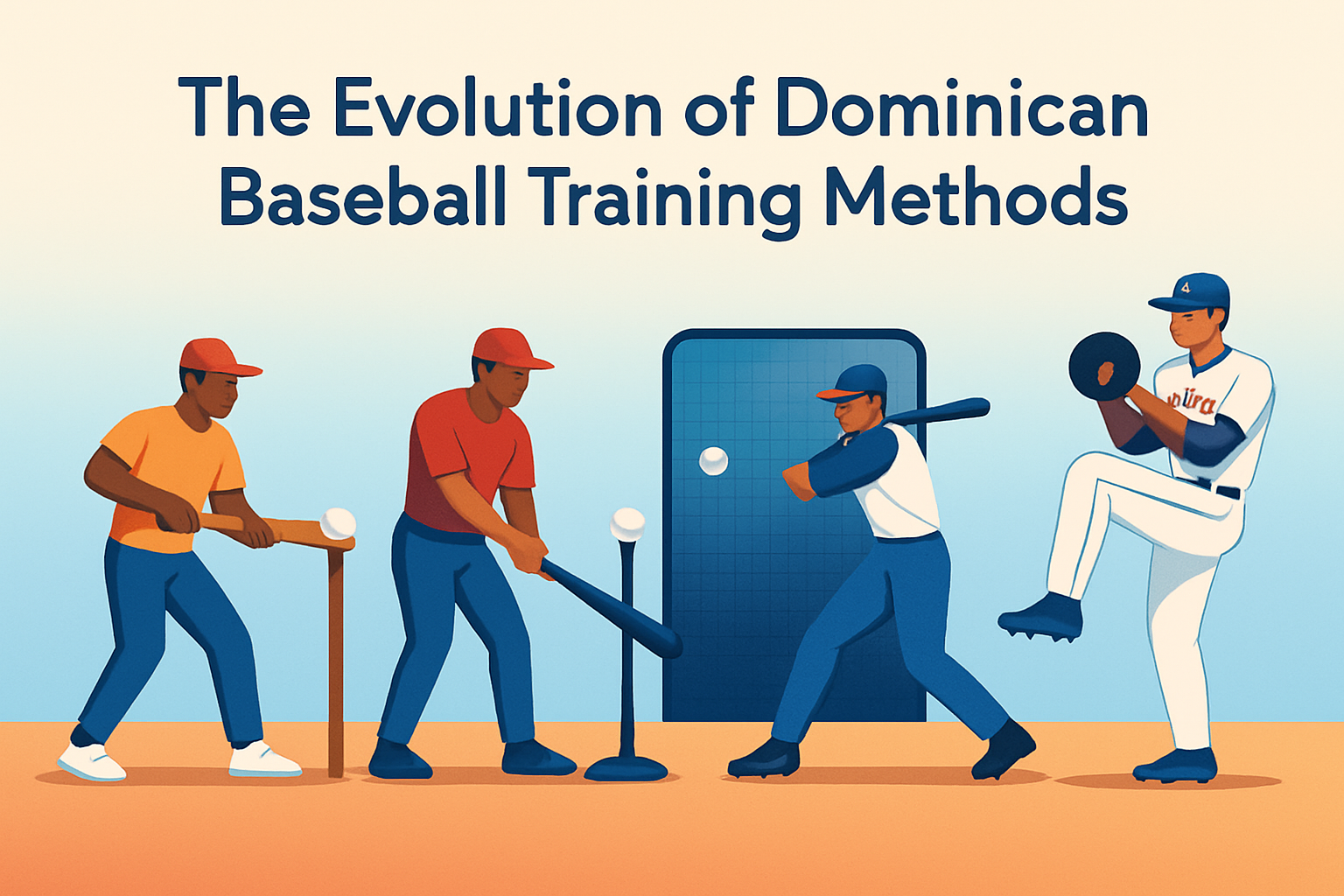
In the initial stages, Dominican baseball training was informal and community-oriented. Youngsters learned the game on makeshift fields using broomsticks as bats and socks as balls, in a culture wherein play was the primary mode of experiential learning. Without the sophistication of modern facilities, the essence of these early training methods was improvisation. Kids developed key skills like hand-eye coordination through neighborhood games known as “vitilla,” a street variant of baseball.
A notable example is Hall of Famer Juan Marichal, who learned to pitch in his hometown of Laguna Verde with nothing but his bare hands and a passion for the game. Marichal’s journey from these humble beginnings to the heights of professional baseball symbolizes the innate talent and ingenuity of early Dominican players. Despite the lack of resources, a strong communal commitment to the sport propelled local players onto international platforms.
The Shift to Structured Development Programs
As baseball became more formalized in the Dominican Republic, training methods started to evolve. The late 20th century saw the emergence of structured development programs. Recognizing the potential untapped talent on the island, major league organizations established scouting systems and development initiatives. This marked a transformative period where informal street games began morphing into an organized pipeline feeding players into the MLB.
Development programs in the Dominican Republic emphasized fundamental skill enhancement, nutrition, and physical conditioning —all orchestrated under trained professionals. For instance, future MLB stars like David Ortiz and Pedro Martinez advanced through these nurturing systems. By the 1990s, programs like those initiated by the New York Yankees in Santo Domingo had set benchmarks. These academies provided a platform where raw talent was honed into competitive prowess under the tutelage of experienced coaches and trainers.
Baseball Academies and Their Impact
Baseball academies in the Dominican Republic have become an essential component of the country’s baseball ecosystem. These facilities are specifically designed to scout, refine, and showcase Dominican talent to major league scouts. Graduates of these academies often have a streamlined path to professional opportunities abroad. Academy life is rigorous and highly structured, focusing both on athletic performance and personal development.
- Physical Training: Implementing state-of-the-art fitness regimens tailored to young athletes
- Technical Skills: Providing advanced coaching in batting, pitching, and fielding
- Academic Programs: Including language classes and basic education to prepare players for life abroad
The Cincinnati Reds established one of the first baseball academies on the island. Subsequently, nearly every MLB team followed suit, setting up their facilities. These academies not only refine athletic skills but also help young players adapt to the cultural and social landscapes of their new countries. As a result, players like Albert Pujols and Robinson Canó have thrived, becoming role models for aspiring Dominican athletes.
The Role of Technology and Analytics
In recent years, advancements in technology and data analytics have further revolutionized baseball training in the Dominican Republic. Players and coaches now use technology-driven tools to enhance training. Video analysis software helps players break down their mechanics, while wearable technology monitors physical metrics like heart rate and exertion.
Data analytics have altered player evaluations and development processes as well. Coaches utilize metrics like launch angle, exit velocity, and spin rate to individually tailor training regimens. This shift is evident in the success of players like Gary Sánchez, who have embraced technology to improve their performances.
| Technological Tool | Purpose |
|---|---|
| Video Analysis Software | Mechanical breakdown and improvement |
| Wearable Technology | Monitor physical metrics during training |
| Data Analytics | Evaluating player performance and potential |
The incorporation of such technology allows Dominican players to make real-time adjustments, offering them a competitive edge. It bridges gaps between the domestic training environment and the technological advancements of international leagues, ensuring Dominican players remain at the forefront of baseball excellence.
Socioeconomic Implications and Opportunities
The sophisticated development of baseball training methods in the Dominican Republic has had profound socioeconomic effects. For many young Dominicans, baseball represents an opportunity to elevate their family’s status and escape poverty. The success stories of prominent players resonate with the public, inspiring hope and aspiration.
MLB franchises invest significantly in infrastructure and human capital, contributing to local economies. These investments extend beyond baseball, often resulting in improved community facilities and amenities. As an example, the San Diego Padres have actively participated in community development initiatives around their academy much to the benefit of local inhabitants.
The Dominican government’s support in promoting baseball as a national sport has further accentuated these socioeconomic benefits. Baseball academies provide education and vocational training, equipping players with skills even if a professional career eludes them. This broadens career prospects for the island’s youth, fortifying social mobility and economic advancement.
Conclusion: The Way Forward
The evolution of Dominican baseball training methods provides a powerful narrative about resilience, adaptation, and success. As these training methods have transformed from informal street games to state-of-the-art academy systems, they have not only maintained but enhanced Dominican presence on global baseball platforms. Critically, this evolution supports a larger economic and social fabric, offering myriad benefits to the communities involved.
For aspiring players, understanding this evolution and engaging with these advanced training landscapes is imperative. Improving sports infrastructure and technological investments in training facilities can drive continued success and cultural appreciation. The global baseball community stands to gain significantly by seizing the insights offered by these training methods, paving new opportunities for players and stakeholders alike.
As a call to action, one might consider supporting initiatives that democratize access to these high-quality training methods, allowing talent from all walks of life the opportunity to thrive. Whether you are an aspiring athlete, a coach, a parent, or simply a baseball enthusiast, engaging with this dynamic evolution can enhance your appreciation and involvement in the beautiful game of baseball.
Frequently Asked Questions
1. What are the key factors that have contributed to the dominance of Dominican players in Major League Baseball?
Dominican players have become a formidable force in Major League Baseball (MLB) due to a blend of cultural, infrastructural, and motivational factors. Firstly, baseball is deeply woven into the fabric of Dominican culture, often referred to as the country’s “national passion.” From a young age, children have easy access to play the sport, and it becomes an integral part of their daily lives, providing a collective dream of making it to MLB. Additionally, the proliferation of baseball academies in the Dominican Republic has established an infrastructure that fosters talent. These academies, often run by MLB teams, provide young players with rigorous training, access to better facilities, and structured guidance tailored to their development as athletes.
The economic conditions in the Dominican Republic also play a significant role. For many young Dominicans, baseball is seen as a viable path to improve their family’s socioeconomic status. A successful career in baseball presents one of the few opportunities to earn a substantial income, making the sport not just a passion but a potential livelihood. This economic incentive drives the relentless work ethic and dedication often observed in Dominican players. Combined, these cultural, infrastructural, and socioeconomic factors create a perfect storm that continuously funnels highly skilled players onto the international stage.
2. How have Dominican baseball training methods evolved over the years?
The evolution of Dominican baseball training methods is a fascinating journey reflecting broader societal and technological changes. Traditionally, the training of young baseball players in the Dominican Republic was largely unstructured, relying heavily on informal play and personal experience rather than scientific or methodical approaches. Kids would play pick-up games, often using makeshift equipment, fostering an environment of improvisation and creativity. This type of play has been credited with developing the instinctive style and flair for which Dominican players are known.
In recent decades, however, a significant shift has occurred with the establishment of formal baseball academies. These academies were introduced to mirror the organized and analytical training environments found in the United States. They incorporate modern training techniques, including specialized coaching, weightlifting, agility training, and nutritional guidance, focusing on overall athlete development rather than just raw talent. This transformation has been partly facilitated by technological advancements, such as video analysis tools that help players improve their techniques by visualizing and rectifying mistakes.
Furthermore, there is a greater understanding and incorporation of sports science into training regimes, with an emphasis on injury prevention, mental conditioning, and biomechanics. These aspects represent a significant departure from the earlier days of free play, showing a keen adaptation to the professional demands of MLB. Dominican training methods continue to evolve, integrating advanced methodologies while not losing sight of the unique cultural elements that make Dominican players so distinctive on the field.
3. What role do baseball academies play in the development of Dominican baseball talent?
Baseball academies are the beating heart of the baseball “pipeline” in the Dominican Republic, serving as the primary vehicle for transforming raw talent into professional-grade athletes. These academies, often operated by MLB organizations, provide a highly structured environment where aspiring players are not only drilled in the fundamentals of baseball but are also prepared for life in the United States.
Inside these academies, players receive systematic training encompassing technical skills, game strategy, and discipline. The goal is to produce athletes that are fundamentally sound, understanding every nuance of the game at both physical and mental levels. Players also have access to specialized coaching, scouting resources, and advanced technologies such as video analysis tools, helping them refine their skills effectively. Beyond skill development, these academies provide language classes and cultural education, helping players acclimatize to life in the US, which is crucial for their potential transition to MLB.
The intense competitive nature of the academies also instills a high level of discipline and work ethic in players, pushing them to continuously improve and compete for limited spots. This experience hones their resilience and adaptability, traits that are vital in professional sports. Baseball academies thus act as incubators for future stars, funneling adept players into MLB while supporting them on all fronts to maximize their chances of success.
4. How have advancements in technology influenced Dominican baseball training methods?
Advancements in technology have dramatically transformed the landscape of Dominican baseball training methods, ushering in a new era of precision and sophistication. The integration of technology has enhanced various aspects of player development, tailoring training regimes that reflect the contemporary needs of modern baseball.
One of the most notable technological advancements is the use of video analysis tools. These tools allow coaches and players to dissect gameplay and mechanical movements in minute detail, identifying areas for improvement and customizing training programs accordingly. Players can visually track their swing, pitching technique, or base running, facilitating an analytical understanding of their strengths and weaknesses. This real-time feedback accelerates learning processes, allowing for swift adjustments and strategic refinements that were not possible in the past.
In addition to video analysis, other technologies like wearable performance monitors have become a staple in training environments. These devices track a range of biometric data, from heart rates to muscle activity, providing insights into player health, fitness levels, and recovery processes. This data-oriented approach allows for personalized load management and injury prevention strategies, ensuring that players train effectively without compromising their physical well-being.
Furthermore, advances in simulations have introduced virtual scenarios that replicate in-game situations, enabling players to refine their mental game and decision-making skills in a controlled setup. Embracing technology has thus revolutionized the training guildlines in the Dominican Republic, complementing traditional methods with cutting-edge precision and data-driven methodologies.
5. What are some challenges faced by Dominican players as they transition to Major League Baseball?
Transitioning from the Dominican Republic to Major League Baseball presents a gamut of challenges for aspiring players, despite their rigorous training and innate talent. A primary hurdle is the cultural and linguistic transition demanded by moving from a predominantly Spanish-speaking, tropical environment to the diverse landscape of the United States. Adjusting to a new culture, language barriers, and being away from family and familiar customs can be overwhelming for young players, which adds an emotional strain beyond the physical demands of the sport.
The level of competition in MLB is another significant challenge. In the Dominican academies, players might be the stars, but in MLB they face a pool of highly talented athletes from around the world, all seeking the same opportunities. This requires not just skill adaptation but mental resilience in handling pressure and performing consistently under scrutiny.
Moreover, Dominican players must navigate a different style of play with typically larger ballparks, advanced pitching, and a longer season schedule. The shift can be daunting and demands higher endurance, strategic agility, and mental toughness. Alongside, the spotlight on performance means dealing with media attention, contractual negotiations, and financial management, areas many may not have encountered previously in their careers.
Lastly, players must be vigilant about maintaining their professional and personal conduct, adhering to league rules and protocols, which includes managing their reputations impeccably off the field. Addressing these challenges is crucial for Dominican players aspiring for longevity and success in Major League Baseball. Development programs within academies increasingly include elements to prepare players for these transitions, aiming to equip them with tools for both sport and life to navigate these transitions successfully.