The 2010s electronic sign stealing scandal changed how baseball talks about competitive integrity, technology, and gamesmanship. In simple terms, sign stealing is the act of decoding a catcher’s signals to learn which pitch is coming; electronic sign stealing adds cameras, monitors, wearable devices, or data systems to do it faster and more reliably. I covered this subject closely because it sits at the intersection of baseball operations, rule enforcement, and modern communication tools, and few controversies better show how a small technical edge can become a league-wide crisis. For a subtopic filed under miscellaneous scandals and controversies, it matters because it links front office culture, on-field behavior, media scrutiny, and commissioner discipline in one story.
The issue became impossible to ignore in the late 2010s, when Major League Baseball investigations confirmed that clubs had gone beyond traditional runner-on-second decoding and into organized electronic systems. The most famous case involved the Houston Astros during their 2017 championship season, but the broader conversation touched the Boston Red Sox, the New York Yankees, and many long-standing assumptions around what players and coaches considered acceptable. This article serves as a hub for that wider subtopic: how the systems worked, why teams believed they were worth the risk, what rules were broken, how MLB responded, and what lessons still shape the sport. Understanding the 2010s electronic sign stealing scandal is essential for anyone studying baseball’s modern controversies.
Before the scandal, many fans and even some executives treated sign stealing as a gray area with baseball tradition on its side. If a runner on second base noticed patterns in finger signals and relayed them naturally, most people inside the game accepted it as legal observational skill. The line MLB drew, however, was clear: using electronic equipment to decode and transmit signs during a game violated league rules. That distinction was reinforced in a 2001 memorandum, then tightened in 2017 after the Red Sox Apple Watch case. In practice, I have seen how clubs often blurred the line culturally even when the rulebook did not. Competitive departments chased marginal gains, and technology made the marginal gain immediate.
Why did it matter so much? Because pitch information changes outcomes. A hitter who knows a slider is coming can adjust timing, avoid chasing, or sit on a fastball if off-speed signs have been decoded incorrectly. Even small increases in contact quality can swing at-bats, innings, and postseason games. Analysts often debate exactly how much the advantage helped any specific team, and that caution is appropriate, but the basic principle is not in dispute: advance pitch knowledge is valuable. In an era when teams were already using high-speed cameras, biomechanical analysis, and real-time data for legal performance improvement, the temptation to weaponize in-game video for illicit sign decoding was enormous. That is the core of technology’s impact on this scandal.
How electronic sign stealing worked in the 2010s
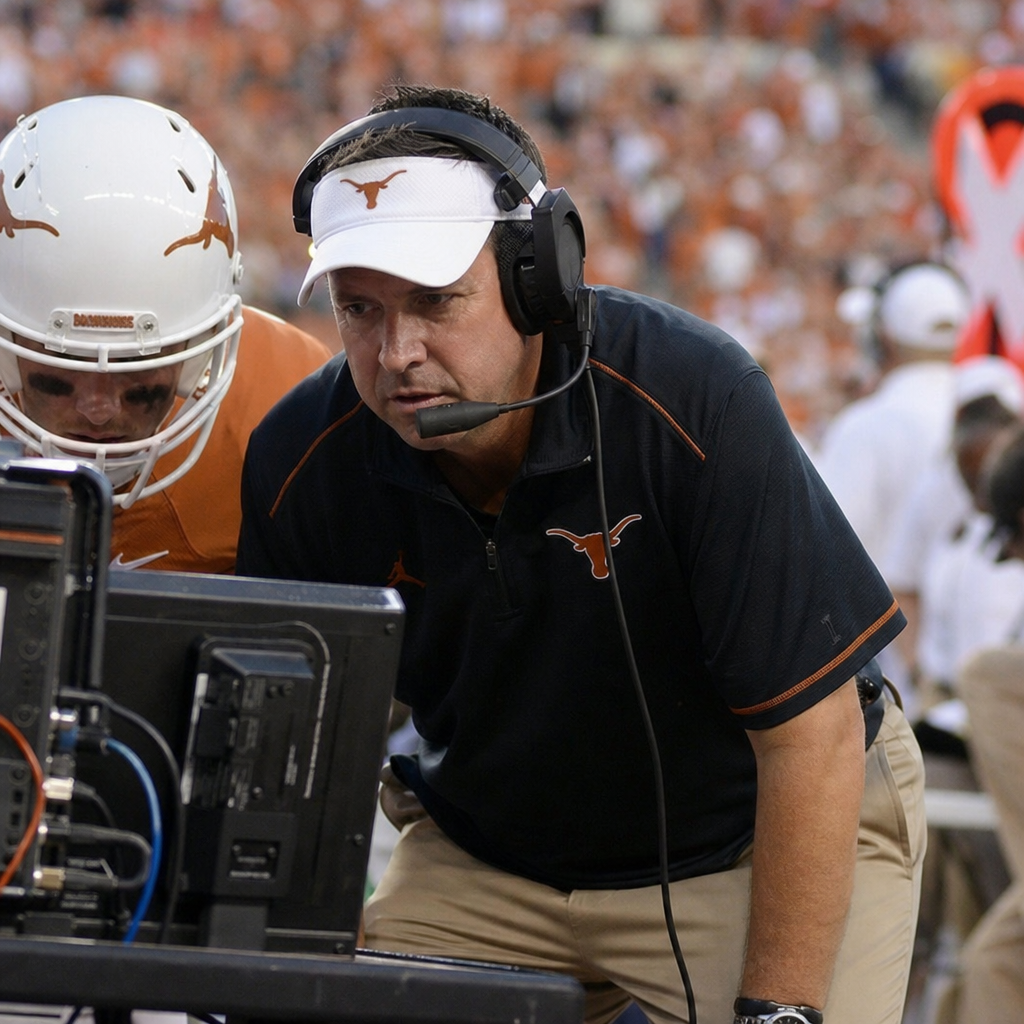
Electronic sign stealing in the 2010s usually followed a simple workflow. First, a live center-field camera captured the catcher’s signs. Second, the video feed appeared on a nearby monitor, often in a tunnel or clubhouse area close enough for staff or players to watch in real time. Third, someone decoded the sequence by identifying whether the catcher was using simple one-sign calls, indicator systems, or more complex pattern changes with runners on base. Fourth, the decoded pitch was relayed to the hitter through an audible or visual cue. In the Astros case documented by MLB, the audible cue became infamous: bangs on a trash can to indicate off-speed pitches. The setup was crude in delivery but technologically enabled at its core.
This mattered because television and internal camera infrastructure had become standard by the 2010s. Clubs had replay rooms, multiple camera angles, analysts, and staff who could move information quickly. The same environment built for player development and instant replay review also created opportunities for abuse. Teams did not need sophisticated artificial intelligence or custom hardware. A monitor, a camera feed, sharp observers, and a relay method were enough. That is one reason the scandal resonated beyond one clubhouse. It exposed how ordinary baseball technology, when connected to a win-at-all-costs culture, could be repurposed into a cheating mechanism without requiring an advanced technical breakthrough.
The Astros scheme and why it became the defining case
The Houston Astros became the defining example because the allegations were specific, corroborated, and tied to the 2017 season, including postseason play. Reporting by The Athletic in 2019, especially by Ken Rosenthal and Evan Drellich, provided detailed testimony from former pitcher Mike Fiers and others. MLB’s subsequent investigation found that Astros players and staff had used a camera-based system during the regular season and parts of the postseason to decode signs and relay them to batters. Commissioner Rob Manfred suspended manager A.J. Hinch and general manager Jeff Luhnow for one year, and owner Jim Crane then dismissed both. MLB also fined the club $5 million, the maximum allowed under the constitution, and stripped Houston of first- and second-round draft picks in 2020 and 2021.
What made the Astros case so damaging was not just the punishment but the collision between success and method. Houston was one of baseball’s smartest organizations, known for analytics, player development, and roster innovation. That reputation made the scandal more consequential because it suggested that a highly advanced baseball operation still embraced an illicit shortcut. In practical terms, the controversy also spread because fans and players began reexamining specific home-road splits, suspicious sounds on broadcast clips, and individual postseason moments. Some of that retrospective analysis went too far, but the broader outrage was understandable. A World Series champion had been found to use prohibited technology, and baseball could not contain the trust damage to one season alone.
The Red Sox, Yankees, and the wider league context
Although Houston dominates public memory, the 2010s electronic sign stealing controversy was never only about one team. In 2017, MLB disciplined the Boston Red Sox after investigators found that the team had used an Apple Watch to relay information from the replay room to the dugout. That case involved using technology to decode signs and pass them along to players, reinforcing the league’s existing ban. In 2020, MLB also punished the Red Sox for a separate 2018 replay room violation, though the commissioner’s report stated the conduct was more limited than the Astros system and largely centered on a video replay operator. The New York Yankees were pulled into the conversation through litigation and released correspondence around prior improper use of a dugout phone, even if the public debate often exceeded the confirmed facts.
The key point is that the scandal revealed a permissive environment across the sport. Teams were probing boundaries, testing replay-room workflows, and looking for informational edges wherever rules appeared soft or enforcement was inconsistent. That does not mean every club ran the same operation or gained the same advantage. It means the incentives were structural. Front offices wanted wins, coaching staffs wanted certainty, and players wanted clues. Once one club believed rivals might be using in-game technology illicitly, the pressure to keep up intensified. I have seen this dynamic in many sports controversies: when enforcement lags innovation, the behavior spreads first and gets clarified later, usually after a public embarrassment forces the governing body to act.
Why technology changed the scale of the advantage
Traditional sign stealing depended on observation, memory, and favorable game situations, especially a runner standing on second base. Electronic sign stealing removed several limits at once. It gave teams a direct camera angle, replay capability, coordinated staff attention, and immediate communication channels. That shifted the activity from opportunistic gamesmanship to repeatable process. A batter no longer needed a teammate on base to decode a sequence. The information pipeline could be active from the first inning, with no baserunner required, and the system could be improved over time as opponents changed sign patterns. Technology did not invent the motive, but it industrialized the method.
There is also a crucial cognitive difference between suspicion and certainty. Hitters constantly hunt for probabilities: maybe a pitcher likes first-pitch fastballs, maybe a catcher goes to a breaking ball in two-strike counts. Electronic decoding can turn probability into near-immediate confirmation. That changes swing decisions. Even when the signal is not perfectly accurate, narrowing the menu helps. Baseball research has long shown how difficult elite hitting is; a few milliseconds of anticipation matter. Statcast data in the broader era demonstrated how tiny changes in exit velocity and launch angle affect run production. Against that backdrop, a system that improves pitch anticipation even modestly can influence outcomes without needing to guarantee a hit on every tipped pitch.
| Element | Traditional sign stealing | Electronic sign stealing |
|---|---|---|
| Information source | Runner, coach, visual observation | Live camera feed and monitor |
| When it works | Usually with runner on second | Potentially any inning, even bases empty |
| Speed | Limited by human recognition | Near real time with dedicated observers |
| Reliability | Inconsistent, depends on angle and skill | Higher, with repeated monitoring |
| Rule status | Generally accepted if unaided | Prohibited by MLB rules |
League rules, enforcement failures, and the delayed crackdown
MLB had rules against electronic assistance before the public explosion of the scandal, but enforcement did not keep pace with technology. The 2001 memo from Sandy Alderson prohibited using electronic equipment to steal signs, and later guidance from Manfred in 2017 warned clubs again after the Red Sox incident. The weakness was not the absence of language; it was the unevenness of deterrence. Replay rooms expanded, video access normalized, and clubs understood that in-game monitoring was difficult unless someone inside exposed the conduct. That is exactly what happened with Houston. Whistleblower testimony, corroborated reporting, and a formal investigation did more to stop the behavior than prior warnings had.
The delayed crackdown shows a common governance problem in professional sports. A rule can exist on paper while daily operations drift in another direction. Unless audits, access controls, and clear penalties match the risk, ambitious organizations will test the boundary. After the scandal, MLB tightened replay-room rules, limited live video access, increased monitoring, and eventually saw teams adopt PitchCom, an encrypted communication device allowing catchers and pitchers to call pitches electronically without visible finger signs. PitchCom, introduced league-wide in 2022, was not a direct product of the 2010s alone, but it clearly addressed the same vulnerability. The league learned that if sign systems remain visible and video systems remain ubiquitous, prevention must be technological as well as disciplinary.
Player reactions, public trust, and the legacy of the controversy
Players reacted strongly because many believed the penalties fell hardest on managers and executives while granting immunity to participants in exchange for testimony. Around the league, pitchers felt betrayed, hitters questioned records, and fans argued over whether championships should carry an asterisk. MLB chose not to vacate titles, partly because leagues almost never rewrite competitive history cleanly once games are played. That decision remains controversial, but it reflects a practical truth: punishment in sports usually targets future deterrence more than historical erasure. The reputational damage, however, has lasted far longer than any suspension.
The broader legacy is that the scandal forced baseball to define the boundary between innovation and cheating more clearly. Teams can use legal technology for scouting, biomechanics, pitch design, bat tracking, and opponent preparation before games. They cannot use live in-game electronics to decode and transmit protected signals. That distinction now feels obvious, but it required a painful public controversy to make it operationally meaningful. For readers exploring miscellaneous scandals and controversies, this case is a central hub because it connects ethics, media investigations, labor tensions, analytics culture, and rule modernization in one episode. If you want to understand how technology can distort a sport without changing a single written objective, start here, then follow the related cases, league memos, and postseason debates that grew from it.
The main takeaway is straightforward: the 2010s electronic sign stealing scandal was not a quirky baseball side story but a major institutional failure shaped by modern technology. A camera feed, a monitor, and a relay method were enough to undermine trust in elite competition. The Astros case became the emblem, yet the wider lesson reaches beyond one club or one season. When rules lag behind tools, organizations push until exposure forces reform. Baseball responded with sharper enforcement, restricted video access, and more secure pitch communication, but those changes came only after the sport absorbed serious credibility damage.
For anyone building a deeper understanding of scandals and controversies, this hub page should anchor the miscellaneous category. It explains the definitions, the mechanics, the rule line, the major cases, and the lasting consequences in plain terms. The benefit of studying this episode is clarity: you learn how competitive advantage is created, where ethical boundaries fail, and why governance matters as much as talent. Continue to the related articles on the Astros investigation, the Red Sox replay-room cases, MLB disciplinary policy, and PitchCom’s adoption to see how this controversy reshaped baseball’s modern era.
Frequently Asked Questions
What is electronic sign stealing, and how is it different from traditional sign stealing in baseball?
Traditional sign stealing has long been part of baseball’s gray areas. In its most basic form, it means a player or coach tries to decode the catcher’s hand signals to figure out what pitch is coming next. If that information is picked up with the naked eye from second base, the dugout, or the field of play, many people inside the sport historically viewed it as gamesmanship, even if opinions differed on where to draw the ethical line. Electronic sign stealing is different because it uses technology such as outfield cameras, live video feeds, clubhouse monitors, replay rooms, wearable devices, or coordinated communication systems to identify and relay signs much faster and with greater accuracy.
That distinction matters because technology changes both speed and scale. A runner on second base might decode signs only occasionally, and only under certain conditions. A camera pointed at the catcher’s fingers, however, can capture every sequence in real time. A nearby monitor can allow staff or players to confirm patterns quickly, and a coordinated alert system can send the result to the hitter almost instantly. In other words, the process moves from opportunistic observation to organized information gathering.
The controversy of the 2010s centered on that technological leap. Baseball had entered an era where clubs were increasingly sophisticated in their use of video, analytics, and communication tools. Those same innovations that improved scouting, player development, and in-game strategy also created opportunities for abuse. That is why electronic sign stealing became a major integrity issue rather than just another baseball quirk. It was not simply about decoding signs; it was about whether clubs were using tools outside the intended competitive framework to gain a systematic advantage.
Why did the 2010s electronic sign stealing scandal become such a major issue for baseball?
The scandal became such a major issue because it touched the sport’s most sensitive pressure points at once: competitive integrity, rule enforcement, trust between teams, and the growing role of technology in decision-making. Baseball has always tolerated certain forms of gamesmanship, but once electronic systems entered the picture, many people felt the balance had shifted. The concern was no longer whether a clever player had picked up a tendency. It was whether a team had built a repeatable, technology-assisted process that undermined the fairness of pitch-by-pitch competition.
It also became a flashpoint because the 2010s were a period of rapid technological expansion throughout Major League Baseball. Teams were investing heavily in video rooms, data systems, wearable tools, high-speed cameras, and advanced analytics. Those tools were supposed to modernize player evaluation and preparation, but the scandal showed how easily the line between innovation and misuse could blur. In that sense, the issue was bigger than one club or one season. It forced the league to confront a broader question: how do you encourage smart use of technology without letting it distort the game itself?
Another reason the scandal resonated was that it affected public confidence. Fans can accept that baseball includes strategy, deception, and hidden information. What is much harder to accept is the idea that outcomes may have been influenced by a coordinated system operating outside accepted rules. Once allegations became specific and credible, the conversation moved beyond clubhouse rumor and into the realm of institutional accountability. The league’s response, media coverage, and reactions from players around the sport all elevated the scandal into one of the defining integrity debates of the decade.
What kinds of technology were involved in electronic sign stealing during the 2010s?
The technologies associated with electronic sign stealing during the 2010s generally fell into a few categories: visual capture, real-time review, communication, and data support. Visual capture usually meant cameras positioned to obtain a clear look at the catcher’s signs. Those feeds could be routed into internal video systems, allowing players or staff to study sequences during the game. Real-time review often involved monitors placed in areas close enough to relay the information quickly, such as near dugouts, tunnels, or clubhouse spaces connected to game operations.
Communication methods varied, which is part of what made the issue so complicated. Once signs were decoded electronically, the information still had to reach the batter or baserunner. That could happen through audible cues, visual signals, body language, timing patterns, or potentially more direct devices depending on the allegation. The exact methods mattered, but the larger principle was the same: technology was being used not merely to collect information for later analysis, but to create an immediate competitive advantage during live action.
Data systems also played an indirect role. Teams in the 2010s were increasingly comfortable organizing large volumes of information, identifying tendencies, and distributing scouting insights efficiently. Even when a scandal focused on cameras and monitors, it existed within a broader ecosystem of digital baseball operations. The practical effect was to make sign decoding more structured and less dependent on chance. That is why the controversy was never just about one camera or one replay room. It reflected how modern baseball infrastructure could be adapted, intentionally or not, into an in-game intelligence network.
How did the scandal change MLB rules, enforcement, and team behavior?
The scandal pushed Major League Baseball to strengthen both the substance of its rules and the seriousness of its enforcement. Before the issue exploded publicly, there was often a gap between formal prohibitions and day-to-day assumptions around what teams might try to do. After the scandal, that ambiguity became much harder to maintain. MLB increased scrutiny over in-game video access, communication devices, and the locations where players and staff could use certain technologies. League officials also placed greater emphasis on monitoring compliance rather than relying on teams to police themselves.
Just as important, the scandal changed the risk calculation for clubs. Teams began to understand that any short-term edge gained from questionable technology use could produce major long-term consequences, including investigations, penalties, reputational damage, and strained relationships across the sport. Front offices, managers, and support staffs had to think more carefully about internal controls: who has access to live feeds, what devices are permitted, where monitors are located, and how information flows during games. In effect, compliance became part of baseball operations.
The scandal also accelerated a cultural shift. Players and coaches became more aware of how vulnerable traditional sign systems were in a high-tech environment. That led to increased complexity in sign sequences and, over time, more acceptance of direct pitcher-catcher communication solutions designed to reduce reliance on hand signs altogether. In that sense, the scandal did not just produce punishment; it helped reshape the game’s operational habits. It made clear that rules about technology could no longer be treated as side issues, because technology had become central to how baseball was played and administered.
What is the lasting impact of the 2010s electronic sign stealing scandal on baseball and sports technology?
The lasting impact is that baseball can no longer treat technology as neutral by default. The 2010s scandal demonstrated that the same tools that improve performance analysis, scouting, coaching, and broadcast quality can also create unfair competitive shortcuts if guardrails are weak. That lesson extends well beyond baseball. Any sport that uses live video, biometric devices, encrypted communications, or real-time analytics now has to consider not only what technology can do, but what it should be allowed to do during competition.
Within baseball, the scandal sharpened the conversation around integrity in a more modern way. Earlier generations might have framed sign stealing primarily as a matter of cunning and gamesmanship. After the scandal, the discussion became more institutional and technical. Questions about server access, camera placement, replay-room protocols, and approved communication channels became part of the sport’s integrity framework. That is a major shift, because it means fairness is no longer protected only by umpiring and written rules on the field. It also depends on how leagues govern information systems behind the scenes.
For fans, the scandal created a more skeptical but also more informed understanding of the modern game. It revealed how deeply baseball now depends on data and technology, and how those systems can influence outcomes in subtle ways. For teams and league officials, it served as a warning that innovation without boundaries can erode credibility. The enduring takeaway is not that technology is bad for baseball. It is that technology must be governed with the same seriousness as any other competitive factor. If the sport wants innovation and integrity to coexist, it has to define clear limits, enforce them consistently, and adapt as new tools emerge.