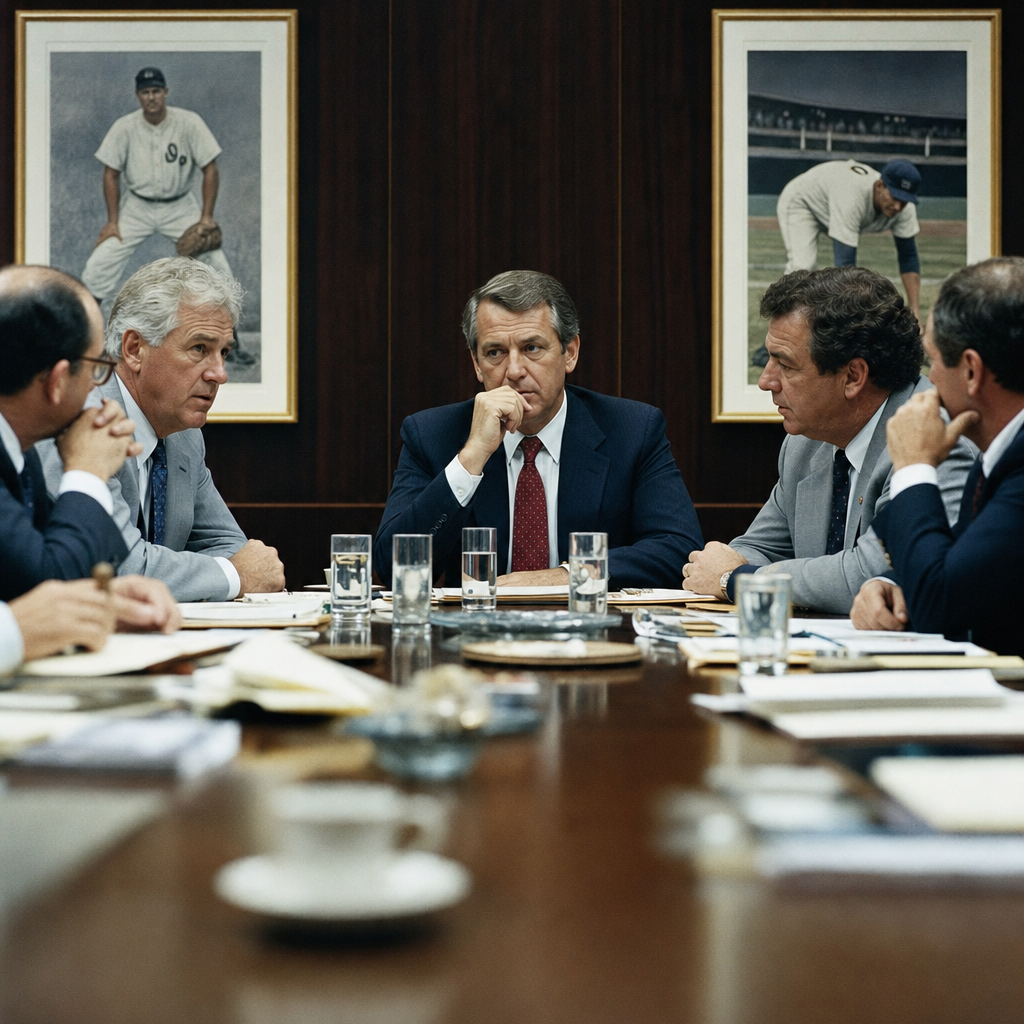
The 1980s collusion against free agents was one of Major League Baseball’s most consequential labor scandals, reshaping contract negotiations, owner behavior, and the modern economics of the sport. In simple terms, collusion occurs when competing clubs secretly cooperate instead of bidding independently, usually to suppress salaries or restrict player movement. In baseball, that violated the basic purpose of free agency, which was created after the reserve system began to crack in the 1970s and players finally gained the right to sell their services on an open market. I have worked through this history repeatedly when building labor timelines and explaining salary trends, and the lesson is always the same: free agency only functions when clubs act separately. Once owners coordinate, the market stops being a market.
This scandal matters because it was not a rumor, a clubhouse gripe, or a misunderstood slowdown in spending. It was formally litigated through arbitration, documented in testimony and ownership communications, and decided against the clubs in a series of landmark rulings now known as Collusion I, Collusion II, and Collusion III. Those cases established that MLB owners had acted in concert during the offseasons following 1985, 1986, and 1987, depressing offers for star players and undermining a collectively bargained system. The fallout included roughly $280 million in damages, restored leverage for the MLB Players Association, and a deepening mistrust that fed directly into later labor conflict. For readers following scandals and controversies in baseball, this is the essential hub because it connects labor law, ownership strategy, player rights, arbitration procedure, and the long arc from free agency to the 1994 strike.
How free agency was supposed to work
To understand the scandal, start with the intended system. After arbitrator Peter Seitz’s 1975 decision in favor of pitchers Andy Messersmith and Dave McNally, the perpetual reserve clause was effectively broken, and free agency emerged as a negotiated right under the collective bargaining agreement. Eligible players could solicit offers from multiple clubs, and teams were expected to decide independently how much a player was worth based on age, production, durability, roster fit, and revenue expectations. That competition was the point. If four clubs wanted a power-hitting outfielder, the bidding process would reveal his market value more accurately than any single front office could. Agents then became central intermediaries, comparing terms, bonus structures, no-trade provisions, and contract length across teams.
By the early 1980s, the system was producing visible salary growth. Owners, especially in large markets, complained that contracts were escalating too quickly. Some executives argued privately that teams were overbidding against themselves, while others believed free agency rewarded veterans at the expense of player development. Those complaints, however, did not give clubs the legal right to coordinate. Baseball’s labor agreement allowed management to compete hard, refuse to sign a player, or build through trades and farm systems. It did not allow competitors to share a common plan to sit out the market. The difference between restraint and collusion is critical: one is a business choice by an individual club; the other is a collective scheme that destroys competitive bidding.
What the owners did and why it became a scandal
The collusion era centered on ownership efforts to contain salary growth after the 1985 season. Commissioner Peter Ueberroth, who had won praise for stabilizing finances and leading the 1984 Los Angeles Olympics, spoke bluntly to owners about what he saw as excessive spending. While he did not need to issue a written command for a conspiracy to exist, the atmosphere changed noticeably. Free agents who would ordinarily have drawn multiple suitors found silent markets, delayed phone calls, and eerily similar contract positions. Clubs were no longer acting like rivals. They were behaving like members of a cartel.
Real-world examples made the pattern obvious. Kirk Gibson, one of the most prominent free agents after the 1985 season, expected broad interest but encountered a market with little genuine bidding. Tim Raines, Jack Morris, Andre Dawson, and other accomplished players later faced comparable resistance. In Dawson’s famous case before the 1987 season, he signed a blank contract offer with the Chicago Cubs after finding almost no market elsewhere, eventually agreeing to a deal worth far less than a normal open auction likely would have produced. Owners also began avoiding direct pursuit of another club’s free agents unless the incumbent team effectively granted permission. That informal “right of first refusal” mindset was nowhere in the labor agreement, yet it functioned as an unwritten rule.
What made this a scandal rather than simple market caution was the evidence of coordination. Arbitrators reviewed meeting records, testimony, internal communications, and patterns of conduct across clubs. The issue was not whether one team valued a player conservatively. It was whether clubs had agreed, explicitly or tacitly, to limit offers and protect one another from competitive bidding. The answer, in case after case, was yes.
The three collusion cases and their rulings
The MLB Players Association, led by executive director Donald Fehr, pursued grievances under the collective bargaining agreement. Those grievances became the three major arbitration proceedings that define the scandal. In Collusion I, arbitrator Thomas Roberts ruled in 1987 that owners had violated the agreement during the 1985-86 offseason by acting in concert regarding free agents. The finding was significant because it confirmed that players were not imagining a frozen market; the market had been unlawfully restrained.
Collusion II examined conduct during the 1986-87 offseason. Again, the arbitrator found for the union, concluding that clubs had continued coordinated behavior. This period affected many notable players, including Tim Raines, who did not sign until well into the season. The longer the resistance lasted, the stronger the inference became that clubs were working from a shared understanding rather than independent valuation models. In my experience reviewing the decisions, what stands out is how ordinary business records became powerful labor evidence once the same anti-bidding pattern appeared league-wide.
Collusion III covered the 1987-88 offseason and produced a more mixed procedural path, but the overall conflict still ended badly for ownership. The cumulative legal pressure, adverse findings, and risk of escalating damages pushed the parties toward settlement. In 1990, MLB owners agreed to pay approximately $280 million to affected players. That figure is often cited because it captures the scale of the violation, but the larger impact was structural: the rulings reaffirmed that free agency rights were enforceable and that labor arbitration could meaningfully police anti-competitive conduct inside a closed sports league.
| Case | Offseason Examined | Main Finding | Practical Effect |
|---|---|---|---|
| Collusion I | 1985-86 | Owners acted in concert against free agents | Confirmed the market had been unlawfully suppressed |
| Collusion II | 1986-87 | Coordinated behavior continued | Strengthened union leverage and damage claims |
| Collusion III | 1987-88 | Further dispute over repeated restraint | Helped drive the eventual settlement |
Players most affected by the frozen market
Not every free agent suffered equally. The players hit hardest were established veterans who should have benefited most from open bidding. Andre Dawson is the classic example because his Hall of Fame caliber production contrasted so sharply with the absence of offers. He ultimately signed with the Cubs for a low base salary plus incentives, then won the 1987 National League Most Valuable Player Award, which underscored how distorted the market had become. Tim Raines, another elite player, also lacked the normal range of bids expected for a switch-hitting on-base machine entering his prime. Jack Morris, one of the era’s most durable starting pitchers, likewise encountered a suspiciously cold market relative to his résumé.
Kirk Gibson’s experience after 1985 was an early warning sign. So was the treatment of several mid-tier free agents who were not stars but should have attracted practical interest from clubs needing depth. Collusion harms the entire salary structure, not just marquee names. When top players lose leverage, comparable players below them lose reference points in negotiations, and arbitration arguments start from a lower baseline. That cascading effect is one reason this episode belongs in any broader guide to baseball controversies. It was a labor scandal with roster consequences, competitive balance implications, and long-term salary effects for players who never became famous enough to headline the story.
How the union proved collusion
The MLB Players Association succeeded because it combined pattern recognition with disciplined grievance work. First, agents and players noticed anomalies: fewer unsolicited offers, nearly identical negotiating positions, and clubs declining even to make symbolic bids. Second, the union collected testimony and transactional evidence across the league rather than treating each negotiation as an isolated disappointment. Third, it used arbitration strategically, where the burden was not to prove a criminal-style conspiracy but to show that clubs had acted in concert in violation of the labor agreement.
This distinction matters. Collusion in sports labor cases is often inferred from behavior plus communications, not from a single dramatic memo that says, “Let’s fix salaries.” Arbitrators looked at whether owners shared information, honored understandings not to pursue one another’s players aggressively, and behaved contrary to what a competitive market would normally produce. Ueberroth’s public and private comments about owner discipline also mattered because leadership signals can shape behavior even without a formal written directive. The union’s case was strong because the anti-competitive result was broad, repeated, and inconsistent with ordinary baseball decision-making.
Why the scandal changed baseball economics
The immediate economic effect was suppressed salaries during the affected winters, but the deeper consequence was institutional. Once owners were caught colluding, every future round of bargaining became more adversarial. Players no longer assumed management would honor the spirit of negotiated rights, and union leaders approached later proposals with greater skepticism. That mistrust helped harden positions in the run-up to the 1994-95 strike, when disputes over salary control and a proposed cap pushed the sport into another historic crisis.
There was also a market lesson. Free agency survived because the rulings showed that collective bargaining rights could be defended against covert coordination. After the settlement, clubs returned more openly to competitive bidding, and salary growth resumed. Modern front offices still seek efficiency, but they are careful about how they communicate around free agents because the collusion decisions remain a cautionary precedent. Even today, when observers debate whether a slow offseason reflects analytics-based caution, luxury tax concerns, or genuine collusion, the benchmark is the 1980s. That period established the legal and factual template for what collusion looks like in baseball.
How this hub connects to other baseball controversies
Within the broader scandals and controversies landscape, the 1980s collusion against free agents belongs to the miscellaneous hub because it intersects multiple categories at once. It is a labor dispute, a governance failure, and an economic manipulation case. It also links naturally to articles on the reserve clause, the rise of the MLBPA, the Messersmith-McNally decision, Peter Ueberroth’s tenure, salary arbitration, and the 1994 strike. Readers exploring this subtopic should also compare collusion with separate controversies such as service-time manipulation, blackballing accusations in other sports, and anti-competitive conduct in franchise ownership contexts.
The key takeaway is direct: the 1980s collusion against free agents was a proven owner conspiracy that undermined one of baseball’s most important labor rights. It depressed player salaries, triggered landmark arbitration victories, and left a legacy of mistrust that influenced the sport for years. If you are building out your understanding of baseball’s biggest controversies, use this page as your starting point, then continue into related articles on free agency, union power, owner strategy, and labor conflict to see how one scandal changed the business of the game.
Frequently Asked Questions
What was the 1980s collusion against free agents in Major League Baseball?
The 1980s collusion against free agents refers to a coordinated effort by Major League Baseball owners to avoid competing openly for free-agent players. Under a healthy free-agent market, teams are supposed to evaluate players independently and bid according to their own needs, budgets, and competitive goals. During this period, however, owners were found to have acted in concert, either by refusing to make serious offers, signaling that certain players should be left unsigned, or discouraging one another from driving up salaries. That behavior undermined the entire purpose of free agency, which was meant to give players the ability to market their services after years of being tied to one club under baseball’s old reserve system.
The scandal was so significant because it struck at the heart of baseball’s labor structure. Free agency had emerged in the 1970s as a major breakthrough for player rights, allowing athletes to benefit from competition among clubs. When owners secretly cooperated instead of competing, they effectively recreated salary restraints that free agency was supposed to eliminate. The result was not just a few disputed contracts, but a broad labor crisis that changed how players, agents, and the union viewed ownership. It remains one of the clearest examples in sports history of how management can distort a labor market when competitors choose coordination over competition.
Why did MLB owners collude against free agents in the first place?
The main reason was money. By the early and mid-1980s, player salaries were rising as free agency matured and more teams began to understand the value of bidding aggressively for elite talent. Many owners believed those salaries were increasing too fast and wanted a way to slow the market without formally reopening the rules of free agency through collective bargaining. Instead of competing for players and accepting market-driven outcomes, some owners attempted to suppress contract growth by coordinating their behavior behind the scenes. From their perspective, if no team broke ranks and made a bold offer, players would have fewer options and would be forced to accept less favorable deals.
There was also a cultural and strategic dimension to the collusion. A number of owners and executives were uncomfortable with the growing power of players and agents, especially after the reserve system had weakened and free agency gave players more leverage than ever before. Some clubs wanted to restore management control informally by creating a colder market. In practice, this meant fewer unsolicited offers, less aggressive pursuit of free agents, and a noticeable reluctance across the league to challenge the status quo. Although owners may have seen this as cost containment, it crossed a legal and contractual line because teams were not supposed to cooperate in restricting player movement. They were supposed to act as rivals.
How was the collusion discovered and proven?
The collusion became apparent because the free-agent market began behaving in ways that made little economic sense. Players who should have attracted strong interest often received little to none. Veteran stars and productive contributors found that clubs were strangely hesitant to negotiate, and in some cases teams seemed content to let obvious upgrades go unpursued. The consistency of that behavior across the league raised immediate suspicion among players, agents, and the Major League Baseball Players Association. When many independent businesses all stop bidding competitively at the same time, it naturally suggests coordination rather than coincidence.
The MLB Players Association pursued formal grievances, and those cases went to arbitration. Arbitrators reviewed evidence that included internal communications, ownership conduct, and patterns of behavior across multiple offseasons. The findings established that owners had indeed violated the collective bargaining agreement by acting together instead of independently. In fact, the league lost a series of major collusion cases, commonly referred to as Collusion I, II, and III. Those rulings were crucial because they turned what might have been dismissed as rumor or player frustration into an officially recognized labor violation. Once proven, the scandal became impossible to minimize, and the financial penalties that followed confirmed just how serious the wrongdoing had been.
What were the consequences of the collusion cases for players, owners, and the league?
The consequences were enormous. Financially, owners were forced to pay hundreds of millions of dollars in damages to players who had been harmed by the suppressed market. That compensation reflected lost salary opportunities and the broader impact of an artificially restricted free-agent environment. For players, the rulings were a major validation of the union’s role and a reminder that free agency only works when enforcement exists. Without aggressive action by the MLBPA, owners might have succeeded in limiting player earnings while preserving the outward appearance of a functioning market.
Beyond the monetary damage, the scandal deepened distrust between players and ownership. It convinced many around the sport that labor peace in baseball was fragile and that owners were willing to test the boundaries of the system when financial pressure increased. That breakdown in trust helped shape later labor confrontations, including the tense atmosphere that contributed to the 1994 strike era. On the business side, the collusion findings also changed how teams approached documentation and labor strategy, because the legal and reputational costs of being caught were severe. In a larger historical sense, the scandal reinforced that baseball’s economic system could not rely on good faith alone; it needed enforceable rules, a strong union, and constant scrutiny.
How did the 1980s collusion scandal change modern baseball economics and free agency?
The scandal had a lasting impact on how free agency operates today. First, it strengthened the importance of the players’ union as a watchdog over the market. Players and agents became even more alert to suspicious patterns in contract negotiations, and clubs understood that coordinated behavior could trigger major legal and financial consequences. In that sense, the collusion cases helped protect the integrity of free agency by making clear that the right to test the market means very little if teams are secretly working together behind the scenes.
It also influenced the modern economic culture of baseball. Teams now place great emphasis on compliance, careful communication, and maintaining a clear line between independent strategy and impermissible coordination. Even though salary suppression concerns still arise in different forms, the 1980s cases remain the benchmark for what outright collusion looks like. Historically, the scandal also helped confirm that player salaries are not simply expenses to be managed but products of a negotiated labor system built on competition. When clubs compete honestly, the market reflects talent, demand, age, performance, and risk. When they collude, the market becomes distorted. That lesson still shapes debates today about payrolls, luxury tax pressures, revenue disparities, and whether all teams are truly participating in free agency as genuine competitors.