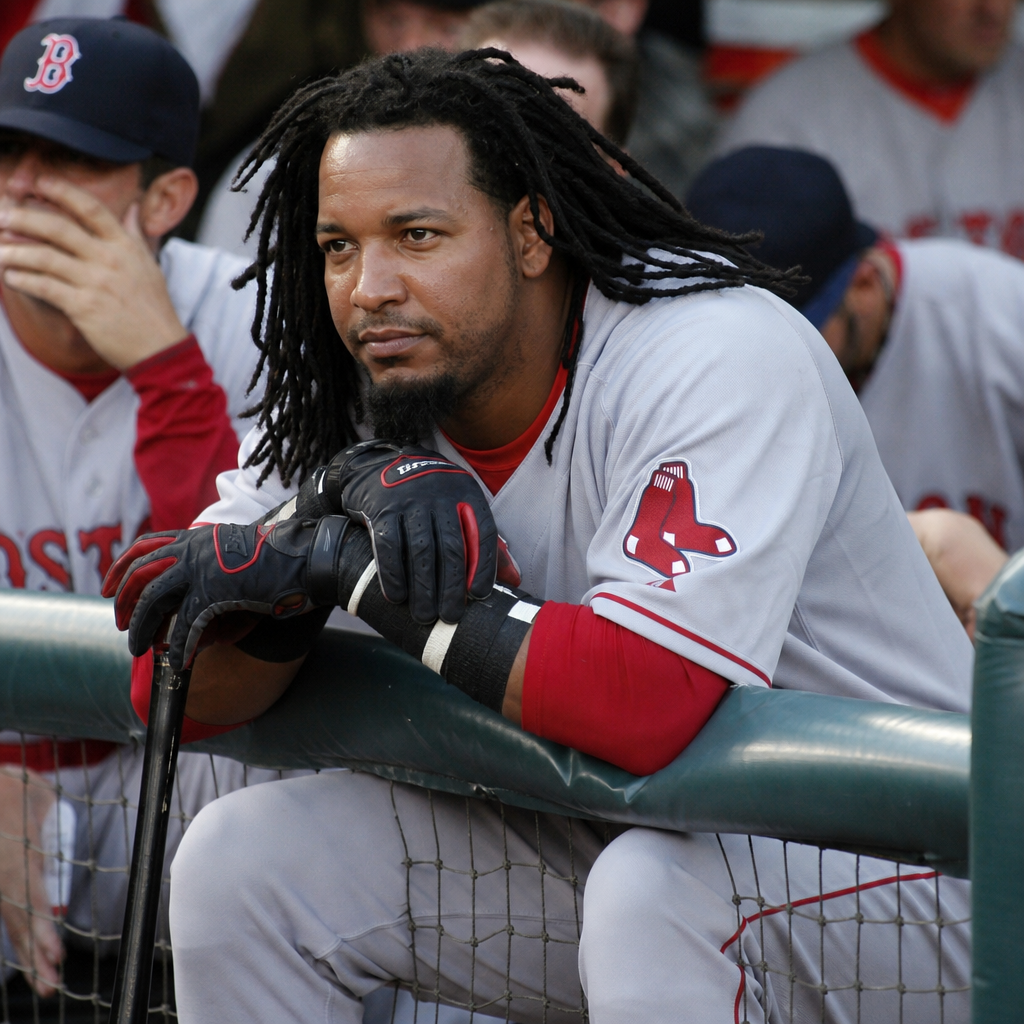
The 2008 Manny Ramirez suspension became one of the defining baseball controversies of its era because it touched performance-enhancing drugs, superstar branding, clubhouse culture, and the limits of Major League Baseball discipline all at once. Although fans often shorthand the event as a single failed test, the full story sits inside a broader web of issues that shaped the sport in the late 2000s. To understand why the episode still matters, it helps to define the key terms around it. A suspension in this context means a league-imposed ban under baseball’s Joint Drug Prevention and Treatment Program, the collectively bargained policy negotiated by MLB and the players union. A scandal is bigger than the rule violation itself; it includes public reaction, media framing, team consequences, and the effect on a player’s legacy. In Ramirez’s case, those layers collided around one of the most gifted right-handed hitters in modern baseball.
There is also an immediate historical wrinkle that serious readers should keep in mind: the suspension commonly associated with Manny Ramirez did not happen in 2008. It was announced in May 2009, during his first full season with the Los Angeles Dodgers, after his dramatic 2008 stint had revived his image and amplified his star power. The confusion persists because Ramirez’s brilliant 2008 performance with the Dodgers was the setup for the shock of the suspension that followed. That distinction matters because chronology changes interpretation. If the ban had occurred before his 2008 resurgence, the narrative would be about interrupted redemption. Because it came after, the story became one of trust broken at the very moment fans believed they were watching a second act unfold naturally.
I have covered baseball controversies long enough to know that timing often determines whether a violation becomes a footnote or a flashpoint. Ramirez was not a fringe player. He was a World Series champion, a batting-title threat every year, and a central figure in the Red Sox ending their championship drought. When he was traded from Boston to Los Angeles in July 2008, then immediately transformed the Dodgers’ lineup and the National League playoff race, his image changed from moody superstar to folk hero. “Mannywood” became a marketing phenomenon. That is why the suspension sent shockwaves through MLB. It cast doubt not only on one player’s choices, but on a celebrated baseball story that had just been sold as joyfully authentic.
This article treats the Manny Ramirez case as a hub within baseball’s miscellaneous scandals and controversies because it connects multiple themes: drug policy enforcement, media spectacle, labor rules, franchise reputation, Hall of Fame debates, and the long afterlife of public suspicion. Understanding those connections helps explain how MLB evolved after the steroid era and why certain controversies keep resurfacing in fan memory. Ramirez’s case is not simply about punishment. It is about what happens when a sport trying to repair credibility learns that charisma cannot shield even its biggest attractions from policy, scrutiny, and consequence.
What happened in the Manny Ramirez suspension case
On May 7, 2009, Major League Baseball announced that Manny Ramirez had received a 50-game suspension for violating the Joint Drug Prevention and Treatment Program. At the time, a first positive test for a performance-enhancing substance under the policy carried a 50-game penalty. Ramirez was playing for the Dodgers, one of the National League’s most visible teams, and he had opened the season as a reigning cultural sensation after his 2008 arrival in Los Angeles. The announcement therefore landed with unusual force. This was not a fading veteran being quietly disciplined. It was one of baseball’s most famous hitters, suspended in the middle of a pennant race and under the glare of national television.
Early reporting indicated that the substance involved was not a classic injectable steroid but a banned drug linked to female fertility treatment, often discussed because some athletes used such medication in attempts to restore testosterone production after steroid cycles. That detail fueled immediate argument. Supporters claimed the case was more complicated than a straightforward strength-building regimen. Critics answered that the program banned the substance for a reason and that technical distinctions did not change the integrity issue. MLB did not publicly litigate every medical detail, and the collectively bargained process was designed partly to protect confidentiality. Still, the broad takeaway was unmistakable: Ramirez had violated baseball’s drug policy and accepted the discipline rather than overturning it through a successful appeal.
The mechanics of the suspension mattered too. Fifty games is a large enough penalty to damage team planning, disrupt roster continuity, and place public pressure on the player’s employer. The Dodgers had to replace middle-of-the-order production from a hitter who had posted a staggering .396 batting average with 17 home runs in 53 regular-season games after joining them in 2008. That stretch was one of the most explosive trade-deadline impacts in recent memory. Losing Ramirez in 2009 therefore had competitive and commercial costs. It affected lineup protection for surrounding hitters, ticket draw, local buzz, and the national image of a club that had leaned heavily into his celebrity.
Why the timing after 2008 made the scandal explode
The reason people still speak of the “2008 Manny Ramirez suspension” is that 2008 created the emotional backdrop. Before the trade to Los Angeles, Ramirez’s relationship with the Boston Red Sox had deteriorated badly. There were disputes over effort, conduct, and clubhouse fit, and the split felt inevitable. Yet once he reached the Dodgers, his performance was so electric that the tension in Boston seemed to vanish from the public imagination. Fans saw smiles, dreadlocks, towering home runs, and a veteran slugger apparently liberated by a new environment. The Dodgers won the National League West, Ramirez finished fourth in NL MVP voting despite playing only part of the season in the league, and his every at-bat became an event.
That rebound changed the scale of the later scandal because it had produced a redemption arc. Baseball thrives on storylines, and Ramirez’s looked perfect: an eccentric genius leaves a difficult situation, rediscovers joy, and carries a classic franchise into October. When the suspension came in 2009, it did not merely interrupt a season. It caused fans and media to revisit the previous year with suspicion. Was the surge purely a product of ballpark fit, lineup support, and renewed comfort, or did a banned substance contribute? The uncomfortable truth is that no one can reconstruct performance with scientific precision after the fact. But the existence of that question was enough to stain what had been celebrated as one of the happiest midseason reinventions in recent baseball memory.
For MLB, the episode was especially damaging because the league was still navigating the credibility crisis left by the steroid era. Congressional hearings, leaked test lists, and the Mitchell Report had already taught fans to doubt sudden surges and late-career renaissances. Ramirez’s case therefore fit an established pattern in the public mind: remarkable production, followed by a revelation that recast the achievement. In that environment, even a legally careful and procedurally proper suspension carried symbolic weight far beyond the text of the rulebook.
MLB’s drug policy and why Ramirez became a major test case
By 2009, MLB’s drug program was no longer a loose or lightly enforced system. The Joint Drug Prevention and Treatment Program had evolved through negotiation between the league and the MLB Players Association, especially after years of criticism that baseball was behind other major sports in confronting performance-enhancing drugs. Testing protocols, banned substance lists, appeal procedures, and disciplinary tiers were formalized. A first offense meant 50 games, a second 100, and a third a lifetime ban subject to possible reinstatement. This structure mattered because it signaled that enforcement was not arbitrary. Ramirez was punished under a clear policy that players had agreed to through collective bargaining.
In practical terms, the case showed the public what a mature enforcement system looked like. The league announced the suspension, the player served it, and the team adjusted. There was no sense that celebrity could erase the process. For a league trying to prove that its anti-doping framework had teeth, that was significant. At the same time, the case exposed the limits of policy in repairing trust. A rule can impose a sanction, but it cannot compel fans to agree on what the violation means morally. Some interpreted Ramirez’s case as evidence that baseball’s safeguards worked. Others saw it as proof that the sport remained structurally vulnerable because elite players were still testing positive after years of warnings and reforms.
| Issue | Detail in Ramirez case | Why it mattered to MLB |
|---|---|---|
| Penalty level | 50-game suspension for a first offense | Showed the policy was enforceable and standardized |
| Player stature | Ramirez was a marquee star and recent postseason catalyst | Demonstrated that fame would not prevent discipline |
| Public narrative | Came after his celebrated Dodgers revival | Turned a policy action into a league-wide credibility test |
| Substance debate | Reports focused on a hormone-related medication | Revealed how technical distinctions can confuse fans |
Another reason Ramirez became a test case is that he embodied baseball’s transition from the unchecked power era to the accountability era. He had debuted in 1993, thrived through the home-run boom, and remained productive into a period when testing and public skepticism were far stronger. When a player with that timeline was suspended, observers inevitably linked generations of baseball history together. The case was less isolated than it looked.
Effects on the Dodgers, the clubhouse, and the business of baseball
Inside the Dodgers’ season, the suspension created immediate baseball problems. Ramirez had been a lineup anchor who changed how opposing managers deployed bullpens. Without him, pitchers could attack the order differently, and the burden shifted to players such as Andre Ethier, Matt Kemp, James Loney, and Orlando Hudson. The Dodgers remained talented enough to win, but the margin for error narrowed. A 50-game absence is roughly one-third of a regular season, and replacing elite on-base ability and middle-order fear is rarely possible through one substitute. Teams generally patch that loss through platoons, bench promotions, and tactical compromises rather than a one-for-one solution.
Clubhouse consequences were harder to quantify but just as real. Players are accustomed to injuries; they are less comfortable defending a teammate suspended under the drug policy. Every media session turns into damage control. Honest reactions can strain friendships, while scripted answers sound evasive. Managers and front offices also face a credibility challenge. They must support the roster without appearing indifferent to the violation. Joe Torre, then managing the Dodgers, handled the public phase with the measured restraint expected of a veteran manager, but no amount of professionalism erased the distraction.
There was also a business dimension. Ramirez had become a brand in Los Angeles. His jersey sold, his image drove broadcasts, and “Mannywood” was not an abstract slogan; it was monetized fan culture. Suspensions hit revenue indirectly through weakened star appeal, altered advertising plans, and a drop in trust around promotional narratives. Baseball is always both competition and entertainment, and scandals force teams to recalibrate both sides at once.
Legacy, Hall of Fame debates, and the place of Ramirez in baseball controversy history
For Manny Ramirez personally, the suspension changed the way his career would be summarized forever. Before it, his résumé supported an uncomplicated case as one of the greatest right-handed hitters the sport had seen: 555 home runs, a career .312 batting average, elite postseason moments, 12 All-Star selections, and a reputation for producing against premium pitching. After it, every discussion of his numbers had to include the failed test. That is the enduring power of drug-policy discipline in baseball history. It does not simply punish the season in question; it reorganizes memory.
Hall of Fame voting became the clearest expression of that change. Ramirez appeared on the ballot with statistics that would once have made induction feel automatic, yet his support remained far below election level. Voters have varied in their treatment of players linked to performance-enhancing drugs, but Ramirez’s confirmed suspension left less room for ambiguity than rumor-based cases. For many voters, the issue was not whether he was brilliant. It was whether baseball’s highest honor should recognize a player disciplined under the sport’s own anti-doping rules. Reasonable people differ, but the voting pattern shows how strongly the suspension shaped his post-career standing.
Within the broader “Scandals and Controversies” landscape, Ramirez belongs in the miscellaneous hub because his case intersects several recurring MLB themes without fitting just one box. It is partly a drug-policy story, partly a media story, partly a labor-policy story, and partly a legacy story. It also illustrates an important truth about baseball scandals: the loudest fallout often comes not from legal complexity but from emotional whiplash. Fans had just embraced a comeback tale. Then they had to reinterpret it through mistrust. Few controversies produce that abrupt a shift.
The clearest lesson is that context matters as much as the suspension itself. Ramirez’s ban mattered because it arrived after a celebrated 2008 resurgence, during a period when MLB was desperate to restore confidence, and against the backdrop of one of the most gifted offensive careers of the generation. If you are exploring baseball’s miscellaneous scandals, this case is essential because it shows how one policy violation can ripple through competitive strategy, public credibility, player legacy, and the business machinery of a major sport. The central takeaway is simple: in MLB, controversies endure when they force people to revisit what they thought they already understood.
For readers building a broader view of baseball controversies, the Ramirez episode is a useful anchor point. It connects to debates about other suspensions, disputed Hall of Fame cases, and the tension between entertainment value and institutional trust. Keep that framework in mind as you move through related stories in this subtopic. The more you compare cases across eras, teams, and policy regimes, the clearer baseball’s controversy cycle becomes—and the better equipped you are to judge the next headline with context instead of surprise.
Frequently Asked Questions
What made Manny Ramirez’s 2008-era suspension such a major MLB controversy?
Manny Ramirez’s suspension became a major controversy because it sat at the intersection of several issues that were already reshaping Major League Baseball: performance-enhancing drug policy, superstar accountability, media scrutiny, and the credibility of the sport after years of steroid-era revelations. Even though many fans remember it as a simple failed drug test involving one famous player, the larger significance came from timing and symbolism. Ramirez was one of the most recognizable hitters of his generation, a player whose talent, personality, and postseason reputation made him bigger than a routine disciplinary story.
The controversy also reflected how MLB was trying to prove that its drug program had real teeth. By the late 2000s, the league was under intense pressure from fans, reporters, lawmakers, and former players to show that anti-doping rules were enforceable and meaningful. When a star of Ramirez’s stature was disciplined, it sent a message that no player was entirely beyond the reach of the policy. At the same time, it raised difficult questions about consistency, fairness, and whether the league’s penalties were enough to deter violations in a culture still wrestling with the legacy of the steroid era.
Another reason the episode hit so hard was that it complicated Ramirez’s public image. He had long been seen as a brilliant but unpredictable superstar, someone associated as much with carefree eccentricity as with elite production. A suspension shifted that narrative. It forced fans and analysts to reconsider not just his statistics, but also how charisma and performance can sometimes soften public judgment until a drug-policy violation changes the tone. That combination of celebrity, ambiguity, and institutional pressure is why the case remained one of the defining baseball controversies of its time.
Was Manny Ramirez’s suspension simply about a failed test, or was there more to the story?
No, reducing the episode to “just a failed test” leaves out the broader context that made it so important. In MLB discussions, a suspension tied to the league’s drug policy is never only about a laboratory result. It also involves the collectively bargained rules between MLB and the players’ union, the classification of the substance in question, the disciplinary schedule, the appeal process, and the way teams and the league communicate with the public. In Ramirez’s case, the public often absorbed the headline version, but the deeper story was about how baseball’s drug policy functioned in practice when applied to a marquee player.
Stories like this also unfold inside a larger clubhouse and media environment. A suspension affects roster construction, team chemistry, postseason hopes, and the public’s trust in on-field achievement. It can reshape the way teammates are questioned, the way managers defend their club, and the way opposing fans interpret a player’s accomplishments. That is why the Ramirez case had so much staying power in baseball memory. It became part of a much wider conversation about what MLB knew, how aggressively it was policing the sport, and whether fans were watching a league that had truly changed from its earlier performance-enhancing drug controversies.
There was also the matter of perception. In baseball, the distinction between technical details and public reputation matters enormously. Even when a case has procedural nuances, the audience often translates it into a verdict on character, legitimacy, and legacy. So while the suspension was linked to the league’s testing and discipline framework, the impact extended far beyond the rulebook. It became a test of how MLB, the press, and the public would interpret accountability in an era when every PED-related case carried historical baggage.
How did the suspension affect Manny Ramirez’s reputation and baseball legacy?
The suspension had a lasting effect on Ramirez’s reputation because it changed the lens through which many people viewed his career. Before controversies of this sort, he was widely celebrated as one of the most gifted right-handed hitters in baseball history, known for extraordinary bat speed, plate discipline, power, and the ability to thrive in high-pressure moments. Those baseball qualities did not disappear, but a suspension attached a permanent asterisk in the minds of many fans, Hall of Fame voters, and historians. In modern baseball memory, elite production and PED-related discipline are often discussed together rather than separately.
For legacy purposes, that matters a great deal. Baseball remains unusually protective of its historical record, and accusations or findings related to performance-enhancing substances can alter how achievements are framed. A player who once might have been discussed mainly in terms of home runs, runs batted in, and postseason heroics becomes part of a moral and institutional debate. In Ramirez’s case, conversations about his greatness increasingly became conversations about trust, era context, and the difficulty of comparing accomplishments across baseball generations marked by different testing rules and cultural expectations.
At the same time, his legacy was not erased. Many observers still regard him as one of the era’s most naturally dangerous hitters, and some argue that baseball’s PED era was so widespread and structurally complicated that individual cases should be judged with caution. But the suspension undeniably narrowed the space for a purely celebratory interpretation of his career. Instead of being remembered only for his offensive brilliance and unforgettable persona, Ramirez became a case study in how controversy can reshape even the most decorated superstar narratives.
What did the Manny Ramirez suspension reveal about MLB’s drug policy and discipline system?
The suspension highlighted both the growing strength and the lingering limitations of MLB’s drug policy during the late 2000s. On one hand, it demonstrated that the league had moved into a more aggressive enforcement phase. After years of criticism that baseball had been too slow or too lenient in confronting performance-enhancing drugs, a high-profile suspension showed that testing and penalties were producing visible consequences. That mattered institutionally because MLB needed to convince the public that its anti-doping program was not merely symbolic.
On the other hand, the case also underscored how difficult it is to build universal confidence in any disciplinary system. Fans often want simple clarity, but league drug policy operates through negotiated rules, confidential medical and legal processes, and technical distinctions that are not always easy to explain publicly. When a superstar is suspended, those complexities become part of the controversy. Questions emerge about transparency, consistency across cases, and whether punishments are proportionate to the offense. Even when the policy works as designed, the public may still debate whether the system is truly deterring misconduct or merely reacting to it.
The Ramirez episode also showed that enforcement alone cannot fully resolve the cultural aftershocks of the steroid era. Discipline can penalize violations, but it cannot instantly restore trust in statistics, records, or player reputations. That is why this case resonated beyond one player and one penalty. It became evidence that MLB had built a more serious framework, while also reminding everyone that policy enforcement is only one part of repairing the sport’s credibility. In that sense, the suspension was both a sign of progress and a reminder of how much uncertainty still surrounded baseball’s anti-PED era.
Why does Manny Ramirez’s suspension still matter when discussing baseball in the late 2000s?
It still matters because it captures so many of the central tensions of that period in one event. Late-2000s baseball was defined by a push-and-pull between spectacular on-field entertainment and deep unease about how that performance was being produced. Ramirez’s suspension touched nearly every major theme of the time: the legacy of steroids, the power of celebrity players, the media’s role in shaping scandal, and MLB’s struggle to present itself as both fair and forceful. As a result, the case remains useful not only for understanding one player, but for understanding the sport’s broader identity crisis in that era.
The episode also continues to matter because it helps explain how modern fans interpret discipline and legacy. Today, when a star player faces suspension or controversy, the public tends to evaluate not just the rule violation but the entire ecosystem around it: league credibility, team response, player branding, and long-term Hall of Fame implications. The Ramirez case was one of the moments that helped cement that pattern. It taught baseball audiences to see disciplinary stories as cultural events, not just transactional roster news.
Finally, the suspension remains relevant because baseball history is cumulative. Each major controversy informs how later generations read the past. When analysts revisit the late 2000s, they are not simply cataloging incidents; they are asking what those incidents revealed about the sport’s values, blind spots, and mechanisms of accountability. Ramirez’s suspension endures in that discussion because it was dramatic, highly visible, and emblematic of a time when MLB was trying to discipline its way out of a credibility problem that had been building for years.