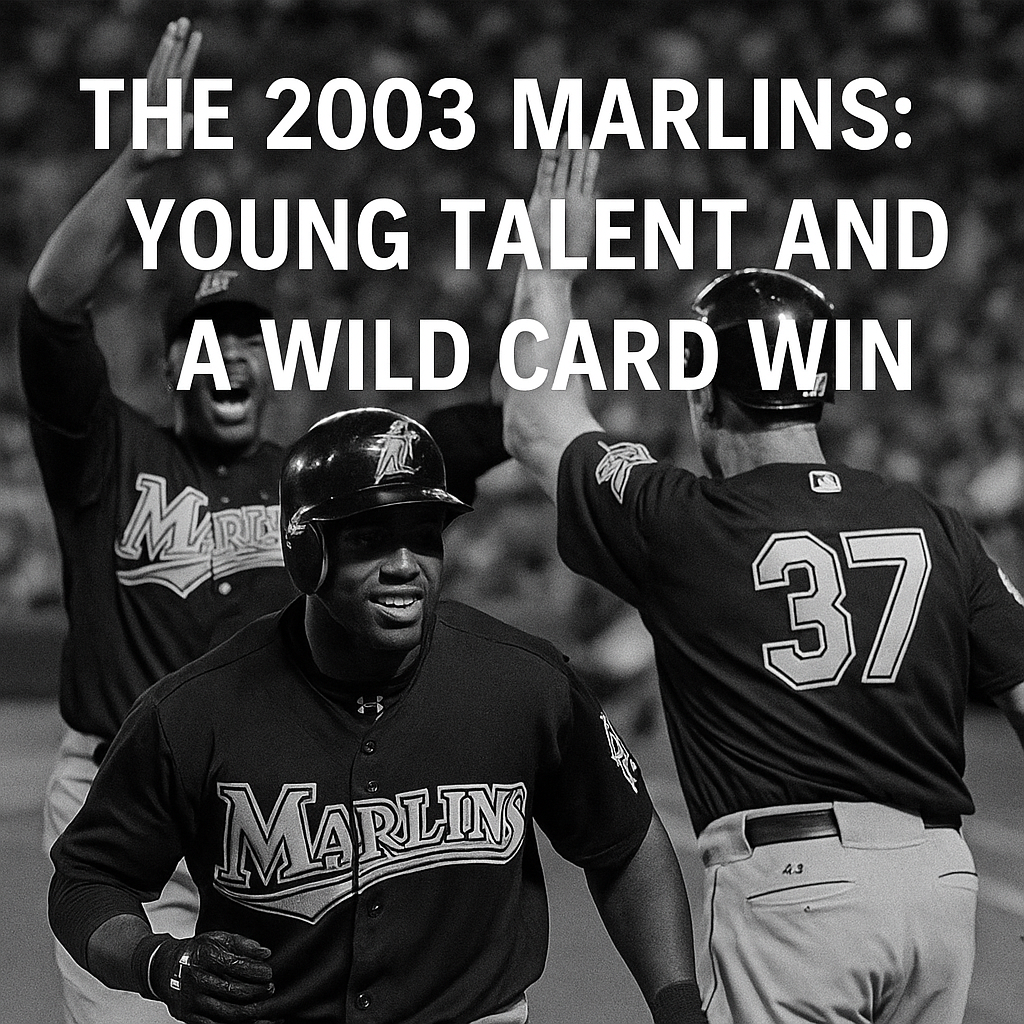
The 2003 Florida Marlins’ remarkable journey remains one of baseball’s most captivating and unexpected tales. This team, relatively young and underestimated, emerged from the shadows to claim a victory that few saw coming. Against overwhelming odds, the Marlins’ blend of youthful exuberance and strategic play took them from being a mere contender for a Wild Card spot to winning Major League Baseball’s highest honor. This story of the 2003 Marlins is a testament to the unpredictability of sports and the impact of harnessing young talent with unwavering determination.
The Marlins’ roster in 2003 featured an array of young players who were either stepping into their prime or had yet to reach it. These players formed the backbone of a team that would defy expectations at every turn. The 2003 season was pivotal in the Marlins’ history, as it marked their second World Series win in just over a decade. The story of this championship season goes beyond sheer statistics; it is woven from the resilience, passion, and the strategic decisions that paid off in ways that changed the team’s history forever.
As the curtain rose on the 2003 MLB season, few believed in the Marlins’ potential to succeed on a grand scale. They were seen primarily as an underdog, unlikely to contend with baseball’s giants. However, the Marlins used this perception to their advantage, rallying around the camaraderie and spirit within their locker room. As the season progressed, their unity and youthful energy translated onto the field. Coaches, players, and fans alike could see glimpses of something special brewing within this squad — setting the stage for a truly unforgettable season.
One of the Youngest Teams with a Point to Prove
In contrast to many teams in the league, the Florida Marlins of 2003 were characterized by their young roster. Players such as Josh Beckett, Dontrelle Willis, and Miguel Cabrera were just beginning to showcase their immense potential. Beckett, a pitcher with a fastball that could intimidate even the most seasoned batters, played a crucial role in the Marlins’ successful campaign. At just 23 years old, Beckett demonstrated maturity and poise uncommon for his age, which proved indispensable during the playoffs.
Then there was Dontrelle Willis, a rookie who quickly became a fan favorite with his distinctive high leg kick and infectious enthusiasm. Willis became an integral part of the rotation, earning the National League Rookie of the Year title. His spirited presence on the mound and in the dugout provided a significant morale boost to the team. His energy spilled over to his teammates, creating a lively atmosphere that stands out in the memories of Marlins fans.
Miguel Cabrera, who would later be recognized as one of the most prolific hitters in baseball, began his MLB career with the 2003 Marlins. A versatile player, Cabrera demonstrated a knack for clutch performances. His ability to come through in high-pressure situations, especially during the postseason, was crucial to the Marlins’ success. Cabrera’s breakout performance was a key factor setting the tone for what was to come throughout his illustrious career.
The team was also complemented by veterans such as Pudge Rodriguez, whose experience brought stability to the young squad. His leadership was vital, both behind the plate and in the clubhouse. As a seasoned catcher, Rodriguez had the acumen to guide the pitching staff effectively. His contributions were instrumental during pivotal moments in the playoff run, showcasing his leadership and ability to remain calm under pressure.
Overcoming the Odds in the Regular Season
Entering the 2003 season, the Marlins were not favored by pundits and analysts to make any significant impact. Expectations were not high compared to the league’s more established powerhouses like the New York Yankees, Boston Red Sox, and San Francisco Giants. However, the Marlins embodied the underdog spirit, and as the season progressed, they began to garner attention for their unexpected successes.
Managed by Jack McKeon, who was affectionately dubbed “Trader Jack” for his penchant for savvy roster moves, the Marlins thrived under his leadership style. McKeon joined the team mid-season, overseeing a dramatic turnaround that would see the Marlins go from a below .500 record to playoff contention. His approach was straightforward but effective — instilling confidence and resilience in his players. The free-spirited approach helped the youthful squad play loose yet strategically sound baseball.
The Marlins’ regular season was characterized by significant momentum shifts. While they faced periods of inconsistency, there were stretches where everything clicked. The Marlins showcased their offensive and defensive prowess, hinted by tight games often clinched by strategic plays and instinctive decision-making. The team gelled together, relying on contributions from both seasoned and emerging players. By season’s end, their collective efforts solidified them as one of the league’s wildcard contenders.
Mechanisms such as strong situational pitching and timely hitting played a crucial role in their journey. The team’s pitching staff was bolstered by both veterans and emerging stars, allowing them to weather the challenges of the season. At the same time, the Marlins’ offensive lineup developed a knack for coming through when it mattered most. Timely hits often proved to be the game-changers required to keep the Marlins in the hunt for the postseason.
A Wild Card Win and a Path to the World Series
Entering the postseason in 2003 as the National League Wild Card team, the Marlins carried a chip on their shoulder. Stacked against more seasoned teams in the playoffs, they relied on their fearless attitude and determination. The Marlins’ first challenge on this path came against the powerhouse San Francisco Giants in the National League Division Series (NLDS). Despite being seen as underdogs, they managed to pull off a surprise victory, besting the Giants in four games.
This victory set the stage for the National League Championship Series (NLCS) against the Chicago Cubs. The series became one of the most memorable in postseason history, particularly due to what would be remembered as the “Steve Bartman incident” — a moment infamous in sports lore. The Marlins found themselves down three games to one, seemingly on the brink of elimination. However, the resilient young squad refused to wilt.
Game 6 of the NLCS is particularly etched into baseball history due to a critical moment in the eighth inning. A fan, later identified as Steve Bartman, interfered with a foul ball, preventing a potential Cubs catch. This event seemed to turn the tide for the Marlins, who capitalized on this opportunity. They surged past the Cubs to win not only Game 6 but also Game 7, propelling themselves to the World Series.
Once in the World Series, the Marlins faced the formidable New York Yankees. The Yankees, boasting iconic talents and having a storied postseason tradition, were heavily favored. Yet, the Marlins repeatedly defied expectations. In a thrilling six-game series, they took advantage of their opportunities, maintaining their focus and executing play even under the intense spotlight of the World Series.
The Marlins’ World Series Triumph
The 2003 World Series highlighted many defining moments for the Marlins, with young guns and seasoned veterans stepping up when it mattered most. The Marlins ultimately clinched the series in six games, thrilling all who witnessed their relentless quest for victory. Josh Beckett’s performance in Game 6 was particularly noteworthy. Pitching on only three days’ rest, Beckett delivered a complete game shutout, securing a 2-0 victory against the Yankees to clinch the title. His achievement under extreme pressure underscored the poise and talent brimming in this young team.
Throughout the series, Pudge Rodriguez’s leadership played a critical role in steadying the Marlins’ nerves. His presence and experience were invaluable, orchestrating the defense and working closely with the pitching staff to outwit the Yankees. The combination of Rodríguez’s stalwart defense and Beckett’s pitching brilliance became a focal point of the Marlins’ narrative, reinforcing the theme of a cohesive, determined unit overcoming the odds.
Moreover, the offensive contributions of players like Miguel Cabrera, Juan Pierre, and Jeff Conine, coupled with strategic managerial decisions, proved instrumental. Cabrera, despite his youth, shone brightly, providing key hits that were integral to the Marlins’ offensive strategy. Juan Pierre’s speed and base running prowess added a dynamic layer to their approach, consistently putting pressure on the Yankees’ defense.
The Marlins’ triumph was celebrated not just for their skills on the field but also for their underdog story — a team that managed to defy all predictions, steer through multiple playoff rounds, and dethrone one of baseball’s most storied franchises. This triumph resonated with fans, epitomizing the enchanting unpredictability of baseball and the magic of witnessing a team you never counted on felling giants.
Conclusion
The 2003 Florida Marlins’ journey from Wild Card contenders to World Series champions remains one of Major League Baseball’s most stirring tales of unexpected triumph. This team of young stars and seasoned veterans proved that spirit and talent could overcome all odds. The Marlins’ victory served as a beacon of hope, inspiring future generations of underdog teams to believe in the impossible.
This story continues to resonate today; it’s a reminder that determination and belief can enable even the most overlooked teams to achieve greatness when they come together. Coaches and players foster an environment where talent can flourish, where passion for the game drives every swing and pitched ball. The 2003 Marlins exemplified that magic, a flying lesson not just to the franchise but to all who watched their unbelievable rise.
Looking back, the thrilling ride of the 2003 Marlins serves as evidence of baseball’s enchanting unpredictability. For fans and players alike, it reinforced why the sport is cherished worldwide — its capacity for fascinating narratives, the potential for the impossible, and the assurance that sporting miracles do indeed happen. The legacy of the 2003 Marlins is firmly etched into baseball lore, forever an inspiration for those who dare to dream against all odds.
“`
Frequently Asked Questions
1. Who were the standout young players on the 2003 Florida Marlins team?
The 2003 Florida Marlins boasted a roster full of promising young talent that played a pivotal role in their remarkable journey to success. Key players included 21-year-old pitcher Dontrelle Willis, who quickly became a fan favorite with his electrifying style and charisma on the mound. Willis, nicknamed “D-Train,” brought an unprecedented youthful energy to the team, capturing the National League Rookie of the Year award with his impressive performance. Another significant young player was Miguel Cabrera, who was just 20 years old at that time. Cabrera, playing mostly outfield and third base, showcased his immense talent and potential in the MLB postseason, delivering critical hits and consistently driving in runs. Josh Beckett, aged 23, was another essential component of the Marlins’ success. Beckett’s stellar pitching captivated baseball fans, especially in the World Series, where his performance in Game 6 – a complete game shutout – clinched the championship for Florida. These young players, amongst others, truly embodied the essence of being underestimated yet crucially impactful, and they collectively showed maturity beyond their years, galvanizing the Marlins to unexpected glory.
2. What was the significance of the Marlins winning the Wild Card in 2003?
Winning the Wild Card in 2003 was a significant milestone for the Florida Marlins, setting the stage for their Cinderella story. At that time, the team wasn’t considered a powerhouse; in fact, they were often dismissed as underdogs within the National League. Securing the Wild Card allowed the Marlins to participate in the postseason despite not winning their division. This opportunity was the foundation of their voyage to the top, showcasing the importance and potential of the Wild Card system to provide opportunities for teams who might peak at just the right moment. The Marlins’ wild ride began with this chance, and they were able to capitalize on the momentum acquired through the Wild Card spot, propelling them past more favored teams like the San Francisco Giants and the Chicago Cubs. By taking advantage of their Wild Card win, the Marlins defied the odds, proving that all teams who secure a spot have a legitimate shot at ultimate success in Major League Baseball.
3. How did the Marlins manage to win against stronger teams during their playoff run?
The Marlins’ playoff run in 2003 was a masterclass in overcoming adversity, smart tactics, and seizing moments when it counted the most. The team demonstrated a blend of youthful enthusiasm and strategic acumen, which often caught more experienced teams off guard. Manager Jack McKeon played a crucial role by making bold and timely decisions that capitalized on their strengths and confused their opponents. McKeon’s leadership and confidence in giving young players significant roles created a balanced and dynamic squad that could adapt to varying situations. In the National League Division Series, the Marlins faced off against the Giants and utilized both aggressive plays and solid pitching to clinch the series in four games. Their ability to remain unfazed by pressure became even more evident in the National League Championship Series against the Chicago Cubs. Down three games to one, the Marlins mounted a dramatic comeback, highlighted by timely heroics and the infamous interference incident involving a fan, commonly referred to as the Steve Bartman game. This indomitable spirit and knack for seizing opportunities continued into the World Series against the mighty New York Yankees, where the Marlins’ fearless play and solid pitching – exemplified by Josh Beckett’s brilliance – led them to victory. Their triumph was the embodiment of skill, ambition, and the sport’s inherent unpredictability.
4. What role did Jack McKeon play in the 2003 Marlins’ success?
Jack McKeon, affectionately known as “Trader Jack,” was hired as the manager of the Marlins in May 2003, and he played an instrumental role in orchestrating one of baseball’s most remarkable turnarounds. At age 72, McKeon became the oldest manager to lead a team to a World Series win, and his influence on the team’s dynamic is undeniable. He brought a wealth of experience and a down-to-earth, no-nonsense style that resonated well with the players. McKeon’s decision-making and innate ability to manage both the game and his players’ psychology were crucial to fostering an environment of belief and resilience. He was known for trusting his players and providing many young talents with the opportunity to shine, empowering them to play with freedom and confidence. McKeon also possessed a knack for making timely in-game adjustments, such as savvy bullpen maneuvers and strategic lineup changes that often turned the tide in the Marlins’ favor. His positive and assertive nature, combined with his baseball acumen, galvanized the Marlins, transforming them from an unheralded team to a World Series champion. McKeon’s tenure with the Marlins is often credited with instilling the belief that all things are possible in sports, even when the odds appear insurmountable.
5. What impact did the 2003 World Series win have on the Florida Marlins franchise?
The 2003 World Series win was monumental for the Florida Marlins, affecting the franchise on multiple levels. In the short term, it brought a surge of excitement and pride to the fanbase, establishing the team as formidable contenders despite their previous underdog status. It was the Marlins’ second World Series win in just a decade, which was particularly impressive for such a young franchise established in 1993. The victory provided a much-needed boost in visibility and credibility within Major League Baseball, and it showcased the potential of strategic team-building and careful management to achieve success without a massive payroll. However, long-term impacts were mixed; the Marlins struggled with financial instability and subsequently faced challenges in maintaining a competitive roster due to market size and financial constraints. The triumph also added to the narrative of the 2003 team as a unique, almost fairy-tale-like success story, which, to this day, is celebrated for the sheer improbability of its accomplishment. Through this magical season, the Marlins embraced a legacy that reinforces the notion that teamwork, determination, and a touch of serendipity can forge paths to glory, no matter the obstacles. This triumph is a cornerstone of Marlins’ history, inspiring fans and players alike and contributing to the rich tapestry of baseball lore.