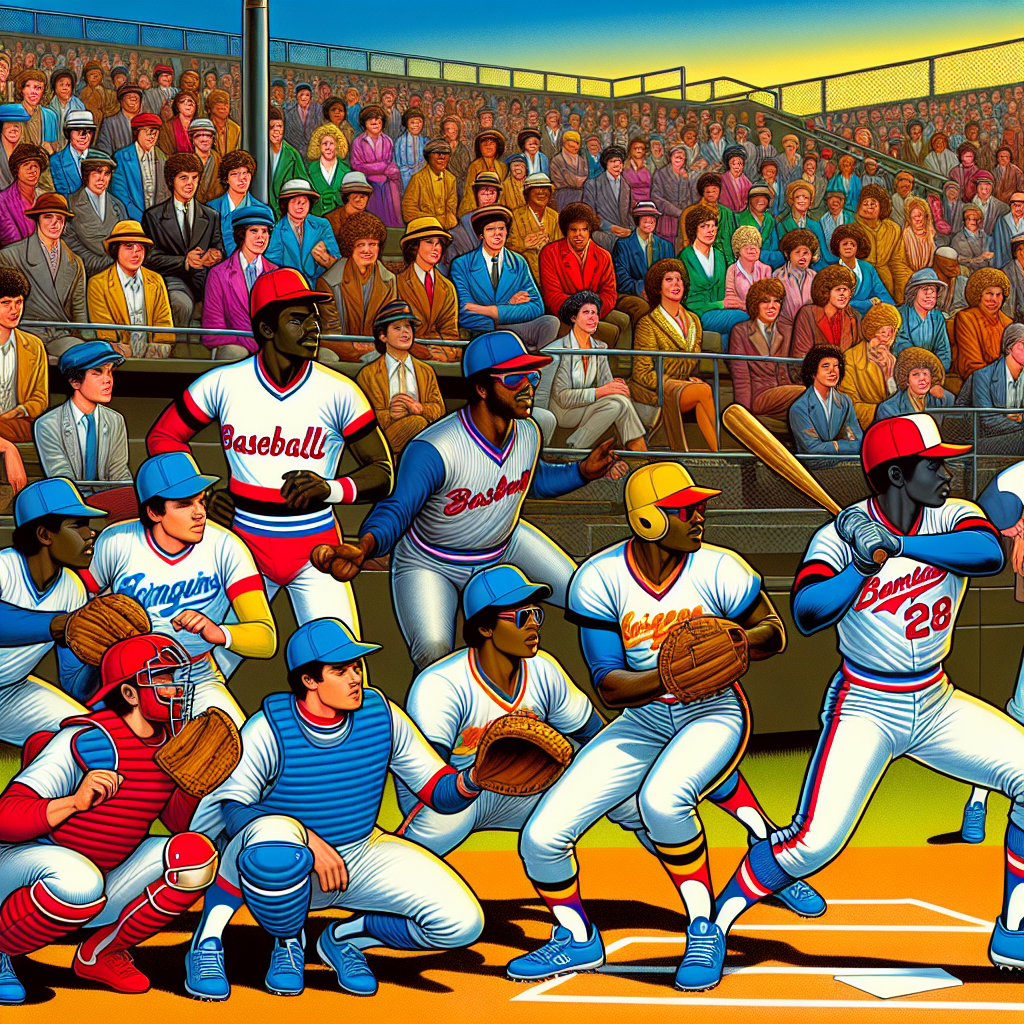
The 1980s were a transformative decade for Major League Baseball (MLB) and its position within American culture and society. As the world navigated through dynamic socio-political and economic changes, baseball proved to be a resilient and adaptable sport, continuously evolving to stay relevant in the eyes of an ever-diversifying audience. The evolution of baseball during this time wasn’t just limited to the game played on the field; it extended to how the MLB positioned itself as an influential cultural entity, responding to the shifting tides of the 1980s social atmosphere.
The decade brought with it challenges that included fluctuating economic conditions, rapid technological advancements, and shifts in societal expectations. Baseball faced stagnation midway through the 1970s, and the 80s demanded rejuvenation, pushing the sport to innovate and find new ways to capture the public’s attention. Simultaneously, the 1980s were marked by major labor negotiations, the increased commercialization of sports, and a newfound focus on television broadcasting, each aspect playing a significant role in shaping baseball’s trajectory.
Moreover, the decade saw changes in demographics within baseball itself, with the sport becoming more inclusive. This inclusivity played a crucial role in reflecting societal ideals of diversity and acceptance, making baseball more reflective of the American cultural landscape. As we look back at the 1980s, we see a fascinating tapestry of events and shifts, illustrating how baseball adeptly rose to meet the challenges of an ever-evolving society. This era set the tone for a future that would see baseball not just as a game but as a pivotal part of America’s social fabric.
Economic Upheaval and Baseball’s Financial Growth
During the 1980s, the United States saw significant economic turbulence. The early part of the decade was marked by a severe recession, followed by economic recovery and growth in the latter half. These shifts in the economic landscape had profound impacts on Major League Baseball, as the league needed to adapt rapidly to preserve its status as America’s favorite pastime.
Teams faced a necessity to change their economic models. The move from public funding for stadium constructions to private investments marked a pivotal change, hinting at baseball’s commercialization trend. The use of sponsorship arrangements and endorsement deals grew, leading teams to intensify their marketing efforts. This era also saw corporations associating themselves more heavily with teams to gain visibility, thus injecting new funds into the league and encouraging a more business-oriented approach to managing baseball franchises.
Players witnessed financial growth, too, as free agency became more pronounced in its effects. Salaries skyrocketed as athletes gained more negotiating power, resulting in increased focus on players not only as athletes but as public figures and brand ambassadors. The growth in player salaries reflected broader economic trends in the U.S., as industries boomed leading to more substantial disposables incomes for many. From a fan’s perspective, ticket prices and merchandise saw incremental increases turning a baseball outing into an evolving family investment.
The Rise of Television and Media Influence
The 1980s was an era dominated by the rise of television as a primary medium for entertainment, and baseball was quick to harness TV’s potential to expand its reach. This decade solidified baseball’s place in American homes through strategic broadcasting deals that brought games into living rooms across the country.
Baseball’s partnership with television networks like ABC and NBC brought the sport unprecedented exposure, making it accessible even to those who couldn’t attend games in person. The explosion of cable television also played a significant role, with networks such as ESPN beginning to show a variety of games and baseball-centric programming, which included sports analysis, highlight reels, and interviews with players and coaches. This was a massive stride in promoting not just the games themselves but also the stories and personalities that made baseball so beloved.
The reaffirmation of television allowed baseball to cultivate a dedicated national audience, enhancing community bonds among baseball fans that transcended geographic limitations. Additionally, this exposure positioned baseball as a prime avenue for advertising, drawing more significant corporate interest and investment. The coverage expanded baseball’s fan base internationally, beginning a globalization process that would only grow in the decades to follow. The television era brought with it challenges, such as a crowded sports broadcasting space, but baseball’s adaptability ensured it remained a staple in American life.

Labor Relations and Their Implications
Labor relations became a tenet of baseball’s evolution during the 1980s. The decade was marked by significant contract negotiations, player strikes, and salary disputes, highlighting evolving labor dynamics that had long-term impacts on the game. These challenges were emblematic of the broader struggles faced by many American industries during this period.
The players’ strike of 1981 was one of the most significant events, resulting in the cancellation of a substantial portion of the season. This strike underscored the growing assertiveness of the MLB Players Association (MLBPA) and demonstrated their resolve in seeking better contracts and working conditions. The resolution of such disputes was essential in setting precedents for labor agreements that respected players’ rights and acknowledged their contributions to the economics of the sport.
This era of labor unrest and negotiation ultimately laid the groundwork for more structured player-owner relations in the decades that followed. Fans learned to appreciate the human aspects of the players’ struggles, while owners came to understand the necessity of fair agreements to ensure the ongoing prosperity of baseball. The ripples from these labor challenges extended beyond baseball, providing lessons in conflict resolution and negotiation strategies to other industries facing labor disputes.
The Impact of Technology on the Game
In the 1980s, technological advancements began to find their way into baseball, bringing about changes that would affect how the game was played, analyzed, and consumed by fans. Technology started to alter everything from training methods to broadcast quality, setting in motion trends that have only accelerated in recent years.
One of the most significant developments was the introduction of video analysis. Teams, coaching staff, and players began utilizing new technologies to study game footage, enabling them to refine strategies and enhance player performance. This method of breaking down game action into analyzable elements was revolutionary, enabling increased understanding of player mechanics and team strategies.
Fans also benefited from these technological innovations. Improved broadcast technologies brought clearer images and more statistics into viewers’ homes, enriching the fan experience and allowing for deeper engagement with the sport. Enhanced scoreboards and stadium facilities began employing digital displays, providing fans with real-time statistics and a more dynamic experience at ballparks.
This technological revolution set the stage for the booming analytics era of baseball in years to come, where data became a driving force in player recruitment, game-day decisions, and fan interaction. The groundwork laid during the 1980s ensured that baseball remained cutting-edge, embracing technology as a critical ally in its continued evolution.
Baseball’s Role in Social Issues and Diversity
The social fabric of the 1980s saw increased conversations around race, gender, and equality, and baseball, as a microcosm of American society, reflected these broader societal changes. The decade’s efforts aimed at increasing diversity within the teams exemplified baseball’s role as a platform for showcasing America’s multicultural identity.
The representation of players of different ethnicities began to rise, with Latin American players and players of Asian descent making significant impacts on the game. Organizations within MLB started placing more emphasis on diverse talent scouting and recruitment, expanding baseball’s talent pool and enriching the sport’s cultural narrative.
As for gender, although women were still largely absent from the professional playing fields, their roles in coaching, team management, and broadcasting began gradually growing, paving the way for future inclusivity efforts. Moreover, baseball leveraged its platform to address broader societal issues through charity initiatives, community engagement, and campaigns that advocated for equality and social justice.
By championing diversity and inclusion, baseball not only mirrored the progressive tendencies within American society but also reinforced its status as a unifying factor that appreciated and celebrated differences. This adaptation was as crucial to baseball’s survival and relevance in the 1980s as it was to the sport’s future health and vibrancy.
Conclusion
The 1980s were a turbulent yet transformative time for Major League Baseball, as the sport adapted to a changing society with remarkable resilience and ingenuity. Faced with economic challenges, advancements in technology, labor disputes, and shifts in societal values, baseball found innovative ways to remain an intrinsic part of American culture. It emerged stronger, having addressed these challenges by embracing change, whether through the commercialization of the sport, leveraging media and technology, or reflecting social diversity.
The decade laid critical foundations for how baseball would continue to develop, setting benchmarks for player relations, embracing technological advancements, and affirming its role as a vehicle for social commentary. Whether examining the effects of economic conditions on player salaries and team operations, the rise of television broadcasting, or the inclusion of diverse voices and cultures within the sport, the 1980s marked a period of substantial progress and adaptation.
In examining this era, we not only appreciate baseball’s deft ability to adapt but also recognize how such strategies have been indispensable in maintaining the sport’s allure well into the 21st century. As baseball continues to meet new societal challenges, lessons from the 1980s remain ever pertinent, highlighting the sport’s outstanding ability to reflect and shape the world around it.
Frequently Asked Questions
1. How did Major League Baseball (MLB) adapt to the economic changes in the 1980s?
During the 1980s, MLB faced a backdrop of considerable economic changes that required adjustments to remain competitive and lucrative. The decade was marked by the rise of free agency, which transformed player contracts and team compositions. Free agency allowed players to negotiate deals and move between teams more freely, which meant MLB had to accommodate higher player salaries. This shift in player dynamics was a direct response to the growing revenue within baseball, fueled by television deals and expanding media markets.
Additionally, teams worked on increasing revenue through other streams, such as merchandise and ticket sales. The construction of new stadiums and enhancement of existing ones also played a part in boosting gate receipts. These factors, coupled with aggressive marketing campaigns designed to draw in fans, demonstrated MLB’s adaptability to the economic shifts of the 1980s.
2. How did baseball address the changing socio-political landscape of the time?
In the 1980s, baseball was situated amid a rapidly evolving socio-political landscape. The decade witnessed an increase in the push for civil rights and equality across various facets of public life. Baseball, inherently American, took steps to ensure it reflected these societal progressions. The league began to embrace diversity more openly, realizing that a more inclusive approach would resonate with a broader segment of the population.
Not only were teams increasingly composed of players from varied racial backgrounds, but the MLB also aimed to amplify Latin American presence within the league, acknowledging the critical role these players played in the game’s history. Initiatives were spearheaded to promote the participation and support for minority communities both on the field and within executive roles, ensuring that baseball maintained its status as a sport for all Americans, regardless of background.
3. What impact did technological advancements have on baseball in the ’80s?
Technology played a pivotal role in reshaping baseball during the 1980s, particularly in how it was consumed by fans. The advent of cable television allowed for a broader reach of baseball games, breaking the geographical barriers that earlier limited viewership. This era saw the launch of ESPN and other networks that broadcast baseball nationally, making games more accessible to fans regardless of location.
Moreover, technological advancements in stadiums, from electronic scoreboards and better lighting to enhanced seating arrangements, improved the in-stadium experience for fans. Baseball also started embracing computer technology, laying groundwork for statistical analysis which would later evolve into advanced sabermetrics, changing how teams were evaluated and managed.
4. How did baseball’s cultural image evolve during the 1980s?
Baseball’s cultural image underwent a significant transformation during the 1980s, largely driven by its efforts to be more connected to pop culture and youth demographics. By aligning with contemporary music, fashion, and public figures, MLB sought to rejuvenate its image. Baseball players like Pete Rose, Nolan Ryan, and Rickey Henderson became larger-than-life figures whose personas extended beyond the diamond.
Consequently, the MLB partnered with various entertainment industries, leading to crossover events and initiatives that merged the allure of Hollywood with the charm of America’s favorite pastime. The league acknowledged the importance of maintaining a youthful appeal, as evident by the collaboration with consumer brands and products that were staples in youth and young adult markets of the time.
5. What were some key changes in the management and operational aspects of MLB during this decade?
Baseball’s management and operational dynamics saw profound changes during the 1980s. One of the most notable shifts was the professionalization of team management with the introduction of advanced data management approaches, although these were in nascent stages compared to later developments. The focus wasn’t only on the field performance but also on operational efficiency and financial sustainability.
The league also engaged in expansions and relocations to align with the demographic shifts occurring within the United States. Cities with emerging markets were eyed for potential team placements, which led to rigorous market analyses and strategic planning. Moreover, MLB’s relationship with the players underwent vital changes with renewed collective bargaining agreements that addressed free agency, minimum salary guarantees, and player rights, setting a precedent for future labor relations within the sport.