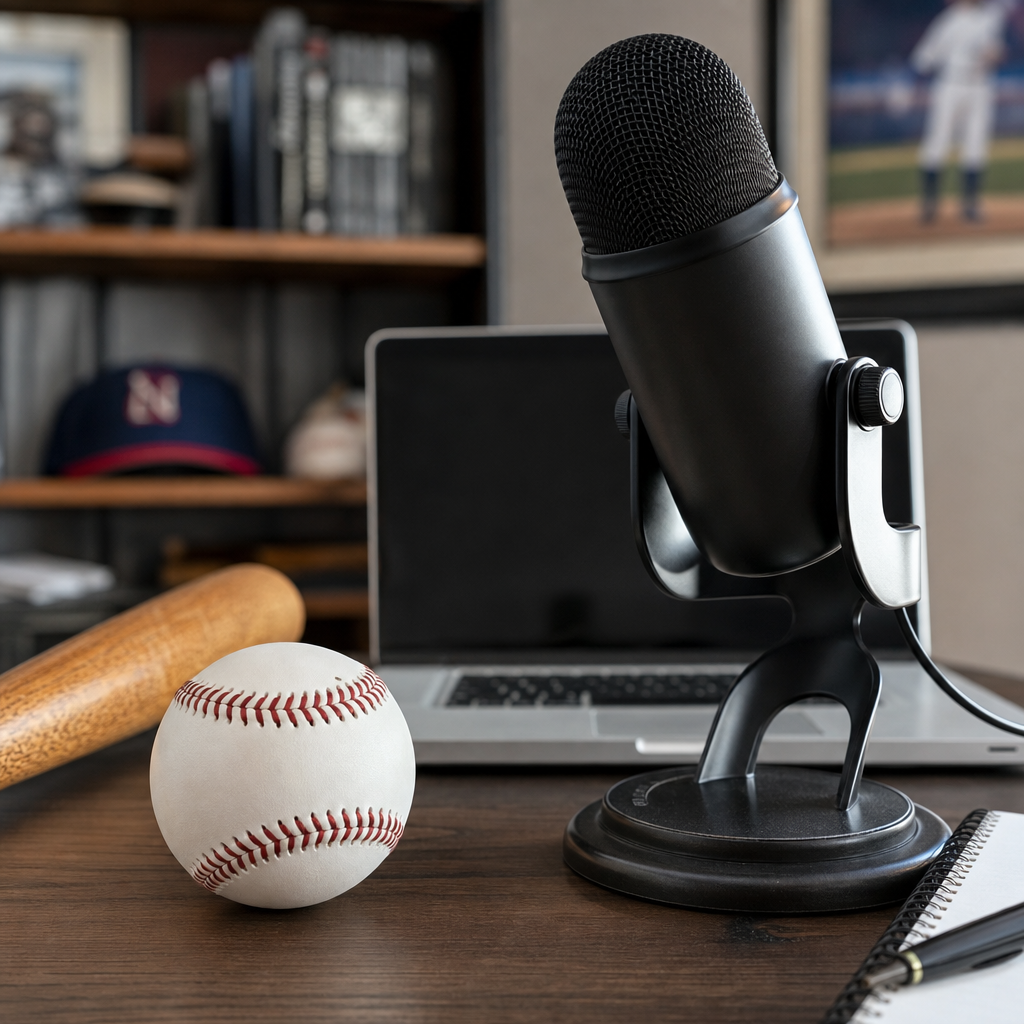
Baseball broadcasting has always evolved with the habits of fans, but nothing has changed the listening experience more dramatically than the rise of baseball podcasts. “Podcasting Home Runs: The Rise of Baseball Podcasts” sits at the center of broadcasting evolution because podcasts have reshaped how people follow teams, learn strategy, revisit history, and connect with the game between pitches. In practical terms, a baseball podcast is an on-demand audio show distributed through platforms such as Apple Podcasts, Spotify, YouTube, and RSS-enabled apps. Unlike live radio, it is available whenever the listener wants it, and unlike traditional studio television, it can be produced quickly, cheaply, and with a highly specific point of view.
This shift matters because baseball is unusually well suited to audio storytelling. The sport is built on daily rhythms, long seasons, rich archives, local identities, and endless debate over roster moves, player development, analytics, and nostalgia. In my experience working on sports content strategy, baseball consistently generates more “lean back” listening than faster, highlight-driven sports because fans want context as much as action. They want to know why a reliever’s spin rate matters, how a front office thinks about service time, what a beat writer saw in the clubhouse, or why a 1975 pennant race still shapes a franchise’s mythology. Podcasts answer those questions in a format that feels personal and portable.
As a hub within innovations and changes in baseball, this article explains how baseball podcasts emerged, why they exploded, how they differ from radio, who makes them, how teams and media companies use them, what formats work best, and where the medium is heading next. It also maps the larger broadcasting evolution around them: streaming, social distribution, direct-to-fan media, advanced analytics, and fan communities that expect expertise on demand. Understanding baseball podcasts is essential to understanding modern baseball media, because they are no longer a side channel. They are now a primary way the sport is interpreted, marketed, and experienced.
Why baseball adapted so well to podcasts
Baseball and podcasting fit together for structural reasons. A Major League season stretches across 162 games before the postseason, creating a constant need for fresh commentary. Fans do not just tune in weekly; they check in daily. That volume of events supports multiple show types at once: rapid postgame reaction, prospect reports, weekly league analysis, historical storytelling, labor and business coverage, fantasy baseball advice, and deeply local team podcasts. A football podcast can live on one weekly preview and one recap. Baseball can sustain a morning briefing, a farm system update, a trade rumor episode, and a Sunday long-form interview without exhausting the audience.
The pace of the sport helps too. Baseball rewards nuance. A listener can absorb a discussion about pitch design, catcher framing, arbitration rules, or lineup construction while commuting, walking, or doing chores. The conversation does not need to compete with nonstop visual action. That is the same reason baseball thrived on radio for decades: description, analysis, and imagination all matter. Podcasts inherit that legacy but remove time-slot constraints. Fans can listen to a 12-minute news burst or a 90-minute deep dive on the evolution of the sweep slider.
Another reason is the fragmentation of fandom. National broadcasts still matter, but baseball loyalty is often intensely local. Podcasting supports niche audiences economically because production costs are low and distribution is global. A podcast focused entirely on the Baltimore Orioles farm system, Japanese players transitioning to MLB, or baseball stadium architecture can survive if it serves a dedicated audience well. That was far harder in traditional radio, where airtime was scarce and programming had to satisfy broader demographics.
From radio booths to on-demand baseball media
To understand the rise of baseball podcasts, it helps to place them in the longer history of broadcasting evolution. Baseball was one of the defining radio sports of the twentieth century. The announcer served as narrator, reporter, and companion, translating the game in real time for people far from the ballpark. Television then added pictures, replays, graphics, and eventually advanced metrics overlays. Cable expanded access, while sports networks professionalized studio discussion. The internet brought blogs, message boards, streaming audio, and digital highlights. Podcasting emerged from that environment as the next logical step: portable, subscription-based, personality-driven media that could blend the intimacy of radio with the depth of written analysis.
Early baseball podcasts often resembled blog talk in audio form. Independent writers and fans used simple microphones and free hosting to discuss trades, rankings, and front-office decisions. As smartphones spread and listening apps became frictionless, quality and ambition increased. Established outlets such as MLB.com, The Athletic, ESPN, Yahoo Sports, and regional sports publishers invested in recurring baseball shows. Team-specific creators built loyal communities. Former players and executives joined the space, bringing firsthand knowledge of scouting, clubhouse culture, biomechanics, and labor negotiations.
The result is a media landscape where podcasts complement live broadcasts rather than replace them. The game broadcast still delivers the event. The podcast delivers interpretation before and after it. In media planning terms, podcasts extend the lifecycle of baseball coverage. A Tuesday night game becomes Wednesday morning analysis, Thursday roster speculation, and a weekend interview with the hitting coach. That layered coverage increases fan engagement and creates more monetizable inventory for publishers and sponsors.
The main formats that define baseball podcasts
Not all baseball podcasts serve the same purpose. The strongest shows are clear about format, audience, and frequency. Daily recap podcasts summarize scores, standout performances, injuries, and transaction news for fans who want a quick update. Analysis-driven podcasts go deeper on mechanics, strategy, player valuation, and front-office decision-making. Interview shows feature players, managers, scouts, broadcasters, agents, and journalists. Narrative series explore a single season, scandal, dynasty, or cultural moment. Fantasy baseball podcasts focus on projections, playing time, and waiver-wire advice. Prospect shows track minor league development and international signings. Team podcasts create a local gathering point, often reacting to each game, press conference, and rumor cycle.
These formats succeed when they match listener intent. If someone asks, “What happened in baseball today?” a concise daily show works. If the question is, “Why did this pitcher suddenly break out?” the answer requires data, mechanics, and comparative examples. I have found that the best baseball audio producers design episodes around those real user questions rather than around abstract branding. That is why durable shows usually develop consistent segments: injury updates, three takeaways, mailbag, stat of the week, prospect spotlight, or historical parallel.
| Format | Main Audience Need | Typical Length | Example Topic |
|---|---|---|---|
| Daily recap | Fast news and results | 10–25 minutes | Last night’s scores and standout players |
| Team-specific analysis | Local insight and reaction | 25–60 minutes | Why a club changed its batting order |
| League-wide deep dive | Strategy and context | 45–90 minutes | How pitch design is changing bullpens |
| Prospect and draft show | Future talent evaluation | 30–60 minutes | Ranking top shortstop prospects |
| History or narrative series | Storytelling and legacy | 20–50 minutes | Revisiting a pennant race or labor dispute |
Clear format decisions also shape monetization and distribution. Short daily shows fit morning listening habits and can carry frequent host-read ads. Long-form shows often build stronger loyalty and subscription value. Team-specific podcasts can integrate local sponsors, ticket offers, newsletters, and community events more naturally than broad national products.
How podcasts changed the fan relationship with expertise
One of the biggest shifts in baseball broadcasting is that expertise is no longer filtered only through national studios or local game booths. Podcasts widened the field. Today a listener can hear a former pitcher explain seam-shifted wake, a beat writer unpack clubhouse dynamics, an analyst discuss park-adjusted offense, or a labor reporter break down competitive balance tax implications. That matters because modern baseball is more technical than it appears on the surface. Terms like weighted on-base average, chase rate, extension, tunneling, and platoon advantage are now part of everyday fan conversation, and podcasts have been central to that education.
The strongest baseball podcasts translate complexity without flattening it. They explain that Wins Above Replacement is a useful estimate, not a sacred truth. They distinguish publicly available metrics from proprietary team models. They note that scouting reports and performance data can conflict, especially in the minors. They also correct common misconceptions. For example, a pitcher’s win-loss record says less about individual quality than strikeout rate, walk rate, contact suppression, and durability. A good podcast can teach that in ten minutes with a recent example, making fans more informed without making the game less fun.
This democratization of expertise has also changed credibility standards. Listeners can compare voices quickly. If a host misstates option rules, misunderstands service time, or ignores sample-size issues, informed audiences notice. In my experience, baseball podcast listeners are particularly discerning because the sport attracts detail-oriented fans. The shows that endure tend to cite specific reporting, reference recognized sources like FanGraphs, Baseball Reference, Statcast, Baseball Savant, or official MLB announcements, and separate observation from speculation.
Teams, media companies, and independent creators
Baseball podcast growth has come from three groups with different strengths. Team-run podcasts offer access. They can feature executives, broadcasters, alumni, and behind-the-scenes staff, and they can align episodes with ticket sales, promotions, and community outreach. Their limitation is obvious: they rarely sound fully independent, especially during losing seasons or front-office controversy. Media company podcasts provide reporting infrastructure, editing support, sales teams, and cross-promotion through websites, newsletters, and social channels. Their challenge is differentiation in a crowded market.
Independent creators often bring the sharpest personality and the narrowest niche focus. They can be faster, more candid, and more experimental. Some build strong businesses through Patreon memberships, YouTube monetization, paid newsletters, Discord communities, live events, and merchandise. The tradeoff is workload. Sustaining research, booking, recording, editing, publishing, and audience development without institutional support is difficult, especially during the daily grind of the baseball season.
The healthiest baseball media ecosystem includes all three. Team media can humanize organizations. Independent podcasts can challenge conventional narratives. Established publishers can connect breaking news to broader analysis. For listeners, that mix creates a fuller picture of the sport than any single broadcast channel could offer alone.
What makes a baseball podcast actually good
Successful baseball podcasts share several traits. First, they respect the listener’s time. Even long episodes need structure: a strong opening, clear transitions, and a reason each segment exists. Second, they balance immediacy with shelf life. News-heavy episodes satisfy current demand, but evergreen topics like player development, rule changes, broadcasting history, or the economics of free agency continue attracting listeners through search and recommendations. Third, they sound professional. Audio quality, pacing, and editing are not cosmetic; poor sound drives abandonment.
Fourth, they use examples instead of clichés. Saying a team “needs more offense” is weak analysis. Explaining that the club ranks near the bottom in hard-hit rate against right-handed pitching and has struggled to get on base ahead of its power bats is useful. Fifth, they understand tension and uncertainty. Baseball is a probabilistic sport. Smart hosts do not present every slump as collapse or every hot streak as transformation. They discuss variance, health, competition level, schedule strength, and underlying indicators.
Distribution strategy matters as much as content. The best publishers pair episodes with transcripts, show notes, clip packages, and related articles. They link to roster analysis, prospect rankings, game recaps, or historical explainers so each episode strengthens the wider baseball coverage network. That hub-and-spoke approach is especially effective for a broadcasting evolution topic because users often move from broad media history into specific interests like streaming rights, local announcers, radio traditions, or team podcast ecosystems.
Where baseball podcasts fit in the future of broadcasting evolution
Baseball podcasts are no longer a novelty; they are infrastructure. Their future is tied to larger media changes already underway. Video podcasts are expanding reach on YouTube, where discovery is stronger than in many audio apps. Smart clipping lets a one-hour episode generate short segments for social platforms and newsletters. Dynamic ad insertion improves monetization. Subscription bundles combine podcasts with articles, ad-free listening, private feeds, and community access. AI-assisted transcription and search make episodes easier to index and quote, which increases their value as reference media as well as entertainment.
At the same time, the fundamentals remain human. Fans return for trust, clarity, and point of view. The baseball podcasts that will matter most over the next decade are the ones that combine reporting, technical knowledge, and storytelling with consistent editorial standards. They will explain rule adjustments, media-rights disputes, international growth, women’s baseball coverage, youth development trends, biomechanics, gambling policy, and whatever the next wave of baseball innovation brings.
For anyone studying broadcasting evolution, baseball podcasts offer the clearest example of how sports media now works: live events create urgency, digital platforms remove distribution barriers, experts build direct relationships with audiences, and niche coverage can scale when it serves real fan questions. That is the main lesson of this hub page. Baseball podcasts have expanded access, deepened understanding, and extended the conversation far beyond the ninth inning. If you are building out your knowledge of innovations and changes in baseball, use this page as your starting point and explore the connected articles on radio history, streaming, announcer styles, and team media strategy next.
Frequently Asked Questions
What is a baseball podcast, and why has it become so popular with fans?
A baseball podcast is an on-demand audio program focused on some aspect of the sport, from daily team coverage and postgame reactions to analytics breakdowns, prospect reports, historical storytelling, interviews, and fan commentary. Unlike traditional radio, which follows a fixed schedule, podcasts let listeners choose what they want to hear and when they want to hear it. That flexibility is a major reason baseball podcasts have become so popular. Fans can listen during a commute, at the gym, while walking the dog, or even while keeping score during a game.
The format also fits baseball especially well. Baseball has a long season, a deep statistical culture, and a fan base that enjoys nuance, debate, and storytelling. Podcasts give creators the time to explore topics that may get only a few minutes on a radio show or TV segment. A host can spend an entire episode discussing a pitching adjustment, a front-office decision, a minor league call-up, or the legacy of a classic World Series. That depth creates a stronger connection for listeners who want more than headlines and highlights.
Another reason for the surge is accessibility. Anyone with a smartphone can subscribe through major listening platforms, and there are now podcasts for nearly every kind of baseball fan. Some focus on one MLB team, some cover the entire league, some specialize in fantasy baseball, and others dive into sabermetrics or baseball history. That variety means fans can build a highly personalized listening experience, making podcasts one of the most important developments in modern baseball media.
How are baseball podcasts different from traditional baseball radio broadcasts?
Traditional baseball radio broadcasts are built around live action. Their primary purpose is to describe the game in real time, capture the atmosphere, and help listeners follow every pitch, hit, and defensive play as it happens. Baseball podcasts serve a different role. Instead of focusing mainly on live play-by-play, they expand the conversation around the game. They explain trends, analyze strategy, react to news, interview insiders, and tell stories that go beyond what can fit into a live broadcast window.
One of the biggest differences is pace and structure. Radio has tight timing, commercial breaks, and station programming constraints. Podcasts usually have more editorial freedom. Hosts can go long on a subject, use a more informal conversational style, and tailor each episode to a specific audience. That often leads to richer analysis and stronger host-listener relationships. Fans feel like they are part of an ongoing conversation rather than simply tuning in to a broadcast.
Podcasts also allow for niche specialization in a way traditional radio often cannot. A local station may cover one team or a broad set of sports topics, but a podcast can focus entirely on bullpen usage, player development, baseball cards, women in baseball media, or the history of Negro Leagues. That level of focus has changed the listening experience dramatically. Rather than relying on a single broadcast voice, fans can now assemble a media lineup that reflects their exact interests, giving them more control, more depth, and more perspectives than ever before.
What kinds of baseball podcasts are available, and how do listeners choose the right ones?
The baseball podcast landscape is broad enough to serve almost every type of listener. Team-specific podcasts are among the most common, offering game recaps, roster analysis, trade speculation, and season-long coverage for dedicated fans. League-wide shows cover major storylines across MLB, often blending news, opinion, and interviews. There are also analytics-focused podcasts that explain advanced stats, player performance trends, and front-office thinking, which appeal to listeners who want a deeper understanding of the modern game.
Beyond that, many podcasts center on baseball history, oral storytelling, and culture. These shows revisit legendary players, famous pennant races, labor battles, rule changes, and the evolution of the sport’s media coverage. Other podcasts target fantasy baseball players, collectors, bettors, or youth coaches and parents looking for player development insights. Some are hosted by journalists and broadcasters, while others are led by former players, coaches, or passionate independent creators with a distinctive point of view.
Choosing the right baseball podcast depends on what a listener wants most: immediacy, expertise, entertainment, or community. A good starting point is to identify whether the goal is to follow a favorite team closely, stay updated on league news, understand strategy better, or enjoy baseball stories between games. From there, listeners should pay attention to episode frequency, host chemistry, audio quality, and whether the show offers thoughtful analysis instead of surface-level reactions. The best baseball podcasts tend to combine credibility with personality, making listeners feel both informed and welcomed back for the next episode.
How have baseball podcasts changed the way fans connect with teams, players, and the sport itself?
Baseball podcasts have made the fan experience more continuous and interactive. In earlier eras, many fans connected with the game through live broadcasts, newspaper columns, highlight shows, and occasional interviews. Now, podcasts keep the conversation alive every day, even on off days and during the offseason. That constant access helps fans stay engaged with team narratives, player development, injury updates, prospect movement, clubhouse dynamics, and front-office strategy in a way that feels more immediate and personal.
They have also changed the relationship between fans and media voices. Podcast hosts often develop loyal audiences because their tone is more direct and conversational than traditional broadcasters. Listeners return not just for information, but for trusted perspective. Many podcasts incorporate mailbags, social media questions, listener voicemails, and fan communities, which gives audiences a more active role in shaping the discussion. That participation strengthens the sense that baseball fandom is no longer a one-way media experience.
For players, coaches, and insiders, podcasts have become a powerful platform as well. Long-form interviews allow them to explain decisions, routines, and experiences in their own words, often with more depth than a short television appearance would allow. For fans, that means greater access to the human side of the game. A listener can come away with a better understanding of how a pitcher sequences hitters, how a manager handles a clubhouse, or how a prospect adjusts to the major leagues. In that way, baseball podcasts do more than report on the sport; they deepen the emotional and intellectual connection fans have with it.
Why are baseball podcasts important to the future of sports broadcasting?
Baseball podcasts matter because they reflect a larger shift in how audiences consume media. Modern fans increasingly want content on demand, tailored to their interests, and available across devices and platforms. Podcasts meet all of those expectations. They remove the limitations of fixed schedules and make baseball coverage portable, searchable, and highly customizable. As listening habits continue to move toward digital and mobile platforms, podcasts are becoming a central part of how sports media reaches and retains audiences.
They are also important because they broaden the range of voices in baseball broadcasting. In the past, access to an audience often depended on working for a radio station, newspaper, or television network. Podcasting lowered that barrier. Independent creators, beat writers, historians, analysts, former players, and local experts can now build audiences by offering insight and consistency. That has led to a more diverse and dynamic baseball conversation, where fans can hear different perspectives and choose the style of coverage they trust most.
Looking ahead, baseball podcasts are likely to play an even bigger role in the sport’s media ecosystem. They support year-round engagement, create sponsorship and subscription opportunities, and help teams, leagues, and media brands maintain relationships with fans between live events. Just as importantly, they complement rather than replace traditional broadcasts. Live radio and television still deliver the game itself, but podcasts enrich everything around it: the context, the debate, the memory, and the meaning. That combination is why baseball podcasts are not just a trend, but a lasting part of broadcasting’s evolution.