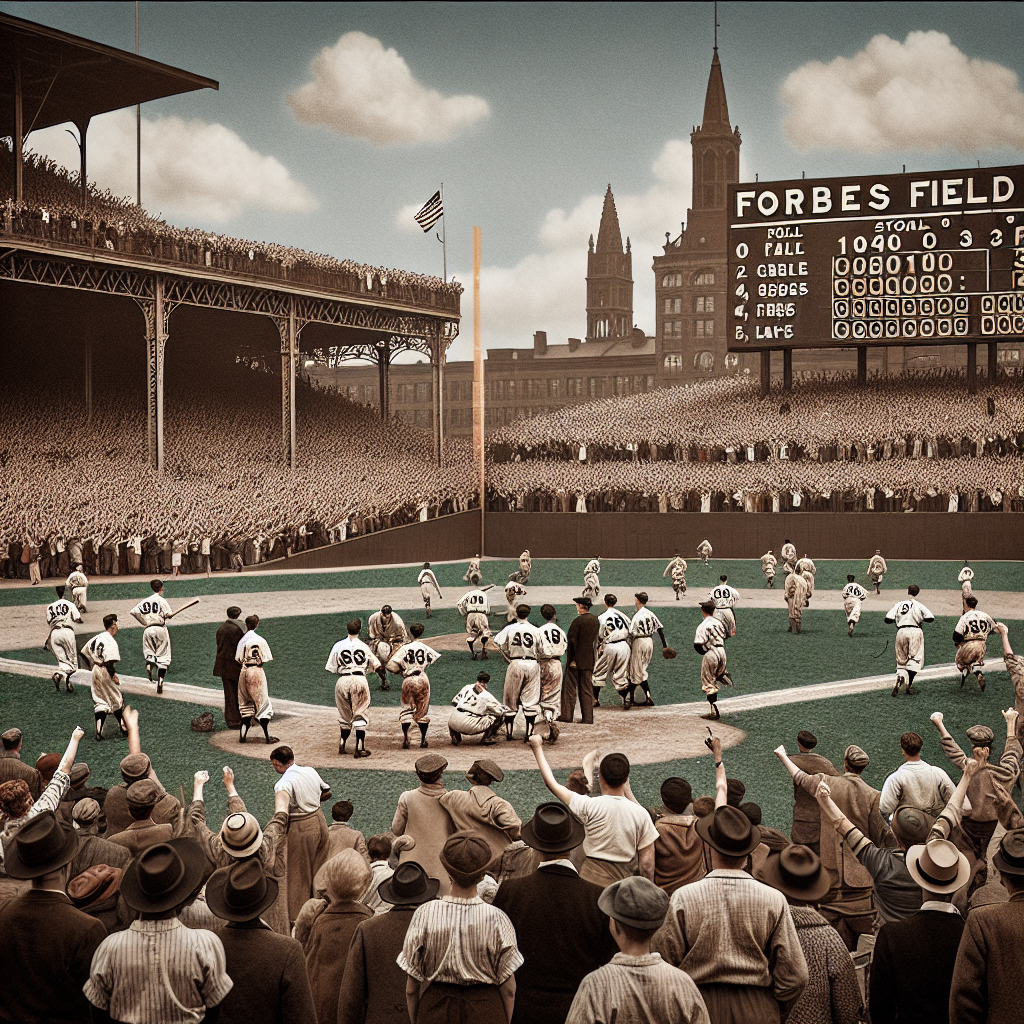
The 1960 Pittsburgh Pirates season remains one of the most memorable and extraordinary periods in baseball history. The Pirates, led by a mix of veteran leadership and young talent, captured the hearts of fans and etched their place in the annals of the sport by winning their first World Series in 35 years. The defining moment of this incredible season was Bill Mazeroski’s walk-off home run in Game 7 of the World Series, forever known as “The Miracle of Forbes Field.” This article dives deep into the pivotal events, key players, and the broader significance of that miraculous season.
The city of Pittsburgh, often known for its steel industry, found an entirely new reason to shine in 1960. Manager Danny Murtaugh steered the team with a steady hand, navigating through the rigors of a long season. While the New York Yankees were the favorites with their robust lineup and storied history, the Pirates showcased an indomitable spirit that could not go unnoticed.
Baseball fans and historians alike still revel in the tales from this iconic season. Whether it was the clutch performances, the defensive brilliance, or the sheer excitement of tight contests, the 1960 Pittsburgh Pirates crafted a narrative rich with drama and unparalleled joy. The team’s journey to the pinnacle of baseball was not merely a sequence of games but a series of moments that encapsulated everything beautiful about the sport.
In this comprehensive examination, we will explore the team dynamics, key regular-season performances, pivotal series games, and, of course, the historical significance of Mazeroski’s legendary homer. Let’s journey back to 1960 and relive the moments that made the Pittsburgh Pirates a beacon of hope and triumph in the world of baseball.
Team Dynamics and Leadership
The success of the 1960 Pittsburgh Pirates cannot be fully understood without delving into the team dynamics and leadership that characterized the season. Manager Danny Murtaugh’s role was crucial. Known for his down-to-earth demeanor and excellent communication skills, Murtaugh managed to foster a sense of unity and purpose within the squad. His philosophy was straightforward – focusing on fundamentals, teamwork, and maintaining a positive clubhouse atmosphere.
Murtaugh’s leadership style resonated well with the players, who looked up to him not just as a manager but also as a mentor. Veteran players like Dick Groat, who won the National League MVP that season, and Vern Law, who clinched the Cy Young Award, provided the much-needed experience and stability. Groat’s exceptional batting and Law’s dominant pitching performances were critical elements in the Pirates’ successful campaign.
The team’s chemistry was further enhanced by young talents like Bill Mazeroski and Roberto Clemente. Mazeroski, already known for his defensive skills, became a household name with his clutch performances. Clemente’s consistently high level of play and fiery competitive spirit added to the team’s overall strength. Their blend of youthful exuberance and seasoned experience formed a finely-tuned machine capable of taking on any challenge.
The Pirates’ success was not just about individual accomplishments; it was about how these individual skills complemented each other and came together harmoniously. Players were willing to adapt and fill roles as needed, focusing on the collective goal rather than personal accolades. Such was the environment Murtaugh fostered – a team-first mentality that proved to be a winning formula throughout the season.
Regular Season Performance
The Pittsburgh Pirates displayed remarkable consistency during the 1960 regular season, finishing with a record of 95-59, topping the National League standings. Their success was characterized by strong pitching, timely hitting, and exemplary fielding – all of which played a crucial role in their regular-season triumphs. The Pirates managed to sustain their performance levels from April through September, rarely encountering prolonged slumps.
Vern Law’s pitching was instrumental; he posted a 20-9 record with a 3.08 ERA, earning him the National League Cy Young Award. Contributing significantly on the mound was also Bob Friend, who led the league in innings pitched and provided a reliable arm in the rotation. Combined, these two pitchers anchored a rotation that kept the Pirates competitive in nearly every game they played.
On the offensive front, Dick Groat led the charge with a .325 batting average, earning him the National League MVP. Roberto Clemente and Smoky Burgess provided additional firepower, consistently driving in runs and maintaining pressure on opposing pitchers. Bill Mazeroski’s batting might not have always grabbed headlines during the regular season, but his defensive prowess shone brightly. In the lineup, each player knew their role and executed it to perfection.
Furthermore, Forbes Field became a fortress for the Pirates, who showcased a strong home-field advantage with electrifying performances for their fans. Attendance numbers surged as the public caught on to the team’s potential, creating an atmosphere that spurred the players on. The camaraderie and mutual respect within the team resonated well with the crowd, making every home game a spectacle.
The National League Pennant
Securing the National League Pennant in 1960 was no small feat for the Pittsburgh Pirates. The road to the pennant had its fair share of challenges, with formidable opponents like the Milwaukee Braves and the St. Louis Cardinals putting up stiff competition. However, the Pirates remained resilient and focused, leveraging their depth and adaptability to outlast their competitors.
One of the most critical stretches for the Pirates came in August when they went on a remarkable winning streak, effectively creating a gap between them and the second-place Braves. This winning streak included dramatic come-from-behind victories and dominant pitching displays, underscoring the team’s ability to perform under pressure. Key players stepped up during this period, with Bobby Shantz delivering crucial saves and Smoky Burgess coming up clutch with timely hits.
Offensively, the Pirates’ lineup was relentless. They consistently scored runs in bunches and demonstrated an ability to manufacture runs through small ball tactics. The combination of speed and power was a nightmare for opposing pitchers, who struggled to contain the multifaceted offense. Players like Bill Virdon and Don Hoak played pivotal roles in keeping the opposition on their toes.
When the time came to clinch the pennant, a decisive victory against the Cardinals sealed the deal. The players celebrated their achievement, understanding that they had taken a significant step towards their ultimate goal. Yet, the focus quickly shifted to the next monumental task – the World Series. The Pirates knew that to cement their legacy, they would need to overcome the final hurdle, facing the powerhouse New York Yankees.
The World Series Against the Yankees
The 1960 World Series pitched the underdog Pirates against the heavily favored New York Yankees, a team laden with Hall of Famers and champions. Analysts and fans alike predominantly predicted a Yankees victory, but the Pirates had other plans. The series turned out to be an exhilarating roller-coaster of emotions, marking one of the most unforgettable World Series in baseball history.
Games one and two saw the Yankees flexing their muscles, crushing the Pirates by hefty margins. But the Pirates demonstrated resilience, bouncing back with victories in games three and four. The unpredictability of the series made every game a must-watch. Strong performances from Roberto Clemente and timely hitting from Don Hoak and Smoky Burgess kept the Pirates in contention.
Game seven became a battle of wills, with numerous lead changes and moments of high drama. The Yankees, renowned for their powerful lineup and disciplined pitching, faced a Pirates team that played without fear. Vern Law and Harvey Haddix provided valiant efforts on the mound, navigating the treacherous waters of the Yankees lineup. However, it was the bottom of the ninth inning that turned into a theatrical masterpiece for baseball lovers.
With the game tied at 9-9, Bill Mazeroski stepped to the plate and etched his name into baseball folklore. Facing Ralph Terry, Mazeroski connected with a pitch that sailed over the left-field wall. Forbes Field erupted in jubilation as Mazeroski rounded the bases, making the Pittsburgh Pirates the World Champions. This walk-off home run remains the only Game 7 walk-off homer in World Series history and an enduring symbol of one of baseball’s greatest moments.
Legacy and Historical Significance
The 1960 Pittsburgh Pirates’ triumph had far-reaching implications, not just for the franchise but for Major League Baseball as a whole. The unexpected victory highlighted the beauty and unpredictability of the sport. “The Miracle of Forbes Field” served as a reminder that tenacity, teamwork, and belief could overcome seemingly insurmountable odds. The Pirates’ World Series win remains a beacon of inspiration for underdog teams across sports.
Bill Mazeroski’s walk-off home run became an iconic moment, often replayed and celebrated in various baseball anniversaries and historical retrospectives. That single swing symbolized the zenith of sports drama, a moment when dreams materialize into reality. For Mazeroski, it meant eternal hero status within Pittsburgh and the broader baseball community. His home run is not merely a highlight but a pivotal point in the lexicon of baseball lore.
The 1960 season also marked the acceleration of Roberto Clemente’s career as he went on to become one of the most revered players in baseball history. Clemente’s performances throughout the season and the World Series spotlighted his immense talent and resolute spirit. His legacy, intertwined with the 1960 triumph, continues to inspire countless athletes globally.
For the city of Pittsburgh, the victory offered a jubilant reprieve from the industrial challenges and economic struggles pervasive at the time. Forbes Field became a historical landmark, imbued with the memories of that miraculous season. The collective pride and joy derived from the Pirates’ victory reverberated throughout the community, uniting fans and residents in shared celebration.
Conclusion
The 1960 Pittsburgh Pirates season epitomizes the magic and unpredictability that make baseball a uniquely captivating sport. Under the astute leadership of Danny Murtaugh, the Pirates knitted together an extraordinary campaign characterized by fortitude, skill, and collective spirit. The regular-season domination, capped off by an unforgettable World Series, solidified their place in baseball history.
Bill Mazeroski’s dramatic home run will forever be remembered as a defining moment in the sport, a dramatic climax to an already thrilling season. It underscored the ethos of the 1960 Pirates, a team that refused to be cowed by reputations and expectations. Their achievement serves as a lasting reminder of what is possible in the world of sports, inspiring future generations to dream big and perform under pressure.
As we look back upon that storied season, we are reminded of the broader impacts of their victory. Beyond the championships and accolades, the Pirates of 1960 provided moments of joy, hope, and unity to a city and a sport. The “Miracle of Forbes Field” will always remain a testament to the enduring spirit of baseball and the timeless allure of the underdog narrative.