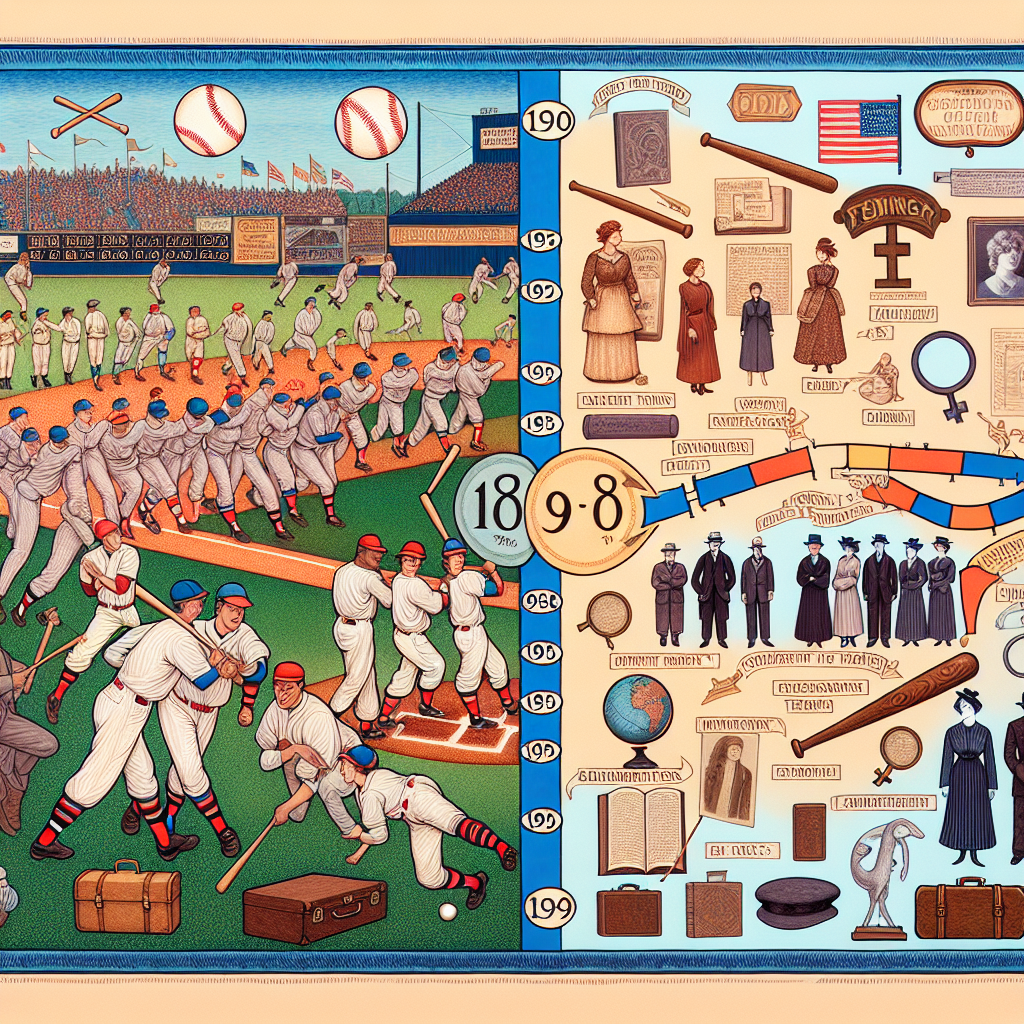
Baseball and the feminist movement may appear at first to belong to entirely different spheres, yet both have been pivotal in shaping modern society. As baseball developed into America’s national pastime, paralleling its evolution was the feminist quest for equality. Interestingly, these two seemingly unconnected realms share significant intersecting histories. This connection reflects broader shifts in cultural and social climates. By exploring the development and impact of women in baseball, we can gain a unique perspective on the feminist movement’s progress. From breaking gender barriers on the field to advocating for equal rights, baseball serves as an unexpected but compelling framework to gauge women’s expanding roles and achievements through different historical periods.
The journey begins in the 19th century, a time when both baseball and the fight for women’s rights were beginning to rise in prominence. Baseball, initially dominated by men, saw the first women’s teams emerging around the 1860s, during the same period the suffragettes were gaining momentum across the United States. Later, as the 20th century unfolded, the integration of women in baseball paralleled significant advancements in feminist advocacy, such as women gaining the right to vote and entering the workforce en masse during World War II. Through various challenges and victories, the participation of women in baseball runs parallel to key milestones in the feminist movement, framing a fascinating discourse on gender dynamics in society.
Women Take the Field: Early Struggles and Triumphs
The 1860s marked the emergence of females playing baseball, coinciding with the early stages of organized feminism. The Vassar College in New York formed the first known women’s baseball teams in 1866. This step was revolutionary, challenging the traditional gender roles of the era. Parallel to this, the suffrage movement fueled a growing demand for women’s rights, advocating for essential changes in societal norms. These developments highlighted the constraints women faced, both socially and physically, and baseball became a symbolic platform for breaking these chains.
Despite facing societal pushback, women like Maud Nelson and Alta Weiss became trailblazers in the sport. Nelson not only played but also owned and managed teams, illustrating that women could hold leadership roles in a male-dominated industry. This defiance against gender norms mirrored the broader feminist ambitions for equality in employment and societal roles. In the spirit of breaking barriers, sports provided a visible arena where the feminist movement could gain ground and achieve milestones, resonating well beyond the baseball diamond.
The All-American Girls Professional Baseball League: Breaking Barriers
The 1940s introduced a significant development in the history of women in baseball with the formation of the All-American Girls Professional Baseball League (AAGPBL). Established in 1943, as World War II drained manpower across industries and sports, the league was not only an avenue for entertainment but also a testament to women’s capabilities in professional sports. Women seized the opportunity to prove themselves as athletes, dramatically shifting public perception on female competencies.
During its existence until 1954, the league offered women a chance to be professional athletes, gaining media attention and spectatorship that highlighted gender equality issues. The existence of the AAGPBL emphasized the need for women’s status elevation in all aspects of life, underlining feminist aspirations on a national stage. Despite its disbandment, the league’s legacy survives as a symbol of gender equality in sports, much like the ongoing feminist quest for empowerment across all societal sectors.
Title IX and Its Impact on Baseball
The legal landscape for women in sports shifted dramatically with the passage of Title IX in 1972. This legislation, prohibiting sex-based discrimination in any school or any other education program that receives federal funding, had far-reaching impacts, including on baseball. While Title IX is most often associated with women’s sports in educational institutions, its implications for baseball cannot be overlooked.
Title IX provided a legal framework that advanced women’s participation in athletics by mandating equal opportunities. This legislation enhanced the feminist discourse by challenging the notion that sports were inherently male domains. Though softball often became the default for female athletes, Title IX opened the doors wider for discussions about women in baseball, influencing collegiate and amateur levels where barriers to participation persisted, albeit gradually dismantling with advocacy and legal support.
Women in Major League Baseball: Steps Toward Integration
Despite Title IX’s success, women’s path to Major League Baseball (MLB) remained, and remains, challenging. However, shifts started to take place over the decades. Women like Kim Ng, who was appointed as the general manager of the Miami Marlins in 2020, underscore slow but meaningful progress in breaking the glass ceiling within the MLB sphere. Ng became the highest-ranking woman in MLB team operations, a significant marker on the timeline of gender integration in baseball.
The feminist movement’s influence persists in these achievements. Women are advocating for more representation and inclusion in managerial and operational roles, leading to gradual shifts in traditional beliefs that baseball was a male-only realm. Ng and others like her serve as icons for change, highlighting the feminist movement’s continued impact on breaking professional barriers and advocating for equal recognition and inclusion across all tiers of society, including America’s beloved sport.
Cultural Shifts and the Future of Women in Baseball
As societal perceptions around gender roles continue to evolve, so too will the presence of women in baseball. The cultural trend of questioning and breaking down gender barriers further aligns with ongoing feminist dialogues. Evaluating these shifts within baseball provides insights into larger societal transformations, such as increasing advocacy for diversity and inclusivity across all industries.
Grassroots initiatives and organizations advocating for women in baseball are gaining momentum, reflecting future prospects for female athletes and professionals in the sport. Programs and platforms such as Baseball for All emphasize encouraging young girls to pursue baseball, advocating for equality from the ground up. This reflects an increasingly supportive environment that prioritizes inclusivity and diversity, mirroring broader feminist objectives.
Conclusion: Baseball as Reflective of Feminist Progress
In analyzing the history and evolution of baseball alongside the feminist movement, a parallel yet connected narrative emerges. The sport has inadvertently played a pivotal role in shaping gender equality dialogues, providing a stage for women to challenge the status quo and push for societal transformations. Whether through breaking into professional leagues, influencing policy and legislation, or changing perceptions, baseball has served as both a reflection and an agent of change in the feminist movement.
As women continue to make indelible marks in baseball, the sport mirrors the broader aspirations and struggles enduring within the feminist movement. It stands as a testament to women’s resilience and tenacity in overcoming barriers and achieving equality. By fostering a deeper understanding of these intertwined histories, baseball can inspire future generations to persist in the fight for gender equality on and off the field.
Frequently Asked Questions
1. How did baseball and the feminist movement begin to intersect historically?
The intersection between baseball and the feminist movement began to take shape notably in the early 20th century. At this time, women were pushing against societal boundaries and seeking more active participation in public life. Baseball, as America’s national pastime, was predominantly male-dominated, yet women increasingly sought roles within it. During World War II, when many male baseball players went to fight, women stepped up to the plate, literally. The establishment of the All-American Girls Professional Baseball League (AAGPBL) in 1943 marked a significant turning point. This league provided a platform for women not only to enjoy and excel in the sport but to also begin breaking down the gender barriers embedded within it.
Beyond just playing the sport, this involvement of women in baseball mirrored the feminist ideologies of the time, which were focused on equality and visibility. As women showed they could handle themselves on the baseball field, it reflected larger societal shifts regarding women’s capabilities in other traditionally male-dominated arenas. Hence, the feminist movement spread its influence into sports, advocating for equal opportunity and representation, which the presence of women in baseball symbolized profoundly.
2. What challenges did women face in entering the world of baseball?
Women faced numerous barriers when trying to break into the world of baseball, a sport steeped in masculine tradition. Early on, female baseball players were often dismissed and subtly, or not-so-subtly, told that they couldn’t play the sport merely because they were women. Societal beliefs about gender roles were deeply entrenched, and women had to contend with stereotypes suggesting that they were too weak or less skilled. This gender bias meant that opportunities were scarce, and when available, women faced skepticism from fans and critics alike.
Moreover, women often faced logistical challenges, such as lack of resources, funding, and support to play at the same level as male counterparts. The AAGPBL, for example, struggled with marketing its players and gaining the same kind of revenue and attention as men’s leagues. Women had to prove they were worth watching, which was an unfair burden not equally placed on male players. Despite these challenges, women persevered, and by doing so, they highlighted the inequities within sports, much like the goals of the broader feminist movement striving for equal rights and opportunities.
3. How did the feminist movement benefit from women’s involvement in baseball?
The feminist movement gained significant momentum and visibility from women’s increasing involvement in baseball. By stepping onto the baseball diamond, women challenged traditional gender norms and helped dismantle stereotypes that sought to keep them confined to specific roles in society. Women playing baseball symbolized a broader cultural shift towards gender equality, echoing the feminist calls for equal rights in other domains such as employment, education, and politics.
In addition, these female athletes became role models for younger generations, inspiring future women to aspire to achieve greatness in any field of their choice, including sports. Their visibility and determination offered a tangible example of feminist ideals in action and demonstrated the potential for women to break through barriers and achieve the same recognition and respect as men. As a result, women’s baseball contributed to the broader dialogue of the feminist movement, embedding the sport as a significant cultural emblem of women’s fight for equality and rights.
4. In what ways has women’s participation in baseball evolved over time?
Women’s participation in baseball has evolved in numerous ways, reflecting both progressive strides and the ongoing struggle for equality. Initially, women played in segregated teams or leagues like the AAGPBL, with these early efforts standing as crucial starting points in the larger dialogue of gender inclusion in sports. Over time, the presence of female baseball players has increased in both amateur and professional contexts, though not without hardship and significant pushback.
Throughout the late 20th and into the 21st century, greater advocacy and support for women in sports, bolstered by Title IX and changing societal norms, have allowed more women to enter baseball. While many baseball teams, particularly at the professional major league level, still remain predominantly male, women’s roles in coaching, management, and other positions of influence within the sport have expanded, thanks in no small part to both advances in legislation and the persistent push by female pioneers and allies in the feminist movement.
Today, women continue to advocate for more inclusive policies, better training resources, and equal pay and recognition in baseball, paralleling the goals of the feminist movement itself. This evolution not only highlights progress but also serves as a reminder of the persistent need for ongoing activism within sports, as in wider society, to reach true equality.
5. What impact does modern baseball have on the current feminist movement?
Modern baseball continues to significantly impact the current feminist movement, both in exemplifying successes and highlighting areas still needing change. Today, women are more visible in baseball than ever before, and their accomplishments are increasingly recognized and celebrated. Women’s professional leagues, international competitions, and mixed-gender events provide platforms for showcasing skills, challenging stereotypes, and pushing for gender parity in all sports.
Moreover, modern baseball is also a battleground for ongoing issues such as fair pay, media coverage, and resource allocation, echoing the demands of the feminist movement across various sectors. Actors within baseball, including players, coaches, and organizations, now often vocally support social justice causes, further linking sports with activism and aligning more closely with feminist objectives. Initiatives aimed at improving inclusivity, like programs to encourage girls’ participation in baseball, reflect the ongoing influence of feminism within the sport and highlight both accomplishments and areas for future progress.
Therefore, modern baseball serves both as a testament to the transformative power of feminism on the field and as an illustration of the challenges still being addressed. This ongoing interplay between sport and feminist ideals ensures that baseball remains a vibrant arena for advocating and showcasing gender equality themes.