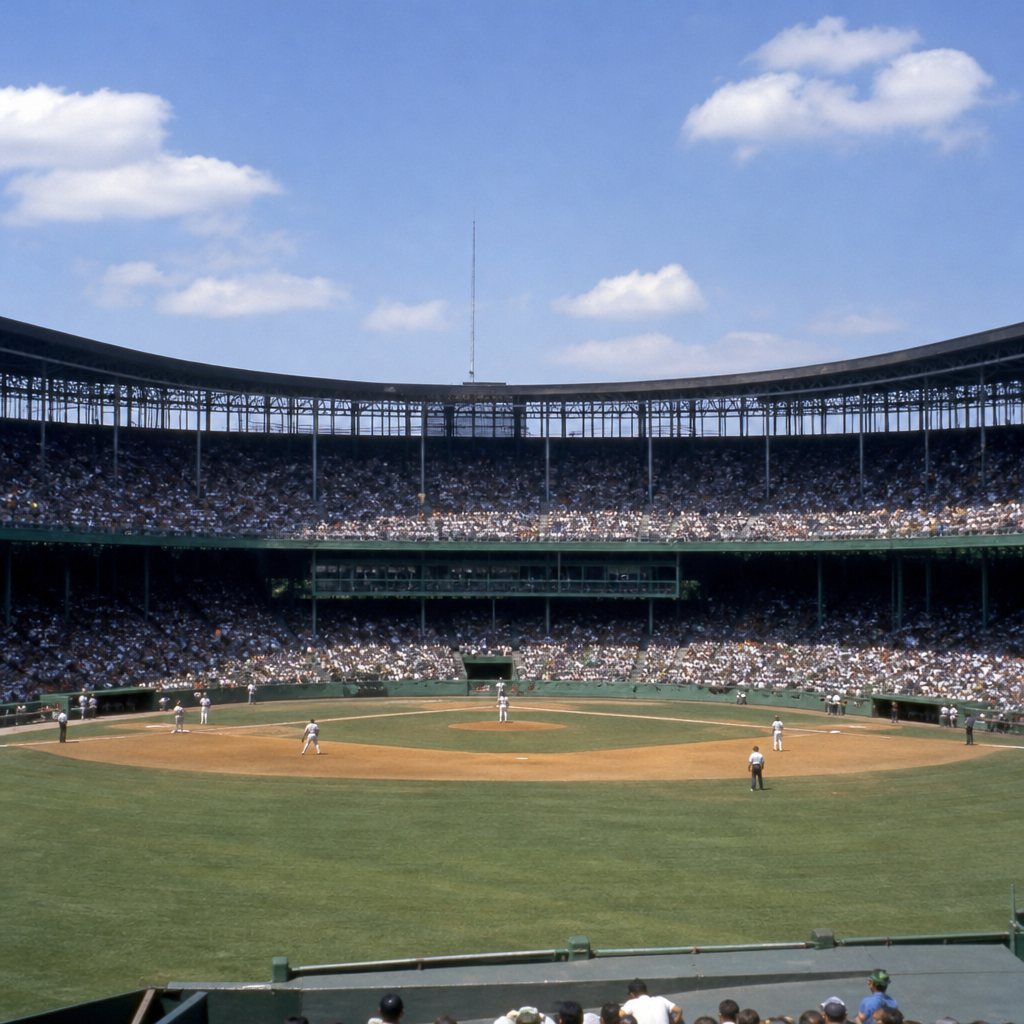
Navin Field opened in 1912 as a practical concrete-and-steel baseball park on Detroit’s west side, but its early decades created the architectural, competitive, and cultural foundation for the venue later remembered worldwide as Tiger Stadium. For anyone studying lost MLB ballparks, Navin Field matters because it shows how a neighborhood park could evolve, through expansions and renaming, into a major league landmark without losing its intimate relationship to the city around it. In the broader history of iconic ballparks, lost MLB ballparks are former major league venues that no longer stand, yet still shape baseball memory, stadium design, preservation debates, and the way fans talk about home-field identity. I have spent years researching old park blueprints, newspaper archives, Sanborn maps, and club histories, and Navin Field consistently stands out because its story is not simply about demolition or nostalgia; it is about how early twentieth-century baseball economics, urban growth, and changing fan expectations transformed one site over time.
The park began as the home of the American League’s Detroit Tigers, replacing Bennett Park, a wooden facility that had become outdated and increasingly risky in an era when fire, crowding, and limited sightlines plagued older grounds. Team owner Frank Navin wanted a more durable, revenue-producing stadium, and he followed the same broad trend that had already produced Philadelphia’s Shibe Park and Pittsburgh’s Forbes Field. In that context, Navin Field represented a second-generation major league ballpark: permanent materials, expanded seating capacity, better circulation, and a stronger fit for a professional franchise with long-term ambitions. Yet the park was never static. It was enlarged repeatedly, renamed Briggs Stadium in 1938, and eventually known as Tiger Stadium after 1961. Understanding the early years is essential because many of the traits later celebrated at Tiger Stadium, from close-in sightlines to a dense urban setting and unconventional field dimensions, were rooted in decisions made between 1912 and the 1930s.
As a hub for lost MLB ballparks, this article also places Navin Field within a larger pattern. Many vanished parks followed a similar lifecycle: rapid construction during baseball’s growth years, renovation rather than replacement as attendance increased, and eventual obsolescence once automobile access, television revenue, and multipurpose planning changed the stadium business after World War II. Ebbets Field, the Polo Grounds, Sportsman’s Park, and Crosley Field all left strong legacies, but Navin Field is especially instructive because one location carried several identities across half a century. That continuity lets historians track how a single ballpark adapted to changing standards while preserving a sense of place that later concrete bowls rarely matched.
Why Navin Field Was Built and What Made It Modern in 1912
Navin Field was built at the corner of Michigan and Trumbull on the same general site as Bennett Park, anchoring the Tigers in Corktown, one of Detroit’s oldest neighborhoods. Construction reflected the “jewel box” era of baseball architecture, when clubs invested in steel-framed and reinforced-concrete parks designed for better safety and higher gate receipts. Contemporary reports placed the initial cost at roughly $300,000, a substantial sum that signaled confidence in Detroit as a major league city. The first game there was played on April 20, 1912, and the new park immediately contrasted with the rougher wooden venues fans had known a generation earlier.
What made the stadium modern was not luxury in the contemporary sense, but structural permanence and operational efficiency. The lower deck wrapped around the infield, support columns were minimized compared with older parks, and the configuration brought spectators unusually close to the action. Owners in that period understood that sightlines sold tickets. A fan who could clearly see Ty Cobb slash a line drive or chase down a fly ball was more likely to return, and more likely to pay for a better seat next time. Navin Field also embodied the urban logic of prewar baseball: it was embedded in a neighborhood and reached primarily by streetcar, walking, and dense city transit patterns rather than vast parking lots.
That location shaped the park’s famous dimensions. Like many city ballparks, the site was constrained by surrounding streets and parcels, so the outfield did not develop according to abstract design ideals. Instead, geometry emerged from real estate limits, and those limits later helped create some of the odd proportions associated with the stadium’s mature form. This is a recurring theme among lost MLB ballparks. Their character often came from irregular urban footprints, not from branding exercises or symmetrical templates.
How the Early Ballpark Evolved Before It Became Briggs Stadium
Navin Field did not remain in its 1912 form for long. Demand for baseball in Detroit, especially with stars such as Cobb and Sam Crawford drawing crowds, pushed ownership to expand seating and improve circulation. Significant enlargements occurred in the 1920s and 1930s, with upper-deck additions and outfield modifications that gradually enclosed more of the park. These phases matter because the stadium most fans remember from newsreels and later television was the result of cumulative adaptation, not one master plan executed all at once.
By the early 1920s, the park’s capacity had already grown materially, and another major expansion in 1923 pushed it closer to the larger big-league facilities of the time. The process mirrored what happened at other successful parks. Owners extended decks, tightened concourses, and sacrificed some openness in exchange for more paid admissions. Navin Field’s later right-field overhang and stacked seating, features that contributed to its looming visual drama, came from this practical urge to add inventory where land was limited. In my research, this is one of the clearest examples of architecture following baseball economics in plain view.
The 1935 and 1936 seasons brought another important wave of work as the Tigers, coming off pennants and a World Series title in 1935, benefited from robust support. The stadium became more enclosed and more imposing, yet it never lost the compressed feel that made it intimidating for visitors. When the ballpark was renamed Briggs Stadium in 1938 after owner Walter Briggs Sr., the new identity reflected ownership change and corporate imprinting, but the essential bones of Navin Field remained. That continuity is why historians properly treat Navin Field, Briggs Stadium, and Tiger Stadium as phases of one evolving place rather than three unrelated parks.
The Fans, the Neighborhood, and the Distinctive Ballpark Experience
One reason lost MLB ballparks retain such power is that they were woven into daily urban life. Navin Field exemplified this pattern. Fans arrived through residential streets, local businesses benefited from game traffic, and the park felt like an extension of Corktown rather than a self-contained entertainment district. This kind of setting fostered routine loyalty. A family could attend games by streetcar, meet friends nearby, and occupy the same sections for years, building traditions that outlasted individual rosters.
The sensory experience was different from that of suburban-era stadiums. The seating rake created immediacy, crowd noise compressed under decks, and the field seemed almost within reach. Visitors frequently commented on how near spectators were to the baselines. That physical closeness helped define home-field advantage before amplification and giant video boards existed. In practical terms, a loud, packed urban park could influence player concentration, umpire pressure, and momentum in ways modern models cannot fully quantify but contemporary accounts repeatedly describe.
Neighborhood integration also brought limits. Parking was scarce, expansion options were constrained, and later generations would view the same urban intimacy as operational inconvenience. Yet these tradeoffs are central to understanding lost MLB ballparks. Their strengths and weaknesses were inseparable. What made Navin Field memorable was precisely what later made the site difficult to modernize at scale.
| Ballpark | Opened | Original Strength | Long-Term Limitation |
|---|---|---|---|
| Navin Field | 1912 | Intimate sightlines in dense neighborhood | Constrained expansion and parking |
| Ebbets Field | 1913 | Strong borough identity and transit access | Limited auto-era infrastructure |
| Polo Grounds IV | 1911 | Huge scale and dramatic dimensions | Aging layout and difficult modernization |
| Crosley Field | 1912 | Compact urban atmosphere | Site restrictions and dated amenities |
Baseball History at Navin Field: Teams, Stars, and Defining Moments
No account of the early years can ignore the players who gave the park meaning. Ty Cobb was the central figure of Detroit baseball in the 1910s and 1920s, and Navin Field framed many of his most significant home performances. Cobb’s style, aggressive baserunning, line-drive hitting, and confrontational edge, fit the intensity of the venue. The park also hosted Sam Crawford, Harry Heilmann, Charlie Gehringer, Hank Greenberg, and Mickey Cochrane across its formative decades, making it one of the American League’s most important competitive stages.
The Tigers did not win a World Series in Navin Field’s earliest phase, but they remained a major draw, and pennant races increased the stadium’s profile. By the 1930s, as Greenberg’s power and Cochrane’s leadership fueled contention, the ballpark became associated with championship-caliber baseball. Detroit won American League pennants in 1934 and 1935, then captured the 1935 World Series, giving the site a permanent place in baseball achievement as well as architecture. Those wins mattered beyond local pride: they validated ownership investments in expansion and demonstrated how a successful team could turn a city ballpark into a civic symbol.
For researchers of lost MLB ballparks, on-field history is not separate from physical history. Signature moments create preservation value. Ebbets Field is remembered through Jackie Robinson and the “Boys of Summer.” The Polo Grounds survives in memory through Willie Mays and Bobby Thomson. Navin Field’s legacy similarly depends on the Tigers stars and pennant drama that unfolded there. Without those layers of baseball significance, the structure would be just another demolished building rather than a touchstone in the history of iconic ballparks.
What Navin Field Teaches Us About Lost MLB Ballparks
Navin Field is an ideal hub example because it reveals the full arc shared by many lost MLB ballparks: replacement of a wooden predecessor, incremental modernization, golden-age fame, postwar strain, and eventual demolition after newer venue standards prevailed. If you are mapping this subtopic, several themes repeat. First, early parks were shaped by transit cities, not car-centric planning. Second, field dimensions often reflected land parcels, creating local quirks. Third, repeated expansions could preserve atmosphere while complicating maintenance. Fourth, public memory tends to intensify after demolition, especially when replacement parks feel less distinctive.
This framework helps readers connect Navin Field to other vanished venues. Sportsman’s Park in St. Louis shared a layered ownership and tenant history. Comiskey Park in Chicago showed how long-serving parks could remain beloved despite limited modern amenities. Washington’s Griffith Stadium demonstrated the same bond between neighborhood setting and eventual obsolescence. In each case, demolition ended the physical structure but not the cultural influence. Architects, preservationists, and club executives still study these parks when discussing intimacy, authenticity, and urban fit.
Navin Field also warns against simplistic narratives. Old ballparks were not universally better. They often had narrow concourses, fewer restrooms, obstructed views in some sections, and accessibility standards far below current expectations. But they offered design qualities now recognized as premium: closeness to the field, strong local identity, and visual individuality. The lesson is balance. A great ballpark combines operational competence with emotional resonance. Navin Field achieved that for decades, which is why its memory endured after the structure itself was gone.
From Navin Field to Tiger Stadium: Why the Early Years Still Matter
The reason the early years matter is simple: Tiger Stadium’s later fame rested on foundations laid by Navin Field. The celebrated atmosphere at Michigan and Trumbull did not appear suddenly in the television age. It grew from the 1912 decision to build a permanent urban park, from the revenue-driven expansions that increased scale without erasing intimacy, and from the generations of Tigers baseball that gave the site emotional weight. Even the later iconography, the looming upper decks and distinctive geometry, developed through a long architectural conversation between land constraints and fan demand.
For readers exploring lost MLB ballparks, Navin Field should be treated as more than a prelude to a better-known name. It is the essential first chapter in the life of one of baseball’s most revered homes, and it offers a model for understanding how ballparks evolve, how cities attach meaning to sports architecture, and why demolition rarely ends a venue’s historical relevance. If you want to understand iconic ballparks fully, start with places like Navin Field, where design, neighborhood, and baseball history became inseparable. Then continue through the wider lost-ballpark landscape, comparing Detroit’s story with Brooklyn, St. Louis, Cincinnati, Washington, and New York. The details differ, but the central truth remains: when a great ballpark disappears, its influence often becomes clearer, not smaller. Use Navin Field as your reference point, and the entire history of lost MLB ballparks comes into sharper focus.
Frequently Asked Questions
What was Navin Field, and why is it so important in the history of Tiger Stadium?
Navin Field was the original name of the ballpark that would later become one of baseball’s most famous venues, Tiger Stadium. It opened in 1912 on Detroit’s west side as the new home of the Detroit Tigers, replacing the club’s earlier wooden park, Bennett Park. At first, Navin Field was not yet the fully developed landmark that later generations celebrated. It was a practical, modern-for-its-time concrete-and-steel stadium built to give the Tigers a safer, more durable, and more permanent home. That alone places it within a major turning point in ballpark history, when many teams were moving away from fire-prone wooden structures and into the first generation of enduring urban stadiums.
Its importance goes well beyond being “the old name” for Tiger Stadium. Navin Field established the site, the orientation, and the neighborhood presence that would define the ballpark for decades. The park’s early design created the foundation for future expansions, and those expansions gradually transformed a relatively straightforward American League park into the dense, distinctive, intimate stadium fans came to know around the world. In other words, Tiger Stadium did not appear all at once. It evolved from Navin Field, and understanding the early years helps explain why the final ballpark felt so layered, irregular, and alive.
For historians of lost MLB parks, Navin Field is especially significant because it demonstrates how a major league venue could grow with its city rather than being completely replaced each time demand increased. Its story reflects Detroit’s rise as a major industrial and sporting center, and it shows how architecture, team ambition, and neighborhood identity could combine over time. If Tiger Stadium became legendary, Navin Field is where that legend began.
Why did the Detroit Tigers build Navin Field in 1912 instead of staying at Bennett Park?
The Tigers built Navin Field because Bennett Park had become outdated for a successful major league franchise. By the early 1910s, baseball was entering an era in which owners increasingly wanted ballparks that looked permanent, accommodated larger crowds, and offered better safety and comfort. Bennett Park, like many earlier wooden facilities, belonged to an older model of stadium construction. It had served the club well enough, but it no longer matched the expectations of a strong American League team in a growing city.
Detroit owner Frank Navin recognized that the franchise needed a more substantial home. The Tigers had already gained national attention during the previous decade, especially with stars such as Ty Cobb drawing fans and headlines. A modern concrete-and-steel ballpark sent a message that the club intended to remain competitive and commercially viable. It also reflected practical concerns. Fire was a constant danger in wooden parks, and the newer generation of baseball architecture promised greater durability and a more controlled environment for spectators.
Another major reason was capacity and revenue. As baseball grew in popularity, owners increasingly understood that better facilities could attract larger crowds and generate more income. Navin Field gave the Tigers room to expand physically and financially. Just as importantly, it was built on the same site as Bennett Park, allowing the team to maintain continuity with its established fan base and neighborhood setting. That decision mattered a great deal in the long run. Instead of abandoning the area, the Tigers deepened their roots there, and that continuity helped create the powerful sense of place later associated with Tiger Stadium.
How did Navin Field’s early design shape the ballpark’s later character as Tiger Stadium?
Navin Field’s early design shaped the later identity of Tiger Stadium by fixing the ballpark within a tight urban footprint from the very beginning. Unlike many later stadiums built with broad, symmetrical acreage, Navin Field had to function within the realities of a city neighborhood. That meant its geometry, seating arrangement, and future expansion possibilities were influenced by surrounding streets, nearby buildings, and the practical constraints of the site. Those conditions encouraged a layered, organic style of development rather than a clean-sheet redesign.
In its original form, Navin Field was relatively modest compared with what the park eventually became. But the key point is that it was built in a way that allowed additions and alterations over time. As more decks, grandstand sections, and structural modifications were introduced in later years, they did not erase the earlier ballpark. They accumulated on top of it. That process gave the stadium its famously intimate atmosphere, with spectators seemingly pressed close to the field and the game unfolding within a distinctly urban enclosure.
This is one reason the venue later felt so different from more standardized parks. Tiger Stadium’s personality came from growth, not from a single master plan completed all at once. Navin Field established the bones: the site, the relationship to the city, and the practical logic of a baseball-first structure. Later renovations changed its appearance and increased its scale, but they preserved the sense that the park had been shaped by time, use, and civic memory. For architectural historians, that makes Navin Field a crucial case study in how a ballpark can evolve without losing its original sense of place.
When did Navin Field become Briggs Stadium and later Tiger Stadium, and why do those name changes matter?
Navin Field did not keep its original name permanently. After Frank Navin’s era, the ballpark was eventually renamed Briggs Stadium, reflecting a change in ownership and the influence of Walter O. Briggs. Much later, it became Tiger Stadium, the name by which it achieved its broadest national and international recognition. These name changes matter because they mark different chapters in the life of both the franchise and the ballpark itself.
The shift away from the Navin Field name reflects an important reality of baseball history: stadiums often mirror the business and power structures behind the teams that occupy them. A new name can signal more than simple rebranding. It can point to new investment, new priorities, and a new public identity. In the case of this Detroit park, each name represented a different stage in the stadium’s evolution from a utilitarian early twentieth-century ballpark into an iconic American sports landmark.
At the same time, the continuity of the site is what makes the story so compelling. Even as the name changed, the ballpark remained fundamentally the same place, carrying forward design features, memories, and traditions rooted in 1912. That continuity is why historians still refer back to Navin Field when discussing Tiger Stadium’s origins. The later fame of Tiger Stadium can sometimes overshadow the fact that its essential identity was forged much earlier. The name changes matter, but they matter most when viewed as layers added to a stadium that had already begun developing its character in the Navin Field years.
Why do historians and baseball fans still study Navin Field’s early decades today?
Historians and baseball fans continue to study Navin Field’s early decades because those years reveal how a ballpark becomes meaningful over time. Navin Field was not merely the precursor to a famous stadium; it was the stage on which the future character of that stadium was formed. Its early history connects architecture, urban development, team identity, and fan culture in a way that is especially valuable for anyone interested in how classic baseball parks functioned within their communities.
From an architectural perspective, Navin Field helps explain the transition from early wooden parks to more permanent steel-and-concrete designs. It also illustrates how expansion could happen incrementally, producing a venue with unusual charm and complexity. From a baseball perspective, the park hosted the Tigers during an era when the team’s profile was growing and Detroit was establishing itself as a major league city. The physical space of the ballpark and the competitive history of the franchise were developing together, each reinforcing the other.
There is also a cultural reason for the continued interest. Navin Field demonstrates that great ballparks are not only about monumental design or famous events. They are also about location, repetition, neighborhood memory, and the gradual accumulation of meaning. The site that later became synonymous with Tiger Stadium mattered because generations of Detroiters experienced it as part of everyday city life, not as an isolated sports complex. That relationship between stadium and neighborhood is a central theme in the history of lost ballparks, and Navin Field stands as one of the strongest examples of how that bond can endure even as a venue changes names, expands, and enters legend.