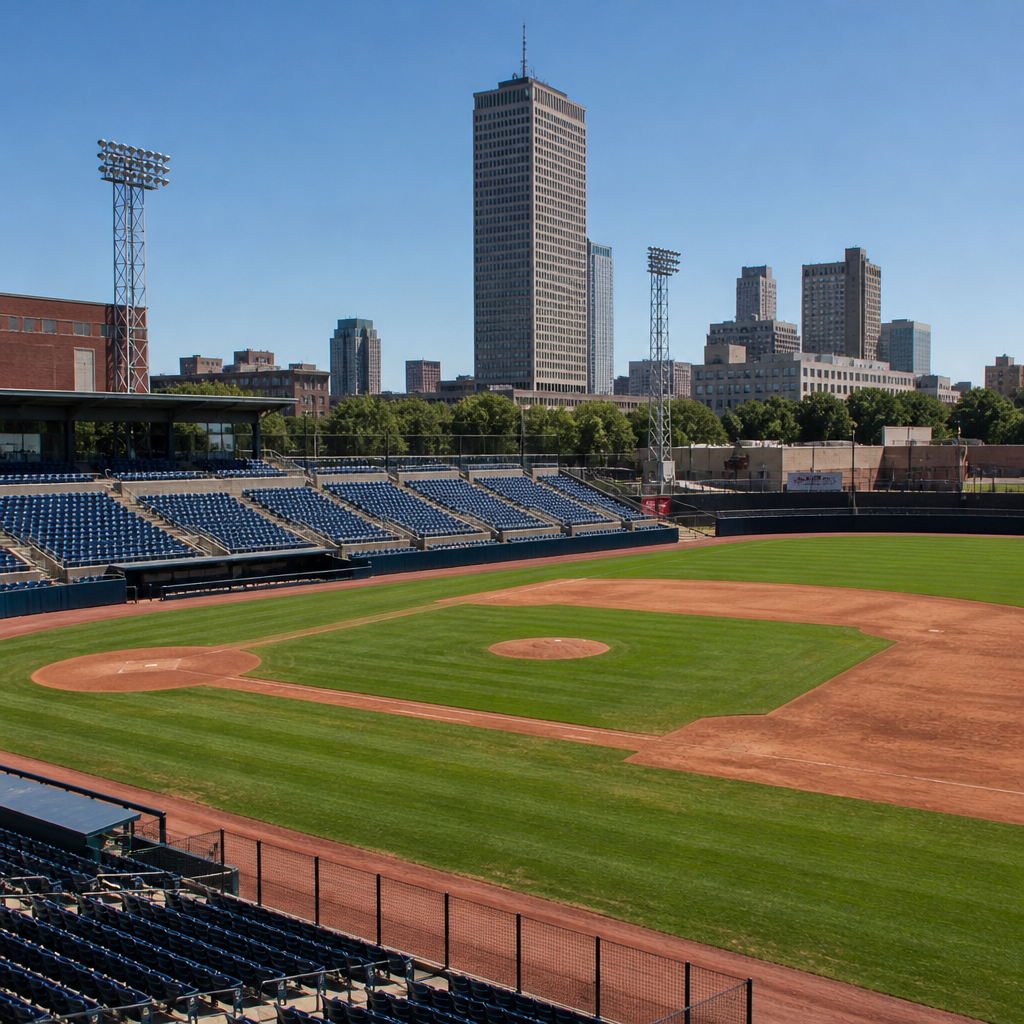
Huntington Avenue Grounds was more than an early baseball field in Boston; it was the stage for the first game of the first modern World Series, a lost major league ballpark that still anchors any serious discussion of baseball history. When historians refer to “lost MLB ballparks,” they mean former major league venues that have been demolished, radically rebuilt beyond recognition, or absorbed into later urban development, leaving only records, maps, photographs, and memory. As a hub within the broader topic of iconic ballparks, Huntington Avenue Grounds offers an ideal entry point because it connects the dead-ball era, the rise of the American League, the birth of championship postseason play, and the fragile afterlife of sports architecture. I have spent years working through old park diagrams, Sanborn fire insurance maps, newspaper game accounts, and Society for American Baseball Research research notes, and Huntington Avenue Grounds repeatedly emerges as one of the clearest examples of why vanished parks still matter. These sites shaped strategy, attendance, neighborhood identity, and even the statistics modern fans quote today.
Opened in 1901 and used by the Boston Americans, later known as the Red Sox, Huntington Avenue Grounds stood in the Fenway area before Fenway Park existed. Its importance is not limited to one famous date in October 1903, when Boston hosted Pittsburgh in what is recognized as the first modern World Series game. The park also helps explain how early twentieth-century clubs operated before concrete-and-steel stadiums became standard. Capacity was modest, outfield dimensions were irregular, field conditions could vary dramatically, and crowd control depended as much on rope lines and temporary seating as on permanent design. Understanding Huntington Avenue Grounds means understanding baseball at the moment it was transforming from a regional professional sport into a national entertainment business. It also gives readers a practical framework for exploring other lost MLB ballparks, from the Polo Grounds and Ebbets Field to the Baker Bowl, South Side Park, and Sportsman’s Park.
Why does this subject matter today? Because lost ballparks are not nostalgia alone. They affect historical comparison, preservation policy, tourism, urban planning, and the way teams market their identities. A home run total hit in a tiny or asymmetrical park cannot be evaluated exactly like one hit in a modern neutralized venue. A franchise that moved from a wooden park to a fireproof stadium changed revenue opportunities, fan demographics, and local transit patterns. Huntington Avenue Grounds is therefore both a specific place and a method: study one vanished venue carefully, and the larger history of lost MLB ballparks becomes easier to read with precision instead of sentiment.
Huntington Avenue Grounds and the first modern World Series game
Huntington Avenue Grounds opened for the 1901 season as the home of the new American League club in Boston. At the time, the American League was asserting itself as a major league competitor to the National League, and clubs often had to establish legitimacy quickly through winning teams and workable facilities. The grounds were bounded by city streets and adjacent development, creating an enclosed but distinctly urban setting. On October 1, 1903, the park hosted Game 1 of the first modern World Series between Boston and the Pittsburgh Pirates. Boston lost that opener 7–3 behind Pittsburgh starter Deacon Phillippe, but the series itself became a landmark event, with Boston eventually winning five games to three. That single fact gives Huntington Avenue Grounds permanent significance: no other site can claim to have launched modern World Series play.
The park’s construction and layout also reflected the transitional nature of early baseball venues. Much of the structure was wood, a common material before the concrete-and-steel wave of the 1910s and 1920s. Wooden parks were cheaper and faster to erect, but they were vulnerable to fire, wear, and constant patchwork maintenance. Teams could expand or reconfigure seating with relative ease, yet those same advantages made many parks temporary by design. In practical terms, Huntington Avenue Grounds represented the business logic of its era: spend enough to host a growing fan base, but not so much that the club loses flexibility while the league landscape is still unstable.
Game conditions there were very different from the standardized environments many fans assume today. The dead-ball era rewarded bunting, base running, hit-and-run tactics, and contact hitting. Outfields could be uneven, and grounds crews worked with limited technology compared with modern drag mats, tarps, and drainage systems. The 1903 World Series therefore was not simply baseball’s biggest stage placed inside a primitive shell; it was a championship contested in an environment that actively shaped strategy. That is one reason Huntington Avenue Grounds remains essential when explaining how postseason baseball began in real, physical terms rather than as an abstract milestone.
What made Huntington Avenue Grounds different from later classic ballparks
Fans often know Fenway Park, Wrigley Field, and the original Yankee Stadium as “classic” parks, but Huntington Avenue Grounds belonged to an earlier design generation. It predated the mature urban ballpark model that integrated permanent grandstands, stronger fireproof materials, and increasingly deliberate sightline engineering. Its asymmetrical dimensions were driven less by aesthetic choice than by available land. Seating was more basic, amenities were sparse, and separation between spectators and field could feel improvised by modern standards. In effect, the grounds sat at the intersection of amateur field traditions and commercial professional stadium development.
That difference matters for anyone researching lost MLB ballparks because it shows there was no single template. Some vanished parks disappeared because they were obsolete; others were demolished because neighborhoods changed, transportation shifted, or teams needed more revenue-producing seats. Huntington Avenue Grounds became expendable after Fenway Park opened in 1912, but its replacement did not erase its influence. The move illustrates a larger pattern repeated across baseball history: once a club found a more profitable or technologically advanced home, the older park was quickly recast as inadequate, even if it had hosted defining moments.
Another distinguishing feature was how closely the site was tied to Boston’s evolving urban footprint. Early parks depended on walkability and streetcar access, and teams selected locations that balanced land cost with population reach. Huntington Avenue gave the club a practical corridor for attendance, but the same urban pressures that made the site useful also limited expansion. Later stadiums solved that problem with heavier construction, more controlled footprints, and eventually parking-oriented suburban planning. Huntington Avenue Grounds, by contrast, belonged to the dense-city, transit-first phase of baseball geography.
How lost MLB ballparks should be studied
The best way to study lost MLB ballparks is to combine architecture, team history, and neighborhood history. Looking only at famous games reduces a ballpark to a postcard. Looking only at dimensions misses why people cared. In my experience, the most reliable method starts with contemporaneous sources: newspapers for game accounts and attendance notes, city directories for nearby landmarks, Sanborn maps for structure placement, and photographic archives for seating and field orientation. Researchers then compare those findings with modern scholarship from SABR, Baseball-Reference, Retrosheet, and library collections to confirm dates, capacity changes, and naming conventions.
Huntington Avenue Grounds is especially useful as a model because its historical record is rich enough to reconstruct both event history and physical context. We know it hosted the 1903 World Series opener. We know it was the home of the Boston Americans during the franchise’s formative years. We know it was superseded by Fenway Park at a moment when baseball economics favored larger, more durable facilities. Those facts, taken together, let readers ask the right questions of every lost park: What era produced it? What style of baseball did it encourage? Why was it replaced? What survives in public memory?
| Lost ballpark | City | Why it matters | What its loss reveals |
|---|---|---|---|
| Huntington Avenue Grounds | Boston | Site of the first modern World Series game | Shift from wooden parks to durable revenue-driven stadiums |
| Ebbets Field | Brooklyn | Symbol of Dodgers identity and urban fandom | How relocation and redevelopment can sever civic memory |
| Polo Grounds | New York | Hosted baseball, football, and iconic postseason events | Extreme dimensions shaped style and statistics |
| Baker Bowl | Philadelphia | Notorious for quirks and structural problems | Safety, maintenance, and obsolescence were constant issues |
| Sportsman’s Park | St. Louis | Shared by multiple clubs across eras | Ballparks often carried layered franchise histories |
The broader story of lost MLB ballparks in American baseball
Lost MLB ballparks are not a side topic within baseball history; they are one of the main ways to understand the sport’s evolution. Before television revenue and corporate sponsorship became dominant, the ballpark was the business model. Gate receipts depended on seat count, weather protection, location, and whether a venue felt safe and respectable enough for middle-class attendance. That is why the progression from wooden parks like Huntington Avenue Grounds to steel-and-concrete structures was so consequential. Owners were not merely building bigger stadiums. They were building more reliable cash engines.
Consider Ebbets Field, demolished in 1960 after the Dodgers left Brooklyn. Its disappearance did not just remove a building; it altered how an entire borough remembered itself. The Polo Grounds, with its famously odd dimensions, influenced strategy and player value in ways modern neutral parks do not. Baker Bowl in Philadelphia became a cautionary tale because structural failures and cramped design undermined long-term viability. Comiskey Park, Tiger Stadium, and old Busch Memorial Stadium lasted far longer, yet their eventual replacement showed that even beloved venues can lose out to demands for suites, wider concourses, and updated infrastructure. Huntington Avenue Grounds stands near the beginning of that long cycle of innovation, affection, obsolescence, and replacement.
There is also an analytical reason to treat these parks seriously. Ballpark effects are real. Researchers have long used park factors to estimate how a venue influences scoring, home runs, doubles, and run prevention. While precise calculations are easier with modern data, the principle applies historically. A cramped outfield, a distant center field, sun angles, prevailing wind, or rough infield conditions could all tilt outcomes. When a park vanishes, the temptation is to preserve only stories. The better approach is to preserve context, because context explains performance.
Preservation, memory, and what remains after demolition
Once a ballpark is gone, preservation shifts from architecture to interpretation. Sometimes a site receives a plaque, street marker, or commemorative installation. Sometimes almost nothing visible remains, and the burden falls to archives, museums, local historians, and digital reconstructions. Huntington Avenue Grounds survives partly through historical scholarship and partly through the power of the 1903 World Series connection. Without that event, it might be remembered only by specialists. With it, the grounds become a gateway into the wider subject of lost MLB ballparks.
That is why sub-pillar hub pages like this one matter. Readers interested in iconic ballparks often start with surviving venues, but the disappeared parks frequently tell the sharper story. They reveal what franchises valued, how cities changed, and which aspects of the fan experience were considered expendable. They also expose the limits of nostalgia. Not every old park was comfortable, accessible, or structurally sound. Some were beloved despite serious flaws. A balanced historical view respects emotional attachment while acknowledging practical realities.
For researchers and travelers, the best next step is to treat former ballpark sites as historical landscapes. Compare old maps with current streets. Read game accounts from opening days and final games. Look for how local institutions interpret the site now. Huntington Avenue Grounds rewards exactly that kind of attention. It may no longer stand, but it still teaches readers how baseball’s championship tradition began, how early major league clubs used urban land, and why so many foundational venues disappeared as the sport industrialized.
Huntington Avenue Grounds deserves its place at the center of any guide to lost MLB ballparks because it combines singular historical importance with broad interpretive value. It was the home of the Boston Americans, the setting for the first modern World Series game, and a representative example of the wooden urban parks that defined baseball before the permanent stadium age. Study it closely and the rest of the subtopic comes into focus: why teams replaced older fields, how ballpark design influenced play, and why demolished venues still shape franchise memory and statistical interpretation. The park is gone, but its lessons remain remarkably concrete.
The key takeaway is simple. Lost ballparks are essential evidence, not decorative history. They explain competitive conditions, business decisions, urban growth, and fan culture better than highlight reels alone ever could. Huntington Avenue Grounds shows that a vanished site can still function as a living reference point for baseball scholarship. It links Boston’s pre-Fenway identity to the national rise of postseason baseball, and it gives readers a practical model for exploring Ebbets Field, the Polo Grounds, Baker Bowl, Sportsman’s Park, and other disappeared major league venues with discipline rather than myth.
If you are building a deeper understanding of iconic ballparks, start here and continue outward through the lost park canon. Use Huntington Avenue Grounds as your map key: identify the site, study the structure, trace the neighborhood, and connect the games played there to larger changes in the sport. That approach will make every related article more meaningful and every surviving stadium easier to appreciate in historical context. Explore the rest of this lost MLB ballparks hub with that framework in mind, and baseball’s vanished landscapes will become far clearer.
Frequently Asked Questions
Why is Huntington Avenue Grounds so important in baseball history?
Huntington Avenue Grounds holds an outsized place in baseball history because it hosted the first game of the first modern World Series in 1903. That alone would secure its legacy, but the ballpark mattered for more than a single ceremonial milestone. It was the home of the Boston Americans, the club that would later become the Boston Red Sox, during a foundational period when the American League was establishing itself as a major force in professional baseball. In that sense, the park was not just a backdrop for history; it was an active participant in the shaping of modern major league baseball.
The 1903 World Series represented a turning point for the sport. It brought together champions from the American League and the National League in a postseason contest that helped define baseball’s championship structure for generations. Because Game 1 was played at Huntington Avenue Grounds, the site became permanently linked to the beginning of one of baseball’s most enduring traditions. For historians, fans, and preservationists, that makes the park a landmark of national significance, even though the structure itself no longer stands.
Its importance also comes from what it reveals about the early urban game. Huntington Avenue Grounds was embedded in Boston’s city landscape, reflecting a time when ballparks were woven closely into neighborhoods and daily civic life. Studying the site offers insight into how fans experienced baseball in the early 20th century, how teams used modest but functional venues, and how professional sports fit into a rapidly changing American city. That combination of championship significance, franchise history, and urban context is why Huntington Avenue Grounds remains central to any serious conversation about baseball’s past.
What happened at Huntington Avenue Grounds during the first modern World Series?
Huntington Avenue Grounds was the site of Game 1 of the 1903 World Series, the first contest in what is recognized as the modern World Series era. The matchup featured the Boston Americans of the American League against the Pittsburgh Pirates of the National League. That game marked the beginning of an organized postseason championship between the two leagues, a concept that would become one of the most recognizable traditions in American sports. Even though the format and the business of baseball would evolve dramatically in the decades that followed, the event at Huntington Avenue Grounds remains the symbolic starting point.
For Boston, the series carried local and league-wide importance. The American League was still relatively new, and the championship provided an opportunity to prove the credibility and quality of its clubs. The Boston Americans ultimately won the series, giving the city a championship and helping legitimize the newer league in the eyes of fans, owners, and the broader sporting public. The fact that the opening game took place at Huntington Avenue Grounds ties the ballpark directly to that larger story of institutional growth and rivalry between the leagues.
From a historical perspective, the ballpark’s role in the 1903 World Series is significant not only because something happened there first, but because the event launched a recurring championship model that became embedded in baseball culture. Every later World Series, from dead-ball era classics to modern Fall Classic spectacles, traces its lineage back to that inaugural game in Boston. Huntington Avenue Grounds therefore stands as the physical origin point of a tradition that has shaped the way championships are remembered, marketed, and mythologized in Major League Baseball.
Why is Huntington Avenue Grounds considered a “lost MLB ballpark”?
Huntington Avenue Grounds is considered a lost MLB ballpark because it no longer survives as an intact major league venue and has been absorbed into later urban development. When historians use the term “lost ballpark,” they usually mean a stadium or field that once hosted major league games but has since been demolished, fundamentally altered, or overtaken by new construction to such an extent that the original park is no longer recognizable in its historic form. Huntington Avenue Grounds fits that definition clearly. Its physical presence has disappeared, but its historical footprint remains substantial.
This “lost” status is important because it changes how the site is studied and remembered. Unlike still-standing historic venues that can be visited in something close to their original form, Huntington Avenue Grounds must be reconstructed through old maps, period photographs, written accounts, newspaper coverage, and broader knowledge of Boston’s urban development. Researchers often piece together dimensions, location details, and fan experience from fragmentary evidence. That detective work is part of what makes lost ballparks so compelling: the places are gone, but the stories remain recoverable through careful historical interpretation.
In the case of Huntington Avenue Grounds, the loss is especially meaningful because the site is tied to such a major baseball first. Its disappearance illustrates a broader truth about sports history: some of the most important places in the game have not survived physically, even though their influence remains enormous. For fans interested in baseball heritage, lost ballparks like Huntington Avenue Grounds serve as reminders that the game’s geography has always been fluid, shaped by urban growth, economics, transportation patterns, and the constant rebuilding of cities around former sporting landmarks.
Where was Huntington Avenue Grounds located, and what does its Boston setting add to its story?
Huntington Avenue Grounds was located in Boston, in an area that connected the ballpark to the city’s evolving institutional and neighborhood landscape. Its placement matters because early major league ballparks were often woven tightly into the fabric of the city rather than isolated in vast parking-lot complexes, as many later stadiums were. That urban placement meant the park was part of everyday Boston life, accessible to local fans and closely tied to the rhythms of street traffic, public transit, nearby businesses, and surrounding development.
Boston adds an extra layer of significance because the city was already a major baseball center by the turn of the 20th century. Having the first modern World Series game played there linked Boston directly to one of the sport’s foundational moments. The city’s strong baseball culture, combined with the presence of the Boston Americans, gave Huntington Avenue Grounds a prominent role in the early identity of the American League. It was not a remote or temporary stage; it was a meaningful venue in one of the game’s most important cities.
The setting also helps explain why the ballpark disappeared. Urban land in cities like Boston was continually repurposed as neighborhoods expanded and institutional needs changed. Over time, many early ballparks gave way to new building projects, altered street grids, or other forms of development. That process transformed Huntington Avenue Grounds from an active sports venue into a historical site that survives mainly in documentation and memory. Its Boston location therefore contributes both to its fame and to its disappearance, making it a textbook example of how urban history and baseball history often intersect.
How do historians and baseball fans remember Huntington Avenue Grounds today?
Historians and baseball fans remember Huntington Avenue Grounds through a mix of scholarship, local memory, baseball literature, and site-based interpretation. Because the park itself is gone, remembrance depends heavily on historical reconstruction. Researchers examine contemporary newspaper reports, surviving photographs, team records, maps, and urban planning documents to understand exactly where the ballpark stood and what role it played in the development of professional baseball. This work allows the site to remain visible in baseball history even without the original structure.
Fans tend to remember the grounds as both a landmark and a symbol. It is a landmark because it hosted the first game of the first modern World Series, and a symbol because it represents the many foundational baseball places that have vanished from the modern landscape. For enthusiasts of historic ballparks, Huntington Avenue Grounds is part of a broader conversation about how baseball’s earliest venues were often wooden, modest, urban, and impermanent. Its story encourages fans to think beyond surviving stadiums and to appreciate the importance of places that exist now only through archival traces.
There is also an emotional dimension to how the site is remembered. Lost ballparks often inspire a particular kind of historical imagination because they require people to picture crowds, players, and defining moments in spaces that can no longer be experienced directly. In the case of Huntington Avenue Grounds, that imagination is anchored by a very concrete fact: this was the place where the modern World Series began. That gives the site a rare combination of specificity and mythic status. Even without standing walls or grandstands, it remains one of baseball’s most resonant historic locations.