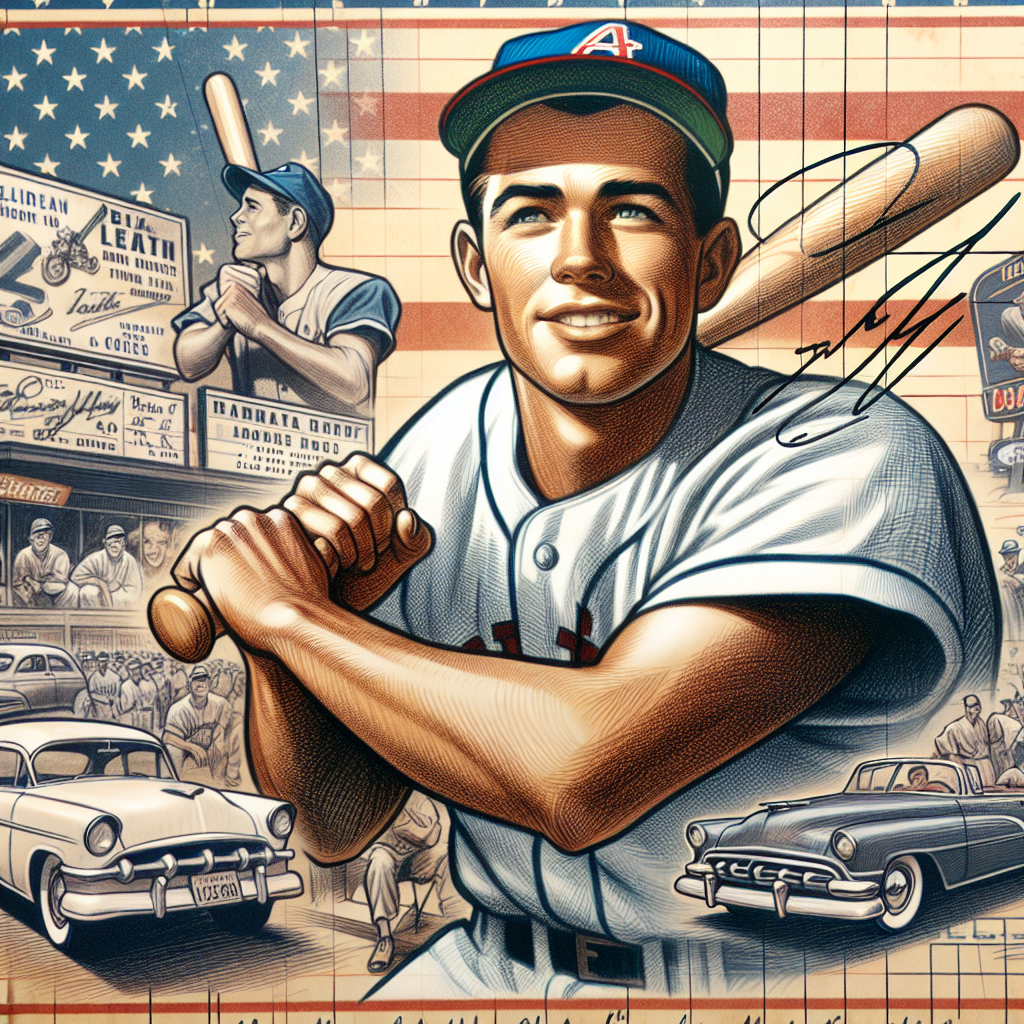
The 1950s were a transformative decade in American history, marked by post-war prosperity, the rise of the suburbs, and the beginning of the Civil Rights Movement. During this time, baseball was not just a game; it was a defining element of American culture. Amidst this backdrop, Mickey Mantle emerged as a baseball hero and a cultural icon. Mantle, with his extraordinary talent and charismatic presence, captivated fans and became a symbol of the American Dream. He was more than just a player; he was a legend whose impact extended beyond the diamond and into the broader cultural landscape of the 1950s. This article delves into Mickey Mantle’s influence on baseball and society during this fascinating era.
Mickey Mantle was born on October 20, 1931, in Spavinaw, Oklahoma, a small town where he honed his baseball skills from a young age. His father, Mutt Mantle, was an inspiration, introducing Mickey to the game and instilling in him a passion for baseball. By the time Mickey reached high school, his talent was apparent to anyone who watched him play. In 1949, at just 17 years old, Mantle began his professional career with the New York Yankees, quickly gaining attention for his remarkable athletic ability and power as a switch-hitter.
Mantle’s rookie season with the Yankees in 1951 marked the beginning of an illustrious career, one that would earn him a lasting legacy in the annals of baseball history. Throughout the 1950s, Mantle was not only one of the best players in the game, but also one of the most beloved athletes in America. His journey from a small town in Oklahoma to the hallowed grounds of Yankee Stadium is a quintessential American story, one that mirrors the optimism and ambition of the 1950s.
The Rise of a Legend
The 1950s were defined by a unique blend of conservatism and change, where Americans sought both stability and progress in post-war society. In the world of sports, Mickey Mantle symbolized this dichotomy. Mantle’s career took off in the early 1950s, capturing the imaginations of countless baseball fans. His extraordinary skills on the field were matched by his likable personality, making him a household name. As a powerful switch-hitter, Mantle was feared at the plate and respected across the league. His performance in 1956, when he won the Triple Crown with a .353 batting average, 52 home runs, and 130 RBIs, was a testament to his dominance in the game.
His achievements were highlighted not only by his statistics but also by his ability to deliver when it mattered most. Mantle thrived under pressure, often shining in playoff games and World Series matchups. In fact, he played a crucial role in leading the Yankees to seven World Series titles during his career. His exceptional play earned him three American League MVP awards, further cementing his legacy as one of the greatest players of his era.
Despite his on-field successes, Mantle was not immune to the trials of being in the public eye. The same decade that glorified him also scrutinized him. His well-documented struggles with injuries and personal problems added complexity to his public persona, making him more relatable and human to his fans. Mantle represented both the triumphs and tribulations of celebrity life, embodying a sense of authenticity that resonated with the American public.
Mickey Mantle and American Identity
Mickey Mantle’s rise to fame coincided with significant cultural shifts in America. The 1950s were years of cultural expansion, defined by a burgeoning middle class and the ubiquitous influence of television and media. Mantle became an icon within this cultural landscape, not just for his athletic prowess, but also as an ideal of the American hero. His small-town roots and blue-collar ethic resonated with everyday Americans striving for success and prosperity.
The image of Mickey Mantle was frequently broadcast into homes across America, thanks in part to the advent of televised sports. During this time, baseball found a new audience through television, and Mantle emerged as one of the first sports superstars of the TV age. His televised heroics enhanced his mystique, reaching a wider audience and solidifying his status as a cultural icon. Mantle’s ability to connect with fans through the burgeoning medium of television helped to elevate his status beyond that of a mere athlete.
Mantle’s embodiment of the American Dream, along with his exceptional skills and approachable image, made him an influential figure beyond the sport itself. He became a spokesperson for brands and an inspiration for countless young athletes. His presence in popular culture and media personified the aspirations of Americans during the 1950s, emphasizing success, determination, and overcoming adversity.
The Hero’s Personal Struggles
While Mickey Mantle was widely adored for his prowess on the baseball field, his personal life presented a much more complex narrative. Behind the glorious home runs and record-shattering seasons, Mantle wrestled with a number of personal demons that often stood in stark contrast to his public image. It’s this aspect of his life that added a layer of vulnerability to Mantle’s towering presence.
Perhaps the most notable of these challenges was his struggle with chronic injuries. Despite his youthful vigor and athleticism, Mantle was plagued by knee problems throughout his career, which began as early as his rookie season in 1951. His determined efforts to persevere in the face of these physical setbacks only added to the lore surrounding his playing career. Yet, these injuries diminished his physical capabilities, constantly posing obstacles that prevented him from achieving even greater feats.
In addition to his physical challenges, Mantle was known to have struggled with alcoholism, a battle that he fought for much of his life. This struggle with alcohol was symptomatic of deeper personal challenges, including dealing with the pressures of fame and personal insecurities. His candid admission of his struggles later in life provides a raw and human perspective on the often idealized life of sports heroes. Despite these hardships, Mantle’s iconic performances, especially in clutch playoff moments, showed his remarkable ability to rise above his personal and professional challenges.
His candidness about these struggles, especially in his later years, added a level of authenticity to his celebrity status. Many fans saw Mantle as a more relatable figure because of his admission of these personal battles, fostering a sense of empathy and support. This vulnerability contrasted sharply with his public persona as a baseball hero, further enhancing his legendary status. Mantle’s journey is a powerful reminder that behind every idol is a human being, with their own battles silently shaping their triumphs.
Mickey Mantle’s Legacy
Mickey Mantle didn’t just influence baseball in his time; his legacy extends far beyond the field into the very fabric of American culture. His remarkable accomplishments and larger-than-life persona left an indelible mark on the sport of baseball and the hearts of millions of fans. To this day, Mantle is remembered not only for the records and accolades he achieved but also for the way he transformed how baseball players were perceived by the public.
In the modern era, the mystique of Mantle continues to inspire generations of athletes and fans alike. The old Yankee Stadium might be gone, but the stories of Mantle’s towering home runs linger, becoming tales of baseball lore passed down through generations. His influence can be seen in how players today seek to balance their on-field performances with their responsibilities as public figures. Mantle’s willingness to confront his challenges head-on serves as a lesson in humility and perseverance that transcends time.
In terms of statistics and accolades, Mantle’s numbers speak for themselves. Yet, his true legacy is perhaps best reflected in the respect and admiration he commands long after his playing days. His authentic connection with fans and the public, both during his career and in his life after baseball, highlights a rare quality of enduring appeal. Mantle’s legacy is a poignant reminder of the power of sports figures to shape societal values and cultural identities.
Beyond baseball, Mantle’s legendary status has also carved a special niche in American popular culture. His image has appeared in countless forms of media, including movies, books, and memorabilia, ensuring that the spirit of Mickey Mantle is omnipresent in American sports culture. His story, often marked by glory and triumph yet shadowed by personal struggles, paints a comprehensive picture of the life of a sports icon whose influence becomes more profound with time.
Conclusion
Mickey Mantle’s story is a quintessential piece of Americana, encapsulating the hopes, dreams, and complexities of 1950s America. He was a walking emblem of both athletic excellence and human vulnerability, a man whose life on and off the field reflected the broader cultural landscape of his time. As a baseball player, Mantle set a standard for excellence, thrilling fans with his unparalleled talent and resilience. As a public figure, he navigated the complexities of fame with authenticity, creating a lasting connection with the public.
His legacy as a cultural icon extends beyond the game of baseball. Mantle’s influence is found not only in the records he set or the championships he won but also in the stories he inspired and the people he touched. From young athletes looking to emulate his swing to generations of fans who saw him as a beacon of hope and perseverance, Mickey Mantle’s impact is timeless. His story tells us as much about America and its values as it does about baseball, making him not just a legend of the sport, but a significant cultural icon.
Today, Mickey Mantle continues to serve as a source of inspiration and reflection. His life reminds us of the dualities that exist within all human endeavors — the potential for greatness alongside the challenges we must overcome. The legacy of Mickey Mantle is a celebrated chapter in America’s pastime, but it also acts as an enduring narrative about the resilience and spirit of the American people during a pivotal time in history.